
Reviewed · MUSEUMS
Da Vinci Interactive Museum Venice Scuola di San Rocco
Leonardo da Vinci comes to life in Venice in a fun, practical way. At the Da Vinci Interactive Museum in the Scuola di San Rocco, you can wander in during opening hours and spend your time with working replicas plus multimedia explanations in several languages.
I especially love the hands-on machine exhibits. You are not just looking, you are operating, turning, and testing his ideas the way you might with a good science-and-inventor station.
One thing to keep in mind: this is a small, self-guided museum. It can feel done fast if you expect huge galleries or original masterpieces, and a professional guide is not included.
In This Review
- Key things to know before you go
- Scuola di San Rocco Location: What to expect on arrival
- Mobile tickets, English-friendly exhibits, and smart planning
- Touring the exhibits: Earth, Water, Air, Fire
- Earth: materials and machine thinking
- Water: movement and problem-solving
- Air: motion, lift, and the imagination to build
- Fire: energy and how the inventor connects the dots
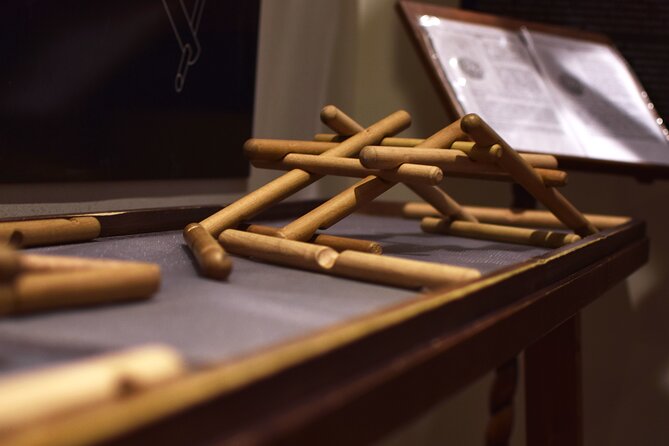
- Working replicas: the hands-on part that most people remember
- Da Vinci’s paintings, backlit for prime viewing
- Anatomy studies: the link between body and genius
- Video, multimedia displays, and where the pacing works
- Bookshop and extra browsing time
- Rules that affect your visit (food, timing, and behavior)
- How much is $10.21 worth in Venice?
- Who should book this museum, and who might skip it
- Should you book the Da Vinci Interactive Museum in Venice?
- FAQ
- How long does the Da Vinci Interactive Museum visit take?
- Where is the museum located?
- What language is the experience offered in?
- Is a professional guide included?
- Are tickets mobile?
- What are the opening hours?
- Is there audio support available?
- Do I need to pay an access fee to visit from outside Venice?
Key things to know before you go
- Working replicas you can operate, not just glass cases
- Backlit high-resolution copies of da Vinci’s paintings for close viewing
- Organized by themes: earth, water, air, and fire
- Anatomy studies plus art context, linking the inventor to the human body
- Audio support available on request at the entrance
- Worth it for families and curious adults, but plan for a short visit
Other Venetian collections behind the palace doors:

Scuola di San Rocco Location: What to expect on arrival
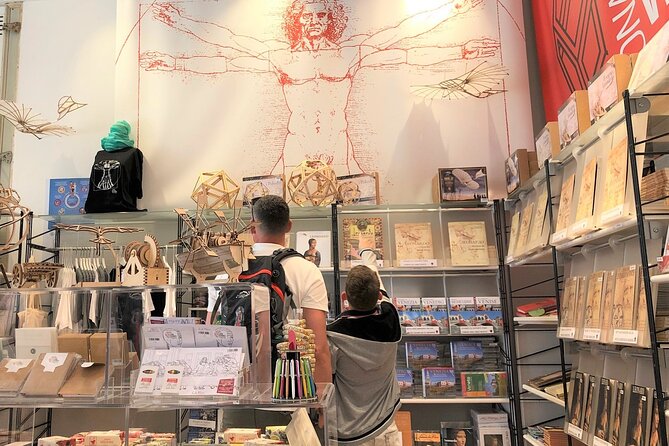
This museum lives in Venice, in and around the Scuola di San Rocco area, which is a great setting if you like small, characterful corners more than big museum circuits. The visit is straightforward: you show up within opening hours and work your way through the exhibits at your own pace.
The big practical win is time flexibility. Your entry lets you visit any time during the museum’s hours, so you can fit it into a day of wandering. Opening hours run daily from 10:30 AM to 4:30 PM, with the last entrance at 4:00 PM.
It’s also close to public transportation, so you do not have to build your whole day around one rigid schedule. And yes, Venice being Venice, you should still wear comfy shoes, since the museum setup includes stairs.
Mobile tickets, English-friendly exhibits, and smart planning
You buy a ticket online and use a mobile ticket for entry. The museum is offered in English, and the exhibit descriptions are also available in Italian, English, French, German, Spanish, and Russian, with multimedia screens that support the story.
Because this is not a guided tour, your visit depends on you reading the panels and using any audio tools that are available. If you enjoy learning while you move, make sure you pace yourself instead of rushing through rooms like it is a checklist.
Duration is listed at around 45 minutes. In real-world terms, I think that is a good target if you read key sections and play with the interactive parts. If you are with kids who want to try every mechanism, you may stretch it longer.
Touring the exhibits: Earth, Water, Air, Fire
The museum experience is organized into four themed sections: earth, water, air, and fire. That structure matters because da Vinci’s genius can feel scattered if you see it as one giant “genius” label. Here, you get a clear path through his thinking, from materials and forces to motion and energy.
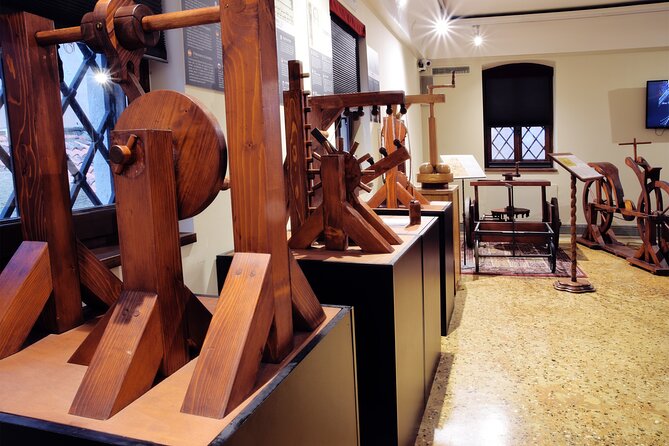
In each section, you will encounter machines built to Leonardo’s design. The museum notes that the replicas follow his proportions as closely as possible, with any necessary changes made to account for practical realities. That gives you something tangible to hold onto: ideas that started in sketches became working engineering.
What I like about this layout is that it keeps you from getting bored. If one room feels slow, you can switch themes and immediately get a different kind of curiosity. It also helps kids, because they can connect the “what” (water, air, etc.) to the “how” (replica mechanisms) right away.
The same hours, spent on the water instead:
- Venice: Doge’s Palace Reserved Entry Ticket
★ 4.6 · 42,716 reviews - Venice: Grand Canal Gondola Ride with App Commentary
★ 4.1 · 23,020 reviews - Venice: Grand Canal Gondola Experience with Live Commentary™
★ 4.2 · 16,504 reviews - Boat Trip: Glimpse of Murano, Torcello & Burano Islands
★ 4.3 · 15,699 reviews - Venice: La Fenice Opera House Entry Ticket with Audio Guide
★ 4.6 · 11,742 reviews
Earth: materials and machine thinking
The earth section leans into how da Vinci approached solid-world problems. Expect a focus on mechanics and how parts interact. Even if you do not study engineering, these exhibits help you see the logic behind the inventor’s designs.
If you are traveling with kids, this is a solid starting point because it frames the experience as something you can understand step by step. Adults often appreciate it too, because it explains how the fantasy of inventions is grounded in basic cause and effect.
Water: movement and problem-solving
The water section is where da Vinci’s curiosity about flow, motion, and system behavior really clicks. These exhibits are great for anyone who likes the moment when an idea becomes a functioning tool.
If you are short on time, do not feel bad skipping any single station for one big interactive model. The museum’s flow makes it easy to sample without feeling like you missed the whole point.
Air: motion, lift, and the imagination to build
In the air zone, you get a sense of da Vinci as a thinker of flight and force. The museum uses replicas to bring his designs into the real world, so you can see what he was imagining and how motion might work.
This room tends to satisfy both the art lovers and the science lovers in a mixed group. Kids like the activity. Adults like the reasoning behind the form.
Fire: energy and how the inventor connects the dots
The fire section ties together how da Vinci linked human curiosity with practical experimentation. Even when you cannot build these ideas exactly as he did, the replicas show the intent behind the designs.
If you are the type who likes to leave museums feeling smarter, this section helps you see da Vinci as more than a painter who happened to draw machines. He was mapping forces and making ideas testable.
Working replicas: the hands-on part that most people remember
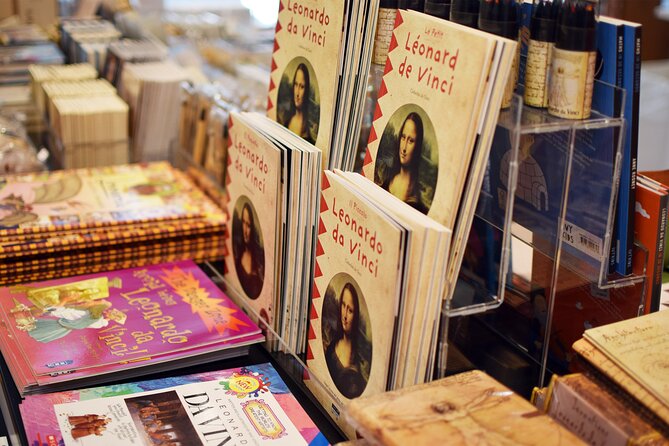
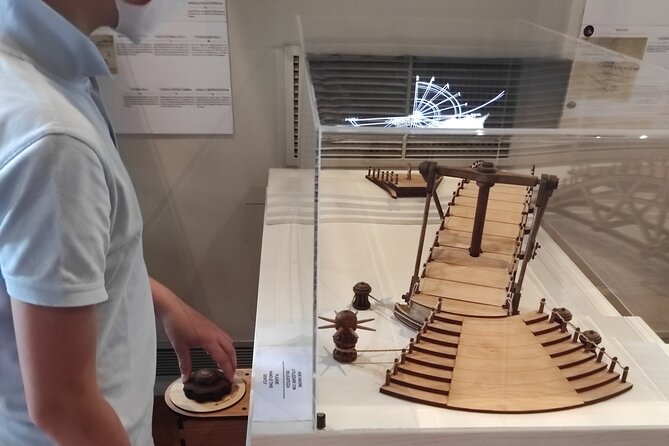
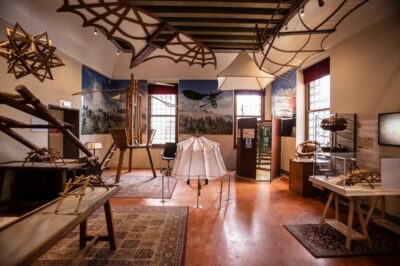
The museum’s headline promise is interactivity, and it is the main reason people give this place strong marks. You can engage with interactive models and try out mechanisms tied to da Vinci’s concepts, rather than just standing and reading.
This is where the Scuola di San Rocco setting adds to the experience. You are not in a sterile box. You are in a historical Venice environment, and the machines feel like a bridge between old paper drawings and real-world engineering.
One reality check: the museum can feel small. Some visitors find they can finish quickly, while others take their time with interactive stations and puzzles. My advice is to treat it like a “choose your own adventure” museum. Spend longer where you get stuck, and do not worry about rushing every detail.
Da Vinci’s paintings, backlit for prime viewing
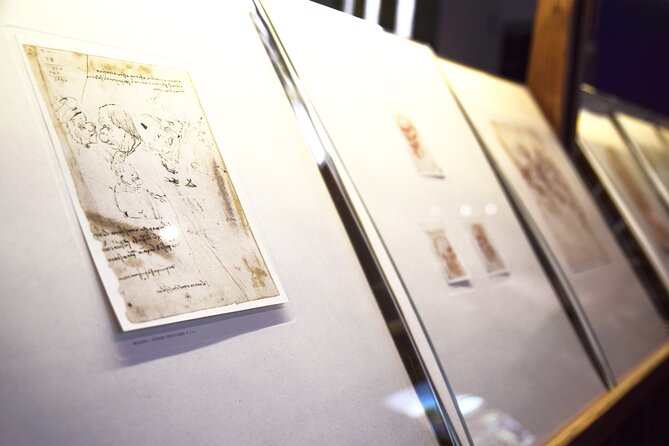
A big plus here is the backlit display of high-resolution copies of da Vinci’s works. Seeing reproductions that are clearly lit and easy to study changes the mood. Instead of squinting at details, you get a calmer way to look closely and follow explanations.
These are not just decorative screens. The museum frames the paintings alongside da Vinci’s medical and artistic work, so you understand why his art was tied to observation and study.
If you love art, this part can pleasantly surprise you. You do not need to be an art history major to appreciate the setup, because the lighting and presentation are built for reading and viewing, not for fading into the background.
Anatomy studies: the link between body and genius
Alongside the machines and the paintings, you will find major studies of anatomy. The museum connects da Vinci’s fascination with the human body to both his scientific curiosity and his ability to capture form.
This is valuable for readers who have heard da Vinci as a “Renaissance superstar” but never learned what made him tick. Here, you can see the through-line: observation, study, and then translation into tools, drawings, and images.
If you have kids, anatomy can feel like a scary word until the exhibits show it in a clear, museum-friendly way. This museum aims to keep it understandable and curiosity-driven.
Video, multimedia displays, and where the pacing works
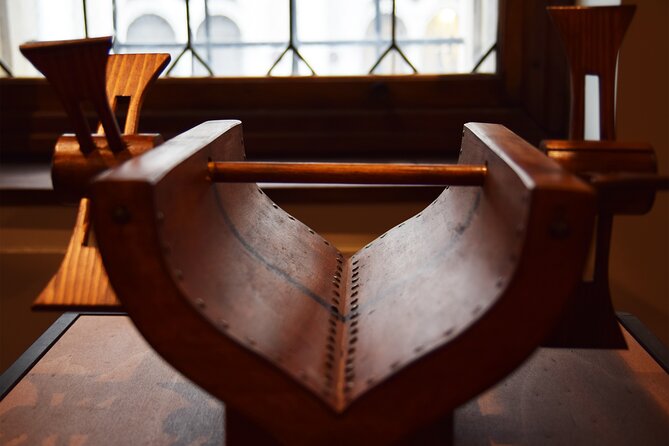
Expect multimedia elements, including descriptions of da Vinci’s life and works. There is also a short film in the mix, focused on his years as an artist and inventor.
Multimedia is most useful when it resets your attention. If you have been bouncing between interactive stations, a short video break can refresh you so you return to the exhibits ready to read again.
One note for planning: since there is no professional guide included, multimedia and text panels do the heavy lifting. If you like learning by hearing rather than reading, ask about audio support at the entrance. Some visitors report that audio guides are available free of charge on request.
Bookshop and extra browsing time
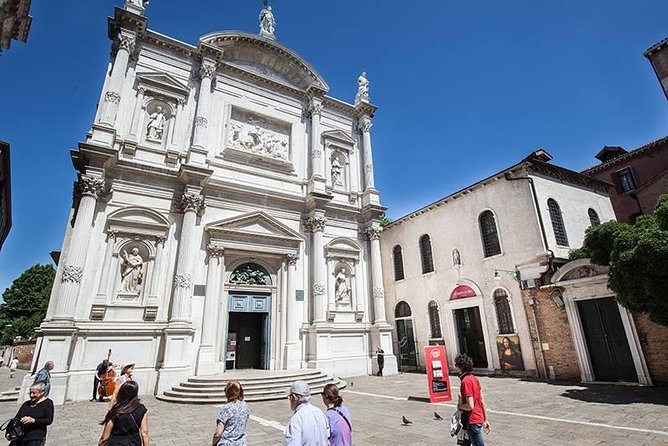
There is a well-stocked bookshop plus displays that add extra context about da Vinci’s life and work. This is one of the smartest places to spend time if you want something practical to take home.
If you are traveling with kids, the shop can be a win for the “we learned something but now we need to remember it” factor. If you are an adult, it is a chance to go deeper without committing to a full-day museum marathon.
The museum does not try to replace major Venice attractions. It is a focused da Vinci experience, and the bookshop helps you extend that focus after you leave.
Rules that affect your visit (food, timing, and behavior)
You will want to plan around exhibit-area rules. Food, chewing gum, and beverages are prohibited inside exhibit areas, so plan on saving snacks for outside the museum.
Last entrance is 4:00 PM, and the museum closes at 4:30 PM. If you arrive late, you may lose time before you hit the interactive stations and the backlit painting displays.
The museum also has rules for students and youth who may be disruptive or risk damage. If you are traveling with a larger group of children, it is worth setting expectations early, so the visit stays fun for everyone.
How much is $10.21 worth in Venice?
At about $10.21 per person, this museum is priced like a short, ticketed experience rather than a day-long museum anchor. The value is in the combination of interactive models, thoughtful exhibit structure, and high-resolution backlit art viewing.
If your expectation is a massive museum with original works, you may feel disappointed. Multiple visitors highlight that it is tiny and can take around an hour, sometimes even less depending on how much you engage.
But if you want a smart, low-stress way to get close to da Vinci’s world, it is a good buy. You get practical “how it works” moments from the replicas, plus art viewing that is easy on the eyes, plus anatomy context that connects the artist to the observer.
This is also good value because it is family-friendly. Kids get hands-on involvement, and adults get explanations that do not talk down.
Who should book this museum, and who might skip it
Book it if you fit one of these profiles:
- Families with kids who like operating things, not just looking at them
- Adults who want a compact da Vinci experience with interactive engineering and readable explanations
- Anyone who enjoys science meets art, especially the anatomy and painting connection
- Travelers who want a 45-minute to 1-hour stop without committing to a full museum day
You might consider another option if:
- You want a larger museum with original artworks, big-gallery scale, or a long guided program
- You dislike self-guided visits and prefer a full-time professional guide
- You need more than one room of hands-on interaction to stay satisfied
Should you book the Da Vinci Interactive Museum in Venice?
Yes, I think it is worth booking if you want a small, hands-on da Vinci stop that fits into a Venice day. The strongest reason to go is the mix of working replicas plus backlit painting viewing, and the fact that it is designed for real attention spans, including kids.
If you are the type who reads labels, you will get the most out of it. If you are more “hit the highlights and move on,” you can still have fun, just don’t expect a long, original-art pilgrimage.
Go in with the right mindset: this museum is about trying da Vinci’s ideas, not collecting masterpieces. If that sounds like your pace, book it, then pair it with the rest of your day around the Scuola di San Rocco area.
FAQ
How long does the Da Vinci Interactive Museum visit take?
The visit is listed at about 45 minutes.
Where is the museum located?
It is in Venice, Italy, at the Scuola di San Rocco area.
What language is the experience offered in?
The experience is offered in English, and exhibit descriptions are also available in Italian, English, French, German, Spanish, and Russian.
Is a professional guide included?
No, a professional guide is not included.
Are tickets mobile?
Yes, you receive a mobile ticket.
What are the opening hours?
The museum is open daily from 10:30 AM to 4:30 PM, with the last entrance at 4:00 PM.
Is there audio support available?
Audio guides are reported as available free of charge upon request at the entrance.
Do I need to pay an access fee to visit from outside Venice?
On certain dates, some day visitors from outside Venice may need to pay a €5 access fee. The details and exemptions are linked at https://cda.ve.it.
Lately added around Venice



Museums, compared.
Venice’s Best: Basilica, Doge’s Palace, Gondola & History Gallery
Read our review →
Vivaldi’s Four Seasons Concert & Music Museum Visit
Read our review →
Charming Gondola Ride on the Grand Canal & Gondola Gallery™
Read our review →
City Pass with Museums including Doge’s Palace
Read our review →
Bell Tower & St Mark’s Square History Gallery Ticket
Read our review →
Venice Museum Pass & Doge’s Palace Entrance Ticket
Read our review →
Basilica, Doge’s Palace, History Gallery & Bell Tower Option
Read our review →Browse the lists this tour appears in