
Reviewed · WALKING TOURS
Experience Venice Like a Local on a Guided Small Group Walking Tour By Night
Venice at night feels like a secret you share. This guided small-group stroll lets you see the city’s big names plus quieter corners under streetlamp light, with a professional local guide keeping the story clear. I especially like the mix of blockbuster stops like Rialto and the more tucked-away places tied to Marco Polo and Carlo Goldoni. One thing to think about: several church and museum entrances are not included, so you may pay more once you’re on site.
The pace is made for getting oriented fast, especially if this is your first trip to Venice. You’ll walk outdoors for about 2 hours, with each main stop clocked around 15 minutes, which keeps things moving without feeling like a sprint. The maximum group size of 15 is a real plus if you like asking questions instead of shouting over a crowd.
If you’re traveling with kids or family, this kind of night format can feel easier than a daytime route full of long lines. Just plan ahead for the practical reality that the tour depends on good weather and enough participants to run, so keep an eye on updates close to the start time.
In This Review
- Key highlights worth prioritizing
- Why an 8:30 pm Venice walk hits different
- Meeting Campo San Zaccaria, ending at Campo San Tomà
- Small group size and a professional local guide
- Itinerary stop by stop: San Zaccaria, Marco Polo, Rialto
- Sant’Aponal and the Frari area: churches plus writers
- Campo San Toma finish and how to continue your night
- Price and value, plus the one cost surprise
- Weather, timing, and the communication reality
- Who should book this night tour, and who should skip it
- My booking checklist for a smooth Venice evening
- Should you book this Venice like a local night tour?
- FAQ
- What time does the Venice night tour start?
- How long is the guided walking tour?
- How many people are in the group?
- Are church entrances included in the price?
- What locations do we visit during the tour?
- Is there an extra access fee for some visitors?
Key highlights worth prioritizing
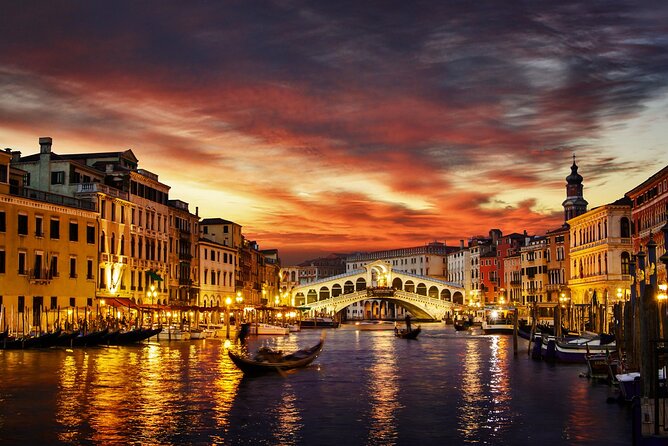
- Streetlamp Venice: big sights feel calmer and more romantic after dark
- Max 15 people: more back-and-forth with your guide in a 2-hour loop
- Marco Polo and Goldoni stops: not just guidebook headlines
- Rialto on the Grand Canal: a classic viewpoint with architecture context
- Outdoor walking tour: an efficient way to build city understanding quickly
- Mixed admission costs: some sites are free, others require paid entry
More sestieri crossed bridge by bridge:

Why an 8:30 pm Venice walk hits different
Venice changes after sunset, and an evening tour is a smart way to experience that. At 8:30 pm, you get streetlamps, softer shadows, and cooler air for walking, which makes the city feel more human and less like a photo set. You also avoid some of the harsh daytime glare that can make stone details hard to appreciate.
What I like about this format is how quickly it gives you context. In a couple hours, you’re not just collecting sights, you’re building an understanding of how Venice’s architecture and neighborhoods evolved. A good guide turns that into something you can actually remember while you keep exploring later on your own.
The biggest drawback to night walking is obvious, but worth saying plainly: you need good visibility and comfortable night-time walking. Since this experience requires good weather, plan for the chance you’ll get rerouted or refunded if conditions are poor.
Meeting Campo San Zaccaria, ending at Campo San Tomà
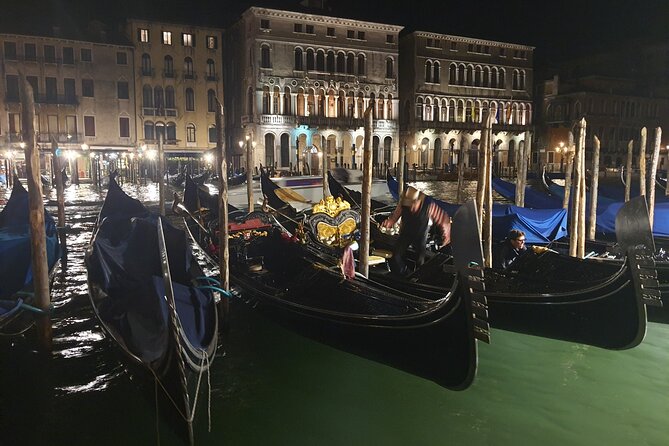
The tour starts at Campo San Zaccaria at 8:30 pm. It ends at Campo San Tomà, and that final stop is near a vaporetto bus stop, which is practical if you still want to move around after the walking portion.
I like point-to-point routing like this because it prevents that awkward feeling of, okay, now what. You’re finished in a different area than you started, so you can continue your evening without having to backtrack much. Also, because it’s near public transportation, it’s easier to build into a larger day plan.
One more practical note: there is no hotel or station pickup included. You’ll want to get yourself to the meeting square a bit early so you’re not rushing through narrow streets in the last few minutes.
Small group size and a professional local guide
This is a guided outdoor walking tour with a professional local guide, and the group max is 15 travelers. That size matters in Venice. You get time for questions, you hear the guide clearly, and you’re less likely to get stretched out across a street.
The “15 minutes per stop” rhythm is also a good match for how Venice works. You see a place, you get the meaning behind it, then you move on before you start zoning out. For your brain, that’s the difference between a list of names and a coherent city story.
Since the tour is offered in English, it’s also more comfortable to ask about what you’re seeing as you go. And because the tour includes pick-up from the meeting point, not from your hotel, you should expect straightforward logistics rather than a complicated rendezvous.
More of Venice once the day boats leave:
- Venice: Catamaran Sunset Jazz Cruise with Aperitivo
★ 4.7 · 1,206 reviews - Venice: Lords of the Night Prison’s Palace Cells & Tortures
★ 4.0 · 1,067 reviews - Venice: Sunset Walking Tour with Food and Wine Tastings
★ 4.9 · 848 reviews - Venice: Crimes, Legends, and Mysteries Sunset Tour
★ 4.9 · 704 reviews - Venice Sunset Cruise by Typical Venetian Boat with Prosecco
★ 5.0 · 505 reviews
Itinerary stop by stop: San Zaccaria, Marco Polo, Rialto
Stop one is the Chiesa di San Zaccaria in Campo San Zaccaria. This is a former monastic church from the 15th century and a major example of Venetian Renaissance style. It’s a strong opening choice because it sets the theme: Venice’s wealth expressed through church art, design, and architecture.
Just keep in mind: church entrances are not included for this stop. So if you want to go in and take your time, budget for paid entry ahead of time. Even if you don’t enter, the exterior and setting in the square still give you something to anchor the tour story.
Stop two is Campo Santa Margherita, a lively square surrounded by houses, shops, bars, and restaurants. It’s popular with students from the nearby university building, which helps you see Venice as a lived-in city, not only a museum. This stop is free and is more about atmosphere and neighborhood texture than ticketed monuments.
Stop three is Casa di Marco Polo. This is where the explorer spent the last 25 years of his life, so it’s the “human timeline” stop in the middle of the architectural focus. Again, admission is not included, but if Marco Polo is a reason you’re in Venice, this is the kind of place you’ll feel glad you made the time for.
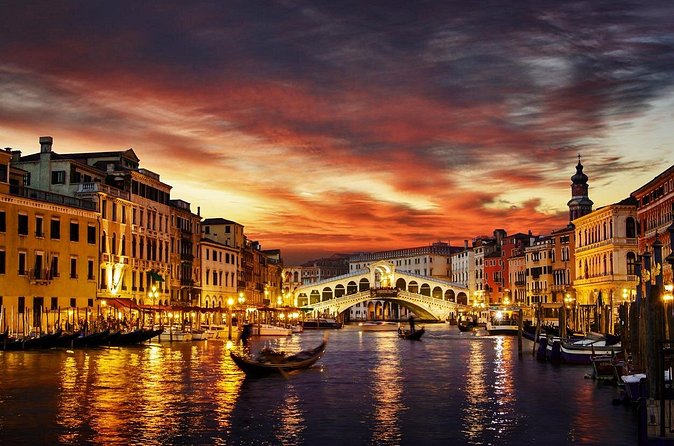
Stop four brings you to Ponte di Rialto, the oldest of Venice’s four bridges spanning the Grand Canal. It’s now an architectural symbol and a major attraction, and at night you’ll experience it with a different energy than the daytime rush. The good news: this stop is free, so you’re not paying to enjoy the view and the sense of place.
Sant’Aponal and the Frari area: churches plus writers
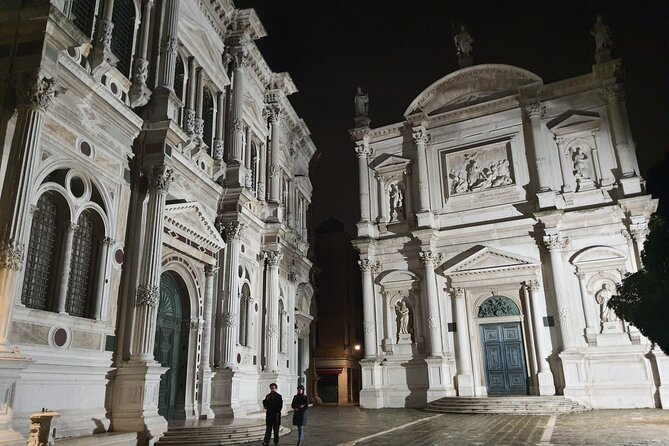
Stop five is Chiesa di Sant’Aponal, visible as you walk along Riva del Vin. This Gothic church is dedicated to Saint Apollinaire and sits tucked away in Venice’s maze of narrow streets, or calli. That “hidden in plain sight” feel is part of why a night walk works. You learn where to look, and the streets feel like part of the story instead of obstacles.
This stop is not included for admission, so expect it to be ticketed if you enter. Still, the guide framing helps: Gothic details make more sense when you hear the why behind the style rather than only noticing the surface.
Stop six is Campo dei Frari, tied to the writer Carlo Goldoni. Specifically, it’s associated with Carlo Goldoni’s House, a small Gothic-style palace that houses a unique museum. This is a fun shift in tone, because it moves you from explorers and bridge icons to theater and everyday culture.
Stop seven is the Casa di Carlo Goldoni in San Polo. It functions as a museum in Goldoni’s birthplace and focuses on his life and career, with exhibits about his impact on Italian theater. Like the other interior sites, entrance is not included, but this is the stop that can really make you appreciate Venice beyond postcards. You’re connecting the city to the people who shaped European art and storytelling.
A practical thought: if you’re trying to keep costs down, you can decide based on your interest level. This route deliberately mixes free squares and ticketed interiors, so you’re not locked into paying for every single stop.
Campo San Toma finish and how to continue your night
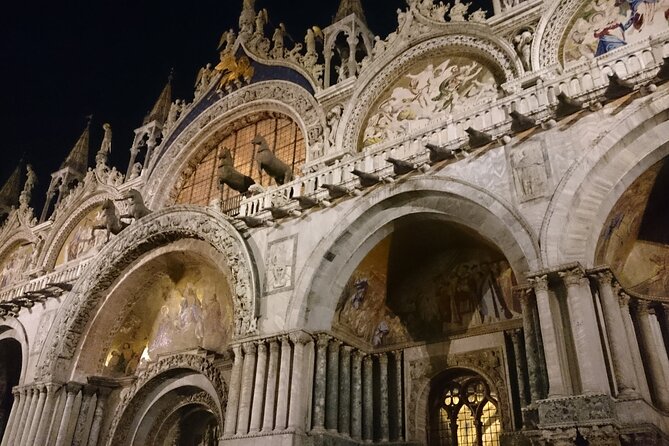
Stop eight is Campo San Tomà, a charming rectangular square with a small well at its center. Around it, you’ll find many restaurants and shops in the neighborhood, so it’s an easy place to transition from tour mode to wander mode.
This stop is free and marks the tour ending point near the vaporetto bus stop. I like the ending because it doesn’t strand you in the middle of nowhere. It gives you a clean off-ramp for public transport, or a chance to grab a late bite in the area without having to plan your return from scratch.
If you’re the type who likes to keep momentum, decide right away where you’ll go next. Venice evenings move fast, and having a plan helps you enjoy what you see rather than spending your whole night choosing between half a dozen nearby options.
Price and value, plus the one cost surprise
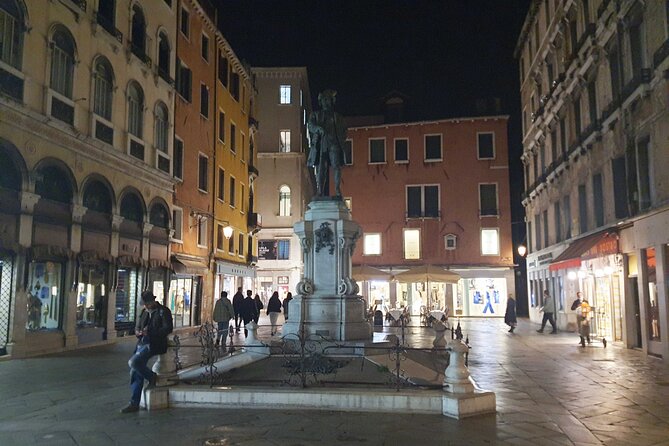
The price is $42.33 per person for about 2 hours, in a max 15 group with a professional local guide. For Venice, where walking tours can range from quick hit-and-run routes to premium experiences with limited access, this sits in a reasonable spot. You’re paying for interpretation and guidance, not just movement from point A to point B.
Here’s the part to watch: food and drinks are not included, and church entrances are not included. Several stops include ticketed sites, including San Zaccaria, Casa di Marco Polo, Sant’Aponal, and the Goldoni properties. Some stops are free squares or viewpoints, but your final total will likely depend on how many interiors you choose to enter.
On top of that, there’s a possible €5 access fee on certain dates for day visitors staying outside Venice who are planning to visit that day. The tour data points you to the city’s official info page for exact dates and exemptions. If you’re coming from the mainland or another city for just the evening, check that page early so you’re not caught off guard.
Weather, timing, and the communication reality
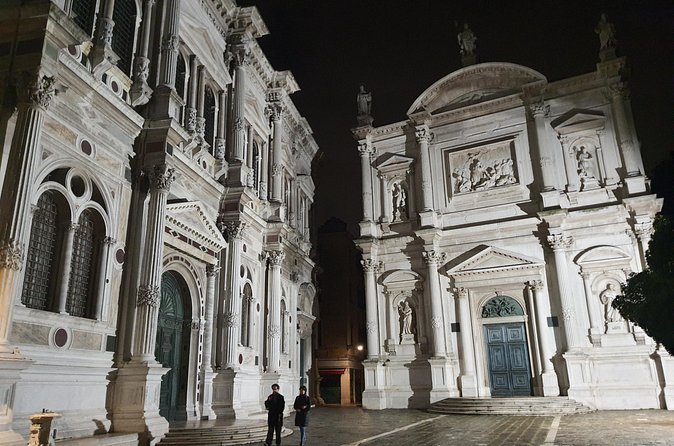
This experience requires good weather, and if it’s canceled due to poor weather, you’ll be offered a different date or a full refund. In practice, that means your evening plan should have flexibility. If you’re building a bigger itinerary around this tour, keep a backup idea for dinner or a nearby walk.
The other cancellation factor is the minimum number of travelers needed to run. That’s important because it’s not only about demand, it’s about viability. If your schedule is tight, you’ll feel better if you confirm your date and keep your notifications on, since last-minute changes are most likely around weather or participation shortfalls.
From a traveler perspective, the big lesson is simple: don’t assume the system will reach you in time. Make it a habit to check updates shortly before you leave for the meeting square, especially if you’re crossing time zones or arriving the same day.
Who should book this night tour, and who should skip it
I think this tour is especially good for three types of travelers.
First, if you want an orientation to Venice quickly, this route gives you a compact arc from Renaissance churches to Rialto to writers’ houses. It’s a city-building experience, not just a sightseeing sweep.
Second, if you’re traveling with family and want something that keeps attention without requiring a whole day of ticket queues, the short stops and small group can work nicely. The “learn as you go” format also helps kids and adults stay on the same page.
Third, if you like stories tied to place, Marco Polo and Carlo Goldoni give you that Venice-as-culture angle. It’s not only the usual photos, it’s ideas you can carry to your next walk.
You might skip it if you strongly prefer fully ticketed experiences where every major stop includes entry, because several key interiors are not covered. Also, if you dislike walking outdoors at night, the format may feel like more effort than you want, even though the duration is only about 2 hours.
My booking checklist for a smooth Venice evening
Before you book, here’s what I’d do to protect your time and budget.
- Check the access fee dates if you’re a day visitor from outside Venice, since a €5 fee can apply on certain days.
- Plan for paid entries at the sites that are explicitly not included, and decide in advance which ones matter most to you.
- Get to Campo San Zaccaria early, so you’re not stressed finding the meeting point at 8:30 pm.
- Keep an eye on weather and accept that the tour might move dates if conditions are poor.
- Confirm updates close to departure, especially if you’re arriving from far away and your attention is split.
This is the kind of tour that feels best when you treat it like a guided introduction, then keep exploring on your own after.
Should you book this Venice like a local night tour?
If you want a guided night walk that mixes famous landmarks with quieter cultural sites, this is a strong choice. The small group of 15, the professional local guide, and the streetlamp atmosphere are exactly the ingredients that make Venice feel special without taking over your whole day.
It’s not perfect, though. The biggest risk is practical, not artistic: some interiors are ticketed, and cancellations can happen if weather is bad or minimum participation isn’t met. If you’re comfortable with that trade-off and you’re excited by Marco Polo, Rialto, and the Goldoni theater connection, I’d book it, then build a flexible dinner plan around it.
FAQ
What time does the Venice night tour start?
The tour starts at 8:30 pm.
How long is the guided walking tour?
It lasts about 2 hours.
How many people are in the group?
The tour has a maximum of 15 travelers.
Are church entrances included in the price?
No. Church entrances and other ticketed interiors are not included.
What locations do we visit during the tour?
You visit Campo San Zaccaria, Campo Santa Margherita, Casa di Marco Polo, Ponte di Rialto, Chiesa di Sant’Aponal, Campo dei Frari, Casa di Carlo Goldoni, and Campo San Tomà.
Is there an extra access fee for some visitors?
On certain dates, day visitors staying outside Venice may need to pay a €5 access fee. You can check the applicable days and exemptions at the city information page provided with the tour.
Lately added around Venice

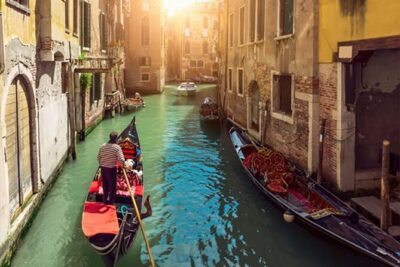
Walking Tours, compared.
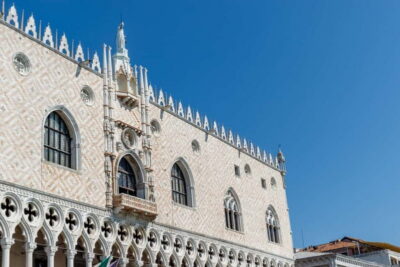
Doge’s Palace and St Mark’s Basilica Walking Tour
Read our review →
San Marco to Rialto Walk & Spritz Like a Local
Read our review →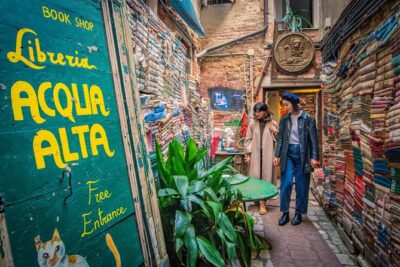
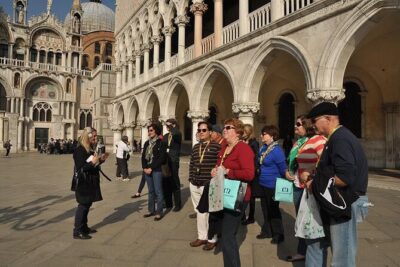
Private 3 hrs Venice Tour: St Mark’s, Walking tour & Boat tour
Read our review →
Walking Guided Tour of the City Must-See Sites
Read our review →
Private Best of Venice Walking Tour with St Mark’s Basilica
Read our review →
Venice Sightseeing Small Group Walking Tour with a Local Guide
Read our review →Browse the lists this tour appears in