
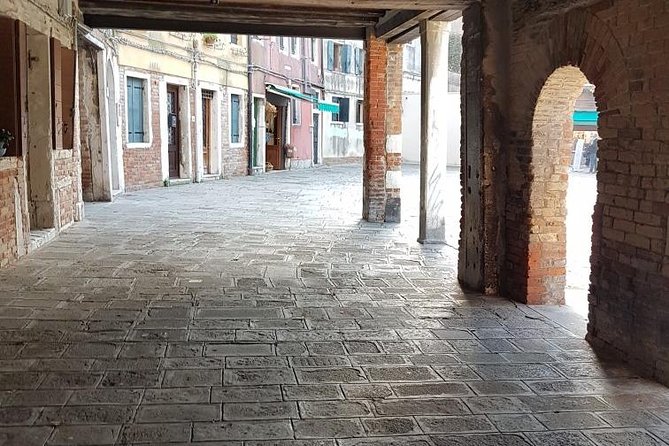
Reviewed · PRIVATE TOURS & GUIDES
Friendinvenice Cannaregio &Jewish Heritage- private tour
Venice tells its Jewish story in plain streets. This private tour is a focused way to see Cannaregio’s day-to-day life, then walk into the Venetian Jewish Ghetto for the key historical rules behind it. I especially like the chance to shift from local street scenes to major cultural landmarks with an English guide who can tailor parts of the route, and I like that key stops include admission. One thing to consider: it is a tight 3 hours, so there is less time to linger than on a longer self-guided day.
You’ll get a lot of value from the structure. Hotel pickup means you do not waste time finding your starting point, and the pacing lets you cover three big storylines without feeling rushed. The only real drawback is timing, because a short stop like Tintoretto’s house (just 10 minutes) works best if you already love art, or you are happy to get the essentials fast.
In This Review
- Key Highlights You Should Know
- Why Cannaregio and the Jewish Ghetto belong together
- Private 3 hours with hotel pickup, and how to plan your day
- Stop 1: Cannaregio, reed-marsh origins and the local side of Venice
- Stop 2: Ghetto Ebraico, 1516 regulations and how faith persisted
- Stop 3: Casa del Tintoretto, Gothic details you can actually spot
- The guide matters: Giorgia’s approach and flexible pacing
- Price and what you really get for $162.31 per person
- Who should book this Jewish Heritage tour, and who might not
- Practical tips for enjoying it without rushing
- Should you book this Friend in Venice private tour?
- FAQ
- How long is the Friend in Venice private Jewish Heritage tour?
- Is this a private tour or a group tour?
- What language is the tour offered in?
- Do I get hotel pickup?
- Where does the tour start and end?
- Are tickets included for the stops?
- Is there an access fee for some visitors?
- What is the cancellation policy?
- Are service animals allowed?
Key Highlights You Should Know

- Hotel pickup in Venice makes the first minutes easy, not stressful
- Cannaregio on the ground level with local rhythms like bacari and lagoon-rowing culture
- Ghetto Ebraico context focused on how regulations shaped daily life in 1516 and after
- Casa del Tintoretto stop is short, but packed with specific façade details to notice
- English guide and mobile ticket keep it smooth from start to finish
More guides with just your group along:


Why Cannaregio and the Jewish Ghetto belong together
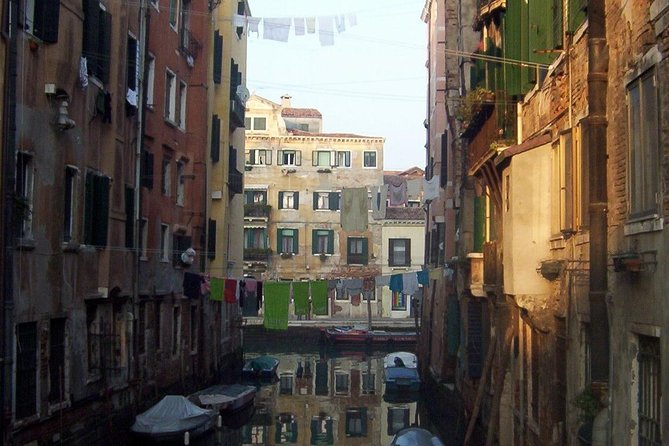
Most Venice tours treat the city like a highlight reel. This one treats Venice like a place where different neighborhoods held different rules, work, and community life, all within walking distance. Cannaregio sets the stage, then the Jewish Ghetto explains how the Republic of Venice organized Jewish presence, not as a vague story, but as lived, regulated daily reality.
You also get a better sense of Venice beyond the postcard lanes. Cannaregio is where you can still spot older habits, like locals gathering in bacari and kids playing games, plus the quieter feel that comes from being away from the busiest cruise-carrying routes.
The result is a route that feels connected. You see the everyday neighborhood texture first, then you understand why certain boundaries and systems mattered.
Private 3 hours with hotel pickup, and how to plan your day
This is a private experience, meaning your group is the only one on the tour. The duration is about 3 hours, and start times are available at multiple points during the day, so you can pick something that fits your Venice schedule.
The big practical win is pickup. Friend in Venice offers to meet you from any hotel in Venice, so you start already walking, not searching. The tour ends in Cannaregio (30121), which is convenient if you want to keep exploring afterward in the same neighborhood.
What I’d plan around: wear good walking shoes. Even though the stops are time-boxed, Cannaregio streets and canal-adjacent paths can be uneven, and you will be moving through several small areas. If you are the type who likes to stop for photos every 30 seconds, build in extra time before and after the tour.
Stop 1: Cannaregio, reed-marsh origins and the local side of Venice
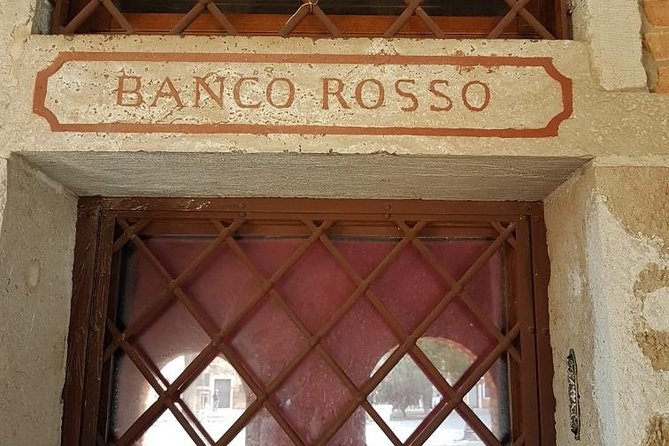
You begin in Cannaregio, a sestiere with a reputation for being more lived-in than some of the more famous corridors. The name is linked to ancient marshland, described as reed marsh in earlier times, which helps explain why Venice’s water-and-land relationship is still part of the neighborhood’s identity.
This is also where the tour leans into what you can actually see with your own eyes. You are encouraged to look for the traditions that survived modern tourism pressure, including the presence of bacari where residents spend time. You may also notice how kids play common street games and how older Venetian pastimes show up in daily life.
One of the most interesting practical details is the lagoon rowing culture. Cannaregio is tied to rowing associations, with facilities near Campo Sant’Alvise where boats can be hauled and practiced away from heavy motor traffic. The calmer water areas make rowing less intrusive and easier to watch, so you get a window into how Venice’s waterfront uses vary from one canal zone to another.
A small drawback: because Cannaregio is still a real neighborhood, your experience can depend on what is happening that day. If schools are out or local social moments are underway, you will likely catch more atmosphere. If the streets are quieter, it still works, but you will shift more toward listening and context rather than spontaneous scenes.
A few more Venice outings worth comparing
- Venice’s Best: Basilica, Doge’s Palace, Gondola & History Gallery
★ 4.5 · 2,478 reviews - Venice: City Center Historical Guided Walking Tour
★ 4.2 · 1,873 reviews - Venice: The History of St. Mark’s Basilica Tour
★ 4.2 · 986 reviews - Venice: Bell Tower & St Mark’s Square History Gallery Ticket
★ 4.3 · 910 reviews - Basilica, Doge’s Palace, History Gallery & Bell Tower Option
★ 5.0 · 586 reviews
Stop 2: Ghetto Ebraico, 1516 regulations and how faith persisted
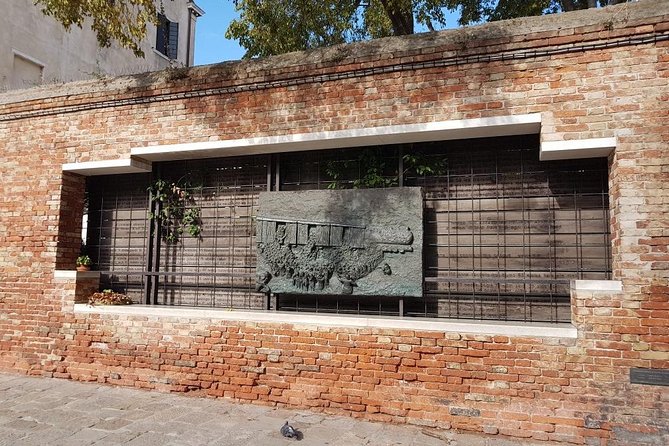
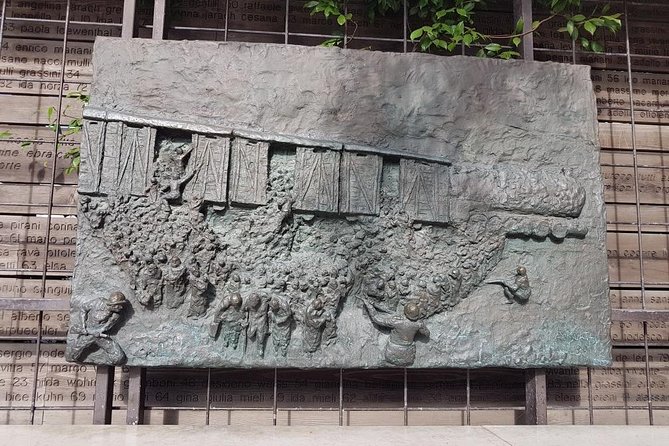
Next you go to Ghetto Ebraico, and the tone changes in the best way. This part of the walk focuses on how Jewish life in Venice went from early documentation to a formalized system backed by decrees. Instead of treating the ghetto as a single museum-like stop, you learn how rules shaped movement, work, and identity.
A key moment is March 29, 1516, when the Venetian Republic enacted a decree to organize the community. The policy details matter because they explain the difference between tolerance in language and control in practice. Jewish residents were directed to live in an area where foundries had existed, known in Venetian as getti. They also had to carry identification through a sign, and they had responsibilities connected to pawnshops with rates set by the Republic.
The tour balances the “permission and prohibition” rhythm with a grounded outcome. Even with restrictions and harsh regulations, the community was granted the freedom to practice its faith, and it had protection in the case of war. That dual reality is what makes this stop stick in your mind: it is not just tragedy, it is also survival, organization, and continuity.
If you are sensitive to heavy history, approach this stop with a slower pace. Give the guide your full attention here. The best payoff comes when you connect the policy language to what you see on the streets and understand what those boundaries meant for everyday life.
Stop 3: Casa del Tintoretto, Gothic details you can actually spot
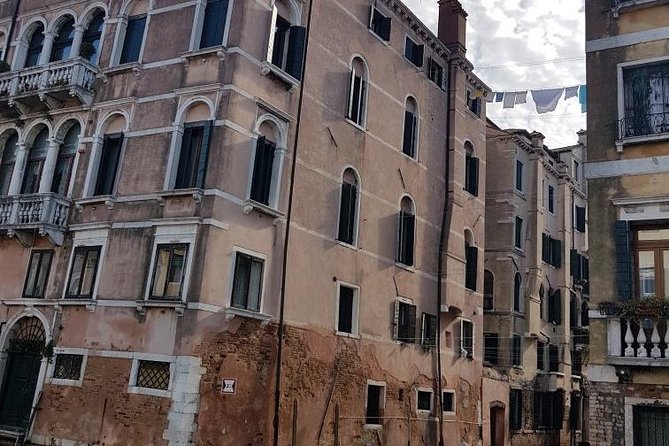
Then you finish with Casa del Tintoretto, tucked into the Cannaregio area. The stop is short, about 10 minutes, but it is loaded with visual cues that help you read the building like a mini art lesson.
Tintoretto, whose real name was Jacopo Robusti, lived here (Venice, 1519 to 1594), except for a period when he went to the court of the Gonzagas of Mantua between 1590 and 1593. The house is described as Gothic, tall and narrow, with a distinctive three-light window on the first noble floor.
What I like is that you are not just told that Tintoretto was famous. You are directed to look for specific features on the façade, like:
- A plaque that points to the house’s importance
- A small marble statue of Hercules with a club, tied to tradition about being placed by Tintoretto
- A nearby statue of an Arab that completes a set of figures starting at Campo dei Mori
Even if you only catch the outside quickly, those details give you a mental hook. Then the guide connects it to Tintoretto’s broader work across Venice, including major paintings housed at places like the Scuola Grande di San Rocco, where he worked for about 25 years, and the Gallerie dell’Accademia.
The walking payoff is the way the story expands beyond the building itself. You hear how his masterpieces appear elsewhere, including Il Paradiso, described as an enormous canvas in Palazzo Ducale’s setting, and you also learn where his remains ended up near his birthplace inside the Church of the Madonna dell’Orto.
A practical consideration: because this stop is brief, it helps to be ready to notice details quickly. If you want deep museum time for Tintoretto, you can treat this as the teaser that guides you toward longer visits later.
The guide matters: Giorgia’s approach and flexible pacing
The biggest reason this tour works so well is the guide. Giorgia is known for being friendly and informative, and what stands out is that she can tailor part of the walk to your interests.
That personalization is not just a nice-to-have. It changes how history lands. If you care more about daily neighborhood life, she can keep you focused on Cannaregio scenes and how locals use the space. If you want the political side, you can expect a clearer through-line for how decrees, restrictions, and community rights fit together.
This also helps with the structure of the tour. Because the stops are time-boxed, you benefit from having a guide who can adjust what you pay attention to, rather than forcing you through a fixed script.
Price and what you really get for $162.31 per person

At $162.31 per person for about 3 hours, this is not a budget walking tour. But for a private Venice experience with hotel pickup, it is easier to see the value.
Here is why the price can make sense:
- Private format means no crowd management
- Pickup from any Venice hotel reduces wasted time and confusion
- The route is built around three meaningful locations, not just a general walk
- Admission is included for two key stops (Ghetto Ebraico and Casa del Tintoretto), while the Cannaregio walking portion is free of admission
In plain terms, you are paying for time, access, and interpretation. Venice is expensive in general, and guided time adds up fast when you count how much you can see and understand in one go.
One caution: because the tour is private, the per-person cost can feel steep if you are traveling solo. If you are able to share with another person, the value often becomes easier to justify. That also fits the idea of group discounts being available.
Who should book this Jewish Heritage tour, and who might not
This tour is a strong fit if you want:
- A neighborhood-forward Venice experience centered on Cannaregio
- Historical context that focuses on how communities were regulated, not just big-name monuments
- An English-speaking guide who can adjust the route toward what you care about
It is also ideal for travelers who get tired of long lines and prefer a smaller, more human scale walk. The Jewish Ghetto stop especially rewards people who like understanding the why behind the layout and the rules.
You might want to rethink if:
- You expect the art stop to function like a museum visit. Casa del Tintoretto is brief.
- You want a slower pace with long breaks for cafés. This is structured and time-boxed.
- You mainly want sweeping views and photo-heavy landmark time. This route is more about streets, context, and specific places.
Practical tips for enjoying it without rushing
A few things can help you get more out of the 3 hours:
- Wear shoes that handle uneven pavement and short stretches that can feel slippery near water
- Plan to be off your phone for parts of the history. The Ghetto Ebraico segment works best when you can listen cleanly
- Bring a light layer if you are there in shoulder seasons, because Venice can feel cooler near the water
- If you care about Tintoretto, arrive with at least one favorite painting in mind so the outside details connect to something you already know
Also note that there can be an access fee on certain dates for visitors staying outside Venice, listed as €5. If that applies to you, it is one more reason to arrive ready and organized.
Should you book this Friend in Venice private tour?
I think this is a smart booking if you want a thoughtful Venice experience that connects neighborhood life to Jewish Venetian history in a way that feels readable and respectful. The private format plus pickup keeps it practical, and the guide, including Giorgia’s flexible, human approach, can help you walk away with real understanding, not just facts.
Book it if you are curious about Cannaregio as a living neighborhood and you want the Ghetto Ebraico story told with attention to how regulations shaped daily life. I would only skip it if you are chasing a checklist of only famous landmarks or you want long art time inside major collections. This tour is built for focused walking, clear context, and seeing Venice through one coherent theme.
FAQ
How long is the Friend in Venice private Jewish Heritage tour?
The tour is approximately 3 hours.
Is this a private tour or a group tour?
It is a private tour, so only your group participates.
What language is the tour offered in?
The tour is offered in English.
Do I get hotel pickup?
Yes. Pickup is offered from any hotel in Venice.
Where does the tour start and end?
It starts in Venice and ends in Cannaregio, 30121 Venice, Metropolitan City of Venice, Italy.
Are tickets included for the stops?
Admission tickets are free for the Cannaregio portion. Admission is included for the Ghetto Ebraico and Casa del Tintoretto stops.
Is there an access fee for some visitors?
On certain dates, travelers staying outside Venice who plan to visit for the day may be required to pay a €5 access fee.
What is the cancellation policy?
Free cancellation is available up to 24 hours in advance for a full refund.
Are service animals allowed?
Yes, service animals are allowed.
Lately added around Venice



Private Tours & Guides, compared.
Murano & Burano Islands Guided Small-Group Tour by Private Boat
Read our review →
Murano & Burano Guided Tour by Private Boat with Glassmaking
Read our review →
Private 3 hrs Venice Tour: St Mark’s, Walking tour & Boat tour
Read our review →
Private Crafted Gondola Ride Along Grand Canal
Read our review →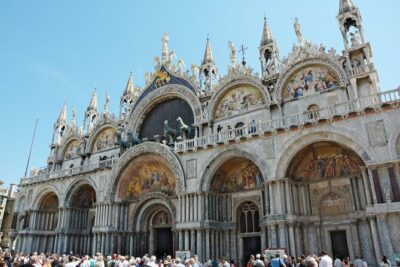
Private Best of Venice Walking Tour with St Mark’s Basilica
Read our review →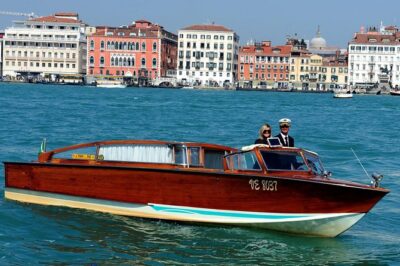
Private tour on Murano Island: discover the art of Artisanal Glassblowing
Read our review →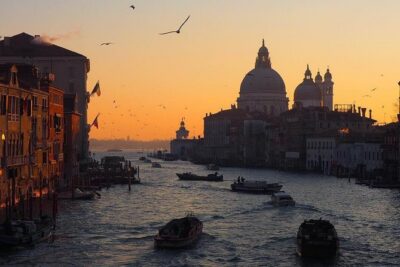
Venice Marco Polo Airport Private Arrival Transfer via Motorboat
Read our review →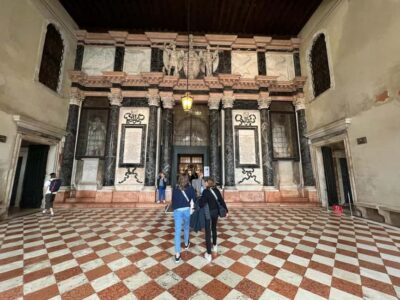
Browse the lists this tour appears in