
Reviewed · HISTORICAL TOURS
Friendinvenice Let’s discover Venice & the history of its courtesans PT
Venice gets scandalous fast. This walking tour takes you into the lesser known world of the city’s historic courtesans, with stops around Santa Croce and Rialto. You will learn how these women shaped social life in the Venetian Republic, and how the government regulated this world while also benefiting from it.
I especially like the storytelling and the way the guide ties people to specific streets and corners, not just big monuments. I also like the costume and culture angle at La Bauta, where fashion becomes part of the power story, not just background.
One drawback to consider is the subject matter. This is history of sex work, clients, brothels, and regulation, so the topic is mature, and the walking route focuses on those areas more than classic postcard sights.
In This Review
- Key Things I’d Pay Attention To
- Courtesans in Venice: More Than Gossip at the Waterline
- What You Learn About Venetian Classes of Courtesans
- Meet Your Guide Nadia, and Her Attention to Detail
- Santa Croce and Ponte Della Donna Onesta: The Start of the Story
- Rialto at Fondamenta del Buso: Merchants, Docks, and Meaning
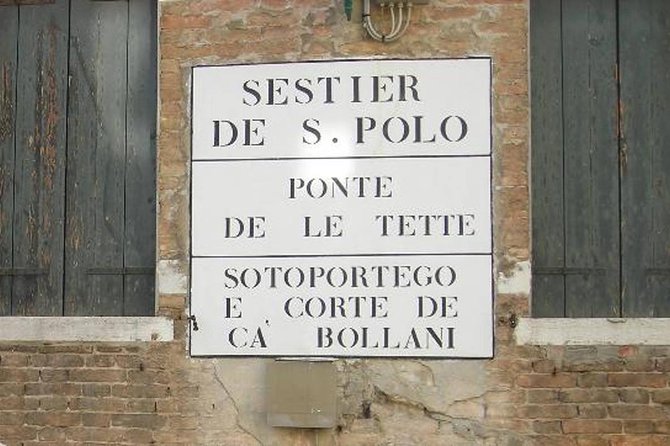
- San Polo, the Bridge of Tits, and Carampane
- La Bauta and Courtesan Fashion: How Clothes Became Power
- Timing, Walking Rhythm, and What You Might Want to Pair It With
- Price and Value: When $180.58 Feels Fair
- Who This Courtesan Tour Suits Best
- Should You Book This Courtesans Tour in Venice?
- FAQ
- How long is the courtesans walking tour?
- How much does it cost per person?
- Is this tour private?
- Do they offer pickup and mobile tickets?
- Are service animals allowed?
- What is the cancellation policy?
Key Things I’d Pay Attention To
- Santa Croce focus: You start near Ponte Della Donna Onesta, a named stop tied to where courtesans lived and worked.
- Rialto dock language: Fondamenta del Buso includes a word play that helps you understand the local context of the red light district.
- San Polo street names: The Bridge of Tits and Carampane are used as real anchors for stories about nearby brothels.
- Fashion as influence: La Bauta is about how courtesans used clothing, embroidery, and bold presentation to signal status.
- Two class system taught clearly: You learn there were different types of courtesans, including Cortigiane Lume and noble courtesans.
- Private, local pace: It is a private tour for your group, so you can move at a comfortable speed for questions.
A few more Venice outings worth comparing


Courtesans in Venice: More Than Gossip at the Waterline
Courtesans are not a side note to Venice. They were woven into daily social life, and the city treated the system as something it could manage. On this tour, you get the history of courtesans as a real public phenomenon, not a rumor. You will hear how educated, elegant women could carry influence through relationships, fashion, and social networks.
What I like is that the tour does not reduce courtesans to one lane of “salacious stories.” It connects the personal side of power to the civic side too, with explanations about how Venice regulated the behavior and benefited from it. That civic angle matters, because it helps you see why the city had laws, categories, and named areas rather than leaving everything in the shadows.
If you are the type who likes Venice beyond canals and churches, this is your lane. You are walking through how Venice functioned as a port city and a merchant city, where desire, money, and rules all met at the edges of the Republic.
What You Learn About Venetian Classes of Courtesans
A big piece of the tour is understanding that courtesans were not all treated the same. You will learn there were two classes of courtesans, and you can expect the guide to explain the difference between noble courtesans and courtesans from the lower class.
One of the named groups you will hear about is Cortigiane Lume, described as the courtesan of the light. Even if you already know the word “courtesan,” this classification approach helps you read Venice differently. Instead of asking who was “good” or “bad,” you start asking what social category they were in and how that shaped access, expectations, and visibility.
That is also why the tour uses street-level locations. When you hear the labels, it makes more sense to connect them to specific neighborhoods and bridges. Venice often rewards that approach, because the city tells you its social history through names, bridges, docks, and street layouts.
Meet Your Guide Nadia, and Her Attention to Detail
The experience is run by Friend in Venice Private Tours. In particular, Nadia is mentioned in feedback for her warmth and professionalism, with a focus on details and historical anecdotes that land quickly. The key point for you is not just personality, it is how that style turns a difficult topic into something you can follow without getting lost.
Good guides make Venice feel like a living place. Nadia’s approach, as described in feedback, is to bring love for the city into the storytelling. That matters here, because courtesans are a heavy topic. When the guide keeps the tone clear and structured, you get context, not chaos.
Also, since this is private, you are not stuck watching a script. If something clicks, or something confuses you, you can ask and keep the walk moving at your pace.
The same hours, spent on the water instead:
- Venice: Doge’s Palace Reserved Entry Ticket
★ 4.6 · 42,716 reviews - Venice: Grand Canal Gondola Ride with App Commentary
★ 4.1 · 23,020 reviews - Venice: Grand Canal Gondola Experience with Live Commentary™
★ 4.2 · 16,504 reviews - Boat Trip: Glimpse of Murano, Torcello & Burano Islands
★ 4.3 · 15,699 reviews - Venice: La Fenice Opera House Entry Ticket with Audio Guide
★ 4.6 · 11,742 reviews
Santa Croce and Ponte Della Donna Onesta: The Start of the Story
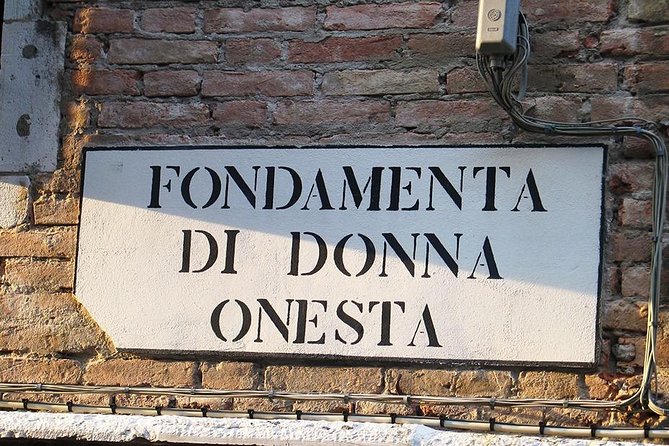
You begin in Santa Croce, at Ponte Della Donna Onesta, a stop named The honest woman. It is a clever entry point, because it frames the topic with a paradox. The story is about courtesans, yet the location carries a name that sounds almost moral.
From here, the tour focuses on how some courtesans lived and worked in this area. That detail helps you understand Venice as a place with long ties to regulated social life. This is not a wandering ghost-story tour. It is anchored to actual places where real people lived their daily routines.
Two practical notes for you at this stop. First, keep your eyes up as well as on the ground. Venice names and shapes often hold the clue for what you just heard. Second, be ready for a tone shift from the classic “Venice sightseeing” mindset. You are there to learn how the city saw and managed this world.
You do not need any special background. The tour is built to explain differences, not just drop names and dates.
Rialto at Fondamenta del Buso: Merchants, Docks, and Meaning
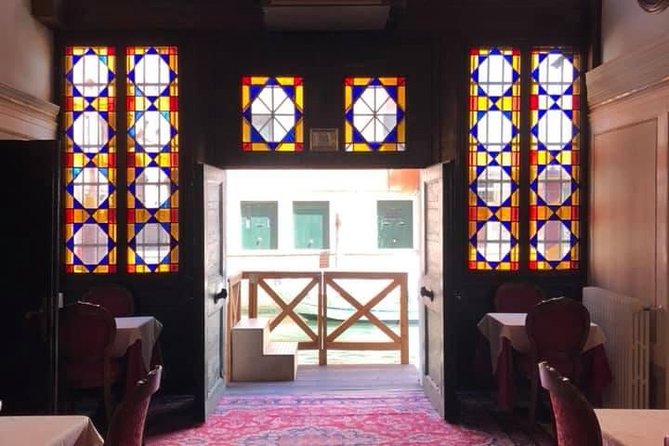
Next you head toward Ponte di Rialto and Fondamenta del Buso. This part of the walk is where the city-as-a-port feeling becomes very real.
Fondamenta del Buso is presented as a little dock where clients would take a gondola ferry to reach the red light district. Even if you know Venice is about water, that specific image gives you a practical sense of movement. This was not random. It had routes, timing, and a physical geography.
The tour also plays with language. In Venetian, the word buso has the meaning of female sex. Hearing that explained in context is one of those “now I see it” moments, because it turns a name you would normally ignore into a clue about how locals talked about bodies and desire without calling everything by the same words.
Value for your trip planning: if you are spending only a short time in Venice, you often focus on Rialto as a landmark. This tour uses Rialto as a hub for understanding how Venice’s economy and behavior met at the waterline.
San Polo, the Bridge of Tits, and Carampane
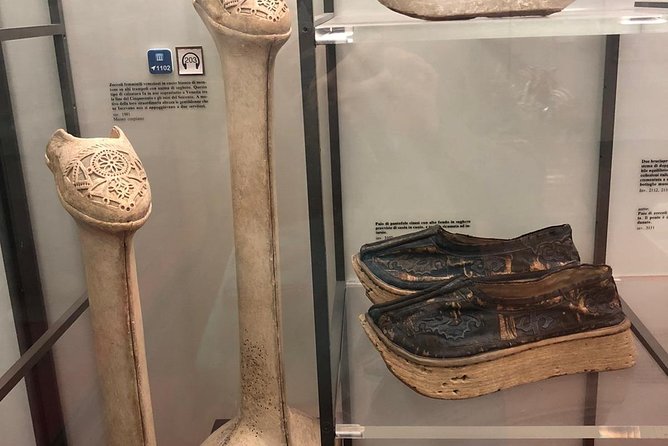
San Polo brings you to one of Venice’s notorious bridge names, the Tits Bridge. It is paired with the Carampane area name, and the stories focus on how brothels and prostitution were nearby.
The point here is not shock for shock’s sake. The tour uses those names as a map of what the city tolerated, allowed, and handled. When a bridge has such a direct nickname, it tells you something about the social reality of the streets around it.
In this stop, the guide connects the area to the presence of brothels and the way prostitutes came and went in the local flow. That helps you picture courtesans not as distant figures but as people moving through a lived urban system.
One consideration: this is where the walking may feel more “urban story” than “art and architecture.” If you want only Renaissance masterpieces, you might find this section a bit blunt. If you want the full human Venice, it is one of the most memorable parts.
La Bauta and Courtesan Fashion: How Clothes Became Power
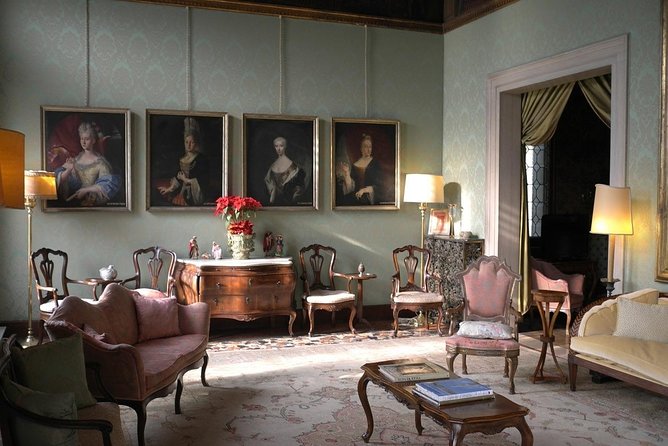
The final stop focuses on La Bauta and the role of fashion in the courtesan world. This is where the tour turns from geography into visual culture.
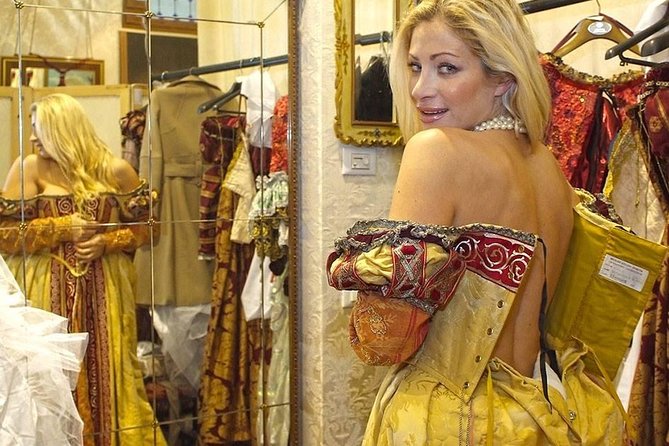
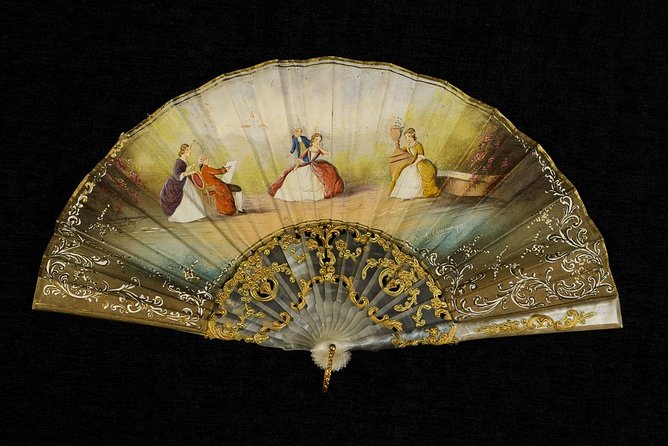
You will hear that courtesans were charming and elegant, and that they helped set fashion trends. The details are specific: bright-colored costumes, a bold décolleté, and richly embroidered sleeves. You also learn about accessories like a bavero and a neck piece made from materials described in the tour. The overall message is that clothing was not only attraction, it was a kind of signal.
In a city where appearances could open doors, presentation became a tool. Courtesans needed to be seen, but also to manage how they were perceived. That is why fashion belongs in a history of influence. It is practical too, because it shows you how a person could project status without holding a formal civic title.
This stop is also good for photography and remembering. Even if you do not take many photos, the mental image sticks because it is concrete. You leave with a visual vocabulary for what the tour taught you about social rank and public identity.
Timing, Walking Rhythm, and What You Might Want to Pair It With
The tour runs about 3 hours 15 minutes. That length is long enough to give you context and short enough to keep your energy. Still, Venice walking can be tiring, especially if you combine it with another packed day.
I suggest you plan your schedule so you are not trying to cram museum sprints immediately after. This is a story-driven walk. The best results come when you let the information settle and you can look again at streets you just learned to read.
You also have some built-in conveniences. Pickup is offered, and there is a mobile ticket. If you are arriving from another area or you just want less time figuring out meeting points, pickup can make the whole day smoother.
And because it is a private tour for your group, you are not stuck with the pace of strangers. That means more time for explanations, and fewer moments where you miss a detail because the group got ahead.
Price and Value: When $180.58 Feels Fair
At $180.58 per person, this tour is not a budget stroll. It can still feel like good value, because what you are paying for is interpretation plus specific location storytelling.
Here is how to think about it. First, the tour is private, not a big open-group format. Private tours cost more because your guide time is dedicated. Second, you get multiple themed stops tied to real places, Santa Croce, Rialto, and San Polo, plus the fashion-focused final stop at La Bauta. Third, admission tickets are listed as included at several stops, with Santa Croce noted as free.
You also get mobile ticket convenience and group discounts. That last part is worth asking about when you are booking. If you are traveling with someone, the value can rise quickly because you share the experience without losing the private feel.
If your priority is classic sights only, you might decide the price is not worth it. If your priority is Venice as a whole society, including its darker, regulated sides, then this is exactly the kind of tour that pays off.
Who This Courtesan Tour Suits Best
This experience fits best if you like history with human faces. You want to know how people lived, what they wore, how the city talked about it, and how rules shaped everyday reality.
You will likely enjoy it if:
- you enjoy walking tours that use names, bridges, and docks as evidence
- you are curious about the Venetian Republic beyond art galleries
- you want a focused topic instead of a random highlights sweep
- you appreciate fashion as a form of social power
You might skip it if:
- you are uncomfortable with mature topics like brothels and client activity
- you only want major monuments and museum stops in a single afternoon
Should You Book This Courtesans Tour in Venice?
I would book it if you want Venice to feel specific and slightly surprising. The route through Santa Croce, Rialto, and San Polo gives you an angle most visitors miss, and the fashion stop at La Bauta turns the theme into something you can picture.
If you are sensitive to mature themes, make sure you know what you are signing up for. Otherwise, this is a strong choice for anyone who loves Venice as a living city with complicated social systems, not just as scenery.
If you have limited time, do not try to make it your only “Venice thing.” Pair it with a slower evening walk afterward so you can look at the canals and bridges with new context.
FAQ
How long is the courtesans walking tour?
It is approximately 3 hours 15 minutes.
How much does it cost per person?
The price is $180.58 per person.
Is this tour private?
Yes. It is listed as a private tour or activity, with only your group participating.
Do they offer pickup and mobile tickets?
Pickup is offered, and you get a mobile ticket.
Are service animals allowed?
Yes, service animals are allowed.
What is the cancellation policy?
Free cancellation is available. You can cancel up to 24 hours in advance for a full refund, and cancellation rules apply if you cancel later than that.
Lately added around Venice



Historical Tours, compared.
Venice’s Best: Basilica, Doge’s Palace, Gondola & History Gallery
Read our review →
Bell Tower & St Mark’s Square History Gallery Ticket
Read our review →
Basilica, Doge’s Palace, History Gallery & Bell Tower Option
Read our review →
St. Mark’s Cathedral Priority Guided Tour & History Gallery
Read our review →Browse the lists this tour appears in