Reviewed · VENICE
Gay Life in Venice from the Middle Ages to Present Days
Venice has a queer trail, but with teeth. This 2-hour walk with Valerio Coppo threads LGBTQ life through real corners of the city, from medieval anti-cruising rules to later hangouts and pop culture. I love the small-group size, because you actually get time to ask questions, not just hear facts. I also like how the stops stay specific, pointing you to exact buildings tied to stories. One possible drawback: the subject matter includes persecution and harsh punishments, so go in with emotional bandwidth.
You’ll move from Campo San Giacomo dell’Orio toward Ponte di Rialto, hitting a tight chain of plazas, churches, and canal-side streets where Venice tried to regulate sexuality. The tour keeps things practical and walkable, and it’s offered in English with a mobile ticket.
It’s also the kind of tour that blends the dark stuff with surprising Venice details. One minute you’re at a church under surveillance, the next you’re talking about a late-Baroque palace that later hosted a music video location. If you want a purely light, feel-good stroll, you might find it heavier than expected.
In This Review
- Key Points You’ll Appreciate
- A Two-Hour Walk Through Venice’s LGBTQ Survival Stories
- Campo San Giacomo dell’Orio, Where Poetry Becomes Evidence
- Fondamenta del Megio and the Power of the Written Record
- Santa Maria Mater Domini and the Surveillance Logic of 1488
- Ponte delle Tette, a “Red Light” Walk With Cat Masks
- San Cassiano and Rolandina Roncaglia’s Terrible Ending
- Campo San Cassiano, Opera Beginnings and Casanova’s Footsteps
- Canal Grande Side Streets: Calle dell Ogio to the Rialto Announcements
- Ruga dei Oresi, a Pharmacy That Could Kill
- Palazzo Ca’ Zenobio, Baroque Rooms to a Madonna Location
- San Sebastiano and Why Art Can Point to Identity
- San Marco’s Bell Tower, the Cheba Cage, and Public Humiliation
- Harry’s Bar and the Modern Social Map
- Riva degli Schiavoni and Love Stories With Names Attached
- Hotels and Palaces Where Desire Left Paper Trails
- San Martino di Castello and the Long Reach of Laws
- Price and Value for a Two-Hour, English-Led LGBTQ Walk
- Who This Tour Is Best For
- Should You Book Gay Life in Venice? My Take
- FAQ
- How long is the Gay Life in Venice tour?
- What is the price per person?
- Where does the tour start and end?
- Is the tour offered in English?
- How large is the group?
- Do I need to bring a printed ticket?
- Are admission tickets included for the stops?
- Is the tour fully refundable if plans change?
- Is there an access fee for day visitors from outside Venice?
- Can I bring a service animal?
Key Points You’ll Appreciate
- A true site-by-site history of LGBTQ life, from medieval policing to later social spaces
- Cat masks and street culture tied to the nickname gnaghe and public street harassment
- Rolandina Roncaglia at San Cassiano, one of the earliest known trans stories in Italy
- Casanova’s presence in the city’s records, including spying for inquisitors
- San Marco’s cheba iron cage and public punishments, explained plainly where they happened
- A small group cap (listed as up to eight travelers, with a stated max of 10), so your questions land
Weighing this against the rest? These sit a few bridges away:
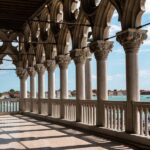
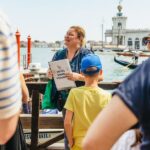
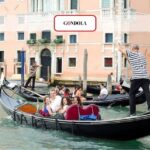
A Two-Hour Walk Through Venice’s LGBTQ Survival Stories
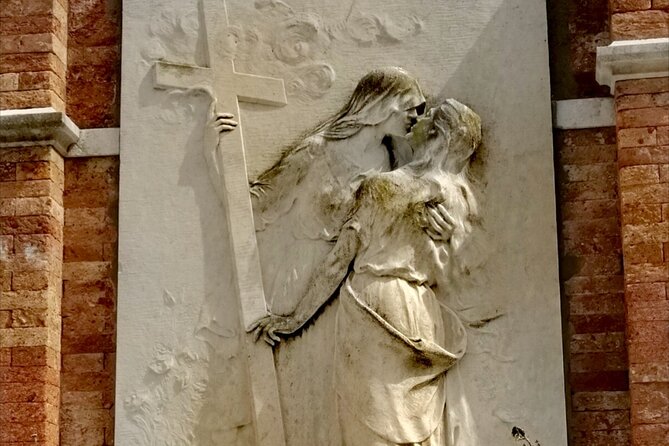
This is a compact tour, about 2 hours, built around many short stops. Expect walking, frequent place names, and a guide who connects them into one story you can picture after you turn the corner.
The big value here is focus. Instead of general “Venice was accepting, or not,” you get local specifics, like where authorities watched church arcades in 1488, or where an iron cage on San Marco became part of public humiliation. You also get later Venice layers, like the social gravity of Harry’s Bar and the pop-culture link at Palazzo Ca’ Zenobio.
Because it is small group, you can ask for extra context without the whole group waiting. And because it’s in English with a mobile ticket, you spend less time figuring out logistics and more time reading the city.
One more practical note: the tour covers heavy topics. You may hear the language used by authorities, including references to punishment and execution. I’d treat it like a history tour with an emotional weight, not a casual “fun facts” walk.
Campo San Giacomo dell’Orio, Where Poetry Becomes Evidence
You start at Campo San Giacomo dell’Orio, and the mood sets quickly. This stop ties a poet to Venice’s LGBTQ literary thread, describing a person who came out in the early 1970s and later died by suicide. The guide frames the poet’s work as among the first in Italian poetry to explore homosexuality.
I like this opening because it reminds you this story is not only about secret meetings and laws. It’s also about language, art, and the personal costs people paid when society refused to make space.
You’ll also get a sense of how Venice neighborhoods preserve memory. Even when you cannot see anything “related” on the surface, the guide helps you connect the street to the person.
Fondamenta del Megio and the Power of the Written Record
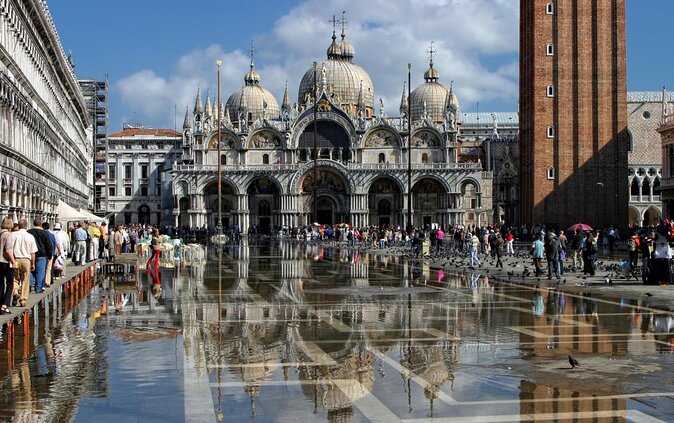
At Fondamenta del Megio, the tour shifts into historians and the way Venice documented itself. You’ll hear about a Venetian historian from the 15th to 16th century and his major chronicles, Diarii, meant to be a full history of Venice before another writer was officially appointed.
The story is not just “this man wrote history.” It includes an extra edge, with the guide explaining why his reputation for kindness was not the compliment it sounded like. It’s a reminder that documentation is political, even when it wears a polite face.
If you like history that shows the mess behind the record, this stop works well. If you want only biographies, you might still find it useful, because it teaches you how to read the past like a real place, not a museum label.
The same hours, spent on the water instead:
- Boat Trip: Glimpse of Murano, Torcello & Burano Islands
★ 4.3 · 15,699 reviews - Venice: La Fenice Opera House Entry Ticket with Audio Guide
★ 4.6 · 11,742 reviews - Murano & Burano: Boat Tour with Guide & Glass Factory Visit
★ 4.3 · 10,716 reviews - Venice: Burano, Torcello & Murano Boat Tour w/Glassblowing
★ 4.4 · 10,245 reviews - Murano, Burano and Torcello Half-Day Sightseeing Tour
★ 3.5 · 7,928 reviews
Santa Maria Mater Domini and the Surveillance Logic of 1488
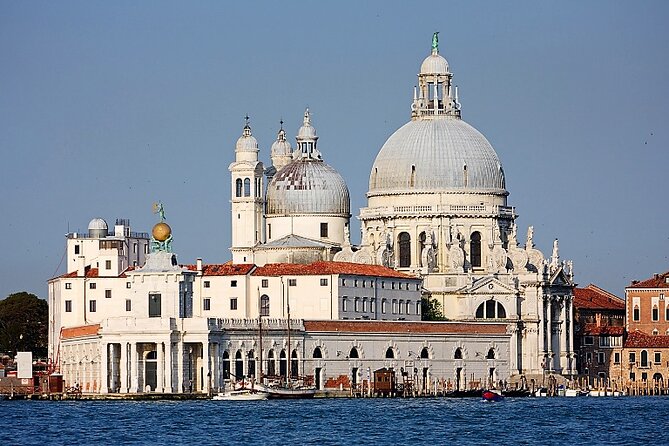
At Chiesa Santa Maria Mater Domini, you step into the architecture of control. Public authorities placed the church’s arcades under surveillance to prevent sodomites from cruising and meeting there in 1488.
This stop is eerie because it ties the built environment to policing. Venice did not only punish people after the fact. It tried to reshape movement and visibility in advance.
One practical advantage of this tour style: you are not stuck inside. You’re oriented by the guide, and you can look around the space, then connect that geometry to why arcades mattered for secrecy.
Ponte delle Tette, a “Red Light” Walk With Cat Masks
Ponte delle Tette is where the tour turns loud and visual. The area is described as the 15th-century red light district par excellence. Authorities, according to the tour story, encouraged prostitutes to display their wares as a way to prevent sodomy.
Then comes the street-culture detail: men dressed as women, called gnaghe, covering their faces with cat masks and making plaintive calls like cats in heat. The guide explains that these calls turned proposals into something explicit for passers-by.
This is not subtle content. If you are the type who prefers distance from sexual descriptions, this stop may feel too direct. But if you want an honest picture of how Venice mixed desire, disguise, and public performance, it’s one of the most memorable places on the route.
San Cassiano and Rolandina Roncaglia’s Terrible Ending
At Chiesa di San Cassiano, the tour focuses on Rolandina Roncaglia, described as the first trans person we know of in Italy. The story says she was born Rolandino, lived as a woman for seven years in a house nearby, and supported herself by selling eggs around the local market. After that, she became a prostitute.
Then the tour moves to discovery and punishment: in 1355 she was discovered, and the guide describes her death as terrible.
I appreciated how this stop does not treat gender identity as a “curiosity.” It centers a real person, with daily survival details and consequences. It’s also a reminder that in many eras, visibility carried a price even when people lived ordinary routines.
If you only want light cultural history, you may need a breather here. Otherwise, this stop is a core emotional point of the tour.
Campo San Cassiano, Opera Beginnings and Casanova’s Footsteps
At Campo San Cassiano, the guide turns to theater and early opera claims. The area is tied to a theater that was said to be the first public opera house in the world, and it’s also connected to homosexual encounters.
You also hear about Giacomo Casanova and a different side of him. The tour says that when Casanova worked as a spy for the state inquisitors in the 18th century, he pointed to these kinds of encounters in the context of surveillance and state interest.
This part matters because it shows the same Venice streets could host art, gossip, and state control. It also keeps the narrative from becoming a simple “persecutors vs victims” story, because individuals like Casanova complicate the picture.
Canal Grande Side Streets: Calle dell Ogio to the Rialto Announcements
Next comes Calle dell Ogio, a short stretch along Canal Grande. The guide describes a famous writer and pioneer of the British gay movement who met a 19-year-old porter there. The romance element is brief but vivid, and it brings the focus back to human connection.
Then you move to Campo San Giacomo di Rialto, near the Rialto market area, where public announcements used to take place. The tour explains that a statue served as a podium for proclamations, including bans related to sodomy. An officer reportedly read names of those sentenced to death who stood on a block at the end of its staircase, right beside one of the most frequented market zones.
This is one of the hardest stops because the space itself turns into an instrument of fear. Venice’s marketplace life is usually about food and commerce, but here it becomes about punishment performed in public sight.
If you want to understand how law worked socially, not just legally, this is where you learn it.
Ruga dei Oresi, a Pharmacy That Could Kill
At Ruga dei Oresi, the tour mentions a suspicious pharmacy used by sodomites for meetings. The guide adds that even getting close could mean condemnation to death.
That “even getting close” detail changes how you think about risk. It suggests authorities were not only chasing behavior. They were policing proximity, rumor, and association.
This stop also helps you see how small business corridors and side lanes in Venice could function as coded meeting routes. The city’s density and maze-like layout were not only romantic. They were also dangerous.
Palazzo Ca’ Zenobio, Baroque Rooms to a Madonna Location
At Palazzo Ca’ Zenobio, you get a turn from street-level policing to architecture and cultural life. The palace is described as one of Venice’s major late-Baroque design examples, both in outward form and in interior decor.
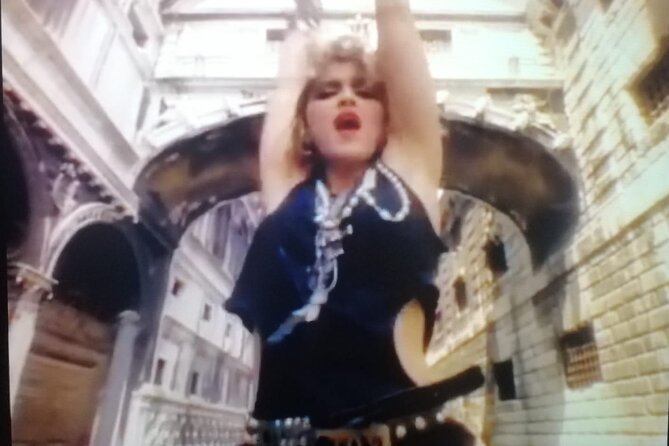
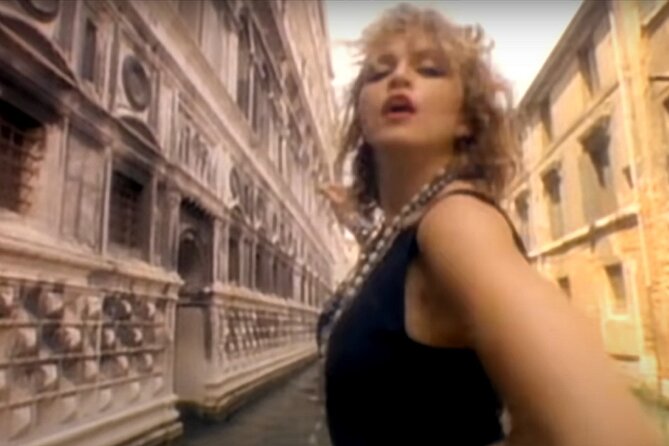
The tour also covers later use. Throughout the 18th century, it became a venue for intense intellectual life. Since 1993, after restoration, it serves as a research center for Armenian studies. And then the pop-culture twist: it was the main indoor location for Madonna’s Like a Virgin video in the 1980s.
I love this kind of stop because it proves the city’s LGBTQ angles do not stop at the past. Even when you land in a contemporary cultural reference, you still get a real building story with a clear timeline.
San Sebastiano and Why Art Can Point to Identity
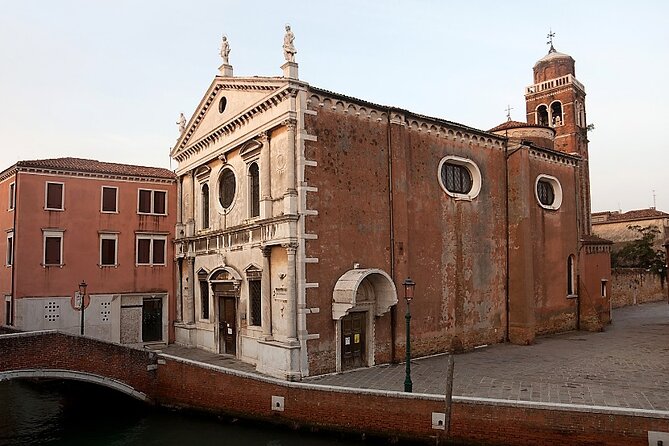
At Chiesa di San Sebastiano, the guide frames Venice’s art world through a symbolic lens. The church is described as a leading art venue thanks to a cycle of paintings by Paolo Veronese, and the tour notes Veronese is buried here.
The guide also explains why San Sebastiano is considered the patron saint of the LGBT community worldwide. Even if you come in without that knowledge, the stop connects symbolism, pilgrimage thinking, and public meaning to a famous art space.
This is a good change of pace after the darker legal stops, as long as you stay mentally open. The symbolism is part of how identity communities found language across eras.
San Marco’s Bell Tower, the Cheba Cage, and Public Humiliation
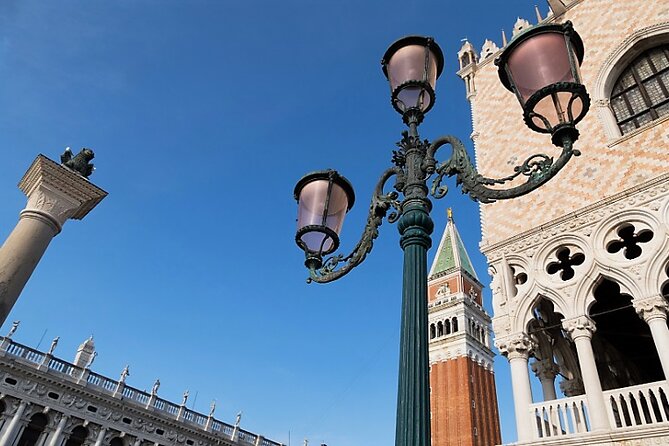
At Campanile di San Marco, the tour describes an iron cage called cheba dating back to the 15th century, with use also in the 16th century. The guide says it was used to expose sodomite priests to bad weather and crowd taunts below.
Then you step into Piazzetta San Marco, between two columns where executions took place up to the middle of the 17th century, as Casanova also confirmed.
This pairing is powerful because the violence is tied to place and crowd dynamics. It helps you understand that punishment was not only about ending lives. It was about staging shame in a civic theater.
If you are sensitive to harsh topics, pause here. The air around San Marco can feel bright, but the story is not.
Harry’s Bar and the Modern Social Map
At Harry’s Bar, the tone shifts toward modern gay tourism history. The tour describes it as a famous bar where gay travelers gathered up to the 1970s. It adds an extra bit of intrigue: the founder said it was only rumors.
The reason this stop works is simple. It connects the city’s long memory to a place you can still visit. You are not only studying persecution. You’re tracing how communities built social refuge later.
Even if you do not drink, it’s worth it for the story and the sense of what Venice offered people who needed a room to breathe.
Riva degli Schiavoni and Love Stories With Names Attached
At Riva degli Schiavoni, the guide takes you to a palace tied to a love story staged between a Venetian rower and a famous German writer. It’s another reminder that performance and romance, not only law, shaped Venice’s LGBTQ narrative.
This stop is shorter, but it helps you keep the big picture. Venice’s queer story was not just hidden. It often lived in art, theater, staged romance, and public reputation.
Hotels and Palaces Where Desire Left Paper Trails
The route continues through more private spaces and personal stories.
At Calle del Dose da Ponte, the tour says a hotel was home to a famous lesbian American painter who collected love affairs with both men and women. No name is given in the tour description you provided, but the point is clear: personal relationships shaped how women used Venice as a place to live and move.
At Palazzo Ca’ Dario, the guide explains it is famous for a series of unfortunate events that happened to some owners, many described as gay. This stop is more rumor-driven, so you should treat it as story plus atmosphere rather than a single documented event.
At Palazzo Mocenigo, you hear about a British poet living there, known for poetry and also described as having a bisexual component in a complex sentimental and sexual life. Again, the focus is on how identity showed up through living choices and social relationships.
If you like human-scale history, these palace stops are satisfying because they feel like the “where people stayed” side of LGBTQ Venice, not only the “where authorities watched” side.
San Martino di Castello and the Long Reach of Laws
The final stop is Chiesa Parrocchiale di San Martino di Castello. The tour says that in ancient times the church had a porch that a law of 1450 listed among places of the night where sodomites cruised.
That “long reach” idea sticks with you. Even after people vanished and buildings changed, Venice kept a legal memory of what it feared. The tour closes by showing that the city’s LGBTQ past is not just a collection of anecdotes. It’s also a record of official anxiety.
Price and Value for a Two-Hour, English-Led LGBTQ Walk
At $92.63 per person, you are paying for a small, guided, English-language route that links many locations into one coherent story. The tour is designed for about 2 hours and uses a mobile ticket, so you spend less time on paper and more time on the streets.
The small group cap matters for value. Up to eight travelers is listed in the tour highlights, and a stated maximum of 10 travelers is listed in the additional info. Either way, it’s not a giant group. That means the guide, Valerio Coppo, can handle questions, adjust the pace, and explain local context as you walk.
Also, the stops are described as admission ticket free. That reduces extra costs and keeps you from feeling nickel-and-dimed for every church corner.
Booking-wise, it’s described as commonly booked about 25 days in advance. If you’re traveling in high season, I’d plan ahead, because this kind of theme tour can fill early.
If you are traveling with a service animal, the tour states service animals are allowed. And the description says it’s near public transportation, which is helpful for getting to the start at Campo San Giacomo dell’Orio and finishing near Ponte di Rialto.
One more practical heads-up: if you are staying outside Venice and visiting for the day, you might need the €5 access fee on certain dates. The tour points you to the city page for exact days and exemptions. You’ll want to check that list before you go.
Who This Tour Is Best For
This tour fits you if you want Venice in a different light, not the standard postcard checklist. It’s ideal for people who enjoy street-level history, want to connect names and dates to actual places, and are comfortable with serious themes.
It also suits you if you like guides who tell stories. The reviews and guide style around Valerio Coppo emphasize clear communication and warm pacing, with lots of pride in showing Venice from angles most people miss.
What might not fit as well is if you strongly prefer light, playful content only. This route includes surveillance details, punishments, and executions. It is not written as a “party version” of LGBTQ history.
And if you want more explicit or more detailed “spicy” storytelling, you should know the tour balances many angles and may not focus on the most graphic details. Asking your guide what tone you want early can help set expectations.
Should You Book Gay Life in Venice? My Take
I’d book it if you want a Venice walk that actually has stakes. The combination of medieval laws, church surveillance, cat-mask street culture, and San Marco’s public punishment sites gives you a deep sense of how the city tried to control love and how people kept making lives anyway.
I’d also book it if you like a guide who is a storyteller, not just a reciter. With Valerio Coppo leading and an interpretive guide included, the experience feels designed, not improvised. The small group size is a real comfort too, because you are not lost in a crowd.
Skip it only if you want an upbeat, minimal-controversy tour. This is history with consequences, and it expects you to handle it.
If you choose to go, come with comfortable shoes and a mindset for respectful listening. Then Venice will feel less like a picture book and more like a lived place, full of complicated people.
FAQ
How long is the Gay Life in Venice tour?
It runs for about 2 hours.
What is the price per person?
The price is $92.63 per person.
Where does the tour start and end?
It starts at Campo San Giacomo dell’Orio and ends at Ponte di Rialto.
Is the tour offered in English?
Yes, it is offered in English.
How large is the group?
The tour highlights say it is capped at eight travelers, and the additional info lists a maximum of 10 travelers.
Do I need to bring a printed ticket?
No. A mobile ticket is provided.
Are admission tickets included for the stops?
The tour description lists each stop with admission ticket free.
Is the tour fully refundable if plans change?
Free cancellation is available if you cancel up to 24 hours in advance for a full refund.
Is there an access fee for day visitors from outside Venice?
On certain dates, visitors staying outside Venice who are visiting for the day may have to pay a €5 access fee. The tour points you to the city page for exact dates and exemptions.
Can I bring a service animal?
Yes. Service animals are allowed.