Reviewed · TOURS
Il meglio di Venezia in un tour dei punti più e meno noti
Venice without the usual script. This guided walk mixes famous landmarks with everyday calli, campi, inns, alleys, and shops, so you see the city as Venetians do.
I especially love how the route pairs great photo viewpoints with real city texture. You pause at places like the Scala Contarini del Bovolo and Ponte dell’Accademia, but you also pass homes and facades linked to names like Mozart and Goethe.
One possible drawback: expect a fair amount of walking on uneven stone. It is not suitable for people over 95, so plan your pace if you have mobility issues.
In This Review
- Key Highlights You’ll Care About
- Meeting at St Mark’s Square: How to Find the Right Columns
- From Rialto Area to Scala Contarini del Bovolo: Where Venice Turns Vertical
- Palazzo Contarini del Bovolo and the Mozart and Goethe Stops
- Teatro La Fenice Outside: A Classic Stop Without the Ticket Stress
- Ponte dell’Accademia and Santa Maria della Salute in the Background
- Dorsoduro Free Time: Real Streets, Not Just a Walking Parade
- Campo Santa Margherita Break and Food Tasting
- Scuola Grande di San Rocco: Why a Pass-By Still Feels Meaningful
- Ending at Ponte degli Scalzi: A Calmer Finish Line
- Price and Value Around $58: What You’re Paying For
- Language Options and Local-Contact Moments That Make It Feel Human
- Who Should Book This Venice Walk, and Who Should Pass
- Should You Book This Tour?
- FAQ
- Where is the meeting point for the tour?
- Where does the tour finish?
- What languages are the live guided tours offered in?
- Is the tour walking-heavy?
- Will I have time to eat during the tour?
- Can I cancel for a refund?
- How flexible is booking?
Key Highlights You’ll Care About
- Meeting at St Mark’s Square columns so you start in the right place fast
- Scala Contarini del Bovolo with a scenic stop that actually helps your photos
- Teatro La Fenice from the outside for context without the ticket stress
- Ponte dell’Accademia views with Santa Maria della Salute in the background
- Campo Santa Margherita break and food tasting to recharge like a local
- Chance encounters with shopkeepers and craftspeople that add texture beyond monuments
Weighing this against the rest? These sit a few bridges away:
Meeting at St Mark’s Square: How to Find the Right Columns
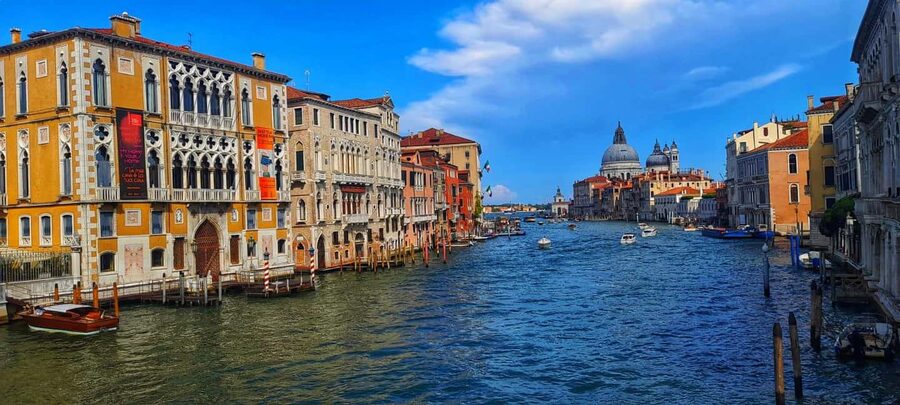
Your tour begins at the meeting point in St Mark’s Square, not somewhere you have to guess. Look for the middle of the two columns: one holding the statue of the Venetian lion, the other supporting the statue of St Todaro. It is a clear landmark setup, which matters in Venice, because you can lose time quickly just finding the right spot.
From there, the walk flows into the areas that many first-time visitors miss because they are too focused on rushing from one “must-see” to the next. You are moving through calli and along canal and church-adjacent scenery, where the city still functions as a neighborhood, not just a postcard.
A small practical note: having a working mobile connection can help, since you might need to stay in touch while you’re meeting and repositioning.
From Rialto Area to Scala Contarini del Bovolo: Where Venice Turns Vertical
The route heads toward the Rialto area and then to one of Venice’s most visually rewarding structures, the Scala Contarini del Bovolo. Even if you only get a photo stop, you’ll feel why this place is famous for the “outside-the-curve” experience. The building stands out because it is built to be seen from different angles, and the approach through surrounding streets helps you understand how Venice stacks views on top of each other.
What I like about this part of the tour is that it is not just sightseeing. You also get a short guided sense of place, so you can look longer without getting lost in details. You’ll be walking through the calli, then pausing for the scenic views on the way, which is the kind of pacing that keeps photos from turning into a sprint.
This is also where the tour starts to lean into the theme that makes it worth booking: historical Venice, plus daily Venice. You will see the city’s grand surfaces, but you’ll also be surrounded by the kinds of streets Venetians actually use.
Palazzo Contarini del Bovolo and the Mozart and Goethe Stops
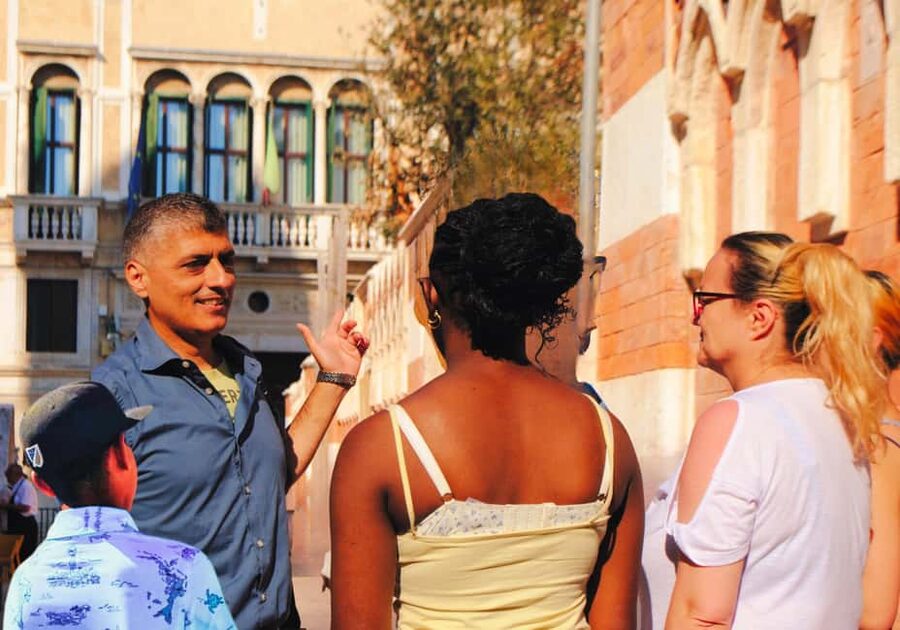
Right around this area, the tour continues with the Palazzo Contarini del Bovolo stop, where the experience stays strongly visual. You get time to photograph and then move on through the neighborhood lanes, not just a straight line between big monuments.
The tour also includes passing points tied to well-known cultural figures. You’ll walk through calli that connect to stories of artists and writers, including Mozart and Goethe, who are linked to stays in buildings along the route. You don’t need to know everything about them to enjoy the payoff. The value is in the context your guide provides as you see the stonework and street layout, so those names stop feeling like trivia.
A practical benefit for you: the “pass by” stops are efficient. You get context while you’re already moving, so you aren’t spending your entire day waiting in place. If you want Venice to feel like a lived-in maze with meaning, this is the right tempo.
The same hours, spent on the water instead:
- Boat Trip: Glimpse of Murano, Torcello & Burano Islands
★ 4.3 · 15,699 reviews - Venice: La Fenice Opera House Entry Ticket with Audio Guide
★ 4.6 · 11,742 reviews - Murano & Burano: Boat Tour with Guide & Glass Factory Visit
★ 4.3 · 10,716 reviews - Venice: Burano, Torcello & Murano Boat Tour w/Glassblowing
★ 4.4 · 10,245 reviews - Murano, Burano and Torcello Half-Day Sightseeing Tour
★ 3.5 · 7,928 reviews
Teatro La Fenice Outside: A Classic Stop Without the Ticket Stress
Next you reach Teatro La Fenice. You are not going inside here, which is honestly smart if your goal is to keep the day moving and still understand what you’re seeing. The stop is set up as a photo and pass-by moment, so you can get the look and the feeling of the theater’s role in Venice without adding line time or changing your day plan.
Why this works: the theater is one of those Venice icons where the building itself tells you a story. Even from the outside, you can connect it to the idea of Venice as a city where arts, public life, and architecture overlap. You’re also positioned in a part of town where walking routes keep revealing new angles, so the theater does not feel isolated.
For photographers, the timing is brief but helpful. For people who just want to understand the city quickly, it’s a clean stop that doesn’t swallow your schedule.
Ponte dell’Accademia and Santa Maria della Salute in the Background
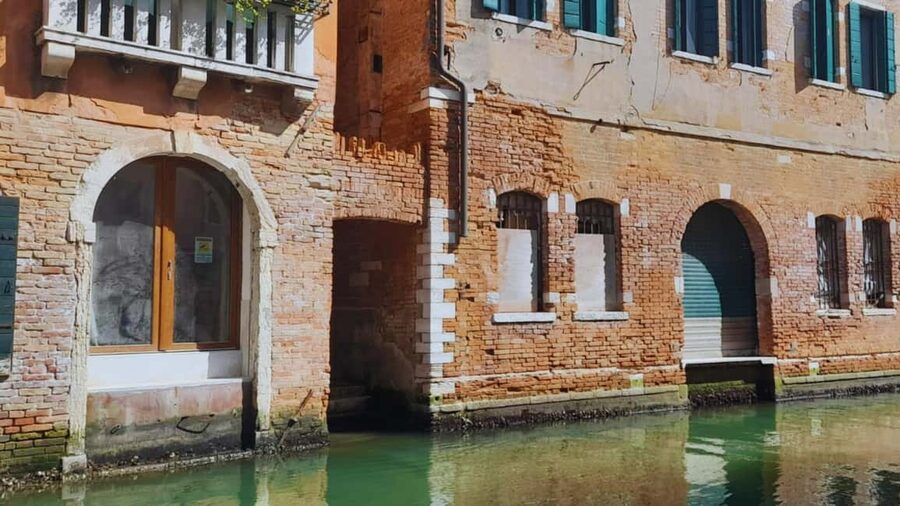
Then comes one of the most satisfying “put it together in your head” viewpoints: the Ponte dell’Accademia stop. You get a photo stop and visit time, which is perfect because this bridge is a visual coordinator. It helps you connect what you’re looking at with how the city is arranged across the water.
One standout detail you’ll appreciate: from here you can admire the church of Santa Maria della Salute in the background. That view does more than look good in photos. It helps you understand Venice’s sightlines, especially the way major religious landmarks anchor your orientation as you move.
This is a great point in the tour for you to slow down mentally, even if your feet are still moving. You’ll start to recognize how Venice frames the “important” structures between canals, streets, and rooftops.
Dorsoduro Free Time: Real Streets, Not Just a Walking Parade
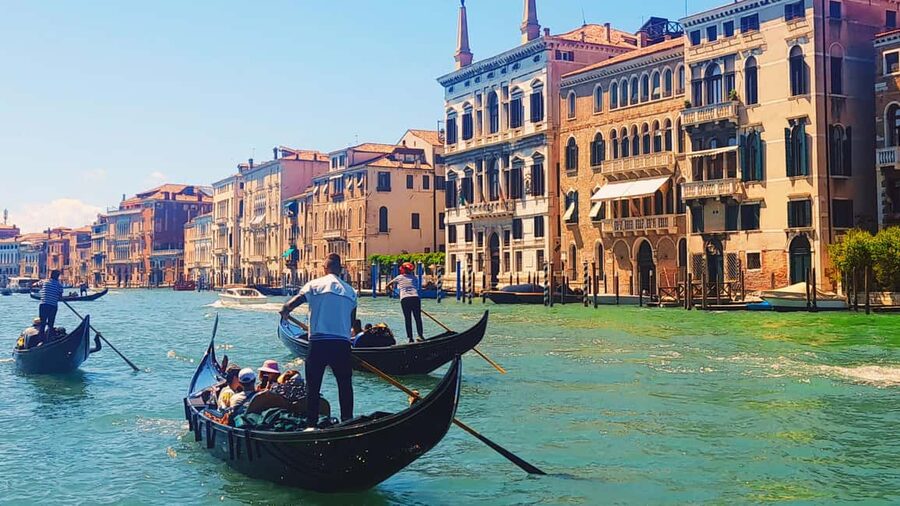
After the bridge stop, you head into Dorsoduro for a photo stop and free time. Dorsoduro matters because it has a different atmosphere than the most crowded core. The tour uses this time wisely: you are not rushed through another mandatory checklist.
Instead, you get breathing room to absorb what changes when you get slightly off the main carousel. This is where Venice starts to feel more like neighborhoods and everyday life, the exact vibe that the tour highlights from the start.
If you’re hungry or you just need a minute away from crowds, use this segment to reset. Look for small street corners and shop windows. Venice is full of tiny details, but you’ll only notice them when you slow down enough to let them register.
Campo Santa Margherita Break and Food Tasting
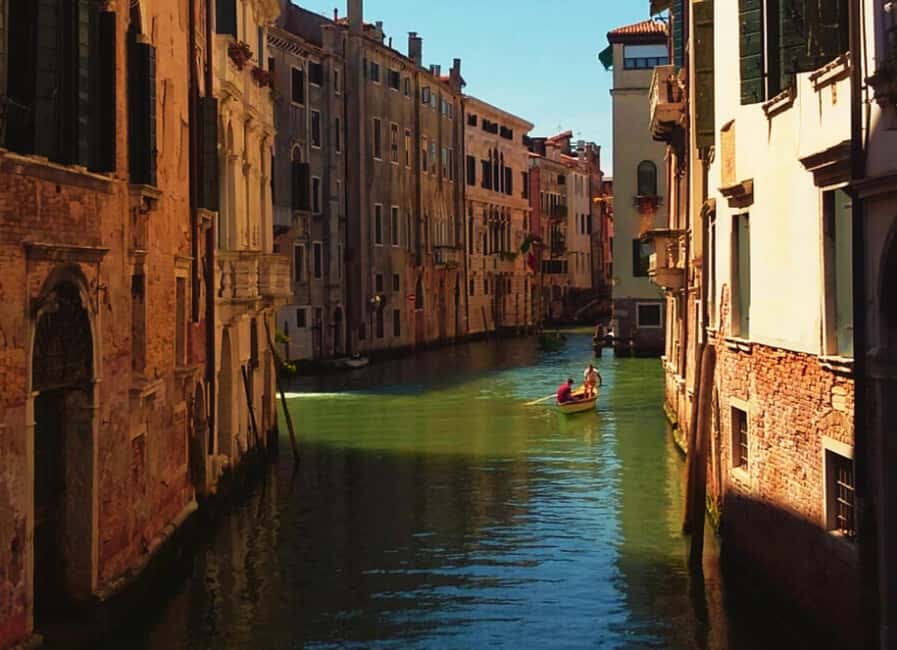
Then you reach Campo Santa Margherita for a longer break. This is one of the best “you’ll thank yourself later” parts of the day, because a walking tour in Venice works only if you build in recovery time.
Here you’ll get a break time, photo stop, and visit time, plus free time and walking. The highlight is food tasting, which is the most practical part of the experience if you want Venice to go beyond monuments. Instead of treating food as an afterthought, the tour gives you a structured chance to sample something while you’re in the flow of the day.
You’ll also enjoy how this area balances energy and human scale. It is not all grand buildings and canal backdrops. It’s campi life, people moving through, and the kind of setting where you can watch Venice as a real city.
Tip for you: keep your tasting flexible. If something smells amazing but you feel too full already, skip it. Venice food is part of the fun, but the best meals come after you’ve paced the day.
Scuola Grande di San Rocco: Why a Pass-By Still Feels Meaningful
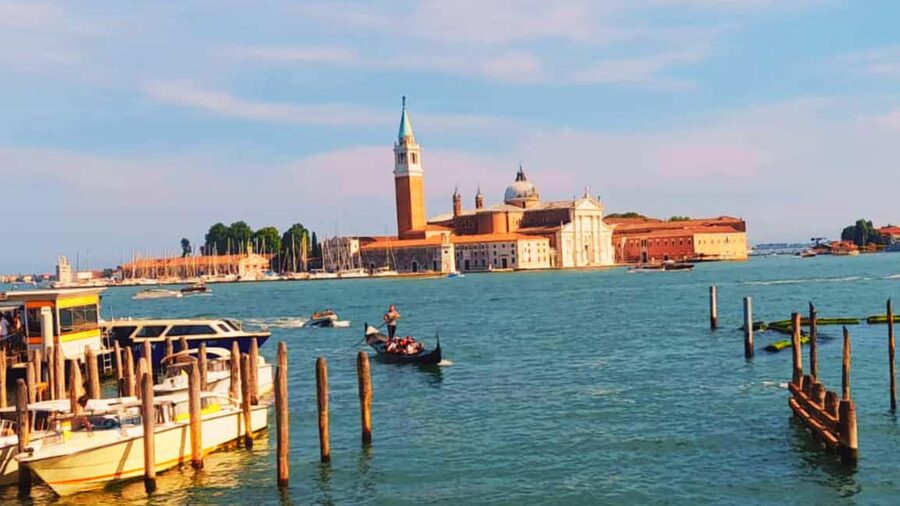
Next is Scuola Grande di San Rocco, a pass-by moment with a photo stop. This is a great example of how the tour handles “big-ticket” architecture without turning it into a long museum marathon.
Even with limited time, you get something useful: you’re not just seeing a wall and moving on. Your guide’s explanations help you connect what you’re looking at with Venice’s social structure, where religious and civic groups mattered. That context is what makes a short stop feel worthwhile instead of rushed.
For people who love architecture and symbolic places, a pass-by can still be satisfying if you understand why the building exists. For people who just want to keep moving, it works because it doesn’t interrupt the rhythm you’ve built.
Ending at Ponte degli Scalzi: A Calmer Finish Line
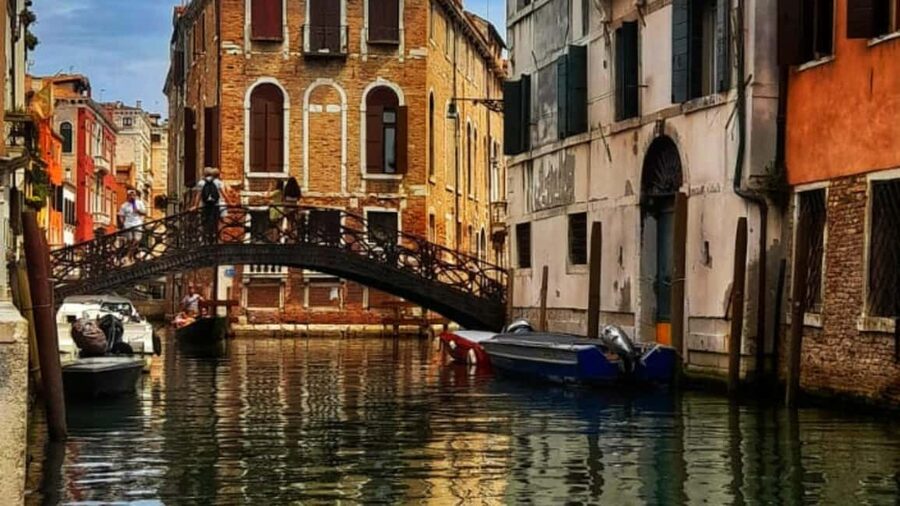
You wrap up at Ponte degli Scalzi, at Ponte degli Scalzi, 3, 30121 Venezia VE, Italy. Finishing away from the busiest choke points helps your day feel less like a race to the end.
Why that matters: Venice is tiring, not just because of distance, but because of the constant turning, crossing bridges, and weaving through crowds. Ending at a defined point gives you closure. You can then re-enter Venice at your own pace, whether you head toward St Mark’s again for a last look or you find a quieter canal-side spot.
If you want to keep the momentum, you can use the finish area as a jumping-off point for a post-tour wander. If you want to rest, at least you’ll know exactly where to go next.
Price and Value Around $58: What You’re Paying For
At about $58 per person, you’re not paying for a long museum day. You’re paying for a guided, well-sequenced walking experience that combines the classics with quieter context.
Here’s the value breakdown that matters for real travel decisions:
- Time-saving route design: The stops connect logically, so you spend less energy figuring out where to go next.
- Context, not just photos: The guide’s knowledge turns landmarks into stories, including connections to cultural figures like Mozart and Goethe.
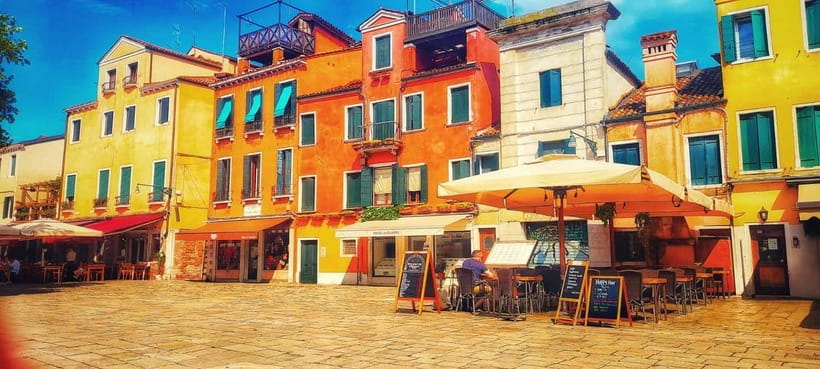
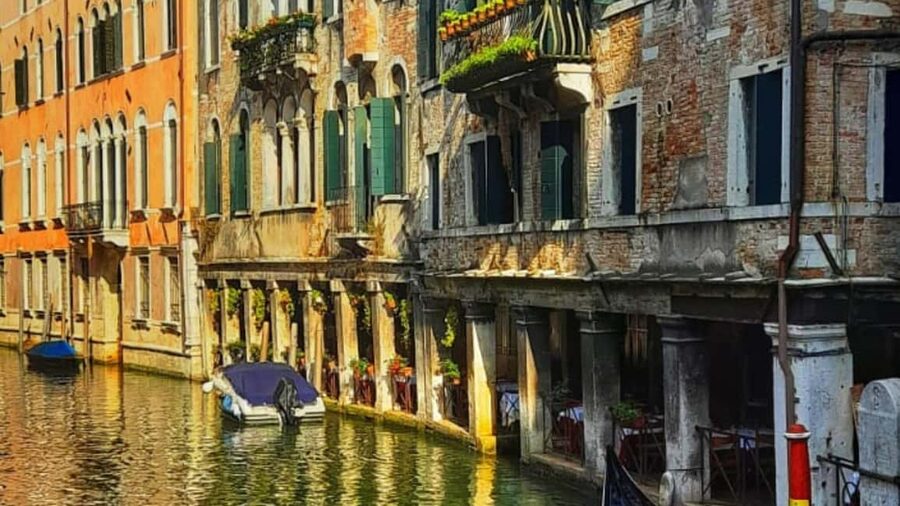
- Everyday Venice angle: You’re not only looking at palaces and monuments. You’re also moving through campi, calli, shops, and normal street life.
- Food tasting at Campo Santa Margherita: You get a built-in chance to sample local flavors instead of hunting alone.
The tour is also flexible in the way it sets you up for planning. There’s a 4-day window for availability tied to starting times, which can be useful if your Venice dates are not locked down. And you may get a meal recommendation during free time near St Mark’s Square, which is practical when you’d rather not gamble on where to eat.
In short: you’re paying for a guided “Venezia experience” that tries to make you see more than the obvious, without dragging you through hours of indoor stops.
Language Options and Local-Contact Moments That Make It Feel Human
The tour runs with a live guide in Italian and German. That’s a big deal for enjoyment. When the explanations are in a language you understand, you’ll actually follow the story behind the streets and buildings, not just skim it with tired attention.
One reason this experience seems to score well is that it doesn’t stay purely architectural. You get moments that connect with locals, including interactions with people such as mask makers and kiosk owners. Even if the encounters are brief, they change the feel of the day. They add the “living city” layer that makes Venice more than a scenery set.
And then there’s the practical personality side. The guide named Fortunato is praised for waiting even when someone is late, and for sharing history in a fun way that keeps the pace from feeling like a lecture. That kind of guide energy is exactly what turns a walking tour from exhausting into enjoyable.
Who Should Book This Venice Walk, and Who Should Pass
This is a great fit if you want:
- The big sights plus the in-between streets
- A guide who explains without turning it into a classroom
- A day with pauses for photos and a real break at Campo Santa Margherita
- A balanced mix of church and palace landmarks with neighborhood life
You should think twice if:
- You cannot handle lots of walking on stone streets.
- You need a fully accessible setup, because this tour is explicitly not suitable for people over 95.
- You only want inside visits and long museum time, because several highlights are photo stops and pass-by segments.
If you like Venice when it feels human, this tour is aiming for that. It’s not trying to replace your own wandering. It sets you up so your wandering becomes smarter.
Should You Book This Tour?
Book it if you want a guided way to see Venice that goes beyond the same crowd-route photos. The mix of Scala Contarini del Bovolo, Teatro La Fenice, Ponte dell’Accademia, Dorsoduro, and Campo Santa Margherita gives you a strong “classic meets local” balance, and the food tasting makes it feel useful, not just scenic.
Skip it if you want a slow, minimal-walking day with mostly indoor access. This experience is built for people who enjoy moving, looking, and learning as they go.
If you’re choosing between doing it on your own and taking a guide for at least part of the day, this one is priced in a way that can make sense. Around $58 is a reasonable trade for route planning help, context, and a structured break where you get to actually eat instead of searching.
FAQ
Where is the meeting point for the tour?
You meet in St Mark’s Square, in the middle of the two columns, one with the Venetian lion statue and the other with the St Todaro statue.
Where does the tour finish?
The tour ends at Ponte degli Scalzi, 3, 30121 Venezia VE, Italy.
What languages are the live guided tours offered in?
The guide speaks Italian and German.
Is the tour walking-heavy?
It’s designed as a walk with multiple photo stops and pass-by segments, plus free time. The tour is not suitable for people over 95.
Will I have time to eat during the tour?
There is a break at Campo Santa Margherita that includes food tasting, and there may also be a meal recommendation during free activity near St Mark’s Square.
Can I cancel for a refund?
Yes, you can cancel up to 24 hours in advance for a full refund.
How flexible is booking?
You can reserve now and pay later. The tour is valid within a 4-day window, and you should check availability for the starting times.
Lately added around Venice
Tours, compared.
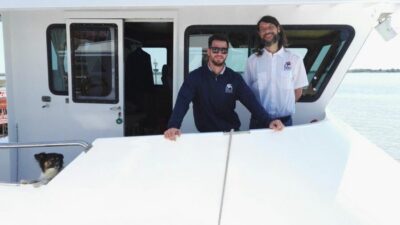
Murano & Burano: Boat Tour with Guide & Glass Factory Visit
Read our review →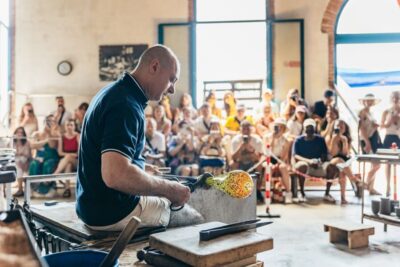
Burano, Torcello & Murano Boat Tour w/Glassblowing
Read our review →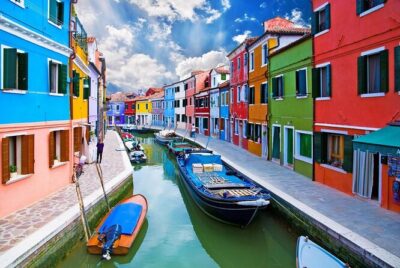
Murano, Burano and Torcello Half-Day Sightseeing Tour
Read our review →
Murano & Burano Islands Guided Small-Group Tour by Private Boat
Read our review →
Doge’s Palace and St Mark’s Basilica Walking Tour
Read our review →
Murano & Burano Panoramic Boat Tour w/ Glassblowing
Read our review →
Murano, Burano, Torcello: Tour with Guide & Glass Factory
Read our review →