
Reviewed · GONDOLA RIDES & SERENADES
Morning Walking Tour of Venice with Gondola Ride
Venice feels calmer early in the morning. This guided walk strings together a smart set of landmarks, then you finish with a gondola ride that gives you that Venice by water feeling without spending half a day in a line.
I especially like the way the guide turns the maze into something you can actually navigate later. If you land with a strong guide, like Monica or Christine (based on past guides’ experiences), the walk can feel like getting a friendly map plus real context, not just a parade of names. I also like that the gondola time is short and sweet, so the whole outing fits a busy first morning.
One thing to think about: this is a shared, collective experience, so the gondola ride is limited to a small boat (up to five people), and the gondola portion does not include guide commentary. If you are hoping for a long, story-heavy boat ride, manage expectations and treat it as a scenic finale.
In This Review
- Key things to know before you go
- Morning Start: why 9:00 am works in Venice
- The Canal Grande stop: learning the city’s main water street
- Piazza San Marco, fast and useful
- Marco Polo mention: a detour that connects Venice to Asia
- Santa Maria della Salute: plague vow architecture you can read
- La Fenice and the Teatro world in Campo San Fantin
- Saints John and Paul: Venice’s burial-focused “pantheon” feeling
- Campo Santa Maria Formosa: the big square locals actually use
- Gondola ride reality: short, shared, and mostly about the view
- Pacing, crowd flow, and how not to get left behind
- Value check: what $87.70 buys you in Venice
- Weather and timing: the part that can change fastest
- Who should book this tour, and who should skip it
- Should you book this morning walking tour plus gondola?
- FAQ
- How much does the Morning Walking Tour of Venice with Gondola Ride cost?
- Where is the meeting point?
- How long is the tour?
- What’s included, and what’s not included?
- What if the gondola is suspended due to bad weather?
- Can I cancel for free?
Key things to know before you go
- Start time matters: the tour runs at 9:00 am, which helps you see parts of Venice before the heaviest crush.
- A focused Land-and-Water combo: you get a guided walk and then a 30-minute gondola ride, with no extra sightseeing detours.
- Grand Canal orientation: you get a landmark stop at the Canal Grande and learn how it slices the historic center in an inverted S.
- Big sights, short stops: you’ll pass major Venice icons fast, including Piazza San Marco and several major churches.
- Gondola is shared: you may be seated with other people, and your group can be split across gondolas if needed.
- Weather can change the plan: if the gondola is suspended, you must go back to the departure point to hear what happens next.
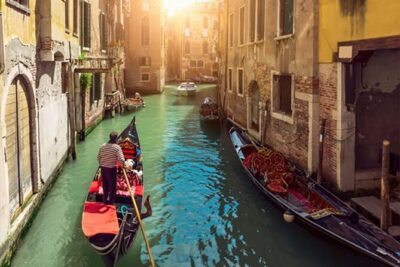
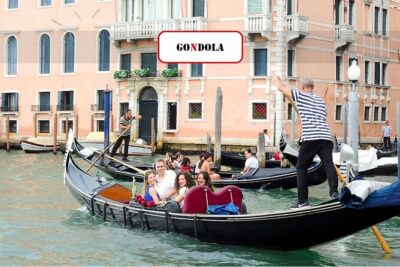
Other gondolas, with and without the singing:
Morning Start: why 9:00 am works in Venice
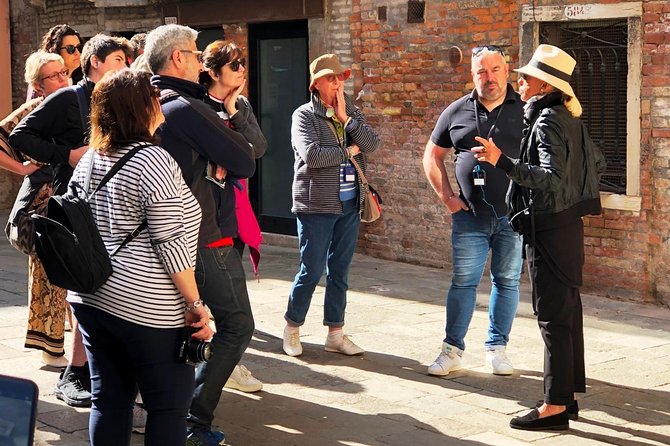
This is the kind of tour that makes sense for a first trip, because Venice can be overwhelming fast. The meet time is 9:00 am, and the early start helps you do a lot of orientation while streets are still moving at a more human pace.
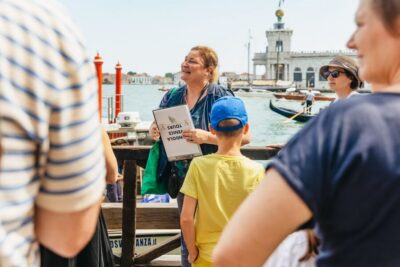
The walking part is guided, and you also get a chance to hear explanations through a group setup (some days it can mean you are spread out in the streets). If you are the type who likes to get your bearings, this structure is useful: you are not just sightseeing, you are learning the city’s shape.
The Canal Grande stop: learning the city’s main water street
You kick things off at Canal Grande, the historic center’s main artery. It runs about 3,800 meters and divides Venice into two parts, tracing that famous inverted S from the Ponte della Libertà area toward the Bacino di San Marco.
This is not a background “fun fact” stop. When you understand where the Grand Canal sits, you start seeing Venice differently as you walk later. Even on your own, you’ll catch viewpoints and bridges with more meaning, because the guide is putting structure to what feels like random canals and corners.
One practical note: this stop lists admission ticket included. That matters because you are not paying extra on the spot for this first anchor moment, and it keeps the tour flow from turning into a money and ticket scramble.
Piazza San Marco, fast and useful
Next you hit Piazza San Marco, Venice’s signature square. It’s listed as a quick stop, and that fits the tour style: you get in, you see the place, and you keep moving so you still cover enough ground to justify the combo.
In a short window, Piazza San Marco can be more about perspective than depth. You’ll notice how the square fits into the surrounding basilicas and how it connects to the broader street network, including the way people funnel through choke points.
If you want to linger later, this tour does not try to monopolize the entire morning. Think of it as the “you are here” moment that sets you up to choose where to spend your real time after.
More sestieri crossed bridge by bridge:
- Venice: Doge’s Palace and St Mark’s Basilica Walking Tour
★ 4.4 · 6,291 reviews - Venice: San Marco to Rialto Walk & Spritz Like a Local
★ 4.2 · 3,651 reviews - Venice Walking Tour and Gondola Ride
★ 3.5 · 3,630 reviews - Private 3 hrs Venice Tour: St Mark’s, Walking tour & Boat tour
★ 4.0 · 3,372 reviews - Venice: City Center Historical Guided Walking Tour
★ 4.2 · 1,873 reviews
Marco Polo mention: a detour that connects Venice to Asia
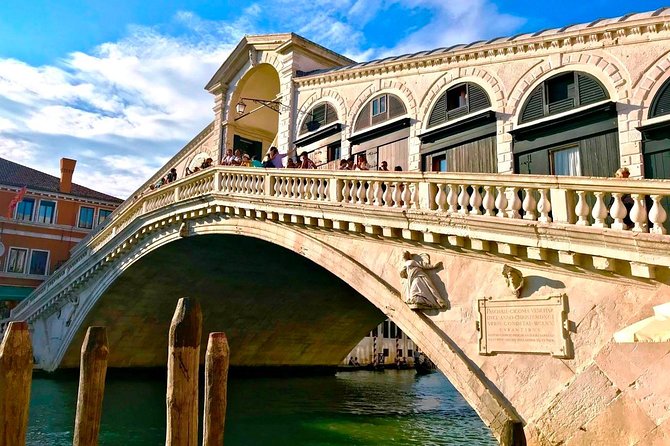
You’ll also get a stop centered on Marco Polo. The key thread here is his account of travel in the Far East, later collected as Il Milione, described as a geographical encyclopedia of the knowledge Europeans had by the end of the 13th century.
Why this matters on a walking tour: Venice was not only about architecture and romance. It was a trade machine, and stories like Polo’s help explain why Venice mattered in the first place. Even if you do not care about the details of medieval travel writing, the reference helps you understand the city’s mindset.
Santa Maria della Salute: plague vow architecture you can read
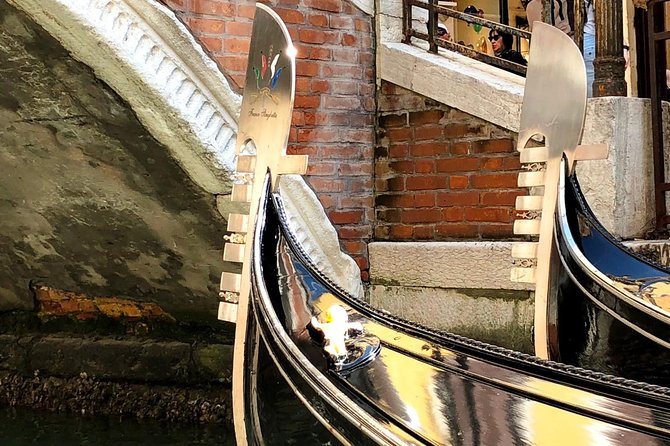
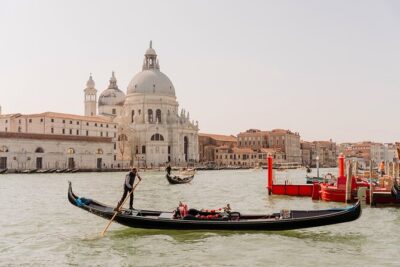
One of the stops is Santa Maria della Salute, a basilica designed by Baldassare Longhena with attention to Palladio’s models. It sits in the area of Punta della Dogana and is meant to stand out in the panorama of St Mark’s Basin and the Grand Canal.
The most interesting part is the backstory. Venetians built it as a votive offering to the Virgin Mary after the plague wave that decimated the population between 1630 and 1631, and the cult became rooted enough that the Virgin Mary was added to Venice’s patron saints. The basilica was also elevated to a minor basilica in December 1921.
This is the kind of detail that makes a short stop worth it. Instead of walking past a big church and moving on, you walk away understanding why it exists, and what the city was trying to do at the time.
La Fenice and the Teatro world in Campo San Fantin
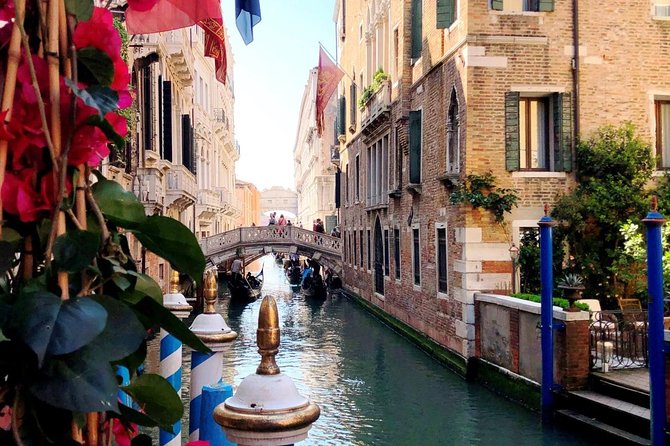
You’ll also pass Gran Teatro La Fenice in the Sestiere di San Marco, in the Campo San Fantin area. It’s described as Venice’s main opera house, known for major opera and symphonic seasons and the New Year’s Concert tradition.
Two things stand out from the facts given: it has been destroyed and rebuilt twice, and it hosts the International Festival of Contemporary Music. That combination, old-world glamour with modern programming, helps explain why La Fenice feels like more than just a landmark you photograph.
If you love the idea of Venice as a performance city, this stop gives you a clue about what to look for later. You might not catch a show on this particular tour, but you’ll know where to go if you want to build in an evening plan.
Saints John and Paul: Venice’s burial-focused “pantheon” feeling
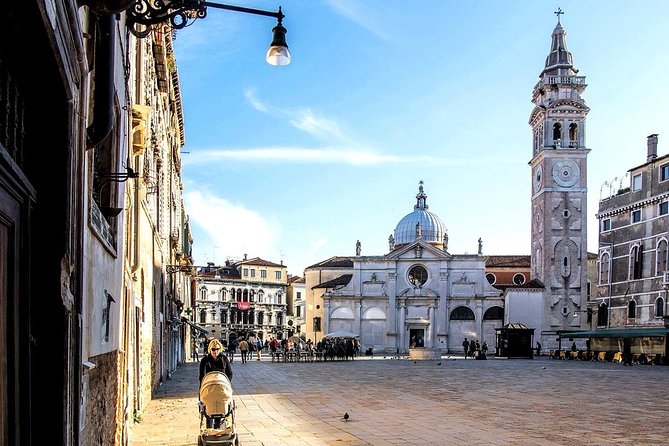
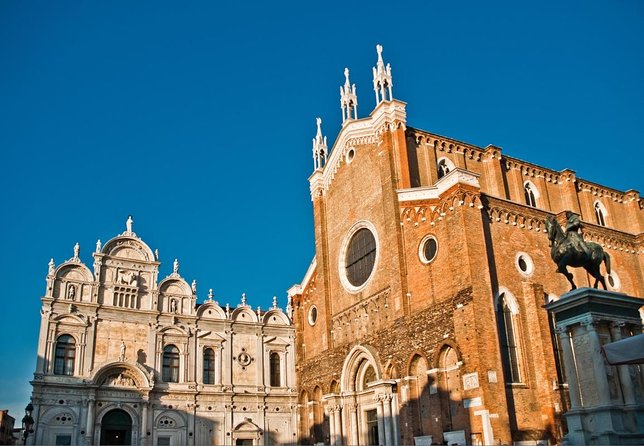
Another major stop is the basilica of Saints John and Paul (in the Castello district, in the campo of the same name). It is called Venice’s pantheon because many Venetian doges and other important figures have been buried there since the 13th century.
The guide detail that it was elevated to a minor basilica in September 1922 may sound small, but it supports the larger point: this is a building tied to civic identity, not only religious devotion. You are standing in a place where Venice remembers itself in stone.
And if you are the type who likes medieval and Renaissance art connections, this stop can set your “lens.” You start noticing how often Venice tells its story through funerary spaces and official monuments.
Campo Santa Maria Formosa: the big square locals actually use
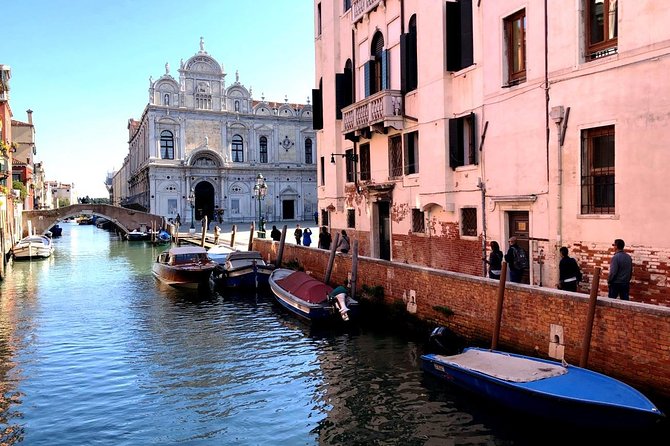
Finally, you reach Campo Santa Maria Formosa, one of the larger squares in Venice’s Castello district. It connects a web of side streets, with nine calli and eleven bridges branching out from it, plus the presence of the church of Santa Maria Formosa.
This is a good reminder that Venice is not just icons. Squares like this are where daily life still flows through the city’s canal-side architecture, and they help you see the city at street level, not only postcard level.
Gondola ride reality: short, shared, and mostly about the view
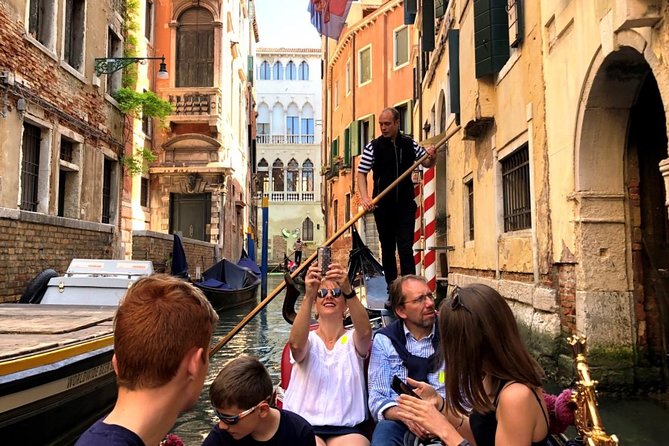
After the walking portion, you get a gondola ride that is described as about 30 minutes. The tour notes say there are no explanations provided during the gondola ride, which means you are mainly paying for the atmosphere and the water views.
Because gondolas can host up to five people, you should expect the ride to be shared. Your group can be split into smaller groups, and at times you may not get the most optimal seating based on how other reservations fill the boat. If you are tall or you are sensitive to cramped seating, plan for it.
That said, the gondola part is still usually the emotional payoff. People talk about how smoothly gondoliers handle narrow canals, low overhanging bridges, and the open feel of moving water. You might find your gondolier is chatty, sings, or adds personal touches, but the only promise here is the ride itself, not a structured narration.
Also remember the practical “where are we going” moment. The tour ends back at the meeting point, so the gondola ride is designed as a controlled finale, not a random drop-off.
Pacing, crowd flow, and how not to get left behind
This tour is collective, and at times groups can feel big on the narrow streets. One of the most helpful tips here is simple: arrive early and stay close to your guide, because the tour is not built to wait for stragglers.
Even with radios or headsets, you can still end up strung out across bridges and intersections. If that happens, your best move is to keep moving steadily and do not fall behind at bottlenecks. Venice has a way of turning 30 seconds into a gap you cannot easily close, especially with crowds.
If you want an easy win, wear comfortable shoes. Your day is mostly walking, and the tour style is about covering ground efficiently. Bring a water bottle, too. Morning in Venice can still surprise you.
Value check: what $87.70 buys you in Venice
At $87.70 per person, you are paying for two things: a guided orientation walk plus a gondola ride that would cost you extra if you tried to piece it together on your own schedule. For first-timers, that combo can be good value because it reduces decision fatigue.
Here’s where the value can swing depending on your expectations. If you want the gondola to come with a full guided story, the official note says explanations are not provided during the ride. You might still hear little bits from the gondolier, but do not build your plan around narration.
On the other hand, if you want a practical start, the guide-led walking portion helps you understand what you are seeing. Many of the strongest experiences tied to this kind of tour come from the guide quality, and guides like Monica or Antonella are repeatedly mentioned as engaging and information-rich.
Bottom line: the price is most fair if you treat the gondola as a scenic treat and the walk as the learning engine.
Weather and timing: the part that can change fastest
This experience requires good weather. The gondola portion might be suspended in bad weather, and the instruction is clear: you need to return to the tour departure point to find out whether the gondola runs and what alternative options exist.
That matters because Venice weather can change quickly, and the tour does not operate on pure guesswork. If you are planning day-trip logistics, build in a little buffer so you can handle a reroute without stress.
Who should book this tour, and who should skip it
This tour fits best if you are visiting Venice for the first time and you want a guided framework quickly. It also works well for people who love big landmarks but do not want to commit to a full-length day in guided groups.
You might skip it if you want long stops, deep museum time, or a gondola ride with guaranteed narration. It is a short-ride format, and the walking part is designed to move.
If you are traveling with kids, it can be a friendly balance, since the gondola is usually the fun payoff and the walk is not overly long. Still, the streets are narrow and pace matters.
Should you book this morning walking tour plus gondola?
I’d book it if your priority is getting oriented fast and still getting that classic gondola moment. The biggest strengths are the guided walk that helps you make sense of Venice, plus a gondola ride that functions as a relaxing capstone.
I would not book it if you are chasing a private, slow, story-driven gondola experience. This one is shared, and the gondola ride is not promised to include a guide’s commentary.
If you do book, my advice is straightforward: arrive on time, stay close to the group at corners, and treat the walk as your main learning time. You’ll get more out of Venice when you stop trying to do everything at once.
FAQ
How much does the Morning Walking Tour of Venice with Gondola Ride cost?
It costs $87.70 per person.
Where is the meeting point?
You meet at Calle larga de l’Ascension, 30124 Venezia VE, Italy. The activity ends back at the meeting point.
How long is the tour?
It’s about 3 hours on average. It’s also described as a combo of a 1.5-hour walking tour plus a 30-minute gondola ride.
What’s included, and what’s not included?
Included are the guided walking tour and the gondola ride. Gondola ride commentary is not provided (no explanations during the ride).
What if the gondola is suspended due to bad weather?
You may be required to go to the tour departure point to check whether the tour takes place or to learn about alternative ways to use the service.
Can I cancel for free?
Yes. You can cancel up to 24 hours in advance for a full refund. If you cancel less than 24 hours before the start time, the amount paid is not refunded.
Lately added around Venice

Gondola Rides & Serenades, compared.
Grand Canal Gondola Ride with App Commentary
Read our review →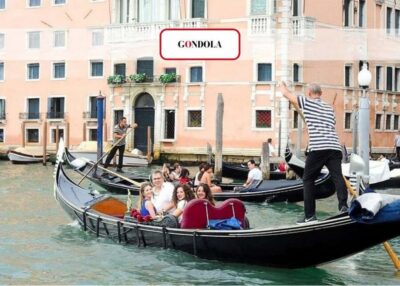
Grand Canal Gondola Experience with Live Commentary™
Read our review →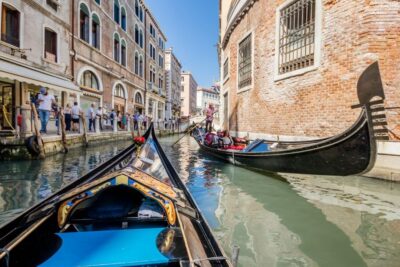
Grand Canal Gondola Experience with Live Commentary™
Read our review →
Venice In a Day: St Mark’s, Doges Palace Gondola Ride & City Tour
Read our review →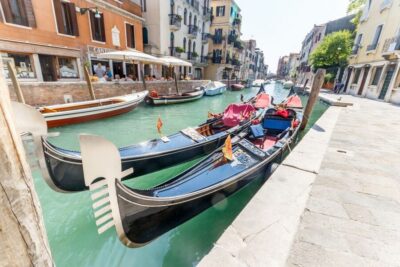
Private Crafted Gondola Ride Along Grand Canal
Read our review →Browse the lists this tour appears in