
Reviewed · MUSEUMS
Museum of Leonardo da Vinci’s working machines
Leonardo machines meet real wood in Venice. This museum is all about working ideas from Leonardo da Vinci’s Codices, brought to life with interactive QR codes and detailed building craft. I especially liked the life-sized working feel of the models and how the whole exhibit stays hands-on. The one thing to weigh first is that the museum can feel a bit smaller than you might expect, so pace yourself and plan for a focused visit.
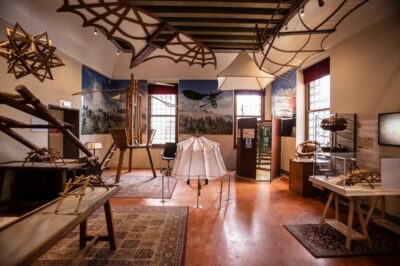
You’ll see machines tied to Leonardo’s studies of flight, war, mechanics, and water, plus anatomy models and replicas of important paintings. The setup is also set in a real Venice church, San Barnaba, which makes the experience feel more like stepping into a workshop than touring a glass case.
One practical consideration: entry can be strict at the cutoff time, so arrive with buffer time, and double-check you are going to the correct meeting point. I also recommend managing expectations if you were hoping for a separate library space, because the exhibit is focused on the models and the digital experience.
In This Review
- Key things to know before you go
- Leonardo machines inside San Barnaba, Venice
- Price and value: what $10 buys you
- The mechanics section: QR codes, working models, and real craft
- Flight, war, mechanics, and water, plus anatomy models
- The digital Leonardo in first person, and how to use it
- Church of St. Barnabas, and pairing the stop in a Venice day
- Room for disappointment: size, timing, and location accuracy
- Who should book this museum, and who should skip it
- Should you book the Museum of Leonardo da Vinci’s working machines?
- FAQ
- Where is the Museum of Leonardo da Vinci’s working machines located?
- How much does the ticket cost?
- How long is the experience?
- What is included with the ticket?
- Are there interactive elements?
- What languages are available?
- Is it wheelchair accessible?
- How do starting times work?
- What are the cancellation and payment options?
Key things to know before you go
- Permanent in San Barnaba since 2021: the exhibition is housed in Venice’s church setting, not a temporary pop-up.
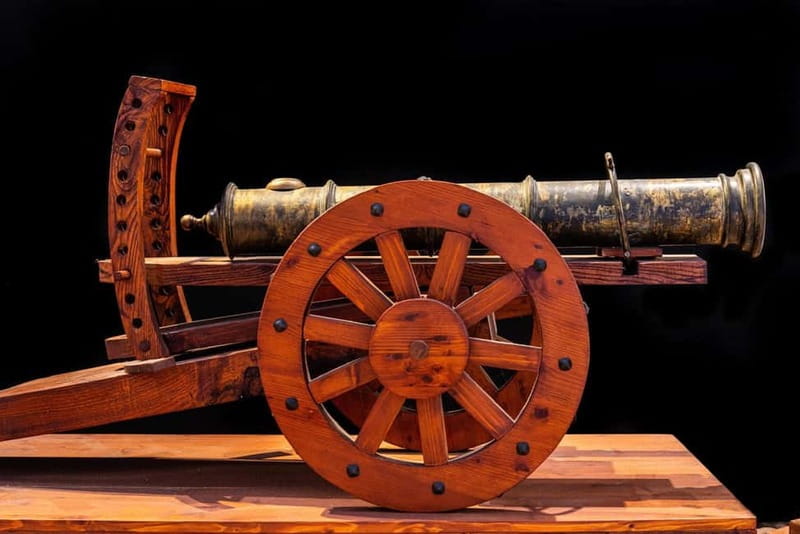
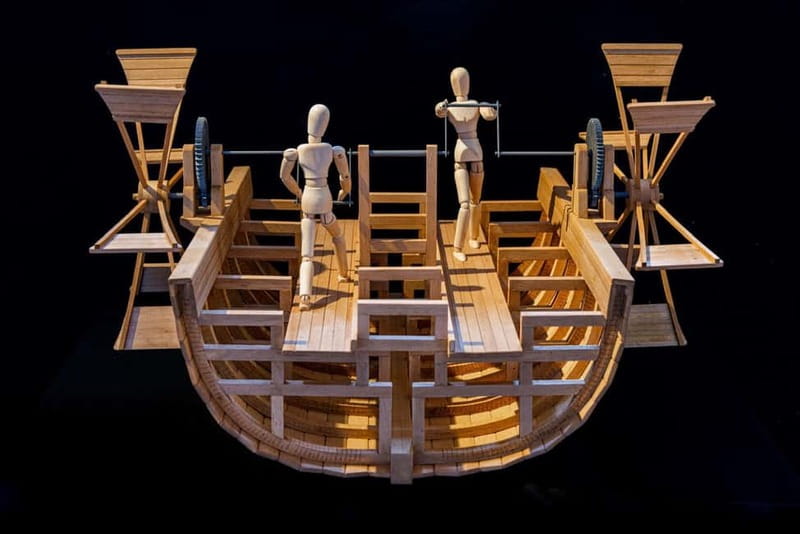
- Codices-inspired working machines: the focus is reproducing models from Leonardo’s engineering studies.
- Casentino wood craftsmanship: models use precious woods from Tuscany, connected to Leonardo’s favorite area.
- Interactive QR codes and a digital Leonardo: you get guidance right where you need it.
- More than machines: anatomy models and replicas of important paintings are part of the show.
- Ticket value goes beyond the museum room: your ticket also supports a visit to San Barnaba and includes a shop and catalog discount.
Other Venetian collections behind the palace doors:

Leonardo machines inside San Barnaba, Venice
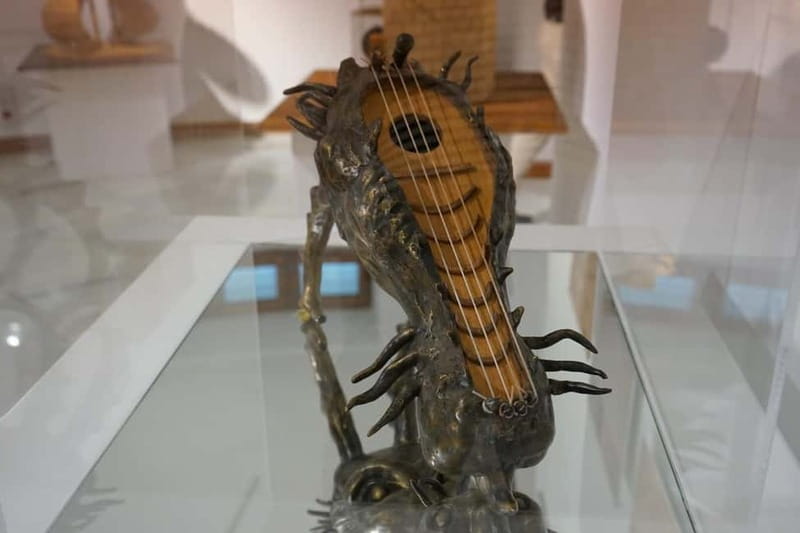
If you like Leonardo da Vinci for more than the famous paintings, this is a very satisfying stop. The Museum of Leonardo da Vinci’s working machines is built around reproductions of models from his Codices, tied to practical engineering themes: flight, war, mechanics, and water. Instead of looking at finished inventions from far away, you get close to how the ideas connect to gears, movement, and structure.
The setting matters. The museum sits in the church of San Barnaba, so you get that Venetian mix of reverence and curiosity. The place you walk through is part of the story, since St. Barnabas is also associated with Indiana Jones movie filming locations. You do not need to be a movie fan to enjoy it, but if you are, it adds a fun layer to your day. It also makes the museum feel like more than a single gallery room.
One more detail I appreciated: the museum includes a mechanics-focused area with unique interactive pieces. That is where the “working machine” idea becomes real. Even if you do not read technical explanations, the physical models and the guidance tools do the heavy lifting.
Price and value: what $10 buys you
The price is $10 per person, and for that you are not just paying for a quick gallery glance. Your ticket includes:
- a visit to the museum
- access to the church of St. Barnabas
- an exclusive book shop inside
- a discounted price on the exhibition catalog if you purchase the ticket
That combo is the value. Many museum tickets in Venice get you one room and little else. Here, you get two experiences in the same visit: the working-machines exhibit and the church stop. The shop and catalog discount also make it easy to take the material home, especially if you want a souvenir that is more than postcards.
I also like the way the experience is designed. You are not relying on a single static display. The interactive QR codes and the digital Leonardo support help you connect what you see to what Leonardo was trying to understand. For $10, that kind of layered explanation is usually what people end up wishing they had.
The mechanics section: QR codes, working models, and real craft
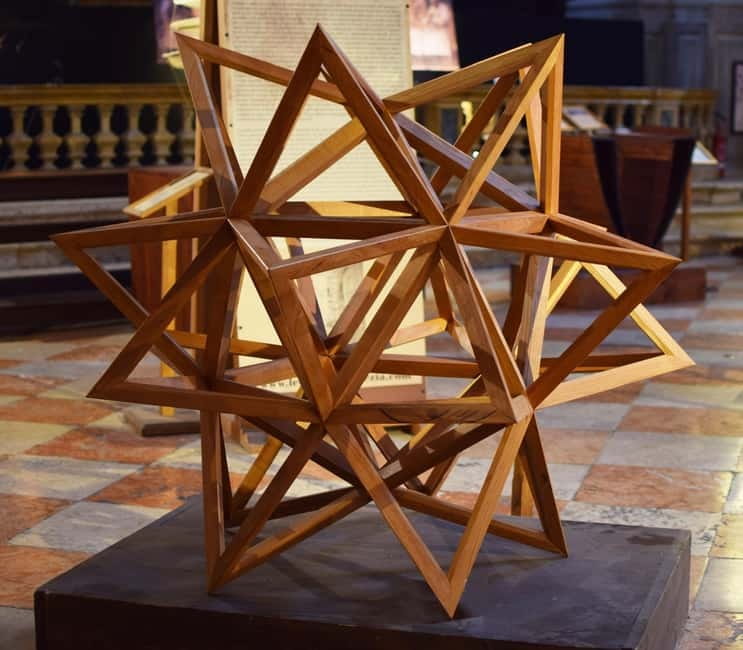
The heart of the museum is the reproduction of Leonardo’s models from the Codices. What makes it worth your attention is not only the theme, but the build approach. The machines are made from precious woods from the Casentino area in Tuscany, an area associated with Leonardo and the time he spent there. That choice changes the feel of the exhibit. Wood models have a warm texture. You notice joints, surfaces, and structure in a way that is harder with plastic.
Another detail that helps: the models are reproduced in Florence by skilled artisans. So you get the sense of a careful hand behind each reproduction. Even when you are not a mechanical person, you can tell when craftsmanship carries through the small decisions, like how parts are shaped and how motion is implied.
The interactive QR codes are a practical feature. Instead of reading everything before you enter, you can scan when you are standing in front of the right machine. That keeps you from bouncing back and forth between signage and objects. It also lets you control your pace. If one mechanism catches your eye, you can spend more time there without committing to the full technical path at once.
And yes, the museum is focused on the mechanics part. That is good news for you if you like engineering concepts, movement, and how one idea leads to another. It may be less satisfying if you wanted a general overview of all of Leonardo’s life work. The exhibit stays anchored to the engineering side.
The same hours, spent on the water instead:
- Venice: Doge’s Palace Reserved Entry Ticket
★ 4.6 · 42,716 reviews - Venice: Grand Canal Gondola Ride with App Commentary
★ 4.1 · 23,020 reviews - Venice: Grand Canal Gondola Experience with Live Commentary™
★ 4.2 · 16,504 reviews - Boat Trip: Glimpse of Murano, Torcello & Burano Islands
★ 4.3 · 15,699 reviews - Venice: La Fenice Opera House Entry Ticket with Audio Guide
★ 4.6 · 11,742 reviews
Flight, war, mechanics, and water, plus anatomy models
Leonardo fans often split into two camps: art-first and science-first. This museum is the science-first version, but it does not ignore the broader creative mind. The machines are based on Leonardo’s studies of flight, war, mechanics, and water. That gives you a clear route through the exhibition themes.
Here is what you should look for as you move through these sections:
- In the flight related studies, pay attention to structural logic. The models are about how force and motion could be translated into something controllable.
- For war related studies, you can see how mechanics was used to think about systems and function, not just weapons as objects.
- In mechanics pieces, the exhibit helps you connect parts to purpose, especially through the interactive support.
- With water related studies, watch for how Leonardo approached flow and movement as something you could reason about with engineering thinking.
Then the museum expands beyond machines. It includes anatomy models as well as replicas of the most important paintings. That matters because Leonardo’s approach was never one-track. He studied bodies with the same curiosity that he used for machines, and he treated painting as another kind of observation tool.
Even if you are not sure how anatomy fits into engineering, you may feel the logic when you see the exhibit. Leonardo’s world was built from observation, measurement, and trying to understand how things work from the inside out. The mix of model types supports that idea.
The digital Leonardo in first person, and how to use it
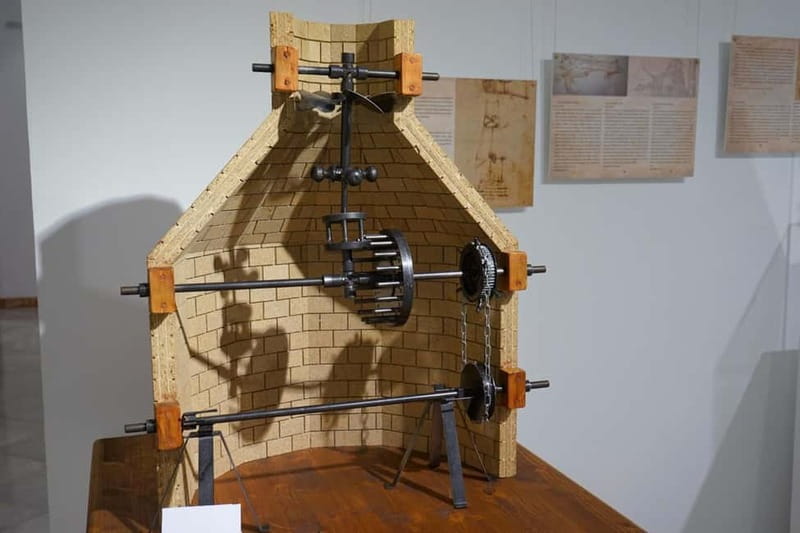
The museum also offers a digital way to understand the inventions. The concept is that you get an opportunity to meet Leonardo in first person, with help explaining each invention. The goal is not just to watch a video. It is meant to guide your understanding while you are looking at the reproduction.
Because the exhibit includes content in its original language in some areas, the digital support and the staff help can matter. The host or greeter offers English, French, Spanish, and German. If you want to ask questions in your language, that is your best bet.
Practical tip: treat the digital Leonardo as a tool, not a requirement. If you feel the connection right away from the QR code explanation and the machine itself, you can move on. If you find yourself stuck trying to imagine how a mechanism works, pause and use the digital explanation right there. That way the guidance supports your questions instead of distracting you from the physical models.
Also, if you are traveling with kids or people who do not want a lecture, the QR codes plus digital explanations can keep the museum from becoming too text-heavy. You can keep your day active, scanning, checking, and moving from one mechanism to the next.
Church of St. Barnabas, and pairing the stop in a Venice day
Your ticket includes a visit to the Church of St. Barnabas. This is not just filler. It gives you a reason to expand your day beyond the machine rooms, and it helps the museum feel anchored in real Venice, not a self-contained attraction.
If you are an Indiana Jones fan, the connection can be a fun way to orient yourself in the space. Even if you are not, churches in Venice often reward a slow look. You can treat this as your decompression moment after the mechanics section, especially if you spent extra time reading QR code explanations and studying details.
In a simple one-day flow, I like this pacing:
1) Start with the working machines, focusing first on the mechanics sections.
2) Scan QR codes where you have questions.
3) Spend time on any theme you love most, flight, war, mechanics, or water.
4) Move to anatomy and the painting replicas if you still have curiosity energy.
5) Finish with San Barnaba so you end in a calmer, scenic setting.
Even if you do not know much about Leonardo, you will likely appreciate the mix. You are basically balancing engineering brain time with a more relaxed cultural stop.
Room for disappointment: size, timing, and location accuracy
Let me be straight about the potential friction points, because they matter for your day.
First, the museum may feel small. One positive review called it a lovely little museum, with the only caveat that it was smaller than expected. That is not automatically bad. It can actually be a plus if you prefer focused experiences over huge routes. But you should plan for a visit that is meant to be concentrated, not a half-day marathon.
Second, timing and entry rules can be strict. If you arrive right at the edge of entry time, you risk being refused access. I recommend getting there early enough that you can settle in, scan, and start calmly. This is especially important in Venice, where getting lost for five minutes is easy.
Third, location confusion can happen. There have been cases where the booking point did not match the actual place people needed to enter. So do not rely on vague directions. Confirm the exact meeting point and address details before you go, and give yourself extra navigation time.
Finally, if you expected a library inside the exhibition, you may not find one. The exhibit focus is clearly on machines, mechanics, QR code interaction, the digital Leonardo component, anatomy models, and painting replicas. If that sounds like your thing, great. If you want a research-style room, you might feel let down.
Who should book this museum, and who should skip it
This experience is best for you if you like:
- Leonardo da Vinci’s engineering ideas, not just his paintings
- hands-on or guided explanations through interactive QR codes
- seeing mechanics connected to themes like flight, war, water, and structure
- a museum that mixes physical models with a digital guide in first person
You might want to skip or at least adjust expectations if:
- you expect a large multi-building museum
- you are looking specifically for a library or study rooms
- you need guaranteed access even when you arrive close to the entry cutoff
If you are traveling with mixed interests, this museum can work well. The mechanics sections keep the engineering crowd happy. The anatomy models and painting replicas give art lovers something to latch onto. The church visit also gives your day a cultural backbone.
Also, this is a good choice if you are in Venice for a limited time. It is priced low and designed for a concentrated, one-day visit. It can slot neatly into a day that already includes church browsing and a Leonardo stop.
Should you book the Museum of Leonardo da Vinci’s working machines?
I think you should book this if Leonardo is your kind of curiosity, and you like your museum time spent on how things work. For $10, the value is strong because the ticket includes the church visit plus an internal shop experience and a catalog discount. The interactive elements, QR codes, and digital Leonardo support help you connect the models to explanations without turning the day into a reading exam.
Before you go, do these two things and you will avoid most headaches:
- Confirm the exact entry location and meeting point so you do not waste your time in the wrong spot.
- Arrive with buffer time so you can enter calmly and start scanning right away.
If you want a quiet, text-only art tour, this is not that. If you want a hands-on-feeling Leonardo experience in Venice, set in a real church and built around working ideas, this is a solid pick.
FAQ
Where is the Museum of Leonardo da Vinci’s working machines located?
It is located in Veneto, Italy, in the permanent museum space inside the church of San Barnaba in Venice.
How much does the ticket cost?
The price is $10 per person.
How long is the experience?
The experience is valid for 1 day.
What is included with the ticket?
The ticket includes a visit to the museum, access to the Church of St. Barnabas, and an exclusive book shop inside. If you purchase the exhibition catalog with your ticket, you get a discounted price.
Are there interactive elements?
Yes. The museum uses interactive QR codes, and it also includes a digital Leonardo program in first person to help explain the inventions.
What languages are available?
The host or greeter is available in English, French, Spanish, and German. Some content is shown in its original language.
Is it wheelchair accessible?
Yes, it is wheelchair accessible.
How do starting times work?
The ticket is valid for 1 day and you can check availability to see starting times.
What are the cancellation and payment options?
You can reserve now and pay later. Free cancellation is available up to 24 hours in advance for a full refund.
Lately added around Venice


Museums, compared.
Venice’s Best: Basilica, Doge’s Palace, Gondola & History Gallery
Read our review →
Vivaldi’s Four Seasons Concert & Music Museum Visit
Read our review →
Charming Gondola Ride on the Grand Canal & Gondola Gallery™
Read our review →
City Pass with Museums including Doge’s Palace
Read our review →
Bell Tower & St Mark’s Square History Gallery Ticket
Read our review →
Venice Museum Pass & Doge’s Palace Entrance Ticket
Read our review →
Basilica, Doge’s Palace, History Gallery & Bell Tower Option
Read our review →Browse the lists this tour appears in