
Reviewed · MURANO & BURANO BOAT TRIPS
The Murano Glass Museum in Venice
A quick trip to Murano can teach you a lot. The Murano Glass Museum, or Museo del Vetro, is one of the best ways to understand how Venetian glass makers built their reputation over centuries.
I like how the exhibits are arranged chronologically, so you can follow the story instead of wandering randomly. I also like that you get a real museum visit with an included admission ticket, plus secure entry that helps you avoid potential ticket-line hassle.
One thing to consider: the museum is mostly a traditional museum experience, not a hands-on show. If you are visiting with very young kids, plan for shorter attention spans.
In This Review
- Key Things to Know Before You Go
- Museo del Vetro: what you’re really stepping into
- Skip-the-line entry that saves real time
- Walking the museum route, from Roman roots to Murano masterpieces
- The audio guide and the museum vibe
- Murano garden space: a calm pause, not a full attraction
- Museum shop size, and why Murano shopping makes sense
- How long should you plan for, really?
- Price and value: what $26.43 buys you in practice
- English entry and who this museum fits best
- Venice day-tripper access fee: check if it applies to your date
- Booking timing: aim for around a few weeks ahead
- A practical caution if your ticket does not show up
- Should you book the Murano Glass Museum?
- FAQ
- What is the duration of the Murano Glass Museum visit?
- How much does the Murano Glass Museum ticket cost?
- Is the experience offered in English?
- What is included with the ticket?
- Is private transportation included?
- Will I receive confirmation after booking?
- Is there an extra Venice access fee on some dates?
- Is the experience accessible by public transportation?
- What is the cancellation policy?
Key Things to Know Before You Go
- Chronological layout across the floors, so history actually makes sense
- Roman-era glass and artifacts on the ground level (1st to 3rd century A.D.)
- World-class Murano collection, focused heavily on 15th to 20th century masterpieces
- English admission is offered, which helps if you do not want to rely on translation
- Audio support is available in multiple languages, based on visitor feedback
- Murano garden area is calm, but not extensive, so do not expect a big park
Other boats out to Murano and Burano:



Museo del Vetro: what you’re really stepping into
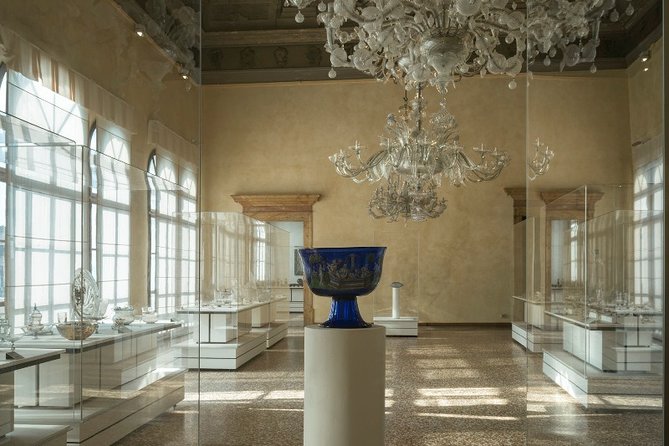
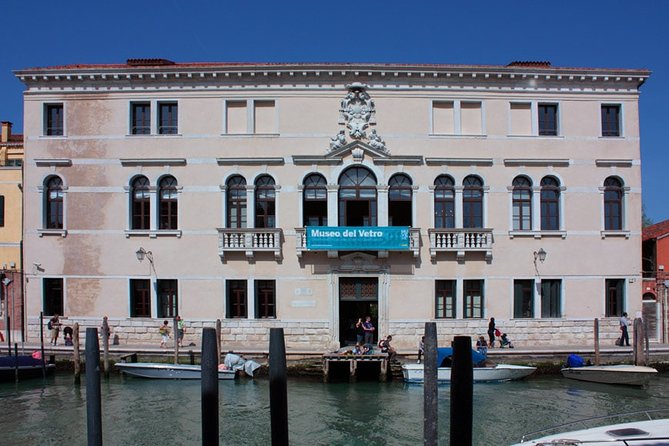
Murano is where Venice makes some of its most famous glass. The Murano Glass Museum, Museo del Vetro, turns that reputation into something you can actually see, floor by floor.
The museum is built for understanding. Instead of one random collection, you walk through periods of time, which makes it much easier to connect design changes to real historical shifts. If you like art history that feels organized, this is a good match.
Two details make it especially worthwhile. First, the museum starts with an archaeological section on the ground floor, including Roman works from the 1st to 3rd century A.D. That gives you a base for how glass traditions existed long before Murano became synonymous with glassmaking. Second, the first-floor collection leans hard into Murano’s own story, with pieces dating from the 15th to 20th century and many famous masterpieces.
Skip-the-line entry that saves real time
You are paying for more than a museum ticket. The included entry is described as secure, and it is meant to help you bypass potential ticket lines, which matters in Venice where “small delays” can turn into “lost half a day.”
The visit window is short enough to stay flexible, but long enough to feel complete. Think about 1 to 3 hours on average, which is the sweet spot for many museum stops in busy cities.
Also, since this is offered in English, you are not stuck trying to interpret everything on your own. If you usually feel shut out by language barriers, this is one reason I think the experience is a smart pick.
Walking the museum route, from Roman roots to Murano masterpieces
Your visit starts with the ground floor. This is where you find the archaeological section, including Roman works dating from the 1st to 3rd century A.D. Even if you are not a hardcore antique-glass person, it helps you understand that glassmaking traditions did not appear out of thin air in the Renaissance.
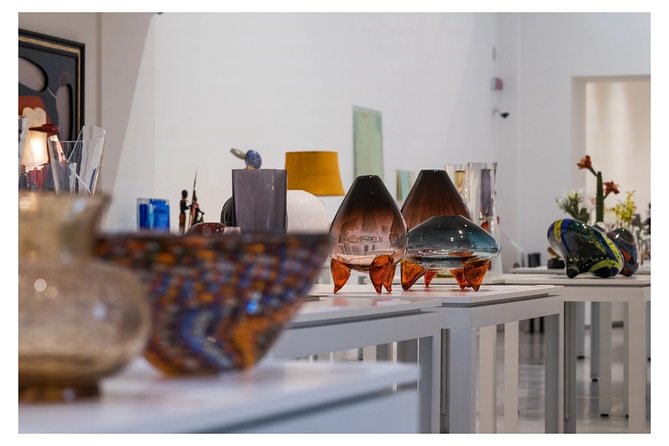
From there, you move up into the heart of the museum. The first floor holds the largest historical Murano glass collection in the world, spanning the 15th to 20th century. This is where you will spend most of your time, because the exhibits cover the evolution of techniques and styles across centuries.
The chronological approach is the big win. You are not only looking at beautiful objects, you are seeing how designs changed over time. That is exactly what makes the museum feel educational instead of just decorative.
Other Venetian collections behind the palace doors:
- Venice: Leonardo Da Vinci Museum Entrance Ticket
★ 4.5 · 3,560 reviews - Venice’s Best: Basilica, Doge’s Palace, Gondola & History Gallery
★ 4.5 · 2,478 reviews - Venice: Vivaldi’s Four Seasons Concert & Music Museum Visit
★ 4.8 · 2,065 reviews - Charming Gondola Ride on the Grand Canal & Gondola Gallery™
★ 4.0 · 1,313 reviews - Venice: City Pass with Museums including Doge’s Palace
★ 4.1 · 1,020 reviews
The audio guide and the museum vibe
The museum is not built like an interactive science exhibit. Based on visitor experiences, it is more of a classic gallery format with an audio guide option in different languages.
That means you will get the most out of it if you enjoy reading interpretive signs, listening to audio notes, and taking your time with objects. The rooms are set up by time period, so the audio guide tends to work well for following along as you move from one era to another.
If you are traveling with a 10-year-old or similar-age child, keep your expectations realistic. One review notes that interest can fade quickly because it is not interactive. Adults and older kids typically do better here because they can spend more time connecting art, technique, and history.
If you want to make the visit smoother with kids, go in with a plan. Pick a couple of time periods to focus on, and treat the rest as bonus stops rather than trying to see everything.
Murano garden space: a calm pause, not a full attraction
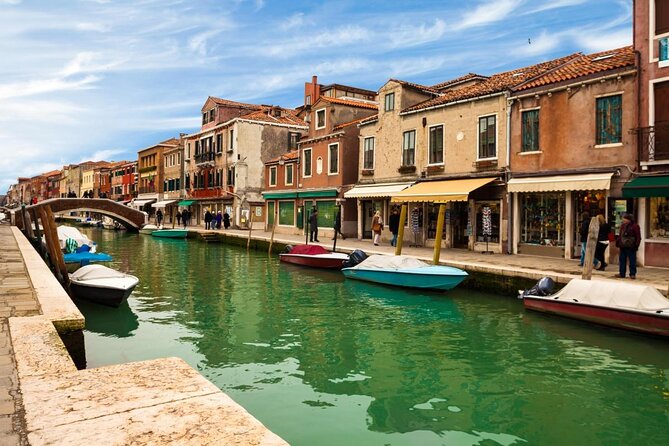
There is a garden area connected with the museum, and visitors describe it as tranquil. That is a nice bonus when you want a break from indoor rooms and want a few minutes of quiet.
But it is not presented as a major garden destination. It is more of a gentle reset than a place to plan your whole afternoon around.
So, use it as a breather. If you are short on time, you can skip it without harming your museum experience. If you have extra minutes, it gives you a pleasant way to end the visit.
Museum shop size, and why Murano shopping makes sense
The museum shop is described as small. For me, that is not a downside, because Murano as a whole is where the real shopping energy lives.
The practical move is to treat the museum shop as a convenience stop, not the main event. If you want gifts, ornaments, or glass souvenirs, you will likely find more variety across Murano’s streets.
This also changes how you should plan your spending. If you only budget for the museum shop, you may find fewer choices. If you keep your souvenir hunt flexible and let Murano’s shopfronts set the mood, you usually get better results.
How long should you plan for, really?
The museum is commonly scheduled in the 1 to 3 hour range. If you love art history and want to linger, aim closer to the high end. If you prefer a faster pace, you can still see the core galleries without turning it into an all-day project.
Here is a helpful way to think about pacing:
- If you are going to use an audio guide, you will probably need more time, because listening takes you slower.
- If you want photos, expect a bit of extra time because some galleries feel better when you slow down and compose properly.
- If you are traveling with kids, shorten the mission. Pick a route that hits the big eras and then move on.
Venice day trips are full of transit time, walking, and decision fatigue. A museum that fits in a tight window is a real advantage.
Price and value: what $26.43 buys you in practice
The listed price is $26.43 per person, and the key point is what is included. You are not only buying a ticket to see objects. You are buying included admission plus secure entry that is meant to reduce the chance of getting stuck in ticket lines.
In Venice, time has a cost. Even when a museum line looks short, the next hour can disappear quickly once you factor in crowd flow and getting yourself back on track.
So this feels like good value if you:
- want a focused museum visit rather than browsing aimlessly
- care about the story of Murano glass, not just souvenirs
- prefer a predictable entry experience
It may feel less worth it if you only want a quick glance. If you already know you are not interested in design history, you may find the experience too quiet and too slow compared to more hands-on activities.
English entry and who this museum fits best
Because it is offered in English, it is a practical choice for visitors who want their visit explained without relying completely on translation apps. That matters most in a museum where the details are the point.
This experience fits best if you like at least one of these:
- art history you can follow chronologically
- decorative arts and craftsmanship
- how a regional tradition becomes a global brand
It is also a solid pick if you want a break from outdoor heat. Murano can be pleasantly paced, but a museum stop gives you a change of tempo.
If you are bringing a very young child, consider whether they will enjoy quiet observation. If they do not, plan for a shorter stop and keep the rest of the day more playful.
Venice day-tripper access fee: check if it applies to your date
There is an additional factor to be aware of. On certain dates, most travelers staying outside Venice who are planning to visit for the day may be required to pay a €5 access fee.
The details, including possible exemptions, are directed to the official page at https://cda.ve.it. Before you commit your plan, I suggest checking your travel dates. It is one of those “small cost, big surprise” items that can mess with your budget at the worst moment.
Booking timing: aim for around a few weeks ahead
This is commonly booked about 23 days in advance on average. That is a strong hint that the museum can be popular, especially when day-trip planning overlaps with peak travel schedules.
If you want the smoothest experience, I would not wait until the last minute. Lock in your plan early enough that you can focus on actually enjoying Murano, instead of playing scheduling roulette.
Also, remember the visit is only a short block of time. A booked slot can keep the day from expanding into chaos.
A practical caution if your ticket does not show up
One negative experience in the information you have points to a problem where a ticket through a third-party channel did not arrive, and entry was denied unless the person paid again. The key lesson for you is simple: treat proof of entry like a must-have travel document.
What you can do:
- Keep your confirmation email accessible offline on your phone.
- Have a screenshot ready in case your internet connection is slow.
- Leave yourself a little extra time on the day, so you can resolve issues without rushing.
If your entry does not come through, it may not be a quick fix. Being ready reduces stress.
Should you book the Murano Glass Museum?
If you love art history, design, or craftsmanship, I think this is an easy yes. The museum’s chronological route, Roman-to-Murano story, and focus on centuries of glass design make it feel purposeful, not random.
If you want a hands-on attraction or something built for constant interaction, this is probably not your best match. It is quiet, gallery-focused, and most rewarding when you are willing to slow down.
A big deciding factor for me is also the included secure entry. For $26.43, the value is in saving time and getting into one of Murano’s must-see stops without the friction of potential lines.
So here is my honest call: book it if you want to understand Murano glass. Skip it if you only want a quick souvenir hunt or you need an interactive experience for kids.
FAQ
What is the duration of the Murano Glass Museum visit?
The visit is approximately 1 to 3 hours, depending on how much time you spend in the galleries.
How much does the Murano Glass Museum ticket cost?
The price listed is $26.43 per person.
Is the experience offered in English?
Yes, it is offered in English.
What is included with the ticket?
Your ticket includes entrance to the Murano Glass Museum.
Is private transportation included?
No, private transportation is not included.
Will I receive confirmation after booking?
You should receive confirmation within 48 hours of booking, subject to availability.
Is there an extra Venice access fee on some dates?
On certain dates, most travelers staying outside of Venice who are visiting for the day may need to pay a €5 access fee. Check https://cda.ve.it for which days apply and possible exemptions.
Is the experience accessible by public transportation?
Yes, it is near public transportation.
What is the cancellation policy?
This experience is non-refundable and cannot be changed for any reason. If you cancel or ask for an amendment, the amount paid will not be refunded.
Lately added around Venice



Murano & Burano Boat Trips, compared.

Boat Trip: Glimpse of Murano, Torcello & Burano Islands
Read our review →
Murano & Burano: Boat Tour with Guide & Glass Factory Visit
Read our review →
Burano, Torcello & Murano Boat Tour w/Glassblowing
Read our review →
Murano, Burano and Torcello Half-Day Sightseeing Tour
Read our review →
Murano & Burano Islands Guided Small-Group Tour by Private Boat
Read our review →
Murano & Burano Panoramic Boat Tour w/ Glassblowing
Read our review →
Murano, Burano, Torcello: Tour with Guide & Glass Factory
Read our review →
Murano & Burano Guided Tour by Private Boat with Glassmaking
Read our review →Browse the lists this tour appears in