Reviewed · VENICE
The places of Carlo Scarpa in Venice
Carlo Scarpa turns Venice details into architecture lessons. This private, art historian-led walk links St. Mark’s Square to a Scarpa masterpiece in about 2 hours. I love that it is paced for clarity, so you are not just looking, you are learning how the design thinks.
Two things I really like: first, the Olivetti showroom uses light and color to make you “see” water effects inside, right where the city is famous for reflections. Second, at Fondazione Querini Stampalia, you get Scarpa’s smarter relationship with flooding, using raised walkways and controlled water movement instead of pretending it will never happen.
One consideration: the tour runs in rain, but exceptional high tide could cancel it and you would get a refund. Since your time in Venice is precious, plan this afternoon slot with a bit of flexibility.
In This Review
- Key things you will notice on this Scarpa walking tour
- Scarpa’s Venice: architecture you can actually read on foot
- Stop 1: Inside the FAI Negozio Olivetti, where St. Mark’s water becomes light
- Stop 2: Querini Stampalia Foundation, Scarpa redesigns flood risk as a visitor path
- What you learn from Scarpa’s two tricks: glass, light, and managed water
- Timing and logistics that actually help your day
- Price and value: what $226.53 gets you in Venice
- Practical notes before you go, including rain and Venice entry rules
- Should you book this Carlo Scarpa tour?
- FAQ
- How long is the Carlo Scarpa walking tour in Venice?
- Where does the tour start and end?
- What is included in the ticket price?
- Is this tour private, or is it shared with others?
- Does the tour run in rain?
- What time does the tour begin?
- Is there free cancellation?
Key things you will notice on this Scarpa walking tour
- Private, art historian-led format with a small group (up to 10), so questions do not get lost.
- Olivetti showroom light tricks: a fountain trickle, colored glass tiles, and window light all working together.
- Flood-aware design at Querini Stampalia: Scarpa raised a flooded area into a visitor walkway.
- Controlled water becomes part of the design through parapets and channels that guide water to the garden.
- Afternoon timing keeps your morning open for other Venice priorities.
- Tickets included for both key stops, so you spend less time at doors and more time at details.
Weighing this against the rest? These sit a few bridges away:

Scarpa’s Venice: architecture you can actually read on foot
Venice can make you feel like the only winning move is to chase big views. This tour is different. It takes Carlo Scarpa and shows how he built meaning into the smallest moves, like how a floor fades in tone as light changes, or how a walkway can turn a flood problem into a planned experience.
You start in the St. Mark’s area and end at a different point in the city, which is handy if you want to keep exploring afterward. And since this is private, you should get more than a checklist of famous names. You should get explanations that connect design choices to everyday Venetian realities, especially water.
For me, the best architecture tours do two jobs at once: they teach you what to look for and they make you feel calm while you look. That is what this itinerary is built for. Two stops, each about an hour, with included entry. You will walk, yes, but it will not feel like a marathon through crowds.
If you like Renaissance and Baroque Venice, this adds a 20th-century layer. Scarpa’s genius is that he did not treat Venice like an old postcard. He treated it like a living system, one that includes light, glass, and water that shows up whether you are ready or not.
Stop 1: Inside the FAI Negozio Olivetti, where St. Mark’s water becomes light
Your tour begins at the Clock Tower in Piazza San Marco, then heads into the FAI – Negozio Olivetti showroom. This is Scarpa working with a simple idea and making it theatrical: bring the atmosphere of the square inside, but do it through controlled details.
Here is the magic you are looking for. The showroom recreates the theme of water using a few carefully designed devices. On the ground floor there is a small fountain effect, a trickle that visually echoes the way water behaves outdoors. Then the floor is covered in tiny colored glass tiles. Those tiles catch and reflect the incoming light, creating a flickering result you usually associate with St. Mark’s Square during high tide.
Light is the second main character. Large windows flood the showroom with daylight, and that light bounces and reverberates on the fountain water. You also get a sense of depth through the surfaces, including a gray-purple stucco wall that helps the reflections read clearly. One of Scarpa’s smartest tricks is the way the floor color changes as you move away from the windows. It gradually fades, which quietly makes the room feel bigger and more dimensional.
What is practical for you is this: you can spend a long time in Venice staring at icons and still not know why they work. Inside the Olivetti showroom, your eyes get a script. You know what to watch for, and you can connect it to what you will see outside later at St. Mark’s.
A possible drawback is that this stop is about sensory detail. If you prefer architecture explained mainly through history dates, you might want to lean into questions and ask for a short, clear summary as you go.
Stop 2: Querini Stampalia Foundation, Scarpa redesigns flood risk as a visitor path
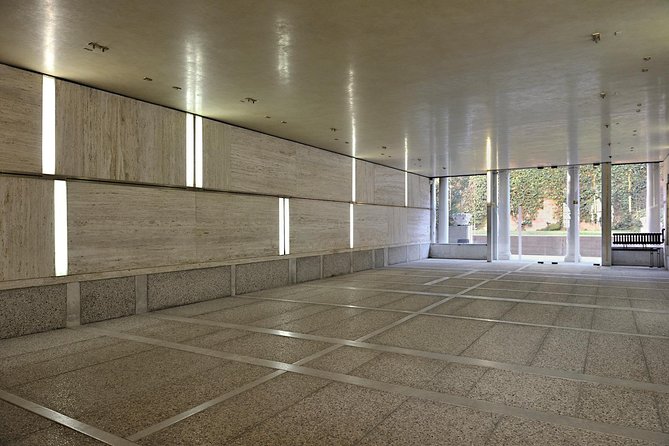
After the showroom, you move to Fondazione Querini Stampalia, where Scarpa’s relationship with nature and architecture becomes more functional than poetic. This place is also about harmony, but the “nature” here is water, including the fact that parts of the building had been regularly flooded.
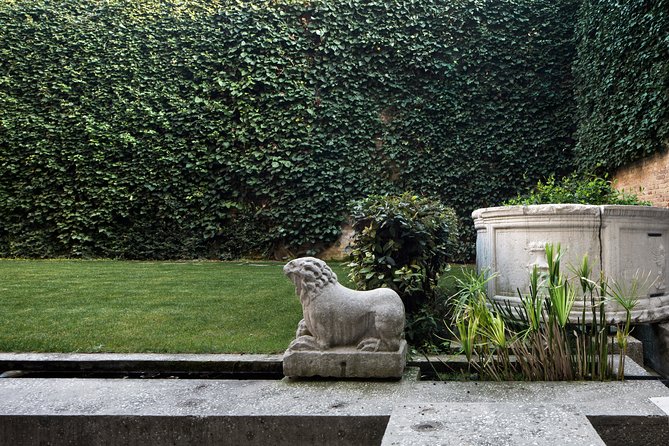
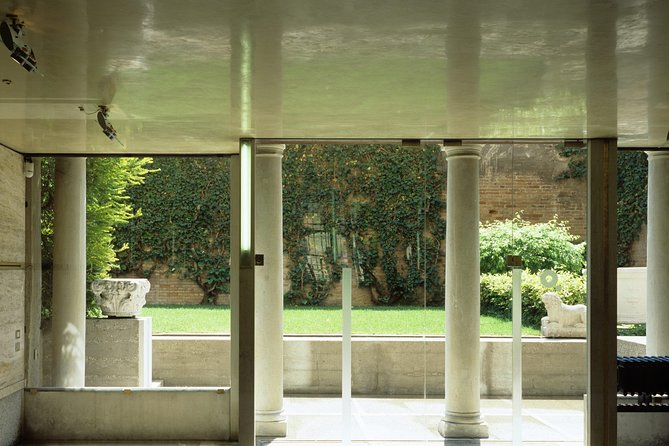
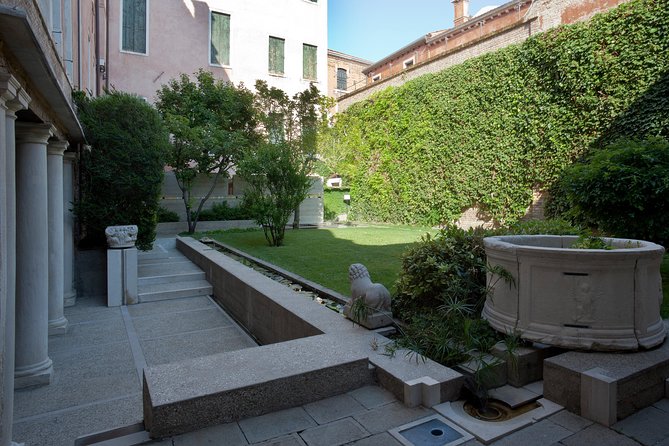
Scarpa reinforced the building and renovated both the entrance hall of the museum and the palace’s garden. The key idea for visitors is that he regained control over an open portion that had been disused because flooding made it unreliable.
Instead of accepting that as a dead end, Scarpa raised the area from the ground floor and transformed it into a walkway for visitors. That move changes everything about how you experience the space. You do not have to mentally adjust for wet floors or unstable access. You walk through a designed route, and the building’s structure guides you.
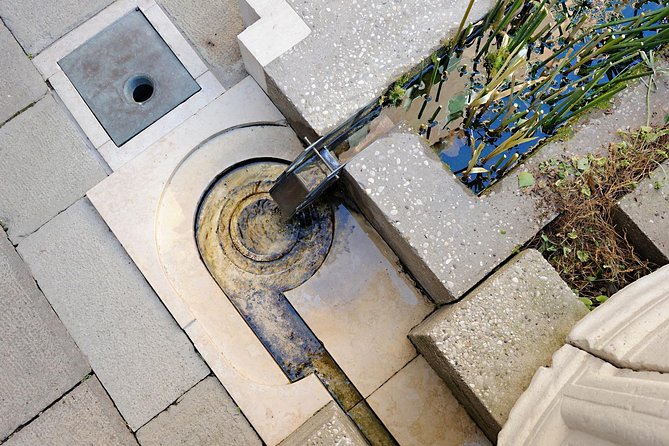
Meanwhile, water is not ignored. Water that enters the ground floor is contained by a parapet wall and channeled into the rear garden. In other words, the system handles flooding, but it also turns water into an aesthetic element, coexisting with the architecture rather than fighting it.
If you care about practical design, this stop delivers. Scarpa’s brilliance is not only that it looks composed. It is that the design accounts for conditions that Venice cannot fully control.
The only consideration: this portion is more about conceptual architecture and how it manages water. If you are expecting only ornate visual drama, you still get beauty, but you will get it through engineering ideas and spatial planning.
The same hours, spent on the water instead:
- Boat Trip: Glimpse of Murano, Torcello & Burano Islands
★ 4.3 · 15,699 reviews - Venice: La Fenice Opera House Entry Ticket with Audio Guide
★ 4.6 · 11,742 reviews - Murano & Burano: Boat Tour with Guide & Glass Factory Visit
★ 4.3 · 10,716 reviews - Venice: Burano, Torcello & Murano Boat Tour w/Glassblowing
★ 4.4 · 10,245 reviews - Murano, Burano and Torcello Half-Day Sightseeing Tour
★ 3.5 · 7,928 reviews
What you learn from Scarpa’s two tricks: glass, light, and managed water
This itinerary is short on purpose, and that is a good thing. In just two hours you get two distinct ways Scarpa changed Venetian design forever, and you can compare them.
At Olivetti, the focus is on light and reflections. Scarpa uses glass tiles and a controlled fountain trickle to make the square’s water effects feel present inside a room. The gradual fade of floor color with distance from the windows teaches you how atmosphere can be designed. You learn that “Venice reflections” are not only weather. They are also material choices and layout.
At Querini Stampalia, the focus shifts to structure and resilience. Scarpa shows you that water management can be part of the beauty, not a nuisance parked out of sight. Raising the walkway turns a flooded ground-level problem into an elevated experience. Meanwhile, parapets and channels guide water to the rear garden, which is a quietly clever solution. You come away understanding that architecture can respect Venice’s conditions and still create calm spaces for visitors.
The best part is the way these stops teach you to look. After seeing both, you will likely notice similar thinking elsewhere, even if you do not know the architect. You start asking, Where is the light coming from? How does the floor shape perception? Where does the water go?
If you like architecture tours, you will probably find this format satisfying because it gives you themes you can carry with you across the city.
Timing and logistics that actually help your day
This is an afternoon tour, starting at 2:00 pm, and running about 2 hours total. That matters more than it sounds. Venice afternoons are good for wandering, but they can also become exhausting if you start too late. A scheduled block in the middle of the day helps you keep momentum.
The meeting point is clear: the Clock Tower, Piazza San Marco. The tour ends at Campo Santa Maria Formosa. Ending there is useful because it drops you closer to routes that keep you moving through Venice without immediately backtracking to St. Mark’s.
Group size is also practical. It is private, with a minimum of 2 people per booking and a maximum of 10. Small groups are good for architecture tours because you can hear answers and see details without constant reshuffling.
This also is not a “hover and hurry” format. Each stop is about an hour with included admission. In a city where lines and ticket gaps can eat time, having entrance included for both locations is real value.
One more practical note: this tour uses a mobile ticket. Also, service animals are allowed, and it is described as suitable for most travelers. Since you are walking and standing to view architectural details, wear comfortable shoes.
Price and value: what $226.53 gets you in Venice
At $226.53 per person for about 2 hours, the pricing is not “impulse buy cheap.” But it also is not just you and a map.
You are paying for a qualified guide and entry to both sites. That included admission matters here, because you are targeting two specific Scarpa-linked spaces that are not always included in standard city walks. If you tried to DIY both stops, you would still spend time figuring out where to go, what to prioritize, and how to understand what you are seeing.
You are also paying for the private format. With a group that can be up to 10, you are likely to get more attention than you would in a big open-group tour. And the tour description points to an art historian-led approach, which usually means you get explanations that go beyond surface labels.
There is also the value of timing. Afternoon tours leave your morning free for other plans, and with Venice, that freedom can be the difference between a good day and a rushed one.
If you are traveling with someone who also likes architecture or design details, the value improves. And if you have flexibility, a rain-friendly tour helps you avoid losing your day entirely.
Bottom line: if you want a Scarpa-focused experience that saves you time and adds real understanding to what you see, the price can make sense. If you mainly want broad sights with minimal walking and minimal explanation, you might want a lighter format.
Practical notes before you go, including rain and Venice entry rules
This tour is designed to work even when the weather does. It will run with rain, but in exceptional high tide it might be cancelled, with a refund provided. That is important because Venice water conditions can change fast. If you are booking during a week with known high-water risk, it helps to keep your schedule flexible.
Venice can also have city access rules on certain dates. The tour info warns that on some dates, you might need registration and payment of an access contribution to visit the city, so you should check the Comune di Venezia website for the latest procedures.
In terms of where you end up, you will finish at Campo Santa Maria Formosa. Plan a simple next step, like a cafe stop or a slow walk toward whatever neighborhood you want to explore. That way you are not immediately hunting for your bearings in the rain or in a sudden crowd.
Finally, this is a private tour/activity, only your group participates. That tends to make the experience feel more personal, but it also means you should arrive on time at the start so the guide can keep the flow between the two stops.
Should you book this Carlo Scarpa tour?
Book it if you want Scarpa’s Venice through two high-impact sites in a short, well-paced block. I think it is especially worth it when you enjoy architecture details, light and reflections, and the real design problems Venice forces on people.
Also book it if you value guided explanation. The experience description and feedback emphasize a guide who is punctual and shares a personal, engaged way of looking at Scarpa, not just facts.
Skip it, or consider another option, if your main priority is big-picture sightseeing with lots of scenic stops. This tour is about design thinking, and you will spend your time looking closely, not only photographing landmarks.
If you are in Venice for a limited time, you will likely appreciate the afternoon timing and the included tickets. That is a smart way to turn a short window into an architecture-focused day.
FAQ
How long is the Carlo Scarpa walking tour in Venice?
The tour lasts about 2 hours.
Where does the tour start and end?
It starts at the Clock Tower, Piazza San Marco, 30124 Venezia VE, Italy, and ends at Campo Santa Maria Formosa, 30122 Venezia VE, Italy.
What is included in the ticket price?
The tour includes a qualified guide and entrance to the Olivetti showroom and the Querini Stampalia Foundation.
Is this tour private, or is it shared with others?
It is a private tour. Only your group participates, with a maximum of 10 people per booking.
Does the tour run in rain?
The tour will take place also with rain. In the event of exceptional high tide it might be cancelled and you would receive a refund.
What time does the tour begin?
The start time is 2:00 pm.
Is there free cancellation?
Yes, free cancellation is available. You can cancel up to 24 hours in advance for a full refund.