
Reviewed · HIDDEN GEMS & BACKSTREET TOURS
Tour of The Real Hidden Venice
Venice without the crush is the whole point here. You get a small-group walk that threads through quieter neighborhoods like Cannaregio and the Jewish Quarter, then lands you at Rialto Bridge with the stories you did not know you needed.
This tour is a lot of walking on Venice ground. Expect bridges, stops for explanation, and some standing, so if you want a slow and sit-down day, plan other activities too.
In This Review
- Key highlights worth your attention
- Why this walk starts in Cannaregio, not the tourist crush
- Campo San Geremia: the funny rules of Venetian squares
- Crossing into the Ghetto Ebraico, and why the word matters
- The Madonna dell’Orto and Tintoretto’s footprint
- Palazzo Mastelli del Cammello, the Camel House nickname
- Squero dei Muti: where old gondolas were made
- Ponte Chiodo: a small bridge with big timing
- The Rialto approach: seeing the bridge before you hit the crowds
- Campo San Giacomo di Rialto and Mercato di Rialto, Venice’s lived trading base
- Price and value: why $47.16 can make sense in Venice
- Group size, pace, and guides: what you should expect in real life
- Practical tips so you enjoy the quieter route
- Should you book The Real Hidden Venice tour?
Key highlights worth your attention
- Campo San Geremia first for an easy start in a lesser-visited square and an odd, funny origin story
- Ghetto Ebraico on foot with context on the word ghetto and how the quarter shaped daily life
- Chiesa della Madonna dell’Orto stop tied to Tintoretto and what you can spot in front of the church
- Camel House facade at Palazzo Mastelli del Cammello, plus a feel for why Venice nicknames stick
- Old gondola workshop vibes at Squero dei Muti, plus classic canal-bridge views
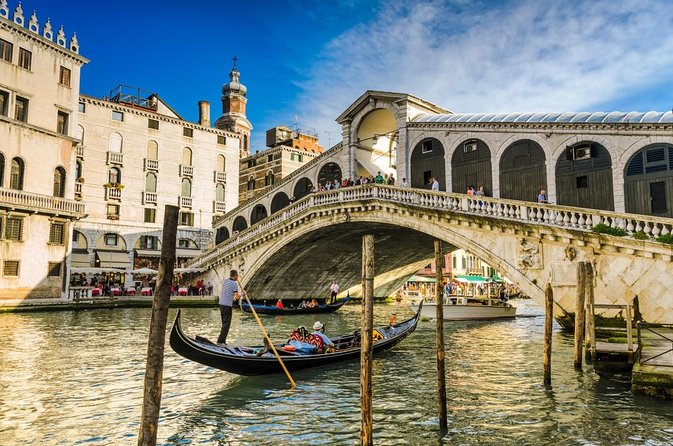
- Ends at Rialto Bridge so you can continue exploring with better direction and confidence
Other walks through the quieter calli:

Why this walk starts in Cannaregio, not the tourist crush
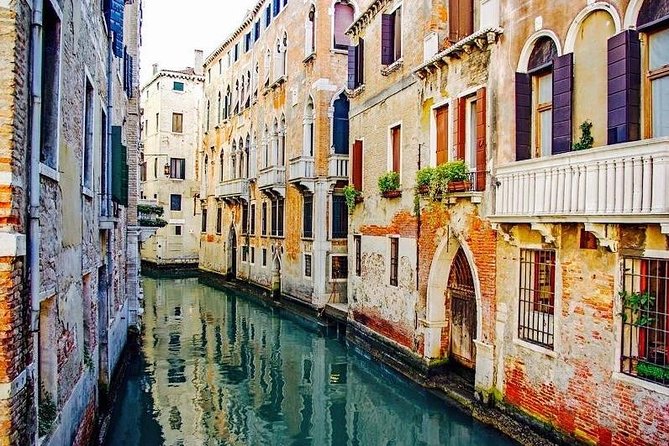
Most Venice tours blast you toward the big sights fast. This one does almost the opposite, starting in the area of Cannaregio and the nearby streets that locals use every day.
That matters because Venice feels different when you are not constantly weaving around tour buses. You get to hear how the city functions beyond the postcards, with a local guide explaining what daily life looks like, not just what happened centuries ago. And since the group is capped at 15, you can ask questions without yelling into someone’s camera strap.
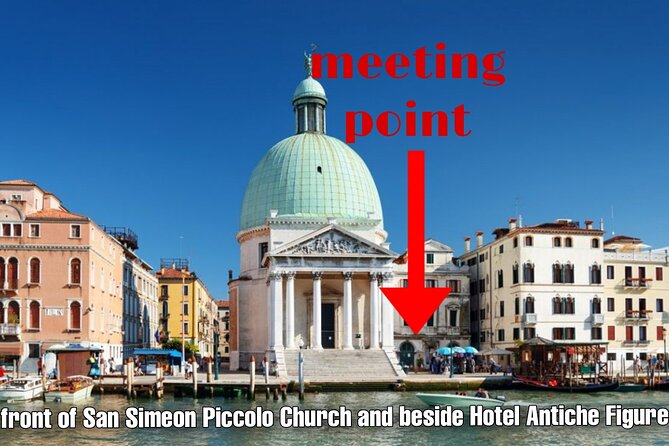
It also helps that the start point is in the Santa Croce area, near the Hotel Antiche Figure. If you are staying around Santa Lucia, this is a convenient beginning. If you are staying closer to St. Mark’s, you should double-check your route, because getting to the meeting point can mean a longer walk than you expect.
Campo San Geremia: the funny rules of Venetian squares
Your first proper moment is at Campo San Geremia, a picturesque square in Cannaregio. Campo squares can look straightforward, but in Venice the meaning of a campo versus a piazza and how the space evolved can be weirdly comic. You will hear the unusual backstory of this particular campo, and it sets the tone for the rest of the walk.
This is also a smart warm-up stop. In about five minutes, you get oriented in a calm spot before you start crossing foot bridges and slipping into narrower canal lanes. Even if you are short on time in Venice, this start helps you build a sense of direction, because you are learning how to read the city as you walk it.
Crossing into the Ghetto Ebraico, and why the word matters
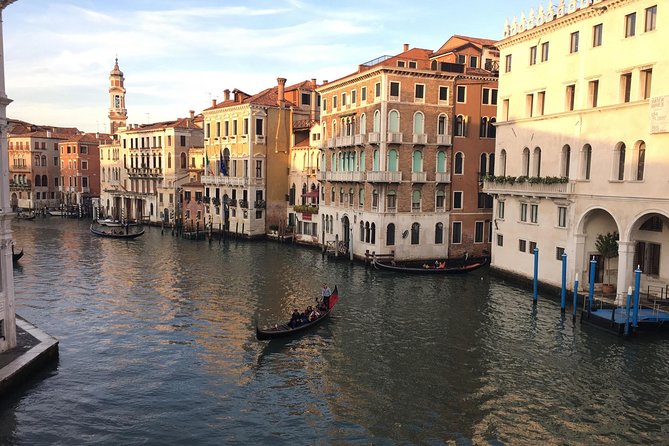
Next you cross into Venice’s Jewish Quarter, the Ghetto Ebraico. This is one of the most historically loaded areas of the city, and it is easy to miss the significance if you only treat it as a scenic neighborhood.
Here, the guide focuses on the origin of the word ghetto and what that quarter meant in everyday terms. You do not just hear a headline version of history. You get a human scale explanation that connects the quarter to what you can still see and understand today.
You will also get time to look around, about 15 minutes in this stretch. Use it. Scan the streets like locals do, then ask questions if something catches your attention. This is one of the best places on the route for asking, Why did this area develop this way?
The same hours, spent on the water instead:
- Venice: Doge’s Palace Reserved Entry Ticket
★ 4.6 · 42,716 reviews - Venice: Grand Canal Gondola Ride with App Commentary
★ 4.1 · 23,020 reviews - Venice: Grand Canal Gondola Experience with Live Commentary™
★ 4.2 · 16,504 reviews - Boat Trip: Glimpse of Murano, Torcello & Burano Islands
★ 4.3 · 15,699 reviews - Venice: La Fenice Opera House Entry Ticket with Audio Guide
★ 4.6 · 11,742 reviews
The Madonna dell’Orto and Tintoretto’s footprint
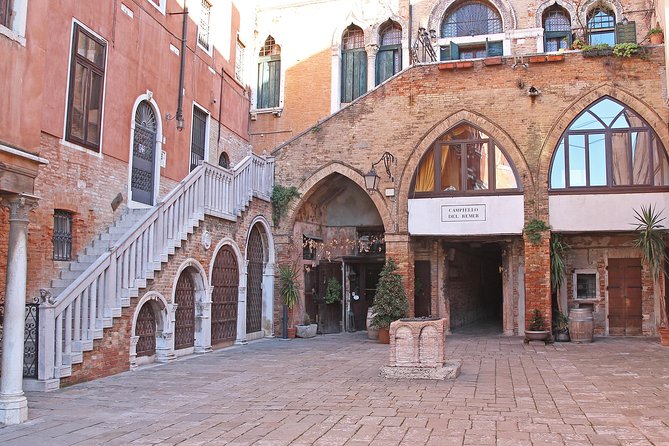
One of the standout cultural stops is the Chiesa della Madonna dell’Orto. You do not come here just to say you saw a church. You come for the Tintoretto paintings connection, and for the chance to notice something special right around the church area.
The tour includes time near the original floor of Venice in front of the church. The church admission is not included, so you will want to check what you want to do once you arrive. If you are the type who loves standing quietly and taking in details, you can plan for that extra step. If you prefer to keep moving, the exterior area still gives you something meaningful to anchor the story.
This stop is a good example of why a guided walk beats solo wandering. The guide helps you read what you are looking at, instead of letting your brain flip through guidebook facts and forget them ten minutes later.
Palazzo Mastelli del Cammello, the Camel House nickname
If you have ever wondered why Venetian buildings get nicknames, this is where it clicks. The Palazzo Mastelli del Cammello is known as the Camel House because of its facade nickname, and you will learn the legend behind why it got that name.
This is a quick stop, just about five minutes, but it is the kind of detail that makes Venice feel alive. It turns architecture into character. You start to see that Venice is a city of stories built into stone, plaster, and street-level myth.
Also, it helps that the guide typically keeps things conversational. Across the range of guides associated with this tour, you hear the same theme in how they teach, fun facts, real local language, and plenty of chances to ask follow-up questions. Names that come up often in guide feedback include Mateo, Giovanni, Nico, Sebastian, Sebastiano, Thomas, Georgia, and Michelle, and the common thread is that they make the city feel personal.
Squero dei Muti: where old gondolas were made
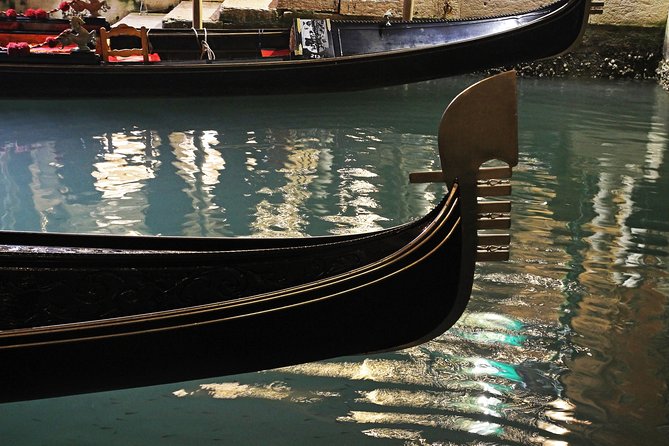
Then you wind toward the Squero dei Muti, an old gondola workshop site. Venice’s gondolas are famous, but what is more interesting is the process and the place where craft happened.
This stop is brief, about five minutes, but it is timed well inside the day. After learning about history and architecture, the gondola factory connection gives you a working-life perspective. Venice was not only palaces and ceremonies. It ran on skilled labor, tools, and small industries tied to the canals.
If you care about Venice beyond big landmarks, this is a highlight. It is also an easy photo pause without turning into a bottleneck like some of the more famous viewpoints.
Ponte Chiodo: a small bridge with big timing
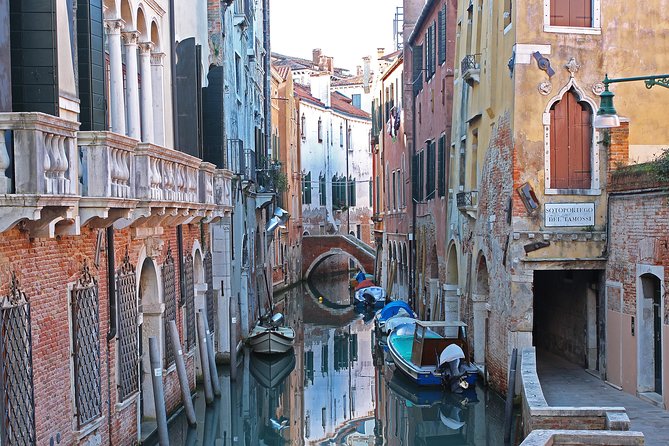
You also stop at Ponte Chiodo, described as the original bridge of the Venetian Republic. It is the kind of place where, without context, you might just see another bridge.
With the guide, the stop feels like a time marker. It is a reminder that even smaller crossings have long timelines in Venice. You learn what makes this bridge part of the Republic-era story, and you get a better sense of how Venice’s geography shaped movement and power.
At five minutes, this is not a long lesson. It is a quick anchor that helps you understand the city as you keep walking.
The Rialto approach: seeing the bridge before you hit the crowds
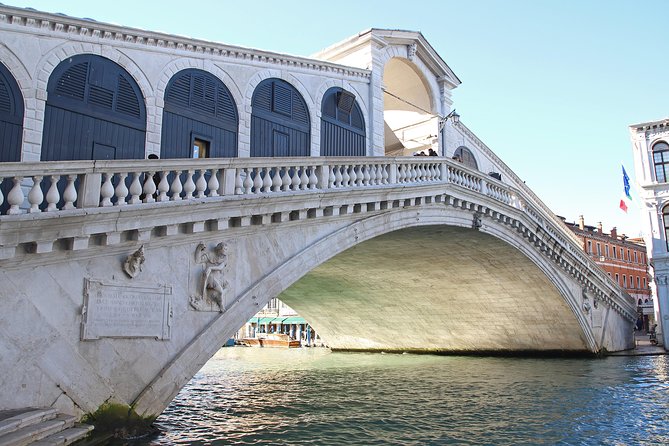
As you get closer to the big centerpiece, the route sets you up for Rialto Bridge with the right mental setup. You learn about the 16th-century landmark and why it mattered as the first bridge built on the Grand Canal.
There is also a moment on the water and city views, timed for about 15 minutes at Ponte di Rialto. This is one of those spots where the view is only half the reward. The other half is realizing what you are seeing in terms of trade, layout, and tradition.
And since your ending is near Rialto Bridge in the heart of Venice, you are in a strong position to keep exploring afterward. You also have a better sense of where to walk next, instead of getting dropped into the busiest area with zero bearings.
Campo San Giacomo di Rialto and Mercato di Rialto, Venice’s lived trading base
Just before you fully settle into the Rialto area, you pass Campo San Giacomo di Rialto, described as the first lived island of Venice. It is a quick stop, around 10 minutes, but it gives you a powerful idea of how Venice began. You are not just looking at a city. You are moving through a sequence of meanings tied to how people lived and settled here.
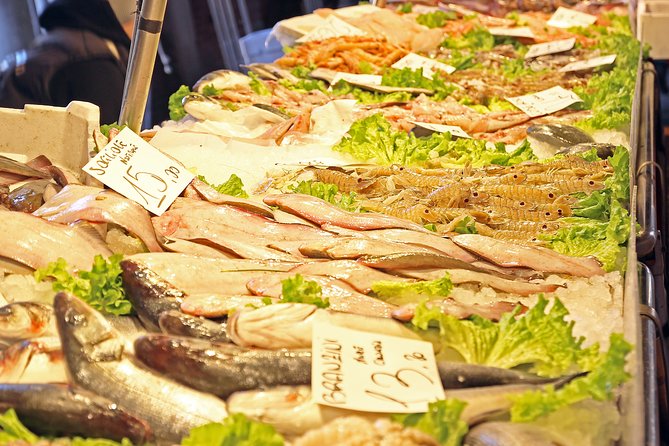
Then you reach Mercato di Rialto, the old trade center of the Venetian Republic, about 15 minutes. This is where the tour’s storytelling ties together. Rialto is not only a famous bridge and shopping area. It was an engine for commerce, the kind of place where rumors, prices, and decisions moved as fast as people could.
By the time you finish the walk, you understand why Rialto Bridge is where it is, and what it represents. That turns the landmark from a photo stop into an actual part of the city’s logic.
Price and value: why $47.16 can make sense in Venice
At $47.16 per person for about two hours, this is not the cheapest way to walk Venice. It is also not wildly priced for what you get.
Here is the value equation you are really buying:
- A local guide for a two-hour route that you would likely not plan perfectly on your own
- A group size capped at 15, which makes questions practical, not performative
- A map included per person, plus local taxes covered
- Stops across quieter districts, so you get fewer crowd blocks and more “this is how people actually move” moments
Also, booking on average about 54 days in advance suggests it is in demand. If you want a specific time window, do not leave it to the last minute.
One cost consideration to know: admission ticket is not included for the Madonna dell’Orto stop. Everything else on the route is listed as free for the tour stops. So your total spending is usually just your guide plus any church choice you make.
Group size, pace, and guides: what you should expect in real life
This tour runs with a maximum of 15 travelers, and it is offered as a small-group or private option depending on what you choose. That is a big deal in Venice, where a group of 30 can feel like a moving wall.
The pace is a walking tour pace, and it is designed for moderate physical fitness. You should wear shoes you trust on stone, and you should be ready to stand while you listen. A couple practical realities based on common feedback patterns:
- Some parts take longer because the history matters to the guide and the group
- If you want constant movement, ask questions early and be ready to keep walking once the group finishes a viewpoint
On the guide front, the strongest praise consistently points to guides who bring Venice to life with humor and local detail. Names that frequently appear in top-rated feedback include Mateo, Giovanni, Nico, Sebastian, Sebastiano, Thomas, and others, and the main theme is that they answer questions and give practical recommendations after the tour. That means you finish with direction for lunch, bars, and what to do next.
Practical tips so you enjoy the quieter route
Venice is easy when you plan for it. For this specific route, I’d do three things:
- Bring a layer. The canal air can change fast, and you are outdoors almost the entire time.
- Pack smart for photos. You will hit viewpoints like Rialto, plus bridge crossings, plus churchfront details.
- Plan your meeting spot route ahead of time. The start is not at St. Mark’s. If you are coming from somewhere else, give yourself extra walking buffer.
If you are traveling with kids, note that children must be accompanied by an adult. And if you are visiting outside Venice for a day, check the Venice access fee rules for certain dates at cda.ve.it. Some visitors staying outside of Venice may need to pay a €5 access fee, with exemptions depending on circumstances.
Should you book The Real Hidden Venice tour?
Book it if you want a guided walk that explains Venice in a way that clicks fast. You will appreciate the quiet neighborhoods, the Jewish Quarter context, and the fact that the route ends at Rialto Bridge with real meaning behind it, not just a skyline view.
Skip it or consider pairing it with a slower plan if you hate standing during history talk or you want a ultra-fast highlights circuit only. This is still a walking tour, and you should expect breaks for stories at several stops, including the more serious history segments.
If your goal is to understand Venice beyond the usual postcard loop, this is a smart, high-value use of two hours.
Lately added around Venice

Hidden Gems & Backstreet Tours, compared.
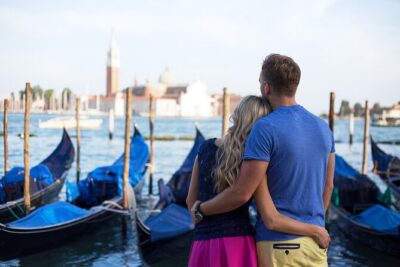
Venice Private Gondola Ride: Explore Hidden Canals and Sights
Read our review →
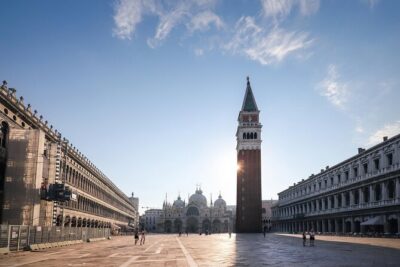
Venice 3,5 hrs tour: Doge’s Palace, St Mark’s and Hidden Gems
Read our review →
Private Secret Venice Tour; Rialto Market, San Polo & Food and Wine tasting
Read our review →
St Mark’s Basilica & Doge’s Palace with Secret Passages Access
Read our review →Browse the lists this tour appears in