
Reviewed · WALKING TOURS
Venice Commissario Brunetti and Donna Leon: Walk His Beat
Venice turns detective as you walk its streets. This Donna Leon and Commissario Brunetti walking tour connects the fiction to real corners of Cannaregio, with a finish at the police headquarters green doors. It is part story map, part neighborhood stroll, and it moves at a pace that lets you actually look around.
I especially like the way the guide, Valerio Coppo, links scenes to specific places, so you understand why each stop matters. I also like that you spend time in quieter Venice areas like Cannaregio and the Ghetto, not just the postcard loops. The whole thing feels like getting your bearings fast, because you come away with street-level context.
The main drawback to plan for is that you are on your feet for about two hours. Venice is uneven and narrow, and a few stretches can feel longer than you expect, even though the stops are brief.
In This Review
- Key things I’d focus on before you book
- Why this Brunetti walk feels different from a normal Venice tour
- Price and logistics, what you’re really paying for
- Starting at Campo dei Gesuiti, then straight into Cannaregio
- Cannaregio’s Santa Maria Maddalena stop and the Angelo Animale chase
- Strada Nova and the small-bar Venice the show loves
- Back in Cannaregio, the investigation talk and neighborhood context
- Rosa Salva and the bar-stop that turns into local food intel
- Basilica dei Santi Giovanni e Paolo, San Zanipolo, and Brett Lynch’s wayfinding
- San Francesco della Vigna and the Questura green doors ending moment
- How to get more out of the walk, even if you are not a superfan
- Who this tour is best for
- Should you book Venice Commissario Brunetti and Donna Leon: Walk His Beat?
- FAQ
- How long is the walk?
- What is the price per person?
- Is the tour offered in English?
- Where is the meeting point?
- Where does the tour end?
- Is pickup available?
- How many people are on the tour?
- Are admission tickets needed for the stops?
- What if the weather is bad, or I need to cancel?
Key things I’d focus on before you book
- Brunetti’s front door start in Cannaregio, right where the story begins
- Stop-by-stop Donna Leon scenes, including Angelo Animale and the Professor Nava thread
- Quiet neighborhoods like Cannaregio and the Ghetto for a different Venice feel
- Real bars and palazzi exteriors, not just churches for photos
- The Questura green doors finish at San Francesco della Vigna
- Small group size cap (15), which helps questions and conversation
More sestieri crossed bridge by bridge:
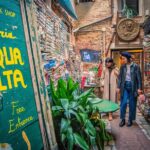
Why this Brunetti walk feels different from a normal Venice tour
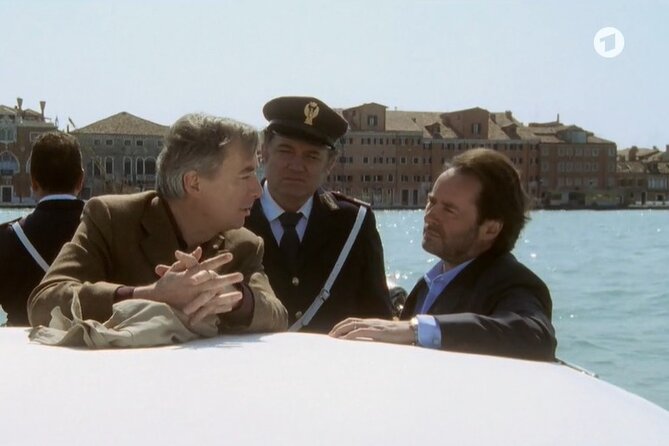
Venice has a way of swallowing you in canals, crowds, and noise. This walk gives you a different way to read the city. Instead of starting with landmarks, you start with people and plot. You move from a recognizable Brunetti door, to churches and side entrances tied to key story beats, and then you land at the Questura area that viewers know for the famous green doors.
That structure matters because it changes how you look. You do not just pass a church or a palazzo. You pause, place a scene in your mind, and then notice the actual street details around it. The guide’s job is to help you connect the dots without turning it into a lecture.
And the vibe is practical, not precious. Even if you are not a hardcore series binge-reader, you still get something out of the walk, because the streets themselves become the “set.”
Price and logistics, what you’re really paying for
At $93.16 per person for about two hours, this is not a budget “see everything” deal. It is a focused walking tour with a licensed guide (registration number 06000001), and it is priced like a storytelling experience with multiple specific filming-corner stops.
Here is what you get for your money that helps it feel fair:
- Small group size: a maximum of 15 people keeps it manageable in narrow calli.
- English offered (and the operator also runs small-group tours in German on certain bookings).
- Mobile ticket: you do not need to print anything.
- Stops are marked free entry: the itinerary lists each main stop as admission ticket free, so you are not paying site-by-site fees.
- Valerio Coppo as the guide: several comments highlight how he ties things to Venice and the stories, plus how he answers questions and adds local pointers.
Timing also helps. This tour is typically booked around 63 days in advance on average, which usually means it can sell out on popular dates. If you are visiting in peak season, I would plan on booking early.
Two small planning notes:
- Pickup is only available for private group bookings, and only within the historical center of Venice (or hotel), if you arrange it.
- The experience needs good weather. If the day is canceled due to poor weather, you are offered another date or a full refund.
Starting at Campo dei Gesuiti, then straight into Cannaregio
You meet at Campo dei Gesuiti, 4878, 30121 Venezia, and you start walking into Cannaregio. The very first moment is the hook: you go to the Brunetti family front door. For people who know the series, that door becomes a kind of anchor point. It is the place where you can immediately feel the fiction “touching” the city.
For first-time series viewers, it still works. Starting at a home door rather than a big monument makes you slow down. You notice how the street slopes, how the buildings frame sightlines, and how Venice neighborhoods feel when you are not fighting through the most famous squares.
You get about ten minutes at the first stop, enough time to spot what the guide is pointing out, then move on without dragging the tour.
The same hours, spent on the water instead:
- Venice: Doge’s Palace Reserved Entry Ticket
★ 4.6 · 42,716 reviews - Venice: Grand Canal Gondola Ride with App Commentary
★ 4.1 · 23,020 reviews - Venice: Grand Canal Gondola Experience with Live Commentary™
★ 4.2 · 16,504 reviews - Boat Trip: Glimpse of Murano, Torcello & Burano Islands
★ 4.3 · 15,699 reviews - Venice: La Fenice Opera House Entry Ticket with Audio Guide
★ 4.6 · 11,742 reviews
Cannaregio’s Santa Maria Maddalena stop and the Angelo Animale chase
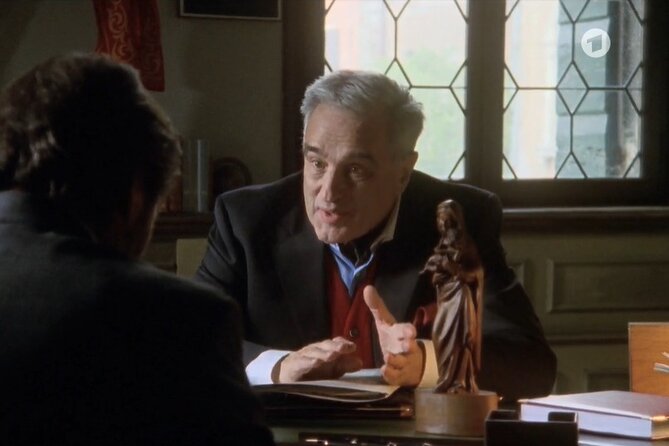
Next up is the Chiesa di Santa Maria Maddalena. Here, the tour points you to a palazzo setting connected to Angelo Animale, a radical animal protection organization. The scene details matter because they tell you what to look for. You are not just standing in front of a church. You are thinking about side entrances, masked figures, and the way people move through an urban maze during a chase.
The story beat on this stop is dramatic: masked figures escape via a side entrance, and one is caught and turned out to be Chiara. In practical terms, this is where the tour becomes more than trivia. It shows you how Venice architecture enables quick exits and tight turns, and why those details feel cinematic on screen.
A small consideration: churches and palazzi exteriors can look different from frame to frame. If you are expecting a perfectly preserved film set feeling, keep expectations flexible. The value here is the connection between city form and storytelling.
Strada Nova and the small-bar Venice the show loves
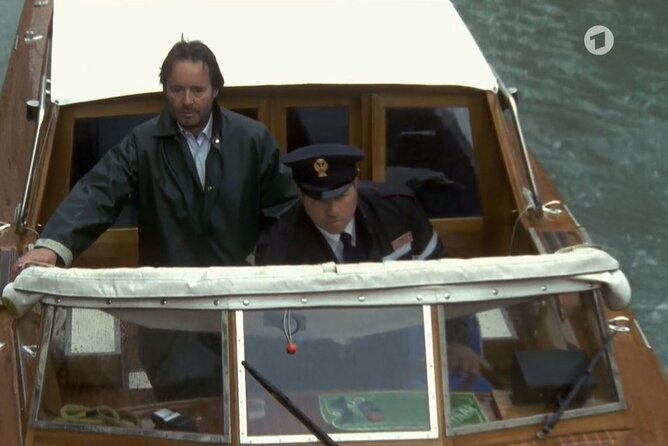
Then you move to Strada Nova, with a story connection to a bar moment for Signora Gismondi and her neighbor dynamics. This stop is short, but it matters because it plants you back in everyday Venice. In a city that can feel all water and marble, bars and narrow streets remind you this is a lived-in place.
Even if you have not memorized every episode, these “micro scenes” help you understand what the series is doing. It is not only chasing crimes. It is also tracking daily life: neighbors, opinions, and routine places where people meet.
The best way to enjoy a stop like this is simple: look up and around. In Strada Nova, you will feel the scale of the facades and the way calli funnel sound. That is part of why these spots translate so well to television.
Back in Cannaregio, the investigation talk and neighborhood context
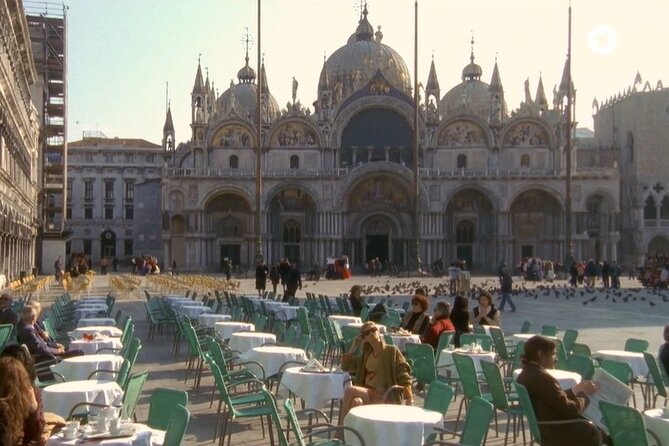
Back in the Cannaregio area, the tour shifts into another story thread: after a key realization about Chiara’s involvement with Angelo Animale, you get a discussion tied to the murder of Professor Nava, who previously worked in the slaughterhouse.
This is one of the more useful parts of the walk, because it adds motivation. Many crime shows present plot as pure momentum. Here you learn why different characters and institutions matter in the Venice setting.
The tour places this conversation in a bar setting associated with another name: Vice-Questore Patta and an inspector routine involving grappa and ordering comfort food and drinks. Specifically, Patta is linked to things like panino prosciutto, a tramezzino with ham and artichoke, and a glass of white wine. Vianello is also associated with valuing a café and croissants here.
You should not expect a formal tasting on this walk. The takeaway is the same: this is the Venice of routine stops and regular preferences. That makes the later police headquarters moment land harder, because you understand the contrast between public order and private conversation.
Rosa Salva and the bar-stop that turns into local food intel
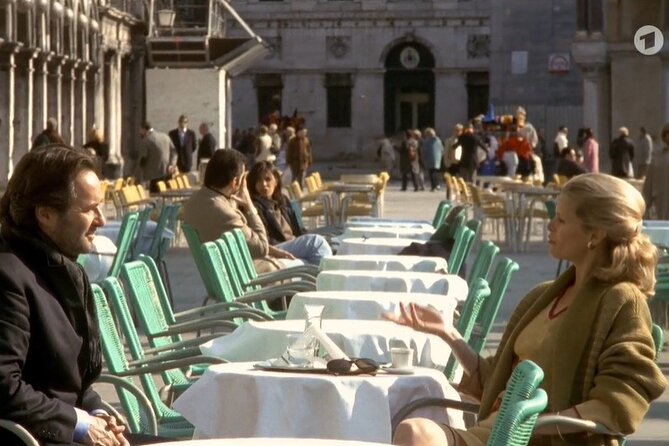
One of the most practical stops is at Rosa Salva – SS. Giovanni e Paolo. The tour uses this location to show how story characters treat bars as information hubs. Even if you just file the food and drink ideas away for later, it helps your own Venice day.
The specific details you get are the kind that make you feel like you have a friend who knows where to go. If you like to plan simple meals instead of wandering hungry, these hints are genuinely useful. You are also learning the neighborhood rhythm around SS. Giovanni e Paolo (San Zanipolo), which keeps the walk anchored to real geography rather than only set dressing.
And yes, this is still fun even if you only catch parts of the plot. The guide’s enthusiasm keeps it moving.
Basilica dei Santi Giovanni e Paolo, San Zanipolo, and Brett Lynch’s wayfinding
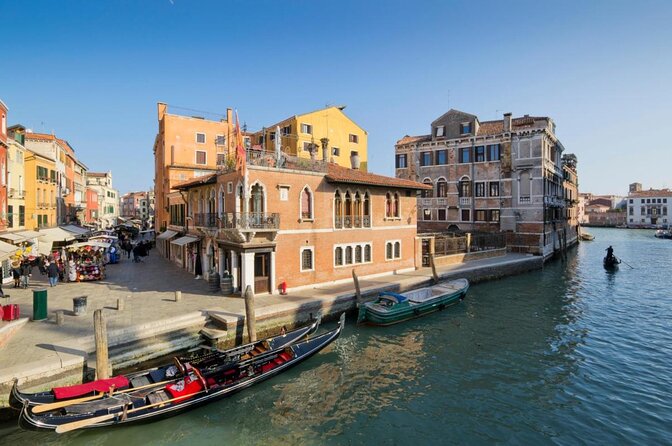
Next is the Basilica dei Santi Giovanni e Paolo (San Zanipolo) area. This stop ties to Signora Maria’s kiosk, and it introduces Brett Lynch, an American archaeologist. The key storytelling element here is that the kiosk has information power, and the guide helps you understand why that kind of place works in a neighborhood mystery.
You will also get wayfinding in a very Venice way. The guide connects you with how the characters navigate and how the city itself supports those paths. If you have ever felt lost in Venice even after seeing maps, you will like learning how real locals make movement feel easy.
This is also a good point to catch your breath. The tour stays efficient, but you can use the short stop to step back, orient yourself, and notice the edges of the square and the paths that lead away from it.
San Francesco della Vigna and the Questura green doors ending moment
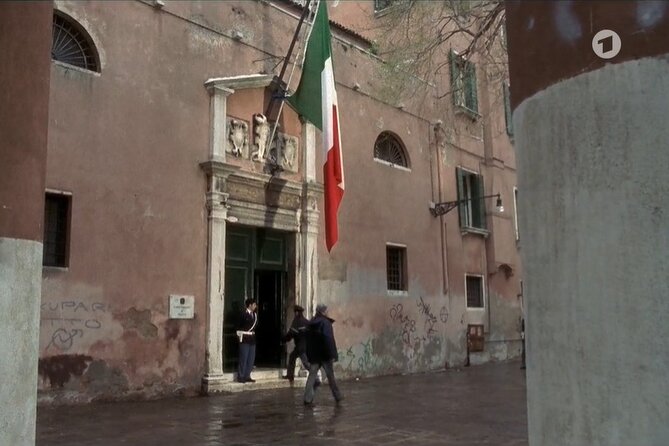
The walk ends at Chiesa di San Francesco della Vigna, and the payoff is the place you cannot miss: the columned hall in a campo that funnels people toward the Questura via the famous green door and portal.
Even with only ten minutes here, it lands because the guide gives you the “why.” This is not a generic photo stop. It is a cinematic architectural corridor, the kind of place where a story can control focus. The green doors are the visual shorthand for police headquarters, and you finally understand how the surrounding space supports that framing.
There is also a gentle reality check. One comment noted that the Questura exterior can look run-down and hard to recognize compared to what people picture. I think that is worth considering. Venice ages. Streets and buildings change. Still, the ending works because the geometry and the route remain the point. You are seeing the city’s role in the scene, not freezing it in time.
How to get more out of the walk, even if you are not a superfan
You do not need to be a die-hard fan to enjoy this. But if you want to squeeze extra value from it, here are a few practical tips based on how Valerio runs the tour:
- If you know some characters, you will spot details faster. If you do not, let the guide give you names and motivations as you go.
- The guide often adds cross-media context, including suggestions like watching the German television shows in addition to reading the books. That can help you recognize scenes even if you read a different translation or timeline.
- Ask questions about “why this place” as you walk. Valerio tends to answer in a way that connects city layout to story logic, and that makes your next day in Venice easier.
Also, take advantage of the practical links and local recommendations the guide shares. One highlight was getting suggestions for places off the mass-tourism track, plus even a link to a rooftop terrace tied to the Brunetti apartment setting. Those are the kind of takeaways that keep giving after the tour ends.
Who this tour is best for
This is a strong fit if you want:
- A walking tour with a story, not a stop-and-stare landmarks program
- More time in Cannaregio and nearby calmer areas instead of only the biggest squares
- A guide who ties Donna Leon details to real Venice streets
- A small-group experience that makes it easy to ask questions
It might be less ideal if:
- You need frequent long breaks. The stops are brief, about ten minutes each.
- You want only the most iconic Venice sights. This one is built around specific set locations and neighborhood texture.
Should you book Venice Commissario Brunetti and Donna Leon: Walk His Beat?
If you like Venice but want a smarter route through it, I think this is worth booking. The price is fair for a small-group, English (or sometimes German) guided experience that stays focused for about two hours. The ending at San Francesco della Vigna and the Questura green doors gives you a real sense of closure, like you finished a story arc in the places where it happens.
My recommendation is simple: book it if you enjoy connecting fiction to the real city. It is not just a list of addresses. It is a way to read Venice by walking.
If you are sensitive to walking on uneven streets, plan your footwear carefully and keep water handy. And if you care a lot about the exact “movie look” of specific spots, remember that buildings age. The charm here is the match between architecture and storytelling, not perfect preservation.
FAQ
How long is the walk?
It lasts about 2 hours.
What is the price per person?
The price is $93.16 per person.
Is the tour offered in English?
Yes. The tour is offered in English, and there are also small-group options in German on certain dates.
Where is the meeting point?
You start at Campo dei Gesuiti, 4878, 30121 Venezia VE, Italy.
Where does the tour end?
It ends at Campo San Francesco della Vigna, Campo S. Francesco, 30122 Venezia VE, Italy.
Is pickup available?
Pickup is only available for private group bookings. If you booked privately, you can request pickup at your hotel or another location within the historical center of Venice.
How many people are on the tour?
The tour has a maximum of 15 travelers.
Are admission tickets needed for the stops?
The itinerary lists the stops as admission ticket free.
What if the weather is bad, or I need to cancel?
The experience requires good weather. If it is canceled due to poor weather, you will be offered a different date or a full refund. You can also cancel for a full refund if you cancel at least 24 hours in advance.
Lately added around Venice
Walking Tours, compared.
Doge’s Palace and St Mark’s Basilica Walking Tour
Read our review →
San Marco to Rialto Walk & Spritz Like a Local
Read our review →
Private 3 hrs Venice Tour: St Mark’s, Walking tour & Boat tour
Read our review →
Walking Guided Tour of the City Must-See Sites
Read our review →
Private Best of Venice Walking Tour with St Mark’s Basilica
Read our review →
Venice Sightseeing Small Group Walking Tour with a Local Guide
Read our review →Browse the lists this tour appears in