
Reviewed · WALKING TOURS
Venice Express Walking Tour
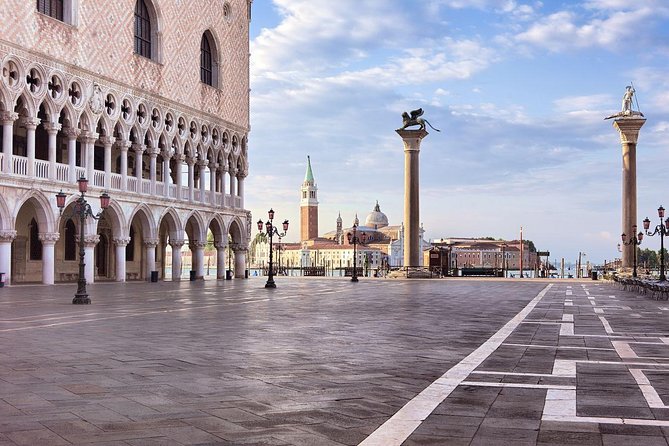
A quiet St Mark’s morning beats the lines. This Venice Express Walking Tour turns the big names you see in photos into a clear street level story, with St. Mark’s Basilica and the Doge’s Palace explained as you walk. I like that the pacing is focused and the guide answers questions with a sense of humor, like Sylvana did for one group I chatted with. I also like that you get headsets when groups are larger, so you do not miss the details. One drawback to plan for: it is short, so if you want long time inside major sights, you will still need separate visits.
What makes this tour work is the way it connects power, faith, and trade. You will hear how the Venetian Republic shaped these landmarks, then you shift to a church legend tied to Santa Maria Formosa, and end with Basilica dei Santi Giovanni e Paolo, where the doges held their final services. If you like Venice as a city of layers, you will get a lot out of the route in just 1 hour 30 minutes.
It runs as an early morning walk starting at 9:15 am from Campo S. Zaccaria, and it tops out at 25 people, so it stays manageable. You finish back at the meeting point, and you can use a mobile ticket. Just know you are mainly collecting context outdoors and at key stops, not doing a slow, inside only museum day.
In This Review
- Key things I’d bank on before you go
- Start in Campo S. Zaccaria, then walk into Venice’s power center
- St. Mark’s Square explained in walking order, not just name lists
- Santa Maria Formosa and Mauro Codussi, with a legend that sounds like Venice
- San Zanipolo (Basilica dei Santi Giovanni e Paolo): doges, funerals, and burial facts you will remember
- Marco Polo gets grounded in the Republic, not just the famous name
- The commercial lifeline between Rialto and St Mark’s, where money met meaning
- Price and value: $35.07 for 90 minutes with real context
- What the best guides do here, and why Sylvana’s style matters
- So who should book the Venice Express Walking Tour?
- Should you book it?
- FAQ
- How long is the Venice Express Walking Tour?
- Where does the tour start and end?
- What language is the tour offered in?
- What’s included in the price?
- Is there an extra fee for some visitors on certain dates?
- Can children join the tour?
Key things I’d bank on before you go
- A short, high-impact St Mark’s area loop that gives you the why behind what you see.
- English guidance with clear audio, including headsets for larger groups.
- Santa Maria Formosa with a very Venice kind of legend, plus Renaissance architecture by Mauro Codussi.
- San Zanipolo’s doge connection, including funerals and burials of the Venetian rulers.
- Marco Polo storytelling tied to Venice’s trading world, not just a name drop.
- Small enough to ask questions, with guides who respond, jokes included.
More sestieri crossed bridge by bridge:

Start in Campo S. Zaccaria, then walk into Venice’s power center
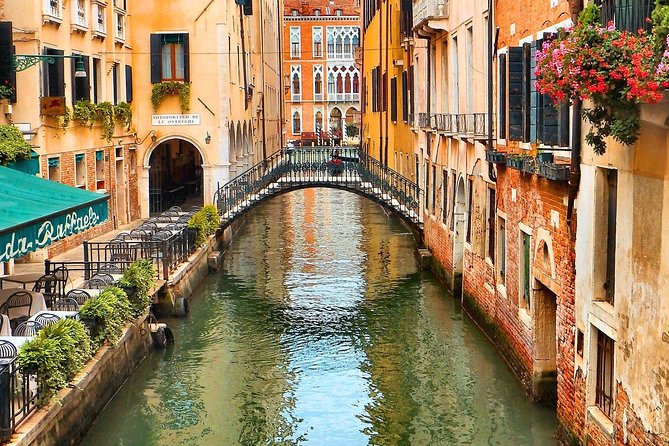
Campo S. Zaccaria is a strong place to begin because it gets you oriented away from the heaviest later day crush. The tour starts at 9:15 am, and that timing matters. Morning in Venice usually means you can actually hear your guide and take in the details without constantly shoulder checking your way through.
The meeting point is Campo S. Zaccaria, 4683, 30122 Venezia VE. You should arrive 10 minutes early so you are ready when the group forms. With a max of 25 travelers, you are not getting lost in a sea of people, and that makes it easier to follow the guide’s line of sight for monuments around St Mark’s Square.
The practical win here is that you are paying for interpretation. Venice can look like one big postcard until someone explains what you are looking at. This tour does that job quickly, with stories that link the monuments, not just facts shouted over traffic.
St. Mark’s Square explained in walking order, not just name lists
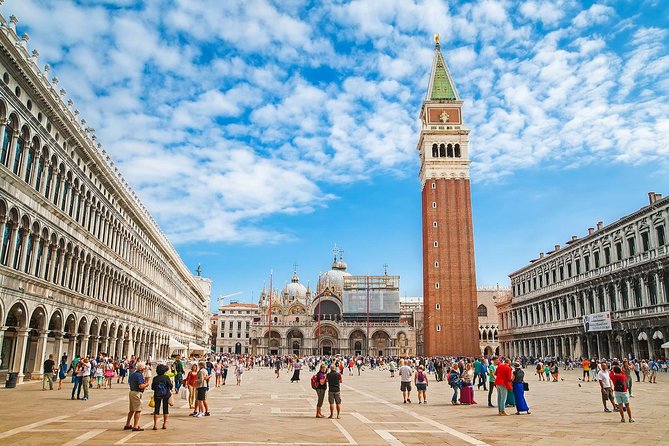
The first stop is the principal public square of Venice, the stage where the city’s biggest institutions sit close together. The guide focuses on the history of St. Mark’s Basilica, the Doge’s Palace, the Campanile, the Clock Tower, and the Procuratie. Even if you have seen these buildings before, you usually do not understand how they connect until someone lays out the civic logic for you.
Here is what you should watch for as you walk this section:
- How St. Mark’s functions as a symbol of Venice’s religious identity.
- How the Doge’s Palace represents state power, administration, and prestige.
- How towers, clocks, and the surrounding buildings show the Republic’s need to organize time and authority.
This is also where your guide can really help you get your bearings. Venice’s center can feel like a maze, so having a clear sequence of monuments makes the streets click in your head. If you already know the names, you will enjoy hearing how the guide connects them to the Venetian Republic and the city’s role in wider Europe.
A small consideration: this part gives you context more than it gives you lingering time. If you want to spend a lot of time inside St. Mark’s or the Doge’s Palace, this walking tour will not replace those visits. Think of it as setting the scene so your later ticket time makes more sense.
Santa Maria Formosa and Mauro Codussi, with a legend that sounds like Venice
Next, you stop at a church erected in 1492, designed by Renaissance architect Mauro Codussi. That alone is a good reason to pay attention, because Codussi is tied to the way Renaissance design worked its way into Venetian buildings.
Even better, the guide layers in the older site. The church sits where there was once a former church dating from the 7th century. And you will hear the tradition that linked it to eight churches founded by San Magno, bishop of Oderzo. Legends like this can be fuzzy, but that is part of the point. Venice keeps its past alive through stories, even when the facts stay complicated.
Then comes the tale behind the name Formosa. According to tradition, the word connects to an alleged appearance of the Holy Virgin disguised as a voluptuous woman. It is the kind of story that sounds too human to be invented, and it is exactly why this stop feels like a Venice experience, not a textbook stop.
What you should take away from this church section is how Venice builds continuity. One site, multiple eras, and a name that carries both faith and local folklore. You will start noticing how the city treats legends as part of its architecture.
One drawback to consider: if you prefer strictly documented history over local legend, this stop might feel more story-driven than you want. But if you are okay with Venice’s mix of faith, tradition, and storytelling, it is a memorable one.
The same hours, spent on the water instead:
- Venice: Doge’s Palace Reserved Entry Ticket
★ 4.6 · 42,716 reviews - Venice: Grand Canal Gondola Ride with App Commentary
★ 4.1 · 23,020 reviews - Venice: Grand Canal Gondola Experience with Live Commentary™
★ 4.2 · 16,504 reviews - Boat Trip: Glimpse of Murano, Torcello & Burano Islands
★ 4.3 · 15,699 reviews - Venice: La Fenice Opera House Entry Ticket with Audio Guide
★ 4.6 · 11,742 reviews
San Zanipolo (Basilica dei Santi Giovanni e Paolo): doges, funerals, and burial facts you will remember
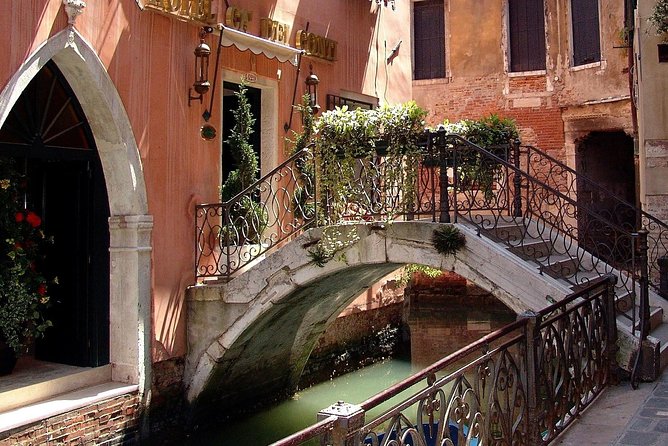
The tour then shifts to one of the city’s largest churches, the Basilica dei Santi Giovanni e Paolo, which has the status of a minor basilica. This is the stop that turns your understanding from general Republic power into something more personal and emotional.
Here is what makes San Zanipolo special:
- After the 15th century, funeral services of all Venice’s doges were held there.
- The church includes the burial of twenty-five doges.
That is a lot of authority packed into one building. When you hear that, you stop thinking of doges as just names in history books. You start picturing the state rituals, the leaders, and the way Venice staged respect for its own power.
As you listen, look at the bigger theme the guide is building. Earlier stops explain how Venice projected itself. This stop explains how Venice honored its rulers at the end of their lives. It is a stark switch, and it works because it is still part of the same story.
If you are someone who likes architecture plus political meaning, this is the moment the tour gives you a payoff. You will likely remember this stop more than the ones that are only about first impressions.
Marco Polo gets grounded in the Republic, not just the famous name
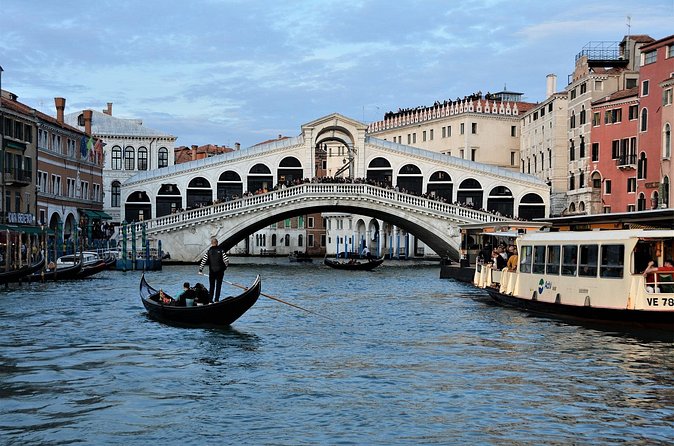
The tour includes a stop tied to Marco Polo, described as an Italian merchant, explorer, and writer, born in the Republic of Venice. That might sound like a simple biographical moment, but it matters where it sits in the route.
Because you have just been hearing about St Mark’s power structures and San Zanipolo’s role in doge funerals, Marco Polo lands differently. You start thinking about exploration not as a solo adventure, but as something a trading city made possible. Venice was not just sightseeing wealth. It was a commercial engine. People moved, goods moved, stories moved.
If you like learning through connections, this stop is a good rhythm change. It stops being only about buildings and turns to a person who represents what Venice exported: trade routes, curiosity, and written stories that helped other Europeans imagine the wider world.
A practical note: the tour stays focused on short stops. So if you want a deep, book level biography, you will need additional reading later. But as a walking tour moment, it does its job.
The commercial lifeline between Rialto and St Mark’s, where money met meaning
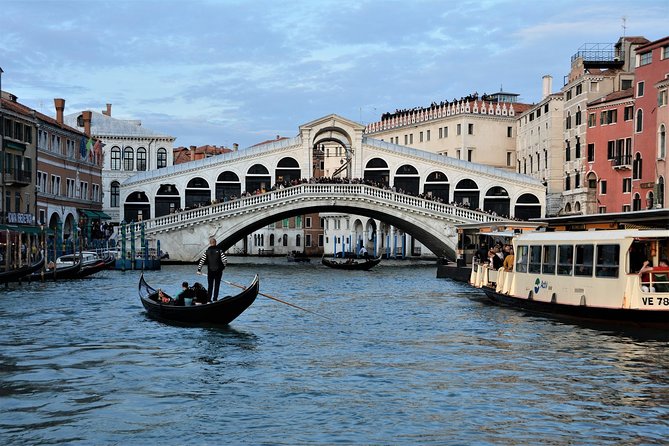
The final stop described is the commercial lifeline between Rialto and St. Mark’s. That line tells you a lot about what the guide is trying to prove: Venice’s greatness did not come from monuments alone. It came from the flow of commerce connecting religious and political centers with the marketplace hub.
Rialto is the trading world. St Mark’s is the political and spiritual front. When the tour ties those two areas together, you get a clearer picture of how the Republic worked. It was not one isolated sphere. It was a system.
This is also where your guide’s tone can make a difference. One of the highlights from the experience feedback is that the guide will add extra stories if you ask. That works especially well in this stretch, because the subject is everyday Venice, not just big building theatrics.
If you get the chance, ask one question about how trade shaped the neighborhoods you are walking through. You will likely get a better answer from this kind of tour than from a random stroll where you do not know what to look for.
Price and value: $35.07 for 90 minutes with real context
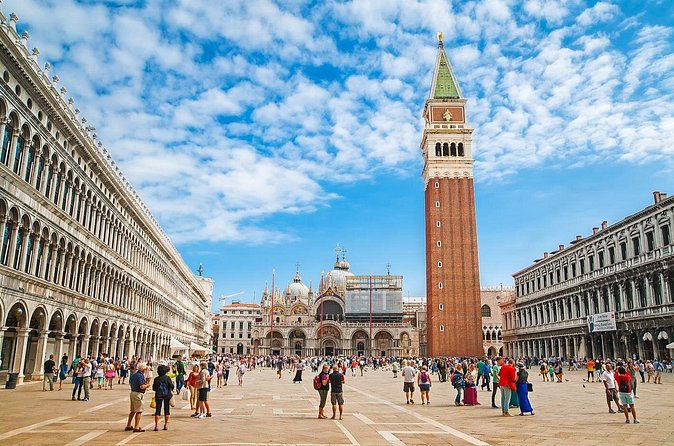
At $35.07 per person for about 1 hour 30 minutes, this is priced like a focused guiding service, not a full day of attraction tickets. That is exactly how to judge it.
You are paying for:
- A local guide and a professional guide
- The storytelling that helps you connect St Mark’s area landmarks into one coherent explanation
- Headsets when groups are larger than 10, so you hear clearly
- A small group size, up to 25 travelers
- A route that hits multiple meaningful stops without needing you to plan each one
For the money, the key value is that Venice’s best-known sights can feel disconnected when you visit on your own. This tour stitches them together. If you hate wasting time in the city by staring at facades with no context, this is a strong use of your first hours.
When it might not be the best value: if you already have deep background on Venetian history and you mainly want long photo time at each landmark. This tour is designed to move, explain, then move again.
What the best guides do here, and why Sylvana’s style matters
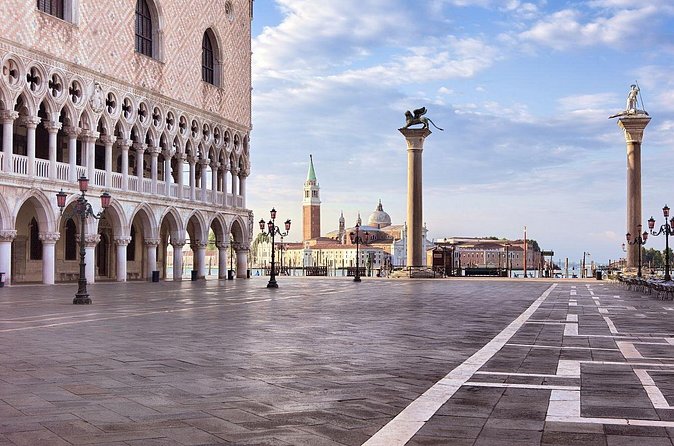
One name you might hear in groups like this is Sylvana. From the feedback, she stood out for being very well informed and for answering questions with a sense of humor, plus extra stories if people asked. That matters because the tour is story-based. When the guide has personality and clarity, the tour becomes a conversation you can follow, not just a lecture you endure.
A guide with good English is also a big deal on Venice walking tours. Even when the group is small, street noise can steal details. The headsets help, but the guide still needs to pace explanations so you can hear them at the right moments.
If you want to maximize your enjoyment, do this: bring one or two curiosity questions to the walk. Ask about the Venetian Republic, the meaning of doge funerals, or why certain architecture styles appeared when they did. You will likely get more than the standard script.
So who should book the Venice Express Walking Tour?
Book it if:
- You want a quick orientation to the St Mark’s area and how the main monuments relate.
- You enjoy guided stories that mix politics, religion, and trade.
- You prefer a time efficient walk over an all-day sight marathon.
- You care about hearing the guide clearly, and you like small group pacing.
Skip it or pair it thoughtfully if:
- You want long entry time inside major sights. This tour is about connections and context, not extended time in interiors.
- You dislike any stop that includes local legend, since Santa Maria Formosa involves a traditional story.
Should you book it?
Yes, if you are aiming for smart first timing in Venice and you want your St Mark’s day to feel understandable, not overwhelming. At $35.07 for 90 minutes, you are buying a fast map of meaning, not just a walk past buildings. The early 9:15 am start is a practical advantage, and the headsets plus small max group size mean you can actually focus on what you are hearing.
If this is your first visit to Venice, this tour is a good foundation. If it is not your first, it still works because it links details you might have missed when you walked by on your own.
FAQ
How long is the Venice Express Walking Tour?
It runs for about 1 hour 30 minutes.
Where does the tour start and end?
It starts at Campo S. Zaccaria, 4683, 30122 Venezia VE, Italy and ends back at the meeting point.
What language is the tour offered in?
The tour is offered in English.
What’s included in the price?
Inclusions are a local guide, a professional guide, and headsets to hear the guide clearly for groups larger than 10.
Is there an extra fee for some visitors on certain dates?
Yes. On certain dates, some visitors staying outside of Venice who are visiting for the day may need to pay a €5 access fee. Check the official details and exemptions at https://cda.ve.it.
Can children join the tour?
Children must be accompanied by an adult, and the tour indicates most travelers can participate.
Lately added around Venice

Walking Tours, compared.
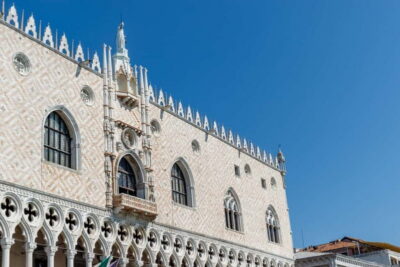
Doge’s Palace and St Mark’s Basilica Walking Tour
Read our review →
San Marco to Rialto Walk & Spritz Like a Local
Read our review →
Private 3 hrs Venice Tour: St Mark’s, Walking tour & Boat tour
Read our review →
Walking Guided Tour of the City Must-See Sites
Read our review →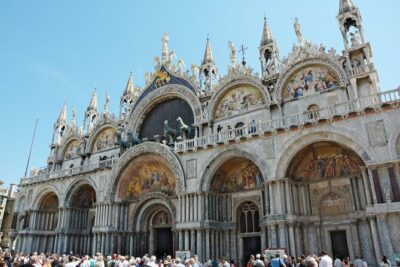
Private Best of Venice Walking Tour with St Mark’s Basilica
Read our review →
Venice Sightseeing Small Group Walking Tour with a Local Guide
Read our review →Browse the lists this tour appears in