Reviewed · TOURS
Venice Film Tour: Explore Iconic Movie Locations
Movies make Venice feel extra real. This Venice Film Tour strings together famous on-screen spots with guide commentary that explains how the city becomes the backdrop for everything from classic romance to big action. I like that it is anchored by Valerio Coppo, a real storyteller who helps you connect scenes to real streets.
My second big win is the pacing. In about 2 hours, you cover a lot of ground, yet the stops are short enough that you still get to actually look around instead of just marching through. I also like that the route often slips past the loudest crowds, so you get quieter hidden corners of Venice alongside the famous landmarks.
One consideration: Venice weather matters. The tour requires good weather, and on some dates you may need a €5 access fee if you are staying outside Venice and visiting for the day, with exemptions listed at https://cda.ve.it.
In This Review
- Key highlights you should know before you go
- Why this Venice Film Tour feels like a smarter use of time
- Meet Valerio Coppo and get the movie lens (fast)
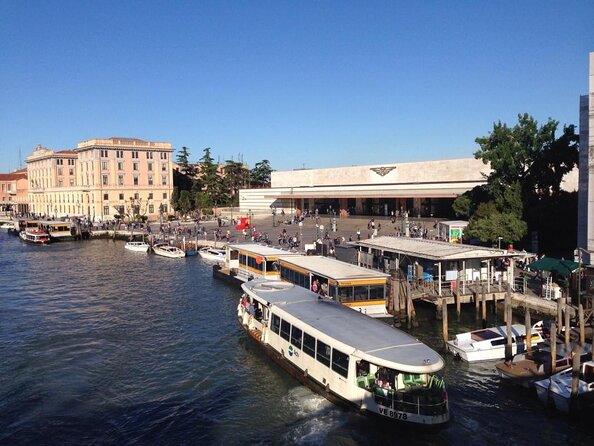
- Starting at the railway station: where Venice often begins on film
- Campo del Ghetto and San Stae: Senso’s passion and the funeral boats
- Grand Canal and Rialto: cinema history on the water
- Santa Maria dei Miracoli and Scuola Grande di San Marco: art you can place
- Ca’ Rezzonico and Teatro La Fenice: palaces and the Phoenix effect
- The Scala Contarini del Bovolo: Othello’s family home and legends
- Campo Santa Maria Formosa and San Barnaba: Spider-Man and Indiana Jones
- Gritti Palace and Hotel Danieli: real luxury, cinematic roles
- Santa Maria della Salute and Piscina Sant’Agnese: a different Venice mood
- San Marco Square and Doge’s Palace: Bond, Othello, and Ripley in the same frame
- Price and logistics: is $185.43 worth it?
- Who this tour is best for
- Should you book this Venice Film Tour?
- FAQ
- How long is the Venice Film Tour?
- What does the tour cost?
- Is pickup offered?
- Is the tour private?
- What language is the tour in?
- Do I need to buy tickets for the stops?
- Is there a mobile ticket?
- Do I need good weather?
- Is there an access fee for some visitors?
- What is included in the price?
Key highlights you should know before you go
- Licensed guide Valerio Coppo with film-making and city context at each stop
- Quick stops that place you near major movie locations, without eating up your whole day
- Many locations marked free for entry, so your money goes to food and gelato
- Mobile ticket plus pickup offered, which helps if you are not starting right by the center
- Tablet clip references at certain points, so you can match the scene to the place
Weighing this against the rest? These sit a few bridges away:
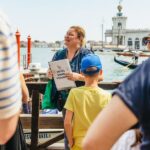
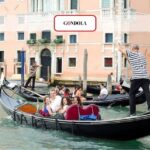
Why this Venice Film Tour feels like a smarter use of time
If you are doing Venice for the first time, it is easy to feel like you are walking in circles. This tour gives your feet a job. You move from landmark to landmark with a story running in the background, so the city stops being a blur of canals and turns into a set of specific, recognizable scenes.
Value wise, the pricing can look steep at $185.43 per person. But you are not just buying “seeing things.” You are paying for a guide who connects cinema and architecture, and for a tight 2-hour route that hits many different neighborhoods without you needing to plan transit and timing yourself. Also, a lot of stops are listed as free, which offsets costs compared with tours that require repeated ticket buys.
The format is best if you want something active and social, not another museum line. You get commentary and photo moments on the go, and you can still keep the rest of your Venice day open for your own exploring.
Meet Valerio Coppo and get the movie lens (fast)
A standout part of the experience is how the guide uses movie references as a way to teach you to look. You do not just hear plot details. You learn what to notice: the placement of a façade, the shape of a campo, a view toward the Grand Canal, or the kind of setting a filmmaker is chasing.
In multiple experiences, the film references are tied to what you can see right then. One review mentioned immediate clip feedback on a tablet, which is exactly the right tool for this kind of tour. It helps you connect the credits to the real angle of the street.
You also get a more personal feel because this is a private tour/activity, meaning it is only your group. One review even described a day where they had essentially an intimate hangout vibe. That does not happen every time, but it tells you the tour can flex to your pace and questions.
Practical tip: this is a walk with story breaks. Wear shoes that work on stone and keep your phone battery charged, because you will want to photo compare the real place to what you remember on screen.
Starting at the railway station: where Venice often begins on film
Your tour kicks off at a Venice railway station, a starting point used in multiple movies. The station is not just a random backdrop. It is where characters arrive, where travel tension starts, and where Venice first feels strange, dramatic, or romantic depending on the film.
This is also the place tied to the Italian actor Alberto Sordi in Venice, the Moon and You (1958). Even if you are only a casual cinema fan, this is a good warm-up because stations are one of the easiest things to spot in your own photos, and it sets the tone for how the city is framed on screen.
Because you are starting here, it is a clean way to orient yourself for the walk. You learn the “flow” of the city, which makes the later stops easier to enjoy.
The same hours, spent on the water instead:
- Boat Trip: Glimpse of Murano, Torcello & Burano Islands
★ 4.3 · 15,699 reviews - Venice: La Fenice Opera House Entry Ticket with Audio Guide
★ 4.6 · 11,742 reviews - Murano & Burano: Boat Tour with Guide & Glass Factory Visit
★ 4.3 · 10,716 reviews - Venice: Burano, Torcello & Murano Boat Tour w/Glassblowing
★ 4.4 · 10,245 reviews - Murano, Burano and Torcello Half-Day Sightseeing Tour
★ 3.5 · 7,928 reviews
Campo del Ghetto and San Stae: Senso’s passion and the funeral boats
Stop 1 is in campo del Ghetto, in the Jewish Ghetto area. This is where Luchino Visconti sets the beginning of the passion between Livia Serpieri and Franz Mahler in Senso (1954). The value of this stop is not just cinematic. It is a real sense of place in a historic quarter, and the tour time is short, about 15 minutes, which keeps it from feeling like a lecture.
Stop 2 is Chiesa di San Stae (Eustachio), connected to the funeral boats in the final scenes of Don’t Look Back Now (1973). You look over the Grand Canal from the church area, and the Baroque façade does a lot of work for your photos. The visit is listed for 10 minutes, so you get an atmospheric moment without overheating your schedule.
Consideration: church exteriors can be easy, but interiors depend on access and opening hours. The tour time is brief, so keep your expectations focused on what you can see from the spot.
Grand Canal and Rialto: cinema history on the water
The Grand Canal stop is one of the biggest “how did they shoot that?” moments. In 1896, Alexandre Promio boarded a gondola and filmed an early rundown of Venice life. After that, the canal kept showing up in films because it visually screams Venice with its scale and reflections.
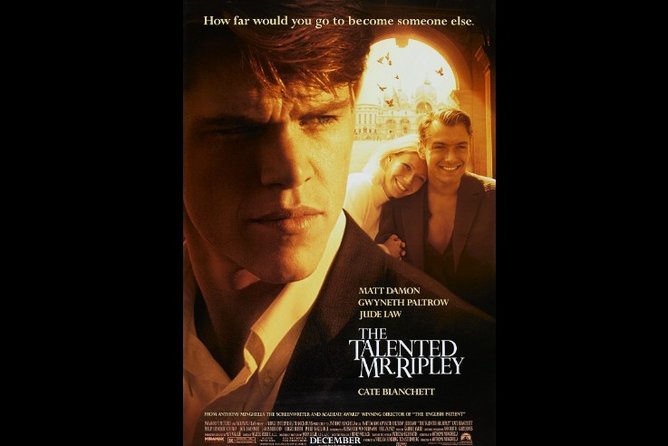
Here you get a sense of how the canal’s 170-plus buildings create instant variety for filmmakers. The tour highlights examples like The Talented Mr. Ripley (1999), where the Venetian apartment is described as a fusion of two buildings facing the water, and The Merchant of Venice (2004) with Al Pacino.
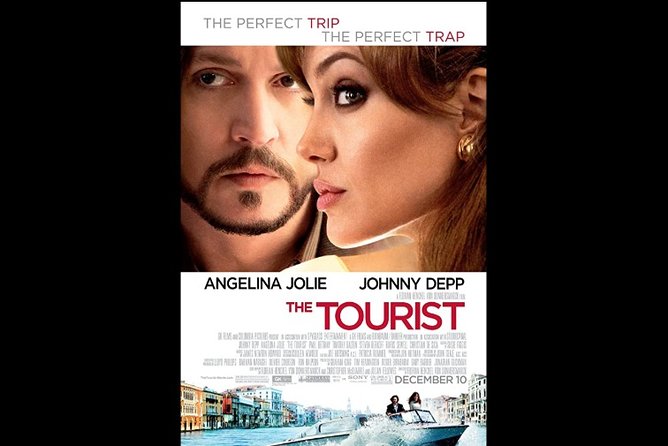
Next is Mercati di Rialto, the Rialto fish market. This stop is tied to The Tourist (2010), where Johnny Depp launches from a terrace onto a stall. Rialto is busy, so you will likely appreciate the guided route that helps you reach the right viewpoints and not just get swept into crowds with everyone else.
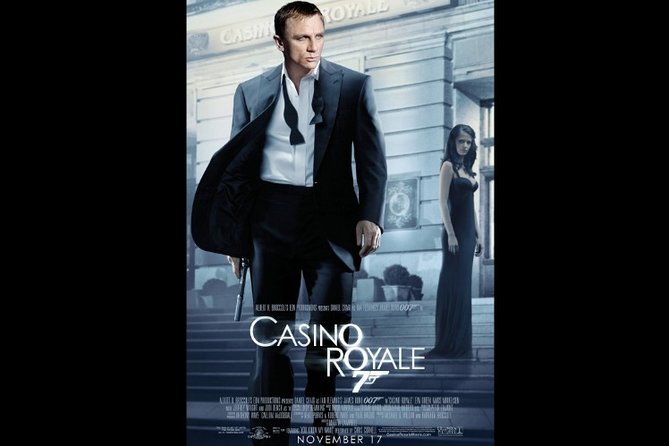
You also get a fun fictional contrast here. Across the canal, the tour points you toward where palatial drama appears in Casino Royale (2006), with the reminder that filmmaking treats Venice like a playground.
Expect about 15 minutes for each of these canal-focused stops. If you like photography, this is where you will want to slow down for a minute, even if the group keeps moving.
Santa Maria dei Miracoli and Scuola Grande di San Marco: art you can place
Stop 5 is Chiesa di Santa Maria dei Miracoli. It is small, beautiful, and adorned with polychrome marble. The cinema tie-in is Orson Welles choosing it for the wedding of Otello and Desdemona in Othello (1952). That connection matters because it helps you understand why directors pick certain spaces. The church is visually “coded” for drama.
The tour also notes a flower shop detail from Bread and Tulips (1999), where Licia Maglietta works. The film shop itself is fictional, but the nearby campo steps behind the church helps you feel the difference between what is built and what is invented.
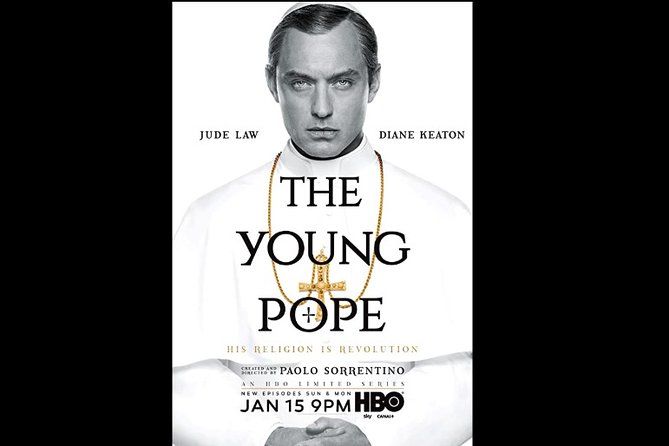
Stop 6 is Scuola Grande di San Marco, linked to The New Pope (2019) directed by Paolo Sorrentino, starring Jude Law. The value here is seeing a landmark that is more than a pretty façade. It shows up in modern prestige TV, which means Venice on screen is not just a vintage postcard.
Both stops are about 15 minutes. Use this time to check textures, color, and details, not just the “big” viewpoint.
Ca’ Rezzonico and Teatro La Fenice: palaces and the Phoenix effect
Stop 7 is Ca’ Rezzonico, a palace that is now a civic museum. In the tour framing, it becomes Drax’s office in Moonraker (1979). This kind of setting is why Venice feels so cinematic: a real interior layout can make a fictional office look grounded and expensive.
Stop 8 is Teatro La Fenice. Here the film link is Senso (1954), which begins during a performance of Il Trovatore staged at La Fenice, before the devastating fire in 1996. The building you see today is rebuilt and reopened in 2003. The tour also plays with the ironic meaning behind the name La Fenice, the phoenix, because the theatre had earlier partial destruction by fire in 1836 and then rose again.
You get about 15 minutes here, which is enough to take in the exterior and absorb the story. If you love theater architecture, you might wish you had more time, but the film-tour format keeps the pace for variety.
The Scala Contarini del Bovolo: Othello’s family home and legends
Stop 9 is Scala Contarini del Bovolo, with a legend that it is linked to Desdemona. The tour says Orson Welles chose the palace as Brabanzio’s home for Othello (1952), even though Brabanzio is not in Venice in the original story.
This stop is a great example of how cinema can reshape your idea of a place. Once you connect this staircase area to the film, you start seeing it as characters would, not just tourists.
Time is listed as 15 minutes. Use it for photos from angles where the staircase form is clear.
Campo Santa Maria Formosa and San Barnaba: Spider-Man and Indiana Jones
Stop 10 is Campo Santa Maria Formosa. The tour notes that it was “destroyed” for Spider-Man: Far From Home (2019). No worries, you are not looking at real destruction. You are looking at a Venice corner that gets transformed by special effects, which is part of the fun.
This stop is about 15 minutes, and it is also a nice breathing break. Campos can feel like the soul of Venice because they are where locals and day-to-day life happen.
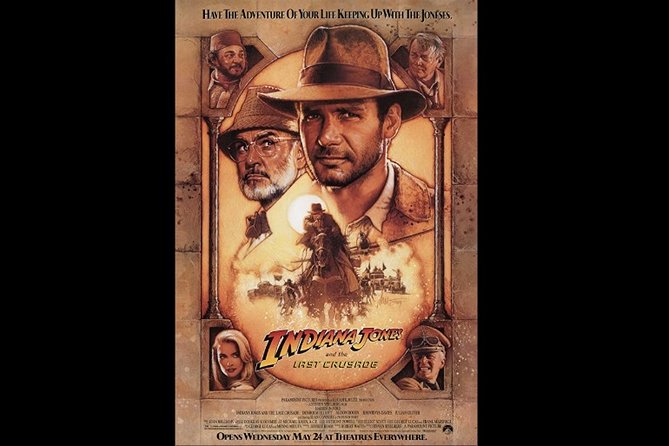
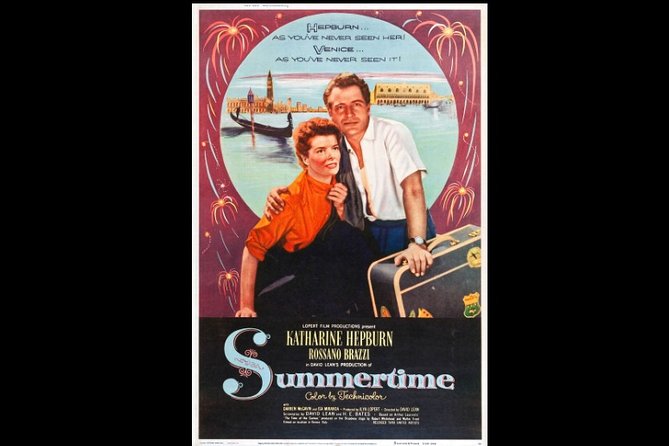
Stop 11 is Campo San Barnaba, tied to Indiana Jones and the Last Crusade (1989). The tour references the X that never indicates where to dig, found in the church’s basements in the story. It also links to Summer Time (1955) with Katharine Hepburn, including an accidental fall into the San Barnaba canal, plus a note that this location was chosen for The Italian Job (2003) remake.
Time here is 15 minutes again. Keep your eyes open for the exact lines that would make a stunt scene plausible, even if it is all movie trickery.
Gritti Palace and Hotel Danieli: real luxury, cinematic roles
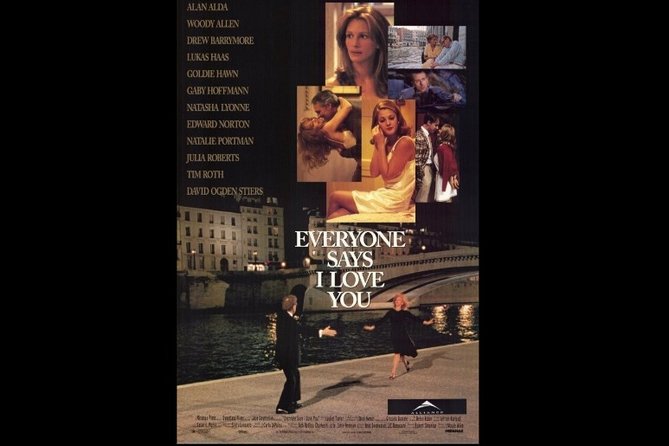
Stop 12 is The Gritti Palace, a Luxury Collection Hotel. The tour frames it as a former palace of the Doge Gritti family and residence of Vatican ambassadors. In the cinema connection, it is used for scenes in Everyone Says I Love You (1996) directed by Woody Allen, starring Julia Roberts. The tour also mentions famous historic guests like John Ruskin, Ernest Hemingway, and Somerset Maugham.
Stop 15 is Hotel Danieli, another very high-end hotel. The tour connects it to The Journey (1974) with Sophia Loren and Richard Burton, and also places it in Moonraker (1979) as the hotel of Holly Goodhead. It also points to Viaggi di Nozze (1995) for a wedding night scene tied to characters played by Carlo Verdone and Veronica Pivetti.
These stops are both short, about 15 minutes for Gritti Palace and 5 minutes for Hotel Danieli. That brevity matters. You are not doing a hotel tour. You are seeing how Venice luxury gets filmed, and how filmmakers borrow real addresses to make their stories feel legitimate.
Practical note: hotels can mean security and restrictions near entrances. The point here is to appreciate the architecture and placement, not to expect interior access on a short walk.
Santa Maria della Salute and Piscina Sant’Agnese: a different Venice mood
Stop 13 is Basilica di Santa Maria della Salute. The tour mentions Lara Croft: Tomb Raider (2001), but clarifies that the visible interior is actually from London’s Painted Hall at the Old Royal Naval College. It also connects this basilica to The Talented Mr. Ripley (1999), behind Ripley in a dialogue scene, and points you to the terrace of the Hotel Westin Europa & Regina across the canal for that conversation setting.
Stop 14 is Piscina Sant’Agnese, which the tour ties to jogging scenes in Everyone Says I Love You (1996) and to Katherine Hepburn’s freshening up in Summer Time (1955).
These are both about 10 to 15 minutes stops. The benefit is variety. After palace and theater stops, you get calmer, more everyday Venice spaces that still carry screen connections.
San Marco Square and Doge’s Palace: Bond, Othello, and Ripley in the same frame
You finish at the Doge’s Palace area and nearby viewpoints around San Marco Square. This is where Venice feels the most “international,” since so many famous scenes cluster around this center.
The tour highlights Moonraker (1979) with a Bond gondola-hovercraft concept, describing it as a unique transport crossing San Marco Square. It also references Casino Royale (2006) for Bond’s hotel view right on the square. Then it shifts to Othello (1952), saying Orson Welles used the side façade south of the basilica for a dramatic dialogue between Brabanzio and Othello.
For cinema lovers, the Talented Mr. Ripley (1999) tie-in lands here too, tied to scenes taking place at café tables in the Piazza. And for modern TV fans, the tour notes scenes from The Young Pope (2019) in this same square area.
Finally, there is the symbolic twist: Venice as a living stage. You end with one of the city’s most recognizably “Venice” spaces, after spending two hours learning how filmmakers keep turning it into stories.
Time at this final area is about 10 minutes. Give yourself a few extra minutes on your own afterward to sit, drink something, and watch the square work.
Price and logistics: is $185.43 worth it?
At $185.43 per person for about 2 hours, the tour is a premium-priced experience. The reason it can still make sense is simple: you are paying for a focused route plus a licensed guide, and you are not spending your time planning and backtracking.
It also helps that many stops are listed as free, so you are not hit with a stack of entrance fees as you go. Plus, you get a mobile ticket and pickup is offered, which reduces stress if you want a smooth start.
One more factor: it is commonly booked in advance (about 56 days on average). That often means the dates can sell out around peak times. If you are aiming for a specific day, plan ahead.
Who this tour is best for
This works especially well if you are:
- a movie fan who wants to recognize locations tied to well-known films
- a first-time Venice visitor who wants a structured route without committing to a full-day plan
- someone who likes variety, canals, churches, palaces, and big public squares in one walking loop
It may not be the best fit if you:
- want long stops at just one or two places
- prefer fully self-guided wandering with no set timing
- are traveling on a day with uncertain weather
Should you book this Venice Film Tour?
I think you should book it if you want Venice to feel specific and story-driven, not generic. The guide-led film connections, the short stop times, and the chance to see both major landmarks and calmer corners make the experience efficient. I also like that this is private, so your group can ask questions and the pacing can feel more personal.
If your main goal is maximum free-roaming time, you might feel the tour cuts into your independent wandering. But if you are going to Venice once, or you want something fun that also teaches you where you are standing, this is one of the best ways to do it in a couple of hours.
FAQ
How long is the Venice Film Tour?
It is about 2 hours.
What does the tour cost?
The price is $185.43 per person.
Is pickup offered?
Yes, pickup is offered.
Is the tour private?
Yes. It is a private tour/activity, so only your group participates.
What language is the tour in?
The tour is offered in English.
Do I need to buy tickets for the stops?
The itinerary notes free admission tickets for the listed stops.
Is there a mobile ticket?
Yes, a mobile ticket is included.
Do I need good weather?
Yes. The experience requires good weather, and if it is canceled due to poor weather, you will be offered a different date or a full refund.
Is there an access fee for some visitors?
On certain dates, day visitors staying outside Venice may need a €5 access fee. Exemptions and details are listed at https://cda.ve.it.
What is included in the price?
A licensed tour guide is included. Tip or gratuity is not included.
Lately added around Venice

Tours, compared.
Murano & Burano: Boat Tour with Guide & Glass Factory Visit
Read our review →
Burano, Torcello & Murano Boat Tour w/Glassblowing
Read our review →
Murano, Burano and Torcello Half-Day Sightseeing Tour
Read our review →
Murano & Burano Islands Guided Small-Group Tour by Private Boat
Read our review →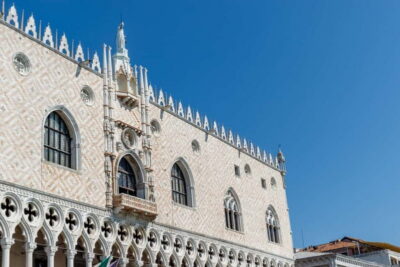
Doge’s Palace and St Mark’s Basilica Walking Tour
Read our review →
Murano & Burano Panoramic Boat Tour w/ Glassblowing
Read our review →
Murano, Burano, Torcello: Tour with Guide & Glass Factory
Read our review →