Reviewed · PRIVATE TOURS & GUIDES
Venice for First-Timers: Essential Private Tour
Venice only makes sense if you understand water. This private tour turns the lagoon, tides, and flood defenses into real, walkable lessons, with MOSE and acqua alta explained in plain language.
I especially love two things here: you get a true small-group feel, limited to eight people, so I could ask questions and actually get answers. And Valerio Coppo brings Venice to life with local street sense and plenty of on-the-ground pointers, from how the city works in a flood to where to eat and what to try.
One possible drawback is that you are walking. If your schedule is tight or your legs are not in the mood, you may want to pair this with more “sit down and soak it in” time later.
In This Review
- Key things that make this tour worth your time
- Water is the hidden plot of Venice
- A private Venice walk with Valerio Coppo, not a rushed line
- Laguna di Venezia: the lagoon shaped by the Republic
- Three port inlets and why tides matter
- Why acqua alta is not just rain
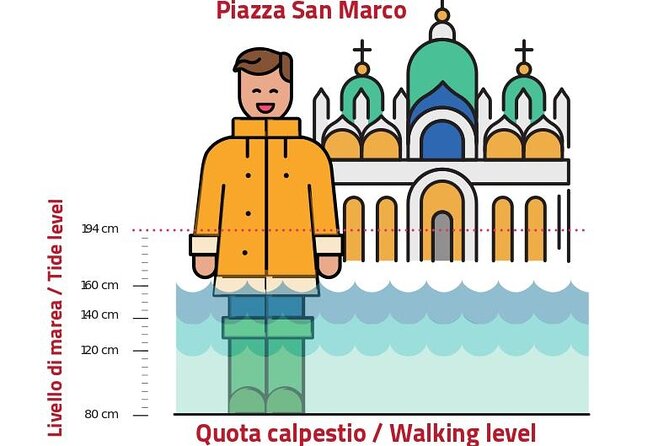
- The 80 cm versus 140 cm reality check
- From aqua granda to the 2019 high-water nights
- Where the route makes sense for a first visit
- Practicalities and value, including the €5 day visitor fee
- Who should book this, and who might skip it
- Should you book this essential Venice first-timer tour?
- FAQ
- How long is the Venice for First-Timers private tour?
- How big is the group for this tour?
- Is this tour private?
- Is the tour offered in English?
- Is pickup included?
- Are there admission tickets included for the stops?
- Are there extra fees for some visitors to Venice?
- Is a mobile ticket used?
- Can I cancel and get a full refund?
- Is the meeting point near public transportation?
Key things that make this tour worth your time
- Lagoon engineering with meaning: you connect the Republic of Venice to today’s survival tactics
- MOSE explained without a headache: you learn what it is and why it matters right now
- Acqua alta, decoded: tides, lunar phases, wind, and low pressure, not just rain
- Real numbers, real thresholds: you hear why 80 cm can still feel dry, but 140 cm hits hard
- History meets recent events: from the big mid-century disaster to the high-water nights of 2019
- Local pace, calmer routes: you are steered away from the longest tourist bottlenecks when possible
More guides with just your group along:
Water is the hidden plot of Venice
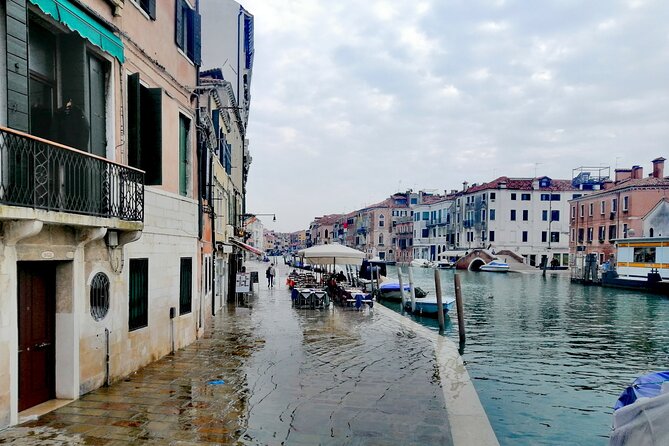
If you come to Venice for the views, great. You will get those. But if you want the city to click, you also need the water story.
This tour is built around the idea that Venice is not just a postcard. It is a living system where the lagoon and the Adriatic Sea keep trading water through three port inlets, at the rhythm of tides. When conditions line up, that trade becomes a problem for the streets and foundations you see today.
What I like is how practical the explanations feel. You learn the causes of acqua alta without turning it into a lecture. You also learn the city’s “why” behind flood defenses like MOSE, so you understand what the barriers are trying to do, and what they can and cannot control.
A private Venice walk with Valerio Coppo, not a rushed line
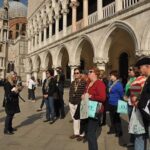
This is a private tour, which matters in Venice. The city is narrow, busy, and easy to feel swallowed by crowds. Here, your group stays small, limited to eight travelers, so you are not squeezed into a moving wall of people.
Valerio Coppo is the driver of the experience. The tone is local and friendly, with lots of small anecdotes that make the streets feel personal rather than staged. The language is English, and families do well here, including kids around school age. The pace also gives you room to ask questions, which is where the tour turns from sightseeing into understanding.
And because it is private, you can also treat it as your first-day setup. Valerio tends to share practical ideas for the rest of your trip, like what neighborhoods to focus on and where to eat and drink. For first-timers, that can save you time later.
Laguna di Venezia: the lagoon shaped by the Republic
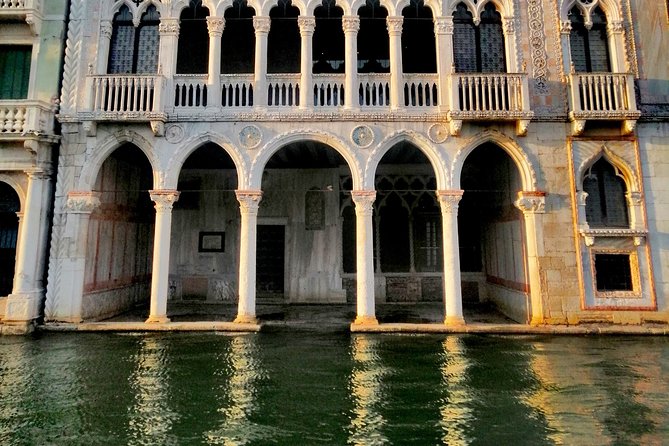
Your first stop sets the tone. You start in the Laguna di Venezia, and you move back through centuries to see how the Republic of Venice shaped this place.
The key idea you walk away with is that Venice did not just live beside the lagoon. It actively engineered it. You hear how the Republic built huge sea barriers and rerouted rivers to serve the lagoon’s needs. That matters, because it explains why the water you see today is not random. It is the result of human choices made over long time periods.
This stop is short, about 15 minutes, and admission is listed as ticket-free for what is included in the itinerary. That is a good length for first-day energy, especially because the real goal is orientation. You are not trying to master everything in one sitting. You are learning the logic.
A small consideration: because this is an early stop, it is the most “concept” heavy part. If you prefer a tour that starts purely with scenery, just know the thinking begins immediately.
The same hours, spent on the water instead:
- Venice: Doge’s Palace Reserved Entry Ticket
★ 4.6 · 42,716 reviews - Venice: Grand Canal Gondola Ride with App Commentary
★ 4.1 · 23,020 reviews - Venice: Grand Canal Gondola Experience with Live Commentary™
★ 4.2 · 16,504 reviews - Boat Trip: Glimpse of Murano, Torcello & Burano Islands
★ 4.3 · 15,699 reviews - Venice: La Fenice Opera House Entry Ticket with Audio Guide
★ 4.6 · 11,742 reviews
Three port inlets and why tides matter
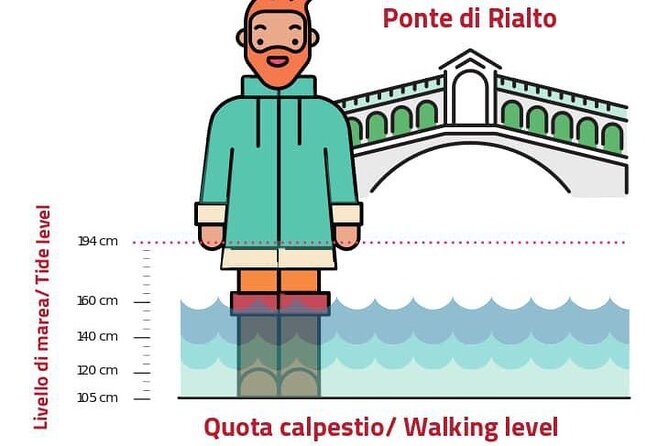
Next you shift from history to how the system works now. You learn how the lagoon connects to the Adriatic Sea through three port inlets, which lets water exchange in and out with the tides.
This is one of those lessons that changes how you see everything afterward. After you hear this, the city’s movements start to feel less mysterious. You can better picture why certain tide conditions create problems, and why water levels are not simply about weather alone.
There is also a practical threshold that gets explained. High tide becomes a concern for Venice when it exceeds 80 cm. Above that level, you are in acqua alta territory, meaning flooding risk climbs and daily life gets affected.
Again, this stop runs about 15 minutes with ticket-free listed admissions. The value is not the duration. The value is that it gives you a base map for everything you will hear later about MOSE and high-water events.
Why acqua alta is not just rain
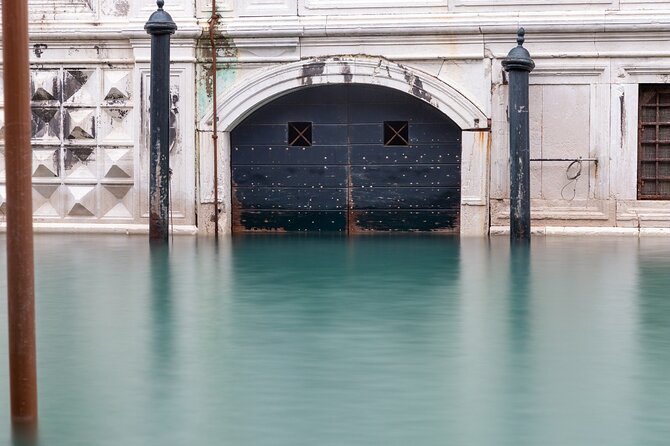
Stop three is where the tour gets genuinely useful. People often assume flooding equals rainfall. Here, you get a clearer picture: rain has nothing to do with it as the main driver.
Instead, you learn that acqua alta comes from a bigger mix of factors. Lunar phases and astronomical tides play a major role, along with strong winds and low pressure. In plain terms, the atmosphere and the timing of tides can team up in ways that push water levels higher than you would expect.
This is the kind of explanation that helps you make sense of forecasts and patterns while you are in town. You stop blaming random weather and start understanding the mechanics behind the water surges.
If you like science-y clarity but hate heavy jargon, this section hits the sweet spot. It also gives your trip a “heads up” feeling. You will walk differently once you know why water rises.
The 80 cm versus 140 cm reality check
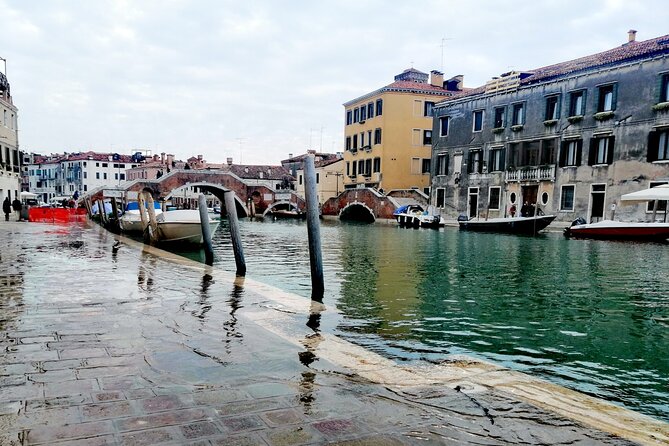
At some point you hear the numbers and think, ok, but what does it feel like on the ground? Stop four answers that.
You get explained how it is possible that with 80 cm tides your feet can keep dry, while a tide around 140 cm impacts the city so badly. That contrast is huge, and it is one of the clearest ways the tour makes flooding feel real rather than theoretical.
The takeaway for you is that Venice does not respond to flooding in a simple linear way. Different streets, foundations, and elevations react differently. That is why two visitors can experience the same season and remember completely different days.
This stop is also brief, around 15 minutes, with ticket-free listed admissions. It works as a checkpoint. After this, you can better judge what you are seeing, and you will understand why some areas look fine during a moderate rise, but other spots get overwhelmed during bigger surges.
From aqua granda to the 2019 high-water nights
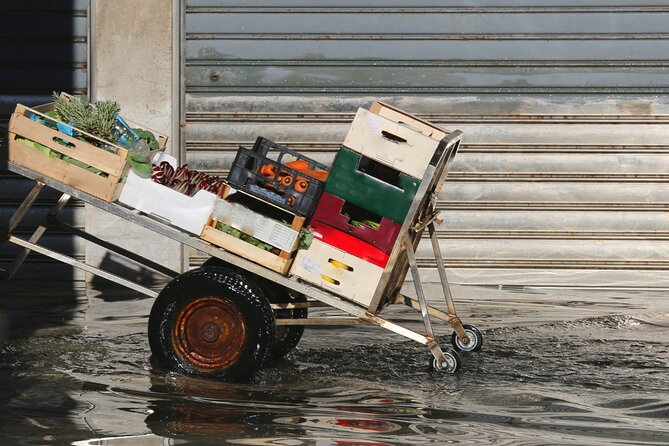
Now the tour switches from mechanisms to human impact. You look back to the 1960s when a tragedy renamed aqua granda after an exceptional wave of bad weather hitting all of Italy. In those days, Venice faced one of the most tragic days in its history, with the tide reaching the highest peak ever recorded.
This part matters because it connects the math to real lives. Flooding in Venice is not just inconvenience. It can damage homes, disrupt daily routines, and leave a long shadow in how a city plans for the future.
Then you jump forward to more recent episodes. You visit Lido di Venezia and also Campo Santa Maria Formosa, where the tour explains a similar situation in 2019. The point is not just what happened. It is how you should think about why these natural events are becoming more tied to larger pressures like climate change and the strains of overuse.
Even if you do not agree with every framing, it is still useful. It pushes you to view Venice as a place under stress, not just a place that is always “romantic and fine.” And it also helps you understand why defenses like MOSE and the city’s planning conversations keep showing up.
These stops are each listed as about 15 minutes. So the tour moves quickly through big chapters of Venice’s water story. That works well for a first-timer because you get the big ideas without losing your day to research.
Where the route makes sense for a first visit
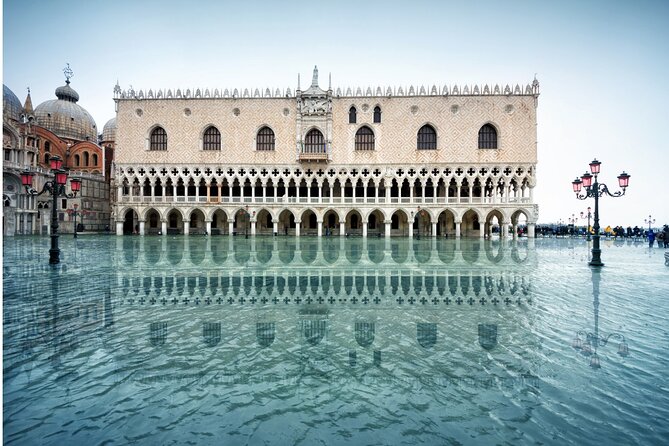
The tour design is smart: it mixes lagoon logic, flood mechanics, then history and recent events, then practical orientation around where water hits.
Because the group is small, you are not stuck watching the guide while you wait for the entire crowd. You can ask a question like why this street level matters, or how MOSE fits in, and you will not feel like you are slowing down the line.
A lot of tours give you facts. This one tries to give you a framework. Once you understand that Venice is connected to the sea through inlet points, governed by tides, and influenced by moon timing, wind, and low pressure, the city becomes easier to read while you explore on your own.
And you may also get steered toward quieter streets and less obvious corners. Valerio Coppo’s style is described as local and away from the most obvious tourist paths, including time spent in authentic areas and quieter churches or monuments when the route allows. That is exactly what helps on day one.
Practicalities and value, including the €5 day visitor fee
Price is $185.85 per person for about two hours. For a private tour in Venice, that is in the range where you should think value, not just cost.
Here is what makes it feel like value:
- you get a licensed tour guide for a short, focused window
- your group is limited to eight, which is smaller than many “private-ish” options
- you cover both lagoon basics and real flood thresholds, so you get more than general sightseeing
- you likely leave with useful recommendations for the rest of your stay, which can reduce wasted time and costly meals
Timing also matters. This tour is typically booked about 70 days in advance, which tells you demand is real. If you are traveling in peak season or during events, booking early helps.
Pickup is offered, and it is mobile-ticket friendly. It is also near public transportation, so you are not stuck hunting for a complicated meeting point.
One more practical point to know: on certain dates, day visitors who stay outside Venice may have to pay a €5 access fee. The tour notes that you can check what days apply and exemptions at https://cda.ve.it. If you are coming from the mainland and doing Venice for the day, look this up before you arrive so you are not surprised.
Who should book this, and who might skip it
Book this if:
- you are in Venice for the first time and want a fast, clear understanding of why the city floods
- you like learning that connects history and current events, not just dates
- you want a private setup with room for questions, limited to eight
- you are traveling with kids and want explanations that do not talk down to them
- you want local restaurant and street-level tips for after the tour
You might choose something else if:
- you want a purely scenic, low-thinking walk with no science and thresholds
- you struggle with walking for two hours, since the schedule is built around moving between stops
- you need a very long deep-historical tour, because this is designed to be compact and first-day friendly
For most first-timers, though, this hits the best use of a guided morning or early afternoon. You build the water map, then the rest of Venice makes more sense as you go.
Should you book this essential Venice first-timer tour?
I think it is a strong yes for the right traveler. If you want Venice to feel understandable, not just pretty, this tour gives you the missing layer fast.
You learn what MOSE is trying to do and why acqua alta happens, and you get real thresholds like the 80 cm concern level and the much bigger impact around 140 cm. You also cover the story from the 1960s aqua granda tragedy to the 2019 high-water nights, so you see that this is not just ancient drama. It is a live reality.
For planning, pair it with flexible time afterward. After a tour like this, you will want to revisit viewpoints and streets with new eyes. And you will probably use Valerio Coppo’s restaurant and neighborhood suggestions immediately, which is the best kind of souvenir, one that actually helps you eat well.
If you are on the fence, consider this simple test: if you plan to wonder about tides, flooding, and the lagoon while you explore, book it. If you only want photos and don’t care about how the city works, you may find it more educational than you asked for.
FAQ
How long is the Venice for First-Timers private tour?
It runs for about 2 hours.
How big is the group for this tour?
The tour is limited to eight travelers.
Is this tour private?
Yes. It is private, and only your group participates.
Is the tour offered in English?
Yes, it is offered in English.
Is pickup included?
Pickup is offered.
Are there admission tickets included for the stops?
The itinerary lists the stops with admission ticket free.
Are there extra fees for some visitors to Venice?
On certain dates, day visitors staying outside of Venice may need to pay a €5 access fee. You can check details and exemptions at https://cda.ve.it.
Is a mobile ticket used?
Yes, a mobile ticket is provided.
Can I cancel and get a full refund?
You can cancel up to 24 hours in advance for a full refund. If you cancel less than 24 hours before the start time, the amount paid is not refunded.
Is the meeting point near public transportation?
Yes, the tour is near public transportation.
Lately added around Venice

Private Tours & Guides, compared.
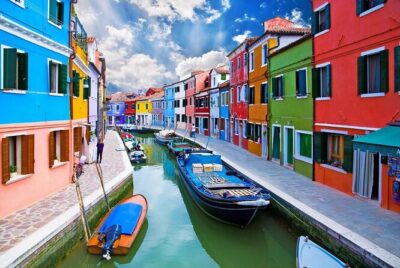
Murano & Burano Islands Guided Small-Group Tour by Private Boat
Read our review →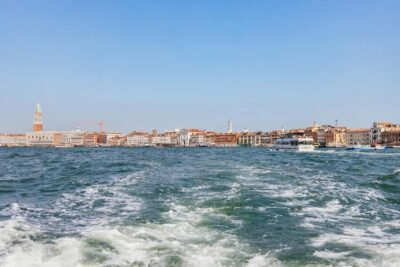
Murano & Burano Guided Tour by Private Boat with Glassmaking
Read our review →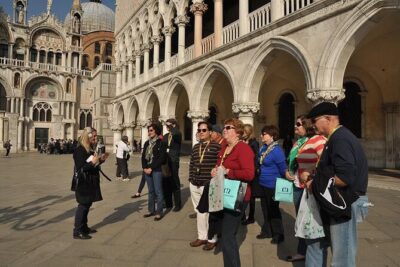
Private 3 hrs Venice Tour: St Mark’s, Walking tour & Boat tour
Read our review →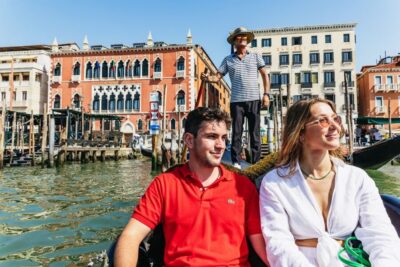
Private Crafted Gondola Ride Along Grand Canal
Read our review →
Private Best of Venice Walking Tour with St Mark’s Basilica
Read our review →
Private tour on Murano Island: discover the art of Artisanal Glassblowing
Read our review →
Venice Marco Polo Airport Private Arrival Transfer via Motorboat
Read our review →