Reviewed · VENICE
VENICE, FRANKINCENSE AND MYRRH! A JOURNEY ON AROMATICS TRADE
Spices in Venice smell like time travel. This is a niche, hands-on tour that connects the Venetian aromatics trade to the scents themselves, so you are not just hearing facts, you are smelling the story. You start at San Samuele and move into Anbesa’s showroom, described as a real incense kingdom, where the guide ties trade routes to real resins, woods, and herbs.
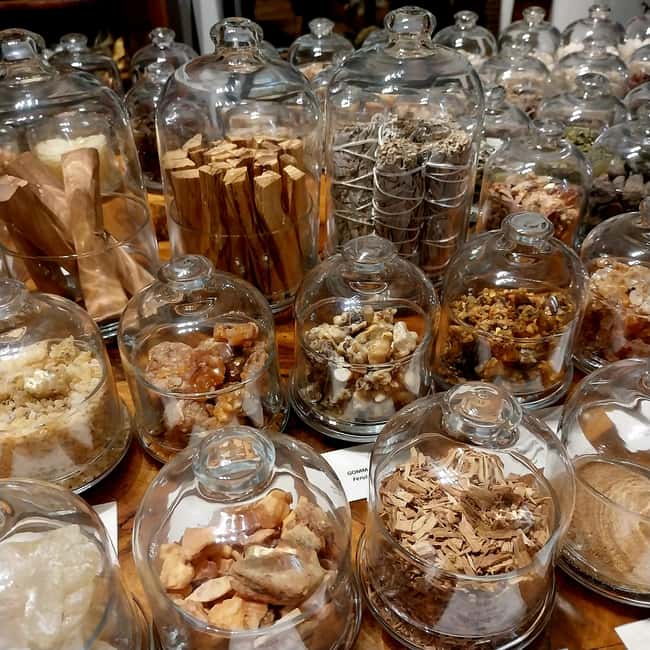
What I like most is how they treat these materials as useful. You learn how aromatic products were used in medicine, cosmetics, arts, and religious rituals, not just as luxury perfume ingredients. The second big win is the sensory part: the olfactive journey includes frankincense, myrrh, sandalwood, oud, labdanum, and more, so you come away with a better sense of what each material actually brings to a scent.
One thing to consider: this is very scent-forward. If you are sensitive to strong resins or you dislike smelling lots of materials, plan to pace yourself and speak up so you can step back for a moment.
In This Review
- Key highlights you will feel right away
- From San Samuele water stop to Anbesa’s incense kingdom
- The Venice spice story: Stato da Terra, Stato da Mar, and the routes that mattered
- Aromatics in Venetian life: medicine, cosmetics, arts, and rituals
- The olfactive journey: frankincense, myrrh, oud, sandalwood, and more
- What the 90 minutes feel like in real life
- The Chiesa di San Samuele start: why this meeting point works
- Value check: why $29 can make sense for this kind of tour
- Who should book this aromatics trade tour
- Should you book Venice, Frankincense and Myrrh?
- FAQ
- Where is the meeting point?
- How long is the tour?
- What languages are offered?
- Is this tour private?
- What is included in the experience?
- What are the booking and cancellation terms?
Key highlights you will feel right away
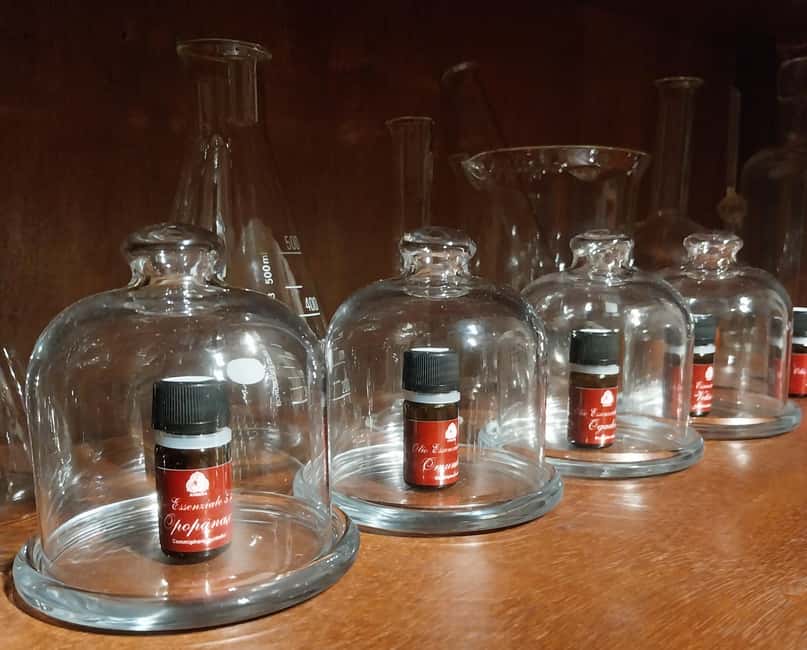
- Anbesa showroom, an incense-focused space where aromatics are presented as a living tradition, not museum glass.
- Venice trade routes explained through Stato da Terra and Stato da Mar, plus the silk route, spice route, and frankincense route themes.
- A real two-part format: history first, then a guided smell session using the collection from their Incensarium.
- Scent testing with practical context, including resin and wood materials used for medicine, cosmetics, arts, and rituals.
- Frankincense, myrrh, and rarer notes like oud and labdanum, letting you compare materials you might never have smelled.
Weighing this against the rest? These sit a few bridges away:
From San Samuele water stop to Anbesa’s incense kingdom
Your day starts at the San Samuele water bus stop, where you will find a sign with the Anbesa logo and the tour name, VENICE, FRANKINCENSE AND MYRRH! A JOURNEY ON AROMATICS TRADE. It is a smart meeting point because it keeps you anchored to a real Venice location, and you can arrive by water bus like the locals do.
Then you head into the Anbesa showroom experience. The tone here matters. This is not a generic talk in a random room. The experience is presented as an Incense kingdom, shaped by years of studying, researching, importing, and trading aromatic raw materials. In practical terms, that means you are likely to get a guide who can explain what you are smelling and where it comes from, not just recite a timeline.
This setting also affects the pace. Expect the focus to shift from outside Venice to inside Venice, at least for the core portion of your 90 minutes. If your ideal Venice day is mostly walking and views, you may find this tour more like an intense specialty session than a scenic stroll. If your ideal Venice day includes people, stories, and details you can taste and smell, this is a great fit.
The Venice spice story: Stato da Terra, Stato da Mar, and the routes that mattered
The heart of the experience is the guided history of Venice’s aromatics trade with the Middle East and the Far East. You will hear the story in a way that connects geography to products, and products to people who bought, sold, blended, and shipped them.
You also get a framing tool that helps the story stick: Stato da Terra and Stato da Mar. That distinction, in plain travel terms, is about how Venice organized its influence and commerce across land and sea. When the guide connects that idea to trade in resins and woods, you can see why Venice was more than a pretty city. It was a merchant machine.
You will also hear trade-route themes like the silk route, the spice route, and the frankincense route. Rather than treating these as generic buzzwords, the experience aims to show how aromatics rode those networks. That is what makes the tour more than a scent tasting. You are seeing how demand moved across distances, and how specific materials became valuable because they arrived from far away with consistent identity.
There is also a Venice infrastructure angle. The experience highlights the Arsenale, vessels, and boats tied to the first production chain in history. Even if you already know Venice had a strong maritime culture, this part is useful because it reminds you that trade needed shipbuilding, organization, and operational muscle. Merchants did not just buy spices, they depended on systems that could move goods reliably.
Aromatics in Venetian life: medicine, cosmetics, arts, and rituals
A big part of why this tour earns a high score is the way aromatics are treated as practical tools. The first segment is dedicated to the orientalist history of Venice and the aromatic products imported and known in Venice markets, with clear mentions of uses.
You will hear how these ingredients were used in:
- Medicine, where aromatics often got attention for their perceived therapeutic value.
- Cosmetics, where scent and oily or resinous textures made sense for personal care.
- Arts, where certain resins and materials can matter in preservation and craft workflows.
- Religious rituals, where incense has a role that is cultural and spiritual, not just decorative.
That mix helps you understand why aromatics mattered to people across social classes. Even if Venice’s public face was silk and grand canals, everyday life had its own relationship with scent. People wanted the smell of health, cleanliness, ceremony, and beauty. And Venice, as a trading hub, was positioned to make those materials available.
Another practical detail: the tour emphasizes raw materials, not only finished perfumes. You are not stuck thinking like a modern shopper. You are learning like a merchant. What matters is the substance, its origin, and what it does when burned, blended, or processed.
If you like travel that feels close to human behavior, this is a strong section. It turns Venice from a postcard into a place where global exchange showed up on kitchen shelves, in workshops, and in ritual spaces.
The same hours, spent on the water instead:
- Boat Trip: Glimpse of Murano, Torcello & Burano Islands
★ 4.3 · 15,699 reviews - Venice: La Fenice Opera House Entry Ticket with Audio Guide
★ 4.6 · 11,742 reviews - Murano & Burano: Boat Tour with Guide & Glass Factory Visit
★ 4.3 · 10,716 reviews - Venice: Burano, Torcello & Murano Boat Tour w/Glassblowing
★ 4.4 · 10,245 reviews - Murano, Burano and Torcello Half-Day Sightseeing Tour
★ 3.5 · 7,928 reviews
The olfactive journey: frankincense, myrrh, oud, sandalwood, and more
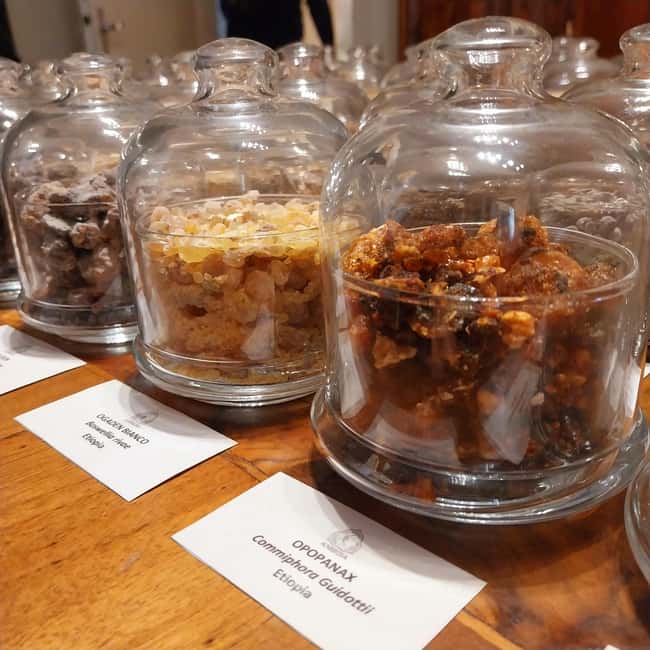
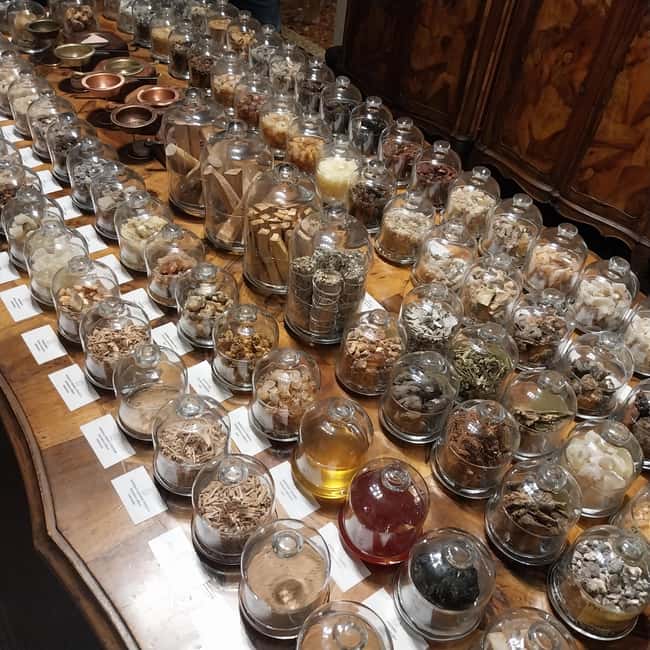
Then comes the part you can smell on your way out. The second half is an olfactive journey through a wide selection of aromatics from the Incensarium collection. Expect a guided test where you compare resins and woods and notice how they behave in aroma.
The materials named for the experience include frankincense and myrrh, plus sandalwood, oud, labdanum, and others. The included tasting list also mentions mastic, colophony, and copal. That is a smart range because it covers different aromatic families: resinous notes, woody notes, and darker, more resin-heavy profiles often associated with incense.
Here is what you should focus on while you smell. Don’t just rate things as good or bad. Instead, listen for character:
- Some ingredients feel smokier or incense-like.
- Some lean wood-dry and grounding.
- Others feel resin-sweet or slightly complex in a way that reminds you of warmth or ritual.
Even if you never bought incense or perfume ingredients before, this kind of comparison teaches you vocabulary fast. By the end, you are likely to understand why frankincense and myrrh are treated as classics in many traditions, and why woods like sandalwood often show up as a steady base.
One more reason this works: the tour does not treat smell as random. It connects scent to origin and to use. When you learn that a material was imported and known in Venetian markets, you are not just inhaling. You are building a mental map linking Venice, trade, and the raw source.
What the 90 minutes feel like in real life
Ninety minutes sounds short, but the format is built to be efficient. You get a first segment with a story and product context, then a second segment focused on a scent lineup. For a private group, it is also a good length. It is long enough to learn and compare, but not so long that your nose (or attention) gives up.
The tour is offered with live guidance in Italian and English, and it is described as a private group. That matters because scent experiences are personal. If you are distracted by noise or you need a slower pace, a private setup helps.
There is one timing note you should keep in mind. The itinerary mentions a Venice visit for two hours, while the overall duration is 90 minutes. In practice, that usually means the guide compresses the middle segment to keep everything within the total time. The takeaway for you is simple: arrive a bit early, settle in, and let the guide keep the flow. Do not plan an important connection right after.
The Chiesa di San Samuele start: why this meeting point works
Your itinerary starts and ends at the Chiesa di San Samuele area, which is convenient because it is tied to the water bus stop. That reduces the stress of finding a meeting spot in a city where everything is a maze of streets and bridges.
Starting near a church is also a quiet thematic match for an incense-and-ritual tour. Even if you do not get a full church visit, the neighborhood context makes sense for the subject matter. Incense and religious practice often meet in the same places in history, and Venice is full of that overlap.
The practical value is that you can get there smoothly by water bus, find the sign, and then transition into the showroom portion without wandering around hoping you found the right door. For a niche tour, that matters more than usual.
Value check: why $29 can make sense for this kind of tour
At $29 per person, this is priced like an accessible specialty experience. The big question is whether you get enough substance for the cost. In this case, you are not just paying for a talk and a few smells. You are paying for:
- A guided history of Venice aromatics trade with routes and concepts tied to how the commerce worked.
- A guided olfactive session with named materials like frankincense, myrrh, sandalwood, oud, labdanum, and others such as mastic, colophony, and copal.
- A showroom environment designed around aromatic raw materials and study.
That is a lot for a short session, especially compared to typical Venice tours that focus only on buildings or canals. If your Venice plan already includes big-ticket sights, this can be a smart complement. You get variety without spending another half day in crowds.
Also, the fact that it is private group style can boost value in the simplest way. You are less likely to be lost in a crowd. In scent work, being able to hear instructions clearly and ask questions makes the whole experience better.
Who should book this aromatics trade tour
You will enjoy this most if you like one of these things:
- Venice stories that go beyond architecture and boats, into commerce and everyday materials.
- Scent nerd energy, meaning you like comparing smells and learning what ingredients do.
- A hands-on learning style where you can smell frankincense, myrrh, oud, and sandalwood in context.
It is also a good match if you are traveling with someone who does not care about yet another photo stop. This is the kind of tour where you can come away with a new sense of what Venice imported, used, and valued.
If, on the other hand, you only want scenic walking time, you might find the showroom portion too indoor and too scent-focused. That does not make it bad. It just means you should choose based on your travel personality.
Should you book Venice, Frankincense and Myrrh?
Yes, with an asterisk that is actually helpful. Book it if you want an unusual Venice experience where the city’s trade history shows up in your hands and your nose. The structure, with story first and smell second, is the right order, and the focus on named aromatics and practical uses makes it feel grounded instead of abstract.
Consider skipping or adjusting expectations if strong aromas can bother you. This is an olfactive journey, and the point is to smell widely. If you handle scents well, you are likely to find it fun, educational, and genuinely different from the usual Venice routine.
FAQ
Where is the meeting point?
You meet at the San Samuele water bus stop, and the guide will hold a sign with the company logo and the tour name.
How long is the tour?
The tour duration is 90 minutes.
What languages are offered?
The live tour guide offers Italian and English.
Is this tour private?
Yes, it is described as a private group.
What is included in the experience?
It includes a history-focused talk about Venice’s orientalist aromatics trade and a second part with an olfactive journey testing a wide selection of aromatic raw materials from the Incensarium collection.
What are the booking and cancellation terms?
You can reserve now and pay later, and you can cancel up to 24 hours in advance for a full refund.