
Reviewed · WALKING TOURS
Venice Historic Walk: the city, its architecture and traditions
Venice is best learned by walking. This Venice Historic Walk uses quiet Dorsoduro lanes to show how the city grew, how Venetians live with water, and why words like squero and palazzo matter. I like that the route is built around real neighborhoods, not just photo stops.
Two things I especially value are the architecture focus and the human scale of the experience. You get to stand in places like Campo Santa Margherita and then connect them to bigger ideas, like Venetian urban planning and cultural heritage, in plain language. And with guides Nicoló and Aleksandra from Cao Rio, the mood is energetic, thoughtful, and very Venice-in-the-morning.
One thing to consider: not everything is entry-included. Church and palace admissions are not included, and the tour also needs good weather. Add to that the fact that on some dates there can be a €5 access fee for day visitors staying outside Venice, so it’s worth checking the city guidance link before you go.
In This Review
- Key takeaways before you lace up
- Why Dorsoduro changes how you see Venice
- The 2 hours 30 minutes route, paced for real sightseeing
- Campo Santa Margherita and the Venetian square culture
- Scuola Grande dei Carmini: how Venetian confraternities shaped the city
- Squero Domenico Tramontin e Figli: gondola boatyards explained
- Osteria Al Squero and a Venetian aperetivo pause
- Fondamenta Zattere and Campo Sant’Agnese: water ports and urban planning
- Punta della Dogana and Santa Maria della Salute: trade, custom, and Palladio-Baroque energy
- Ponte de la Toletta and Ca’ Rezzonico gardens: carnival and palazzo atmosphere
- Architecture, tradition, and the Venice words you’ll remember
- Price and value: does $75.24 make sense for what you get?
- Practical stuff you should plan for before 9:00 am
- Should you book the Venice Historic Walk with Cao Rio?
- FAQ
- How long is the Venice Historic Walk?
- Where does the tour start and end?
- What time does the tour begin?
- Is the tour private?
- What is included in the price?
- Are church or palace tickets included?
- Is the aperitivo stop included with alcoholic drinks?
Key takeaways before you lace up
- Dorsoduro focus: a locals’ side of Venice, with quieter streets and lived-in corners
- Squero boatyards in action: see what a gondola workshop is and why it shaped the city
- A real Venetian aperetivo moment: you stop at Osteria Al Squero, with alcoholic drinks not included
- Architecture and urbanism taught as you walk: you learn the logic behind the city’s layout
- Traditions across the map: customs, mercantile life, and even carnival references
- Private tour format: only your group participates, so the pace can feel less rushed
More sestieri crossed bridge by bridge:
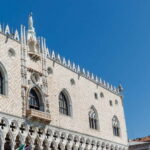


Why Dorsoduro changes how you see Venice
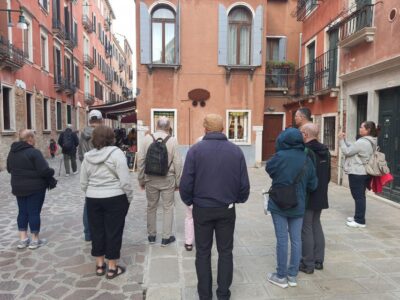
Dorsoduro is one of those Venice areas that feels like it’s breathing at a human pace. The walk is designed to take you through its quiet neighborhoods and backstreets, the kind of places locals use on weekends, not just where tour groups funnel.
What makes it click is that you’re not only looking at buildings. You’re learning how Venice is organized and why certain structures exist where they do. Expect to connect architecture to everyday life, especially Venice’s long relationship with water, canals, and trade.
And yes, you’ll hear the key words that make the city feel less like a movie set. The tour explicitly helps you get comfortable with terms such as scuola (like Scuola Grande dei Carmini), squero (the gondola boatyards), and palazzo (Venetian palaces). Even if your Italian is basic, those terms turn your walk into a kind of guided reading.
The 2 hours 30 minutes route, paced for real sightseeing
The walk runs about 2 hours 30 minutes and is structured into short stops, usually around 10 to 15 minutes. That matters in Venice because your eyes need a break, your legs need a reset, and the city keeps changing with every turn.
It starts at Campo Santa Margherita at 9:00 am, then finishes at Campo San Barnaba. The timing helps because early Venice can feel calmer, and you get a better shot at seeing street life rather than only crowds.
You’ll also notice the tour is built with a “learn as you go” rhythm. You see a place, you get context, then you move on. It’s the opposite of trying to absorb Venice from a guidebook page while you’re walking.
Campo Santa Margherita and the Venetian square culture
Your first stop is Campo Santa Margherita, a classic Venetian square setting where daily life spills out around the edges. This is a good warm-up because it teaches you how Venetians treat public space: not as a grand monument, but as a social room open to the street.
From here, the tour quickly frames squares as part of Venice’s identity. They are meeting points, circulation hubs, and casual stages for traditions. You don’t just look at the facades, you start noticing how the city invites people to linger.
The time here is short, about 10 minutes, which is exactly right for a first landing zone. You’ll be tempted to keep wandering on your own right after, but this tour gives you a reason to move forward.
A few more Venice outings worth comparing
- Venice’s Best: Basilica, Doge’s Palace, Gondola & History Gallery
★ 4.5 · 2,478 reviews - Venice: City Center Historical Guided Walking Tour
★ 4.2 · 1,873 reviews - Venice: The History of St. Mark’s Basilica Tour
★ 4.2 · 986 reviews - Venice: Bell Tower & St Mark’s Square History Gallery Ticket
★ 4.3 · 910 reviews - Basilica, Doge’s Palace, History Gallery & Bell Tower Option
★ 5.0 · 586 reviews
Scuola Grande dei Carmini: how Venetian confraternities shaped the city
Next up is Scuola Grande dei Carmini, a stop focused on what a scuola is and why it mattered. Venetians built these institutions as part of their cultural and social machinery, not just for religion, but for community identity.
Even if you don’t go inside (some entries are not included during the tour), the outside context is enough to understand the scale and purpose. You start seeing schools as civic landmarks, with architecture that signals importance in everyday life.
This stop is also about learning to look. You’ll be able to recognize the language of the building type and connect it to Venetian culture. That skill carries over as you keep sightseeing after the walk.
Squero Domenico Tramontin e Figli: gondola boatyards explained
Then comes one of the best reasons to book this walk: the Squero Domenico Tramontin e Figli stop. A squero is not a vague “cool Venice workshop.” It’s tied to how gondolas were built and maintained, and gondolas were tied to the city’s movement and economy.
You get a focused explanation of what a squero is, and the context helps you understand why Venice’s waterways shaped labor and craftsmanship. It’s a practical piece of history, the kind that makes the city’s architecture feel functional rather than decorative.
The tour keeps it efficient, about 10 minutes, but it’s long enough to reset your mental picture of Venice. Instead of thinking only about canals as views, you start thinking about canals as infrastructure for work.
Osteria Al Squero and a Venetian aperetivo pause
From the squero, you head to Osteria Al Squero for a Venetian aperetivo stop. This is a smart break in the middle of a walking tour, and it also ties your lesson back to the way Venetians actually socialize.
Here’s the practical note: alcoholic beverages are not included. That doesn’t mean the stop is useless. You can treat it as a short taste of rhythm, where you can grab a drink if you want, or just use it as a calm moment to recharge.
You get about 15 minutes at this stop. That’s the right length to avoid turning the tour into a long meal, while still giving you a Venice-authentic intermission.
Fondamenta Zattere and Campo Sant’Agnese: water ports and urban planning
Next you shift to the edges of Venice’s water world with Fondamenta Zattere. This stop is framed as a Venetian port and canals moment, so you’ll be paying attention to the way the city interfaces with movement, storage, and trading routes.
Then you move to Campo Sant’Agnese, which the tour uses to explain Venetian urbanism. This is where the walk pays off if you like understanding how places work. Instead of memorizing landmarks, you learn the city’s logic, including why certain neighborhoods feel the way they do.
These two stops together work because one teaches the water side of Venice and the other teaches the street side. You start noticing how the city’s layout supports daily circulation, not just tourism.
Each of these stops is around 15 minutes, which keeps you engaged without over-staying. In Venice, that balance is hard to get right, and this route does it well.
Punta della Dogana and Santa Maria della Salute: trade, custom, and Palladio-Baroque energy
At Punta della Dogana, you get a look at the custom house and merchants of Venice theme. This is an important transition point. It pushes you from neighborhood life into the commercial engine that helped shape Venetian power and architecture.
Then the tour goes to Basilica di Santa Maria della Salute, which is described in terms of Palladio plus Venetian Baroque traditions and life traditions. This is one of those places where you can see why Venice layers influences instead of choosing one style.
Important practical detail: admissions for the Basilica are not included. You may be able to enjoy exterior views and the overall architecture context, but if you want to go inside, you’ll need to plan for that separately.
Both stops are about 15 minutes. In a 2.5-hour tour, that means you’ll focus on meaning over long museum-style time. It’s great if your goal is to understand Venice quickly and move on with confidence.
Ponte de la Toletta and Ca’ Rezzonico gardens: carnival and palazzo atmosphere
After the weighty trade and religious architecture stops, you get something lighter and very Venetian. Ponte de la Toletta is tied to Venetian Carnival, which helps you see Venice’s theatrical side without turning the walk into a costume parade.
This stop is about 15 minutes, and the key value is context. You don’t just look at a bridge and move on. You learn how carnival fits into the city’s identity and how traditions use Venice’s spaces.
The final leg is Giardini di Ca’ Rezzonico, a stop framed around a Venetian palazzo atmosphere. You get 10 minutes here, and it’s a nice closing contrast: from squares and street life into the calmer feeling of palace grounds.
Like the Basilica, entry details for any interiors are not included in the tour ticketing notes. But even if you keep it mostly outside and in the garden spaces, the stop still works as a “last lesson” in how palaces relate to status, culture, and the city’s visual language.
Architecture, tradition, and the Venice words you’ll remember
This tour is built around teaching you how to read Venice. The guide doesn’t only point out where things are, they explain what they mean in the local system.
You’ll pick up key terms that help you decode future visits:
- Campo as social square, not just a place to stand
- Scuola as a community institution with architectural weight
- Squero as gondola workshop culture linked to Venetian life
- Palazzo as a sign of power and heritage in the streetscape
- Fondamenta and canal areas as the city’s working edges
That matters because Venice changes fast once you stop following a route. After this walk, you’ll know what you’re looking at. And you’ll be more likely to understand the city’s identity on your own, without needing to keep asking the guide every two minutes.
Price and value: does $75.24 make sense for what you get?
At $75.24 per person, this historic walk sits in the “guided neighborhood immersion” range. The biggest value lever here is that you get a real guide plus a structured path through multiple major themes: squares, schools, squero boatyards, ports and urban planning, custom house, baroque-Palladio context, carnival connection, and a palace garden finale.
A second value lever is that many stops are tied to free entry viewpoints. The tour lists admission as free for several stops, so you’re mainly paying for interpretation and direction.
What isn’t included affects your total cost planning:
- Alcoholic beverages are not included during the aperetivo stop
- Tickets inside churches or palaces are not included, including the Basilica of Santa Maria della Salute
- Punta della Dogana is marked as admission not included
If you’re the type who likes interiors, you should budget extra for ticketed entries. If you’re mostly into street architecture and context, this price starts looking very fair.
Also, the tour is private, meaning only your group participates. That often improves the experience because the pace and questions can feel more tailored than a large-group shuffle.
Practical stuff you should plan for before 9:00 am
This is a walking tour, about 2 hours 30 minutes, with a sequence of short stops. Wear comfortable shoes, especially if you’re visiting in warmer months or during a humid stretch. Venice floors can be uneven, and you’ll be moving often.
You meet at Campo Santa Margherita at 9:00 am, and you end at Campo San Barnaba. It’s near public transportation, which helps if you want an easy link to the rest of your day.
The tour uses a mobile ticket, so have your ticket ready on your phone. And it requires good weather. If conditions are poor, you’ll be offered a different date or a full refund, so watch the forecast.
One last Venice-specific planning detail: on certain dates, day visitors who stay outside Venice may need a €5 access fee. The tour notes that exemptions exist, and you should check the official guidance at https://cda.ve.it.
Should you book the Venice Historic Walk with Cao Rio?
Book this tour if you want Venice explained through neighborhood life and city structure, not just iconic scenery. The Dorsoduro focus, the squero stop, and the way traditions are connected to spaces make it a strong choice when you want to feel like you understand the city’s logic.
Skip it or reconsider if you’re only interested in paid interiors and long museum time. A chunk of the best sightseeing here is exterior and street-level context, and church or palace admissions are not included.
It’s also a good fit if you like a guide who keeps things human. The energy described by Nicoló and Aleksandra, and their emphasis on responsible travel and sharing, comes through in the overall vibe. You’re not being lectured, you’re being invited to see Venice with clearer eyes.
FAQ
How long is the Venice Historic Walk?
It lasts about 2 hours 30 minutes (approx.).
Where does the tour start and end?
The tour starts at Campo Santa Margherita, 30123 Venezia VE, Italy and ends at Campo San Barnaba, 30123 Venezia VE, Italy.
What time does the tour begin?
The start time is 9:00 am.
Is the tour private?
Yes. It is a private tour or activity, and only your group participates.
What is included in the price?
The guide is included. The tour uses a mobile ticket.
Are church or palace tickets included?
No. Tickets inside churches or palaces are not included. Some stops are listed as admission not included.
Is the aperitivo stop included with alcoholic drinks?
Alcoholic beverages are not included. The tour includes a Venetian aperetivo stop at Osteria Al Squero, but you should plan on paying for alcohol if you order it.
Lately added around Venice

Walking Tours, compared.
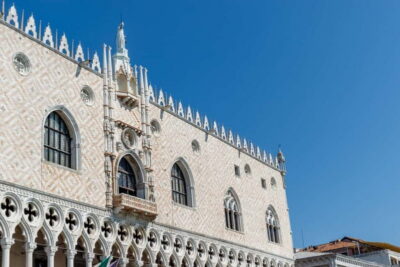
Doge’s Palace and St Mark’s Basilica Walking Tour
Read our review →
San Marco to Rialto Walk & Spritz Like a Local
Read our review →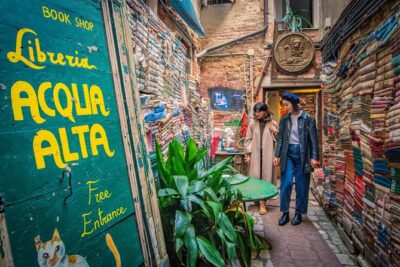
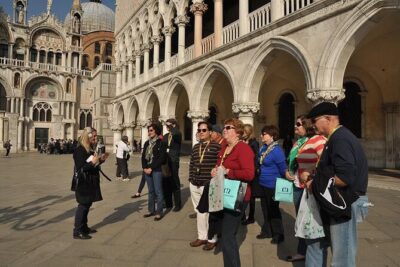
Private 3 hrs Venice Tour: St Mark’s, Walking tour & Boat tour
Read our review →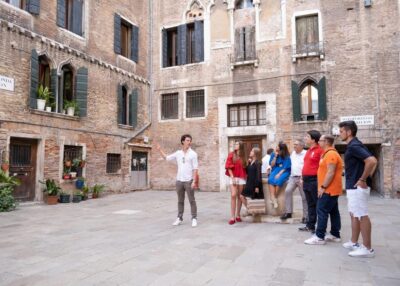
Walking Guided Tour of the City Must-See Sites
Read our review →
Private Best of Venice Walking Tour with St Mark’s Basilica
Read our review →
Venice Sightseeing Small Group Walking Tour with a Local Guide
Read our review →Browse the lists this tour appears in