
Reviewed · WALKING TOURS
Venice: Night Guided Walking Tour of the City’s Highlights
A good Venice tour is mostly about your feet and your questions. This one threads classic landmarks with quieter corners, so you leave knowing how the city actually moves at night. You start at San Zaccaria, then work through lively squares, tucked churches, and literary Venice.
Two things I really like: the route covers major sights without turning into a long, exhausting checklist, and the guide is English-speaking with a storytelling style that can mix funny with a darker edge (one guide, Gianmarco, is specifically praised for clear English and entertaining history). The one drawback: there’s moderate walking, and it is not suitable for wheelchair users.
If weather hits, Venice can be unpredictable. One traveler’s night tour was switched due to cold and wet conditions, and they ended up with an afternoon alternative that covered a different part of town.
In This Review
- Key things you will notice on this Venice night walk
- Meeting at San Zaccaria, setting the tone for Venice after dark
- San Zaccaria Church: why the first stop matters
- Campo Santa Margherita: the square where the city breathes
- Making your way toward Rialto: Marco Polo’s house in context
- Wandering the narrow streets and spotting Sant’Aponal Church
- Campo dei Frari and Carlo Goldoni: literary Venice, not just postcard Venice
- End at Campo San Tomà near Calle del Tragheto: a calmer final pause
- Price and logistics: is $71 for two hours worth it?
- Who this tour suits best
- Should you book this Venice night guided walking tour?
- FAQ
- How long is the Venice night guided walking tour?
- Where is the meeting point?
- What sites does the tour include?
- What is the price per person?
- Is the tour offered in English?
- What should I bring?
- What’s included and what’s not included?
- Is it wheelchair accessible?
Key things you will notice on this Venice night walk
- San Zaccaria Church first, so you get context before the streets get busy
- Campo Santa Margherita included as a major square stop, not just a quick photo break
- Marco Polo’s house near Rialto, placing him in the middle of Venice’s day-to-day routes
- Sant’Aponal Church in San Polo, a quieter Roman Catholic stop off the main tourist lines
- Carlo Goldoni at Campo dei Frari, with Goldoni’s residence now operating as a museum
- Campo San Tomà at the end, a calmer finish once you’ve seen the busy bits
More sestieri crossed bridge by bridge:

Meeting at San Zaccaria, setting the tone for Venice after dark
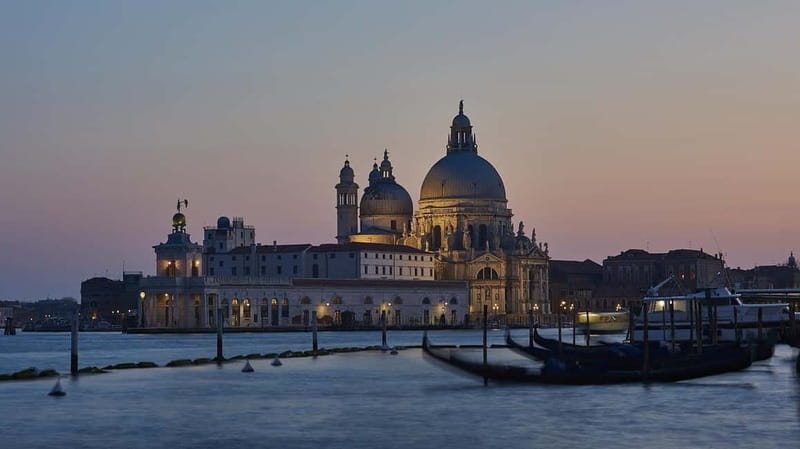
You meet next to San Zaccaria Church, which is a smart starting point. Before you head into neighborhoods and side streets, you get oriented around something solid and unmistakable. Even if you are not a church person, starting here helps you understand Venice’s layout, because you can anchor your bearings while the guide explains what you are about to see.
This is a guided walking tour, not a drive-by. You should expect the rhythm of Venice on foot: narrow lanes, small crossings, and moments where the street changes character fast. The guide keeps you moving, but the point is to help you notice details instead of just passing by.
Practical tip: wear comfortable shoes that can handle uneven stones. Venice ground is not negotiable, and nighttime tours mean you want sure footing, not careful dancing.
San Zaccaria Church: why the first stop matters
San Zaccaria is not just a pretty opening act. Starting at a church gives the guide an easy way to explain how Venetian life, faith, and art all braided together over time. You also get a sense of scale. Venice can feel like one continuous postcard, but when you begin at a specific landmark, the rest of the walk becomes easier to follow.
At this point in the tour, you’ll likely learn what to look for as you go, like what architectural or artistic cues to notice. That matters later, because you will be walking into smaller, less obvious places, including Roman Catholic sites and museum settings.
If you only have two hours, this kind of first-stop framing helps you turn sightseeing into understanding. You do not just see buildings, you start to read the city.
Campo Santa Margherita: the square where the city breathes
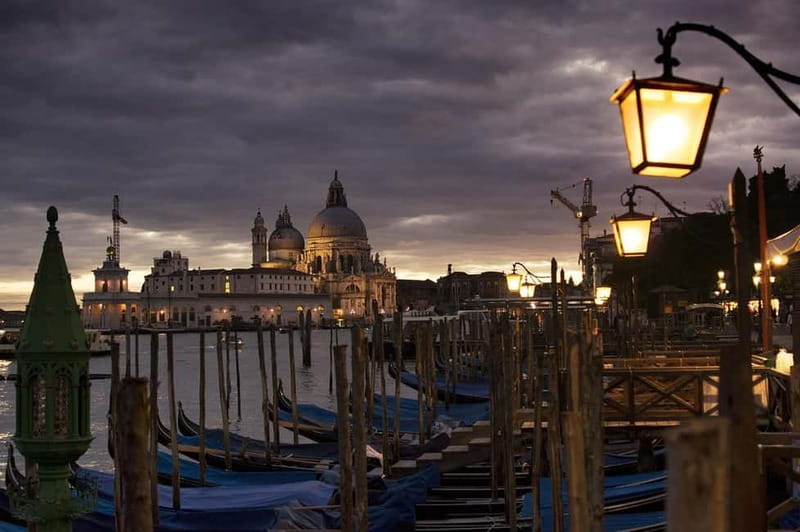
Next up is Campo Santa Margherita, with a guided segment that lasts about 10 minutes. This is a major open area, and the tour uses it for a reason: squares are how Venice organizes everyday life. You can watch how people flow, where conversation happens, and how shop fronts and side streets feed into open space.
This stop is also a good mental reset. After church tones and narrow lanes, a broader square gives you time to take in the street pattern. It’s one of those places that makes you feel like you are seeing Venice from the inside rather than only from a viewpoint.
What to do here: pause for a quick look, then listen to the guide. If you’re tempted to spend your entire stop hunting for photos, you’ll miss the small context cues that make the rest of the walk click.
More of Venice once the day boats leave:
- Venice: Catamaran Sunset Jazz Cruise with Aperitivo
★ 4.7 · 1,206 reviews - Venice: Lords of the Night Prison’s Palace Cells & Tortures
★ 4.0 · 1,067 reviews - Venice: Sunset Walking Tour with Food and Wine Tastings
★ 4.9 · 848 reviews - Venice: Crimes, Legends, and Mysteries Sunset Tour
★ 4.9 · 704 reviews - Venice Sunset Cruise by Typical Venetian Boat with Prosecco
★ 5.0 · 505 reviews
Making your way toward Rialto: Marco Polo’s house in context
From Campo Santa Margherita, the walk pushes toward the Rialto Bridge area. The guide includes a guided window of around 15 minutes here, which is enough time to get you through the most important talking points without losing the group.
Then comes a highlight that many visitors love: Marco Polo’s house, located close to Rialto. Even if you know Marco Polo mostly as a name from textbooks, the point of visiting the site in Venice is how physical it feels. It places him in the city’s trading world, not in some distant legend.
Rialto is famous, but the tour angle is different. You are not just staring at a grand landmark. You are moving around it, learning why this zone mattered, and picking up clues about how merchants, travel stories, and Venice’s reputation connected.
If you are short on time in Venice, this stop is a solid use of it. You get a recognizable connection and a story you can actually picture once you leave.
Wandering the narrow streets and spotting Sant’Aponal Church
This portion of the tour is where the city starts to feel like a lived-in maze. You’ll wind through Venetian narrow streets, and the guide helps you interpret what you’re seeing as you head to Sant’Aponal Church in the San Polo district.
Sant’Aponal is described as an important Roman Catholic site. That label matters. It means the church is not just a decorative stop. It’s a place where religious practice and neighborhood identity overlap, and you can often feel that difference compared with churches that exist mainly as tourist spectacles.
What I like about including a church like Sant’Aponal during a walking tour: it gives the group a break from the busiest sightseeing magnet. You get back into smaller-scale Venice. And because the tour is already moving through San Polo, the stop feels natural, not forced.
Night note: because you are walking streets that do not always have wide sightlines, keep your attention on the guide’s voice and direction. Venice side lanes can look identical until the moment you reach a church facade, canal, or square.
Campo dei Frari and Carlo Goldoni: literary Venice, not just postcard Venice
After the Roman Catholic stop, the tour continues toward Campo dei Frari, where you’ll find the residence of Carlo Goldoni, now operating as a museum. The guided time here is about 15 minutes, enough to frame who Goldoni was and why you’re seeing his home in this particular area.
This is one of the best value parts of the route if you like human stories. Venice tends to sell itself through canals, gondolas, and iconic bridges. Goldoni shifts the focus. Instead of treating Venice as an image, the tour points you to Venice as a place that produced writers who described society, manners, and characters people recognized in their own era.
Even if you are not an opera or theater expert, Goldoni is a name that helps connect the city’s architecture and public spaces to culture. You can look around and think, how would people have talked here? Where would stories have been staged? How would ideas travel?
You do not need to know everything beforehand. The guide’s job is to give you enough grounding so you feel something besides confusion when you see a museum door in a neighborhood that looks ordinary from the outside.
End at Campo San Tomà near Calle del Tragheto: a calmer final pause
The tour finishes at Calle del Tragheto, with the idea of ending at Campo San Tomà as a quieter square. This end strategy is smart. After moving through busier areas, you get a moment to stand still, look around, and reset.
A calm ending does more than feel pleasant. It helps you process what you saw. When you finish somewhere open and slower-paced, you can remember the sequence of stops more clearly, and it’s easier to decide what you want to explore next on your own.
If you plan to continue exploring after the tour, this ending also helps. You are not locked into a single monument. You’re in a neighborhood-adjacent area where it makes sense to wander, grab a drink, and let Venice work its magic at your own pace.
Price and logistics: is $71 for two hours worth it?
At $71 per person for a 2-hour guided walk, the value depends on what you want. If you like walking tours that teach you how to look, this price can make sense, because you’re paying for a guide who connects multiple sites, including a church, a major square, the Marco Polo connection, Sant’Aponal, and the Carlo Goldoni museum setting.
You also get clear advantages that help justify the cost:
- Live English guide
- Tour designed as a focused route with guided time at each key stop
- It’s not a long day, so you avoid the burnout that makes sightseeing less fun
What you should plan around:
- Hotel pickup and drop-off are not included
- Food and drinks are not included
- You need comfortable walking shoes
- It’s not suitable for wheelchair users
One more practical note from real-world conditions: Venice weather can force schedule adjustments. If it’s cold and wet, expect the company to consider safer timing. In one case, the night tour got switched to an afternoon option, which still covered a good mix of the city.
Who this tour suits best
This is a great fit if you:
- Want high-impact highlights in just two hours
- Enjoy a guide who tells stories, including odd or darker details
- Prefer walking through real neighborhoods, not only crossing between landmarks
- Like the idea of seeing Marco Polo and Carlo Goldoni in actual Venice streets and settings
It’s not the best choice if you:
- Need wheelchair-friendly routes
- Hate moderate walking at night
- Want a purely scenic, minimal-stops tour with no cultural or interpretive explanation
Should you book this Venice night guided walking tour?
I’d book it if you want a tight, story-led Venice overview that touches real cultural threads, not only the big tourist icons. Starting at San Zaccaria and then moving into squares and churches gives you a useful way to read the city, and the Carlo Goldoni museum stop is a smart change of pace.
Skip or reconsider if you’re sensitive to uneven ground, you need step-free access, or you only want one type of sightseeing. And if you are planning for a specific night, keep some flexibility in mind, because weather can shake up timing in Venice.
If you’re game for a guided walk, you’ll come away with more than photos. You’ll have a clearer map in your head, and you’ll know why these places belong to Venice beyond their names.
FAQ
How long is the Venice night guided walking tour?
The tour lasts 2 hours.
Where is the meeting point?
Meet the guide next to San Zaccaria Church.
What sites does the tour include?
The tour includes San Zaccaria Church, Campo Santa Margherita, Marco Polo’s house, Sant’Aponal Church, Carlo Goldoni’s residence (museum) at Campo dei Frari, and it ends near Campo San Tomà.
What is the price per person?
The price is $71 per person.
Is the tour offered in English?
Yes, the live tour guide is English.
What should I bring?
Bring comfortable walking shoes, water, and comfortable clothes.
What’s included and what’s not included?
Included: expert local guide, walk through Campo Santa Margherita, and pick up from the meeting point. Not included: hotel pickup and drop-off and food and drinks.
Is it wheelchair accessible?
No, the tour is not suitable for wheelchair users.
Lately added around Venice


Walking Tours, compared.
Doge’s Palace and St Mark’s Basilica Walking Tour
Read our review →
San Marco to Rialto Walk & Spritz Like a Local
Read our review →
Private 3 hrs Venice Tour: St Mark’s, Walking tour & Boat tour
Read our review →
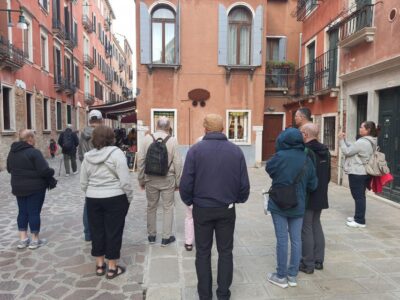
Walking Guided Tour of the City Must-See Sites
Read our review →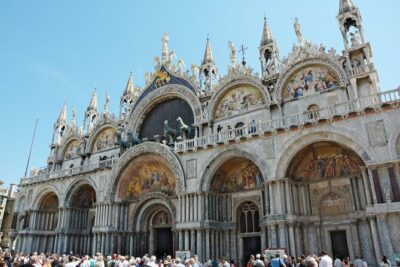
Private Best of Venice Walking Tour with St Mark’s Basilica
Read our review →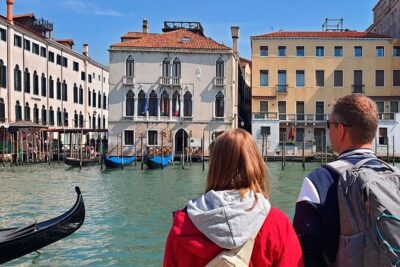
Venice Sightseeing Small Group Walking Tour with a Local Guide
Read our review →Browse the lists this tour appears in