
Reviewed · GONDOLA RIDES & SERENADES
Venice: St. Mark’s Walking Tour & Gondola Traghetto Crossing
Venice is best when you walk like you belong. This 2 hour St. Mark’s loop pairs a short 15 minute host intro with a smartphone audio route, then adds an authentic gondola traghetto crossing where no bridge exists. You get a mix of big-ticket sights and everyday Venice, paced so you can stop for photos or just watch life along the canals.
I like that the structure is simple: you start in St. Mark’s Square, get your orientation, then follow a phone-guided route with 36 key stops. I also like that the audio is a true premium setup, in 9 languages and validated by Retrace, so you can keep moving without needing to constantly ask questions.
One thing to consider: the guided part is brief. After that, you’re on your own with the audio, and the traghetto fee is extra, paid directly to the gondolier (typically €2), so you’ll want your timing and expectations to match.
In This Review
- Key Things I Think You’ll Notice Fast
- Why This St. Mark’s Walking Loop Feels Like the Right Length
- The 15-Minute Host Intro: Getting Oriented Without Losing Time
- Your Phone-Driven Route: 36 Stops from Power to Art to Everyday Venice
- St. Mark’s Square and the Basilica Zone
- Caffè Culture and the City’s Public Face
- Doge’s Palace, Justice, and the Darker Legends
- Royal Gardens and Casino-Era Venice
- Crossing Toward Dorsoduro: The Vow After the Plague
- Ca’ Dario, Modern Art, and the Accademia Bridge
- La Fenice, Revolution, and San Moisè
- Gondola Traghetto Across the Grand Canal: The One Moment You’ll Remember
- Audio Guide Reality Check: How to Use It Without Frustration
- Price and Value: $14 Plus the €2 Crossing
- Who This Tour Fits Best, and Who Should Rethink It
- Should You Book This St. Mark’s Walking Tour and Gondola Traghetto Crossing?
- FAQ
- How long is the St. Mark’s walking tour with gondola traghetto crossing?
- Where does the tour start and end?
- Is the gondola traghetto crossing included in the $14 price?
- What time are gondola traghetto crossings usually available?
- What languages are available for the audio guide?
- Do I need a smartphone and headphones?
- Is this tour suitable for families and kids?
- Is the tour wheelchair accessible?
- Can I pay later or cancel for a refund?
Key Things I Think You’ll Notice Fast
- A short, helpful live start that gets you oriented before you go solo with the phone
- 36 major stops spanning political power, art, and daily life, from St. Mark’s to Dorsoduro
- A real gondola traghetto across the Grand Canal, paid on site to the gondolier
- Premium audio in 9 languages with Retrace validation, designed for an easy loop
- Family-friendly pacing that lets you pause whenever you want
- Small gondola-themed souvenir included with the experience
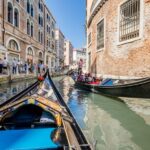
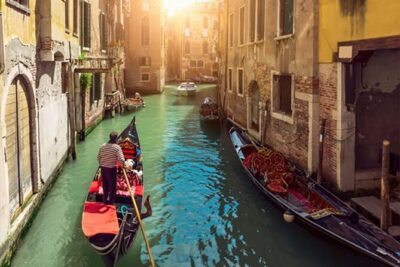
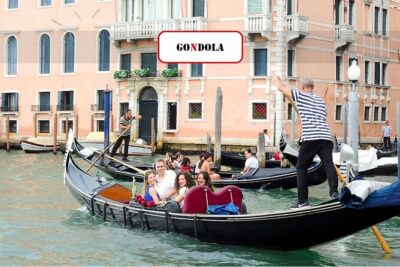
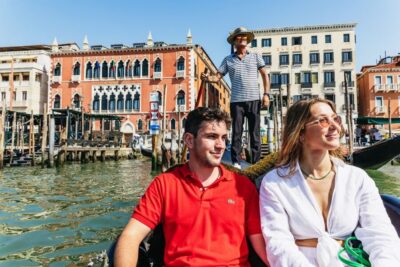
Other gondolas, with and without the singing:
Why This St. Mark’s Walking Loop Feels Like the Right Length
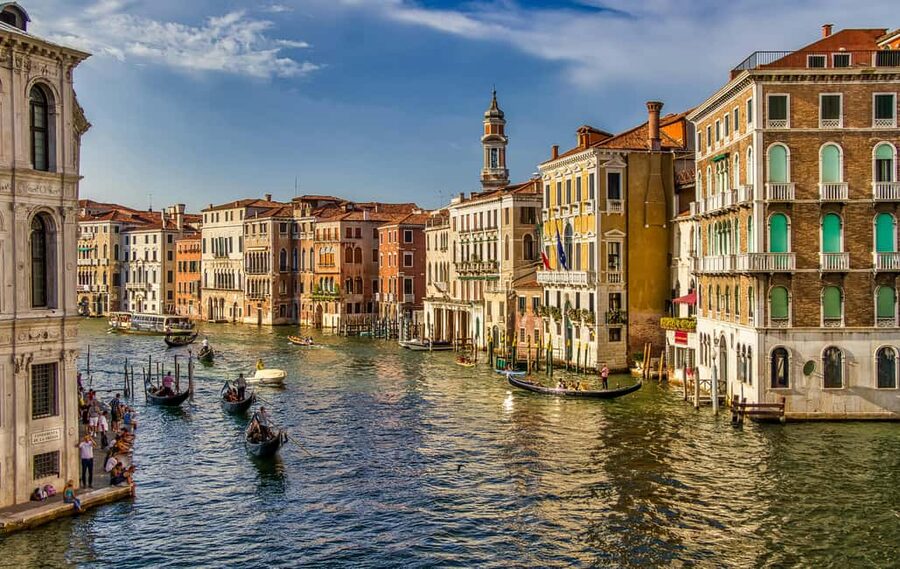
Two hours in Venice sounds short, until you remember you’re also walking across a dense maze of streets and bridges. This tour keeps things tight on purpose: it starts and ends in St. Mark’s Square, and it’s built as a loop so you don’t feel lost or stuck backtracking.
The experience design matters. You’re not trying to cram every monument into one sprint. Instead, you get a quick “why Venice looks like this” starter from a host, then the smartphone audio keeps you connected to the story at every step. That mix is ideal for people who want culture without the stress of matching a group pace.
You also get a moment that feels properly Venetian. Midway through, you cross the Grand Canal by gondola traghetto, the traditional crossing used by locals for centuries. Even if you’ve seen gondolas before, this version is different because it’s functional, not staged. You’re crossing because Venice works that way.
The 15-Minute Host Intro: Getting Oriented Without Losing Time
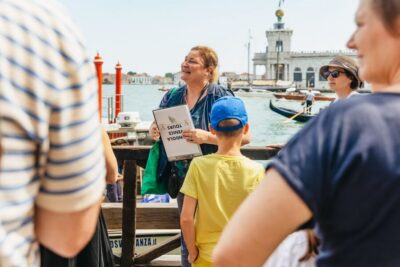
Your day starts at the partner office in Campo San Zaccaria 4683g, and you’re asked to arrive about 5 to 10 minutes early. In most systems like this, the welcome matters more than you think. The host actually meets you in person, explains how the route works, and helps you get your bearings before you walk away into the maze.
That intro is about 15 minutes in English. The point is not to give you a full tour of every building in St. Mark’s. It’s to give you a mental map: where the power sat, why the city looks ceremonial, and what to watch for as you move from plaza to basilica to palace. It’s the difference between seeing icons as decoration versus understanding why those icons exist.
Based on the strongest positive feedback, the best moments here are the clarity and the short extra attention when the host stays with you a bit at the start. If your intro host does the same, you’ll walk in knowing what to look for at the next stop, not just where you are.
Your Phone-Driven Route: 36 Stops from Power to Art to Everyday Venice
After the intro, you follow a carefully set walking route with 36 points of interest. This is where the premium audio becomes the engine of the day. You’ll keep your eyes up, because you’re not constantly hunting for explanations. You can pause as needed, and you’re not forced into a tight group rhythm.
Here’s how the route reads in practice, starting from St. Mark’s Square and flowing toward Dorsoduro.
More sestieri crossed bridge by bridge:
- Venice: Doge’s Palace and St Mark’s Basilica Walking Tour
★ 4.4 · 6,291 reviews - Venice: San Marco to Rialto Walk & Spritz Like a Local
★ 4.2 · 3,651 reviews - Venice Walking Tour and Gondola Ride
★ 3.5 · 3,630 reviews - Private 3 hrs Venice Tour: St Mark’s, Walking tour & Boat tour
★ 4.0 · 3,372 reviews - Venice: City Center Historical Guided Walking Tour
★ 4.2 · 1,873 reviews
St. Mark’s Square and the Basilica Zone
You begin at St. Mark’s Square, the city’s symbolic heart and political stage. From there you move through the basilica area, anchored by St. Mark’s Basilica mosaics, known for their Eastern influences and sacred power. If you look closely, the basilica isn’t just “pretty Byzantine.” It’s part propaganda, part devotion, part identity.
Next comes the Clock Tower, a reminder of trade and timekeeping tied to Venice’s mercantile mindset, followed by the Procuratie Vecchie & Nuove, which represent institutions and how the city grew its civic spaces over time.
Then you’ll pass the Napoleonic Wing & Museo Correr themes, which shift the tone to the fall of the Republic and how later eras tried to remember what Venice had been. In other words, the route doesn’t stop at medieval glory. It tracks what happened afterward.
Caffè Culture and the City’s Public Face
You’ll also run into the old-world elegance of Caffè Florian. Even if you don’t sit down, it’s worth walking past with the audio on, because you get the sense of how public life and art talk to each other in Venice.
Nearby, the focus turns toward spectacle with the Campanile & Loggia. These are visual anchors. When you know what they represent, the views stop being random and start being intentional.
Doge’s Palace, Justice, and the Darker Legends
A big stretch centers on the machinery of power. You’ll hit Doge’s Palace and the famous red columns, tied to justice and authority. From there, the route moves through the law-world details around Porta della Carta & the Tetrarchs, plus reminders of justice through Columns of St. Mark & St. Theodore.
Then the tone shifts toward crime and legend with St. Mark’s Basin view (Venice facing the sea), followed by Prisons & the Bridge of Sighs. This is the part where Venice’s mythology gets attached to real architecture. If you’re the kind of person who likes stories behind stones, this section is a strong reason the tour works.
Royal Gardens and Casino-Era Venice
The route also includes political symbolism with Royal Gardens and stories connected to Napoleon. Then it jumps to an unexpectedly lively chapter with Hotel Monaco and the Ridotto of San Moisè, described in the route as the first public casino in Europe. That’s a fun contrast to the basilica and palace atmosphere, and it keeps the city from becoming one long museum visit.
If your goal is to understand Venice as a living city, this mix helps. Venice had power and devotion, yes. It also had entertainment and human temptation.
Crossing Toward Dorsoduro: The Vow After the Plague
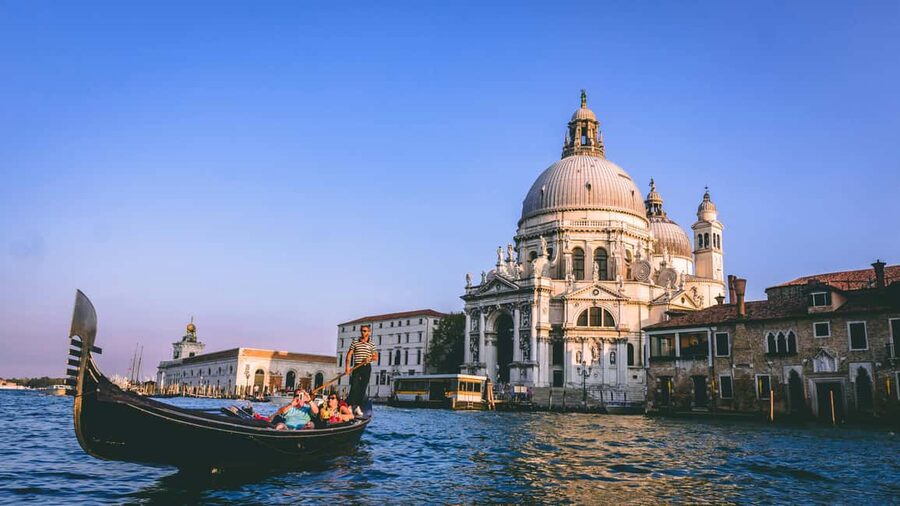
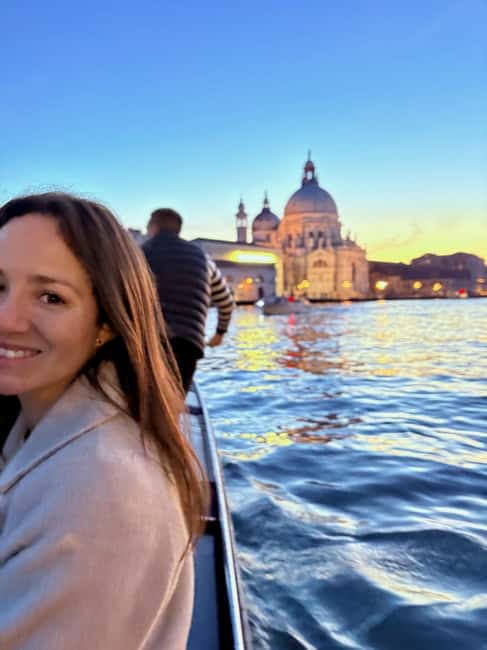
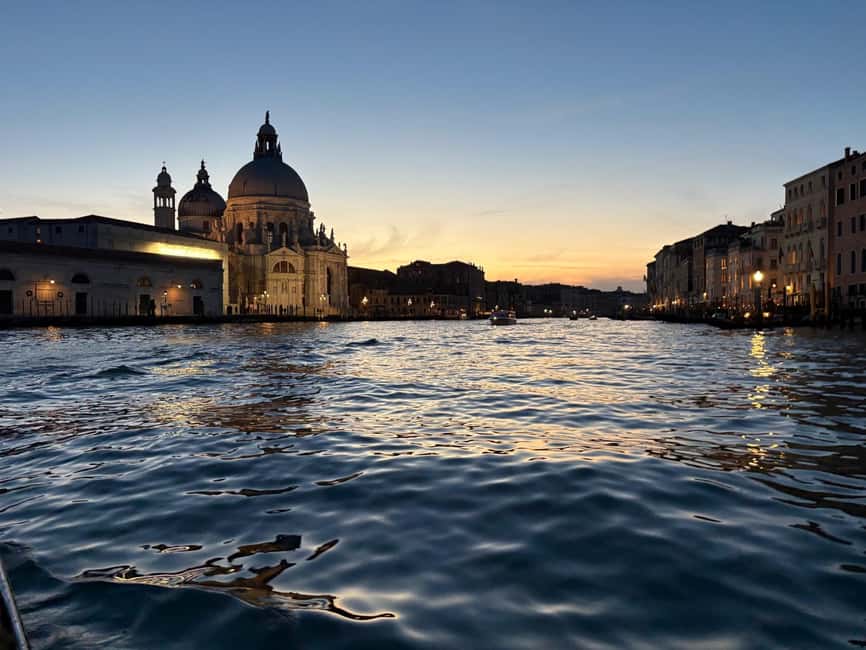
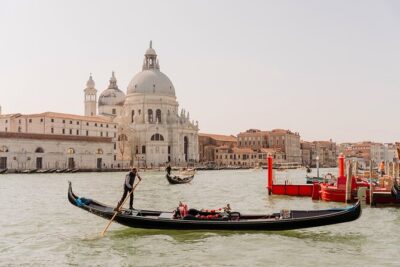
As you move deeper toward the Dorsoduro side, you reach Santa Maria della Salute, tied to a vow made after the plague. This stop gives you a different kind of context, less about policy and more about how Venice coped with catastrophe and turned survival into worship.
Next you’ll connect to trade and modern storytelling with Dogana da Mar, described in the route as trade space and tied to contemporary art. It’s a reminder that Venice kept reinventing how it used its buildings.
Ca’ Dario, Modern Art, and the Accademia Bridge
The route then brings in legendary destinies with Ca’ Dario, followed by a major modern-art turn: Peggy Guggenheim Collection. Even if you don’t go inside, having it on your walking path gives you a clear “this is still a serious art city” message.
Then it points you toward Palazzo Cini & Gallerie dell’Accademia, with Venetian painting as the theme. After that, you cross the story into architecture and canal origins via Accademia Bridge, tied to the Grand Canal’s wider story.
La Fenice, Revolution, and San Moisè
The last stretch heads to Teatro La Fenice, a stop framed around destruction and rebirth. The route then reaches Calle Larga XXII Marzo, linked to the 1848 revolution, before landing around Campo & Church of San Moisè, which connects baroque theatre and symbolic power.
This ending is useful. It’s not just a scenic finish. It’s a final reminder that Venice keeps returning to themes of performance, politics, and survival, even as centuries change.
Gondola Traghetto Across the Grand Canal: The One Moment You’ll Remember
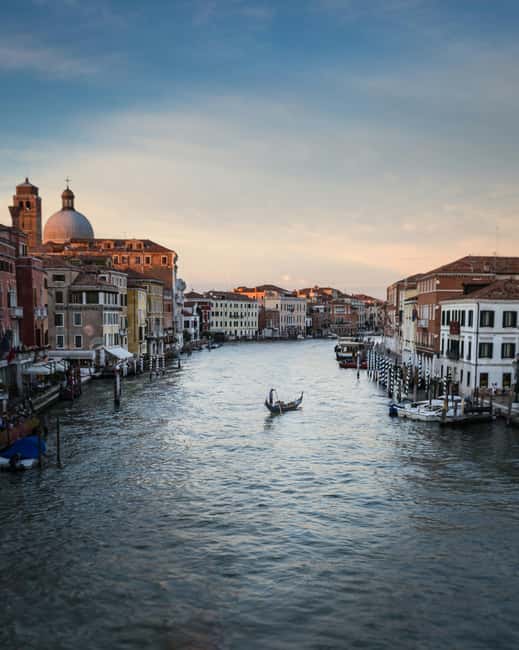
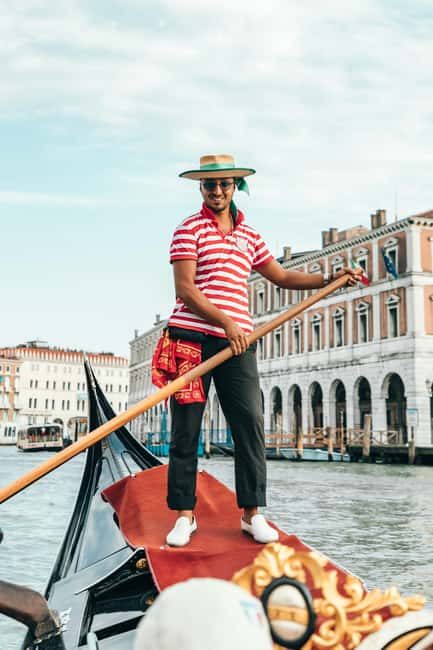
The mid-route highlight is the Grand Canal gondola traghetto crossing. This is a traditional local service used by Venetians for centuries to cross where there is no bridge.
You pay directly on site, and the typical fee is €2 per person. You cannot prepaid this one. That’s small money, but it changes the flow of your day. You’ll want to be ready, cash or a payment method the gondolier accepts, and you’ll want to keep a little time margin so the crossing doesn’t feel rushed.
Timing also matters. The crossing can be used during traghetto operating hours, usually from 10:00 AM to 5:00 PM. If you’re booking a time slot that overlaps those hours, you’re much more likely to get the full experience you came for.
One more practical note: some recent complaints mentioned a mismatch where the gondola crossing did not happen as expected. I can’t know what happened for any individual booking, but I’d treat this as a “check it early” item. When you meet the guide or staff at the start, make sure you understand when and where the crossing happens on your specific schedule. If you’re getting a short live intro and then audio, it’s even more important that the traghetto part is clearly identified before you set off.
Audio Guide Reality Check: How to Use It Without Frustration
The audio guide runs on your smartphone with premium commentary and is available in English, Spanish, Italian, German, Portuguese, Russian, Chinese, and Japanese. You should plan on using it with comfortable headphones and a charged phone.
This matters because the audio is the backbone of the tour after the initial intro. The guide is not shadowing you through every stop. Instead, the phone tells you what you’re looking at and why it matters, using that 36-stop route logic.
If you want the experience to feel smooth, do these small prep steps:
- Bring headphones you know work.
- Keep your phone charged.
- Wear comfortable walking shoes, because Venice distances add up fast even when you think you’re only on a “loop.”
Also note that the tour is not recommended for wheelchairs due to uneven surfaces and bridges. The whole city is built on walkability, but this route includes enough tricky footing that accessibility is tough.
Price and Value: $14 Plus the €2 Crossing
At $14 per person for a 2 hour experience, the value depends on what you think you’re paying for.
Here’s what that price likely covers: the meet-and-welcome at the partner office, a short guided orientation, the self-paced walking route with 36 points of interest, the premium smartphone audio in 9 languages, plus a small gondola-themed souvenir. The tour also includes ongoing support from Voir Venise during your stay for advice and recommendations.
What it does not cover: the traghetto crossing fee, typically €2 per person, paid to the gondolier on site.
So the real “all-in” cost is close to your base price plus about €2. For many people, that’s a fair trade for a route that includes a signature canal crossing and an audio guide you can actually use multiple times in your own way during that day.
But there’s a second value point that’s easy to miss. Several low ratings complained about organization or about the activity not matching the description, including cases where the crossing or guided component didn’t happen. I can’t judge which schedules were affected, but I can say this: this is not a fully guided, step-by-step tour. If you want someone to stay with you the whole time and explain every stop live, this format may feel too hands-off. The best value comes when you’re happy with a short intro plus audio.
Who This Tour Fits Best, and Who Should Rethink It
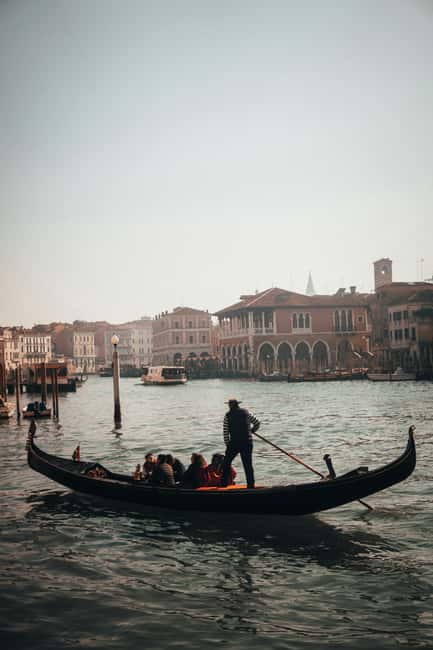
This works well if you want a classic Venice experience without spending the whole day inside museums. It also fits families and kids because the pacing lets you pause. The traghetto moment is usually a big win for younger travelers, since it feels like an event, not just a photo stop.
It also suits travelers who like independence. You walk at your own rhythm on a loop route, and you’re not stuck listening to one continuous monologue for 2 hours.
You might want to rethink booking if:
- You expect a long guided walking tour with live explanations at every stop.
- You’re sensitive to logistics, and you want every component fully handled for you.
- You’re visiting outside the typical 10:00 AM to 5:00 PM traghetto window.
If you’re someone who likes structure but also wants freedom, you’ll likely enjoy this more than the average “see Venice in a rush” option.
Should You Book This St. Mark’s Walking Tour and Gondola Traghetto Crossing?
I’d book it if your priority is a smart, efficient St. Mark’s to Dorsoduro loop with storytelling, plus a genuine Grand Canal traghetto crossing. The best part is the combination: quick live orientation, then audio that keeps you understanding what you’re seeing while you move.
I’d be cautious if your expectation is “a full guided tour where nothing is left to you.” This format gives you a brief host intro, then relies on your smartphone audio for the heavy lifting. Also, since the traghetto fee is paid on site and because operating hours matter, align your time slot with daytime hours so you can actually get that crossing.
If you do book, show up early at Campo San Zaccaria 4683g, confirm the traghetto timing with the staff before you start, and keep your headphones ready. That’s the difference between feeling like Venice is unfolding for you, versus feeling like you’re trying to figure it out mid-route.
FAQ
How long is the St. Mark’s walking tour with gondola traghetto crossing?
The walking loop is approximately 2 hours.
Where does the tour start and end?
It starts at the partner office at Campo San Zaccaria 4683g and ends in St. Mark’s Square.
Is the gondola traghetto crossing included in the $14 price?
The crossing itself is not included in the $14 price. You pay the gondolier on site, typically €2 per person.
What time are gondola traghetto crossings usually available?
Traghetto crossings are usually available from 10:00 AM to 5:00 PM.
What languages are available for the audio guide?
The audio guide is available in English, French, Italian, Spanish, German, Portuguese, Russian, Chinese, and Japanese.
Do I need a smartphone and headphones?
Yes. The route continues with premium audio on your smartphone, so you should bring headphones and a charged phone.
Is this tour suitable for families and kids?
Yes, it is listed as suitable for kids and families, with a walking pace that you control.
Is the tour wheelchair accessible?
It is not recommended for wheelchairs due to uneven surfaces and bridges.
Can I pay later or cancel for a refund?
Yes. You can reserve now and pay later, and you can cancel up to 24 hours in advance for a full refund.
Lately added around Venice

Gondola Rides & Serenades, compared.
Grand Canal Gondola Ride with App Commentary
Read our review →
Grand Canal Gondola Experience with Live Commentary™
Read our review →
Grand Canal Gondola Experience with Live Commentary™
Read our review →
Venice In a Day: St Mark’s, Doges Palace Gondola Ride & City Tour
Read our review →
Private Crafted Gondola Ride Along Grand Canal
Read our review →Browse the lists this tour appears in