
Reviewed · GONDOLA RIDES & SERENADES
Venice Walking Tour and Gondola Ride
A great Venice intro starts with a plan, not just wandering. This tour strings together Saint Mark’s Square and the Grand Canal on foot, then slows things down with a traditional gondola ride. I also like that it keeps the group small, so your guide can actually explain what you are seeing and where you should look. The main downside to consider is the pace, since some people report the walk can feel fast, especially right up front.
You will spend about 3 hours moving through key sights with a guide, with a mobile ticket for easier entry. You also get flexibility because not every stop needs a paid ticket, but a few major landmarks do (like Doge’s Palace), so you’ll want to budget for what you want to add on top. For the value, the big win is that the price bundles guided walking plus the gondola, instead of treating them as two separate outings.
Just come prepared for Venice reality. Wear comfortable shoes, plan for crowds around St Mark’s, and show up early at the start point near Santa Lucia so you do not miss the gondola timing.
In This Review
- Key things that make this Venice combo tour work
- Getting Oriented: From Santa Lucia to Venice’s Showpieces
- Grand Canal: Why Venice’s Main Street Still Feels Like Water
- Piazza San Marco: The City’s Social and Political Center
- Campanile di San Marco and St Mark’s Basilica Area: What to Look For
- Torre dell’Orologio and the Clock Tower Entrance Zone
- Ponte dei Sospiri (Bridge of Sighs): Drama Built Into Stone
- Rialto Bridge: The Oldest Grand Canal Crossing
- Doge’s Palace and Teatro La Fenice: Optional Depth, Not Just Pass-By
- The Traditional Gondola Ride: Why It’s Built Into This Tour
- How Much Value Are You Really Getting for $185.38?
- Who This Tour Suits Best (And Who Might Prefer Something Else)
- Should You Book This Venice Walking Tour Plus Gondola?
- FAQ
- How long is the Venice Walking Tour and Gondola Ride?
- Where does the tour start and end?
- What’s included in the price?
- What is not included?
- Is the gondola ride guaranteed?
- How big is the group?
- Do I need to buy tickets for the sights?
- Is there an extra fee for people visiting Venice from outside the city?
- What if I need to cancel?
Key things that make this Venice combo tour work
- Small group size (listed up to 14, and sometimes capped at 8) keeps your guide’s attention tighter.
- Guided storytelling focused on how Venice worked at its peak, not just photo spots.
- Grand Canal corridor views plus iconic squares and bridges, so first-timers get the main map quickly.
- A traditional gondola ride built into the flow, so you get the Venice feeling without doing extra planning.
- A mix of free and paid sights, letting you decide what to spend extra on in the moment.
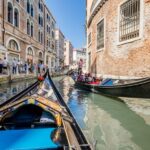
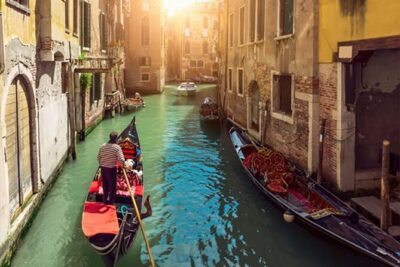
Other gondolas, with and without the singing:

Getting Oriented: From Santa Lucia to Venice’s Showpieces
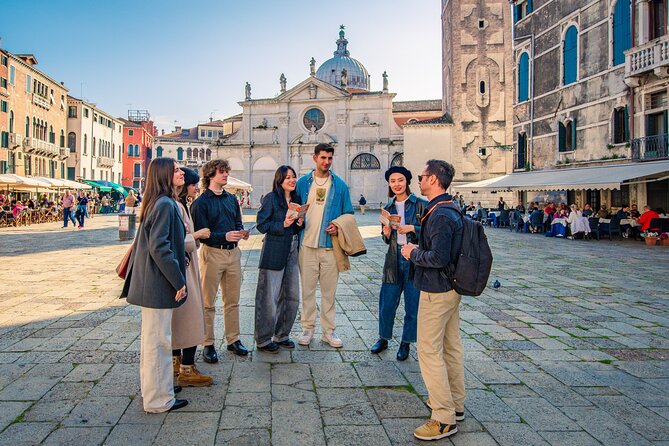
The tour starts at Stazione di Venezia Santa Lucia, and it ends back at the same meeting point. That makes it simple if you are staying near the train station area or using trains and ferries to connect your days.
Where this really matters is time and energy. Venice can feel like one long crowd channel, especially around San Marco. If your group hits busy lanes right away, you may want to be mentally ready to keep moving and to listen when you can, rather than expecting long, calm pauses at every corner.
The best move: arrive a little early, and be ready to walk. One concern that comes up in feedback is that the early part can feel like a dash to catch the gondola window, so you will have a better experience if you start the tour fresh.
Grand Canal: Why Venice’s Main Street Still Feels Like Water
The first stop is the Canal Grande, which is Venice’s best “street” for understanding the city. The canal acts like a backbone through the center districts, the sestieri, and it’s what shaped how people traveled, traded, and lived.
A few practical ideas to take with you here:
- Notice how the Grand Canal splits the central area into two sides. It changes how you experience Venice, because you are always relating landmarks to that waterway.
- Use it as your orientation tool. When you can visualize where the canal bends and how it links to San Marco and toward the Santa Lucia side, the rest of the city makes more sense.
Even if you already know Venice is built on water, the Canal Grande gets you thinking like a local. This is not just scenery, it is infrastructure made beautiful.
Piazza San Marco: The City’s Social and Political Center
Next is Piazza San Marco (St Mark’s Square). This square matters because it has been the social, religious, and political heart of Venice, so it’s where power and pageantry met day-to-day life.
You’ll also get the “how Venice labels itself” lesson while you are there: most city spaces are called campi (fields), while the square and its little extension toward the lagoon, the Piazzetta, are treated as the true center.
What I like about this stop is that it is not just about taking photos. It’s the place where you can stand back, see the flow of people, and understand why so much architecture and ceremony grew here.
A good consideration: St Mark’s is famously crowded. If you are sensitive to noise or tight spaces, plan to focus on what your guide points out rather than trying to read every detail on your own.
More sestieri crossed bridge by bridge:
- Venice: Doge’s Palace and St Mark’s Basilica Walking Tour
★ 4.4 · 6,291 reviews - Venice: San Marco to Rialto Walk & Spritz Like a Local
★ 4.2 · 3,651 reviews - Venice Walking Tour and Gondola Ride
★ 3.5 · 3,630 reviews - Private 3 hrs Venice Tour: St Mark’s, Walking tour & Boat tour
★ 4.0 · 3,372 reviews - Venice: City Center Historical Guided Walking Tour
★ 4.2 · 1,873 reviews
Campanile di San Marco and St Mark’s Basilica Area: What to Look For
From the square, you’ll get near the Campanile di San Marco area and the Basilica di San Marco. The basilica is a key anchor because its core structure dates back to the late 11th century, and later work added famous decorative layers. The main façade roofline is described as mostly Gothic in character, which is a useful clue when you are scanning details.
Two practical notes:
- Basilica-related time is often why this stop feels tight. If you want to go inside, that is typically an add-on decision because entry is not included for everything on this route.
- The Campanile stop lists admission not included, so if you want views from the tower, you may need a separate ticket.
If you are a first-timer, this area is the “okay, this is why Venice is Venice” moment. I think it’s worth paying attention to shapes and styles, not just the fact that the place is famous.
Torre dell’Orologio and the Clock Tower Entrance Zone
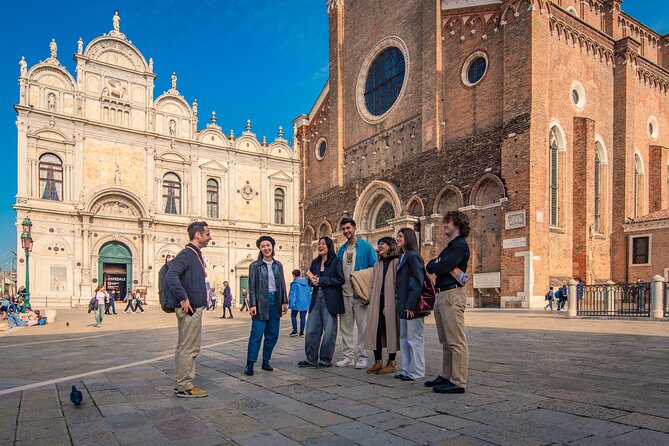
You also stop at Torre dell’Orologio, the clock tower on the north side of Piazza San Marco near the Merceria entrance. It is an early Renaissance building, and it includes both the clock tower and flanking buildings.
The time here is short (around 10 minutes), which means you should treat it like a quick, satisfying systems check. Look at how the tower connects into the surrounding façades and how it frames the route toward the shopping street area.
Again, admission is not included here, so focus on exteriors and on letting the guide connect this zone to how Venice used its public buildings.
Ponte dei Sospiri (Bridge of Sighs): Drama Built Into Stone
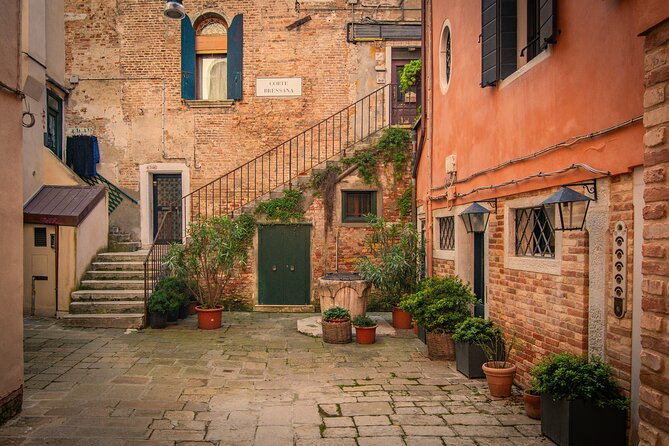
One of the most memorable stops is Ponte dei Sospiri (Bridge of Sighs). This bridge is not just a postcard. It has a specific story tied to power and punishment: it was built in 1602 with white Istrian stone to connect Palazzo Ducale (Doge’s Palace) to the new prisons.
What makes it interesting is the structure. It is described as being formed by two corridors separated by walls, fully covered. Even if you never go inside, you will understand the mood of the place because the bridge feels enclosed and controlled.
A drawback to keep in mind: bridges in Venice are bottlenecks. If your group is moving quickly, you may not have much time to linger for photos without getting swept along. Still, if you listen to the story while you are there, the bridge lands.
Rialto Bridge: The Oldest Grand Canal Crossing
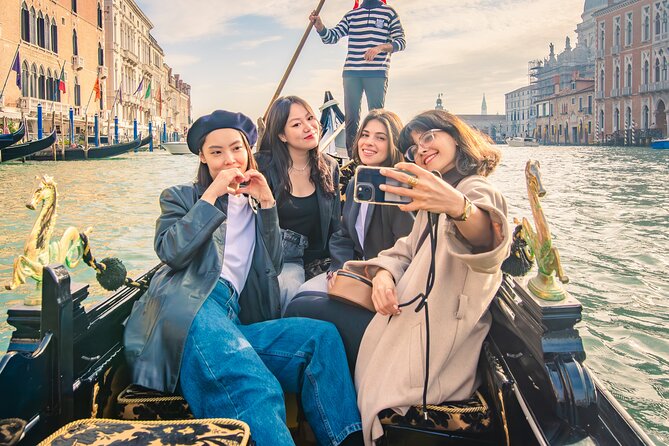
Then you head to Ponte di Rialto, the oldest of the four Grand Canal bridges mentioned here. It connects the sestieri of San Marco and San Polo, and it has been rebuilt multiple times since early versions built using ships and wood.
The version you see today is dated to 1591, which is a detail worth remembering because it explains why this bridge looks older and more “firm” than newer-looking structures elsewhere in the city.
What you should do at Rialto:
- Look at how the bridge stitches two districts together across the water.
- Use it as a baseline point. If you later take photos or navigate on your own, Rialto often helps you orient quickly.
Time is listed around 30 minutes, but Rialto crowds can compress how much you actually enjoy it. Treat it as a viewpoint and a landmark stop, then keep moving.
Doge’s Palace and Teatro La Fenice: Optional Depth, Not Just Pass-By
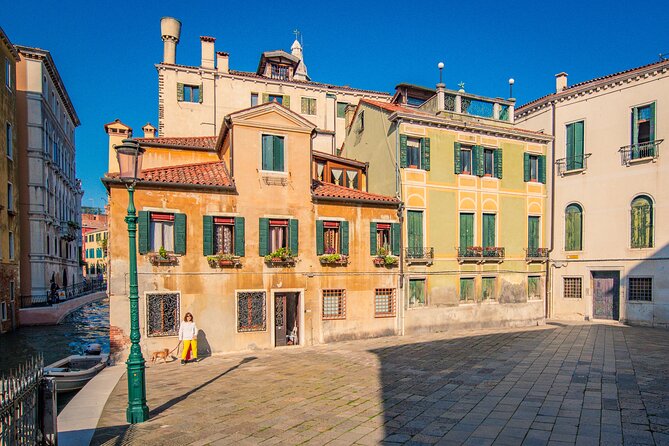
After the bridge cluster, the tour reaches Doge’s Palace, a Venetian Gothic palace that served as the Doge’s residence and later opened as a museum in 1923. Today it is part of museum operations under the Fondazione Musei Civici di Venezia, and it is a major reason many people add time to their Venice days.
But here is the practical part: admission is not included. So you have two ways to enjoy this stop:
- If you just take in the exterior and the big rooms from outside viewpoints, you still get context fast.
- If you want the full museum experience, you’ll need to plan for extra entry time and extra cost.
You also pass by Teatro La Fenice, one of Italy’s best-known opera houses. The focus here is more on landmark recognition than on an included admission. The descriptions tie La Fenice to major 19th century bel canto premieres involving composers like Rossini, Bellini, Donizetti, and Verdi, which gives you a nice “this is the theater that mattered” reference point.
If you are short on time, it’s fine to treat these as story stops. If you love museums and opera history, you’ll likely want to add separate visits.
The Traditional Gondola Ride: Why It’s Built Into This Tour
This tour is built around the gondola ride as a payoff, not a random add-on. The ride is a traditional gondola included in the experience, and the small-group format helps keep the handoff smoother.
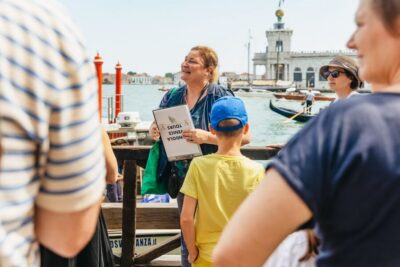
One thing I appreciate is that the tour is designed to get you to the gondola and then return you to finish the walk. In past groups, guides such as Julian were specifically praised for staying engaged, making sure everyone reached the ride, and then bringing the group back to complete the tour.
A realistic consideration: Venice timing is fragile. If you are late to the meeting point or hesitate too long at a photo stop, you can throw off the gondola schedule. So keep your focus during the run-up to the ride.
Also, a small note from experience-style feedback: sound systems and microphone issues can happen. If you rely on clear audio, position yourself where you can hear the guide, especially in dense crowds.
How Much Value Are You Really Getting for $185.38?
At $185.38 per person, you are paying for three main things:
- A guided walking route through major Venice touchpoints.
- A traditional gondola ride bundled in.
- A small group format that aims to make the guide part practical and not just background.
What helps this feel like value is that you are not spending extra time coordinating two separate activities yourself. In a city where logistics can eat your day, that bundling matters.
What can change your final cost is what you choose to add:
- Some stops on the route list admission not included (for example, Campanile di San Marco, Torre dell’Orologio, Doge’s Palace, and Teatro La Fenice).
- Food and drinks are not included.
- There can be a €5 access fee on certain dates if you are visiting from outside Venice for the day, with details on the official site linked by the provider.
My advice: treat the tour price as covering the backbone of the experience, then decide on the day which interiors you want. If you are the type who hates decision fatigue, you might prefer to buy key tickets in advance so you do not stall the group.
Who This Tour Suits Best (And Who Might Prefer Something Else)
This is a strong fit if:
- You are a first-time visitor who wants St Mark’s and Rialto covered with context.
- You like a guide who can connect landmarks to how Venice worked.
- You want a gondola ride without sorting it out alone.
It may be less ideal if:
- You need long, slow breaks and a relaxed pace. Some people reported a fast walking style, and the early stretch can feel like you are moving more than pausing.
- You strongly prefer quieter, less crowd-dependent viewing. St Mark’s and bridges are crowd magnets.
If you fall into the middle, you can still enjoy it. Just keep your expectations tuned to a tour format: movement first, stories as you go, and the gondola as the reward.
Should You Book This Venice Walking Tour Plus Gondola?
Yes, I would book it if you want the classic Venice combo, guided, in a tight window. The best reason is the structure: you get Grand Canal orientation, you hit the biggest San Marco landmarks, you pass major bridges like Ponte dei Sospiri, and then you end with the gondola moment.
Before you go, do two things:
- Be on time at Stazione di Venezia Santa Lucia and keep your energy up for the first part of the walk.
- Decide in advance how much you want to pay for optional entries like Doge’s Palace, since those admissions are not included.
If you like moving through Venice with a plan and you want that iconic gondola experience without extra logistics, this tour is a solid way to start.
FAQ
How long is the Venice Walking Tour and Gondola Ride?
It runs for about 3 hours.
Where does the tour start and end?
It starts at Stazione di Venezia Santa Lucia and ends back at the same meeting point.
What’s included in the price?
The tour includes a guided tour, a traditional gondola ride, and a small group experience. You receive a mobile ticket.
What is not included?
Food and drinks are not included, as well as personal purchases and tips. Some attractions have admission not included (such as Campanile di San Marco, Torre dell’Orologio, Doge’s Palace, and Teatro La Fenice).
Is the gondola ride guaranteed?
The gondola ride is listed as included as part of the experience.
How big is the group?
The tour is limited to a small group, listed as a maximum of 14 people and also as a maximum of 8 travelers.
Do I need to buy tickets for the sights?
Some stops note admission not included, while others note admission ticket free. You may need separate tickets if you want to enter places that list admission not included.
Is there an extra fee for people visiting Venice from outside the city?
On certain dates, some visitors staying outside Venice may need to pay a €5 access fee. The provider points you to the official page for the schedule and exemptions.
What if I need to cancel?
You can cancel for a full refund if you cancel at least 24 hours before the experience start time.
Lately added around Venice

Gondola Rides & Serenades, compared.
Grand Canal Gondola Ride with App Commentary
Read our review →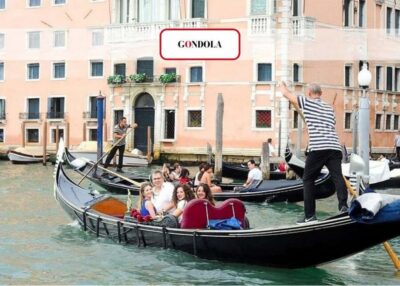
Grand Canal Gondola Experience with Live Commentary™
Read our review →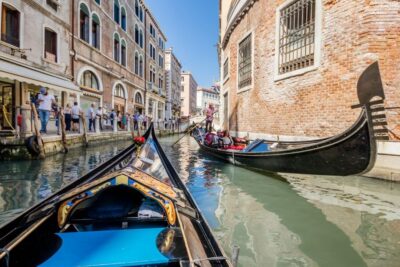
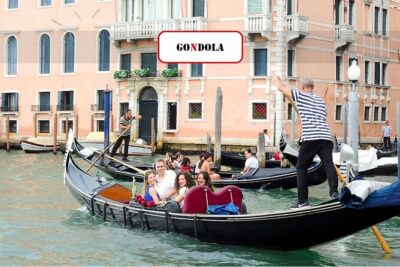
Grand Canal Gondola Experience with Live Commentary™
Read our review →
Venice In a Day: St Mark’s, Doges Palace Gondola Ride & City Tour
Read our review →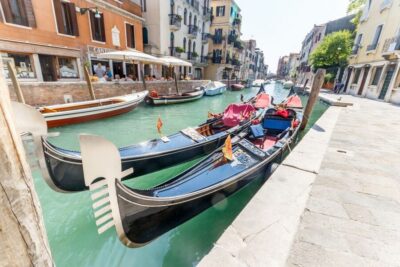
Private Crafted Gondola Ride Along Grand Canal
Read our review →Browse the lists this tour appears in