
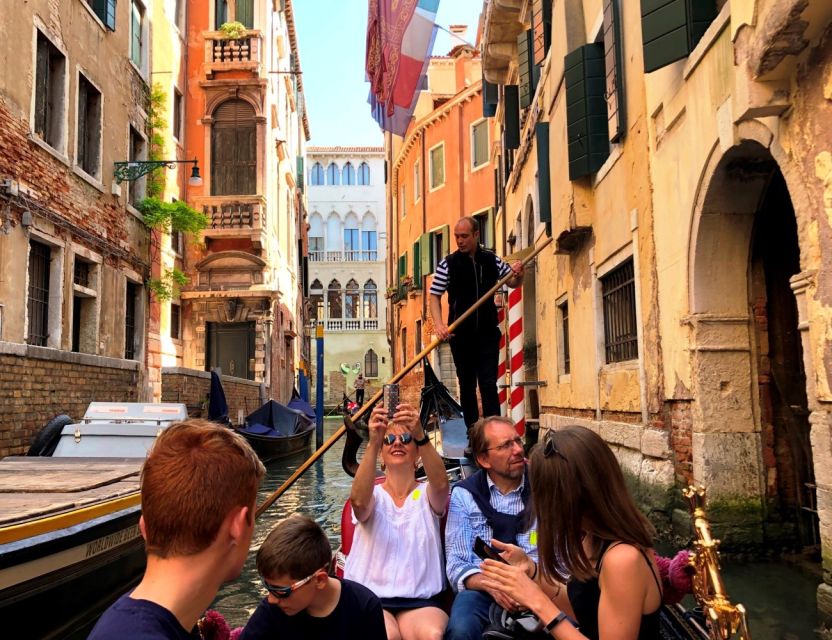
Reviewed · GONDOLA RIDES & SERENADES
Venice Walking Tour and Gondola Ride Combo
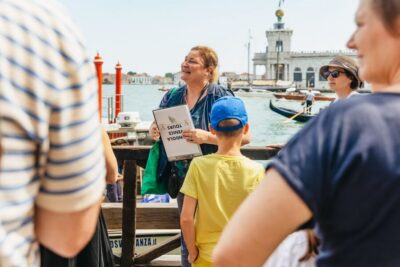
Venice moves faster when you switch from walking streets to canal views. This combo gives you both, with a 1.5-hour guided wander through Venice’s back lanes, then a 30-minute gondola ride on the smaller canals off the Grand Canal. I love the way the guide builds stories around what you can actually see, plus the less-touristy feel of the streets between St Mark’s Square and the Rialto. The other big win is value, since you’re bundling a guided experience with a gondola ride instead of paying for the ride separately. One drawback to plan for: the gondola portion may run short or be delayed when canal access is crowded, so your exact minutes can vary.
If you’ve got limited time, this is a smart way to get your bearings fast, including key sights like the Byzantine façade of St Mark’s Basilica, the Doge’s Palace area, and the Basilica della Salute. In past tours, guides such as Gina and Stephanie have been singled out for being funny as well as informative, which matters in a city where you want facts without feeling like you’re reading a sign. Meeting is straightforward too, at Calle larga de l’ Ascension behind the Correr museum, where a TURIVE staff member checks your voucher.
In This Review
- Key highlights worth your time
- Why this Venice combo works: walk first, then glide
- Price and time: what you really get for $80
- Getting started at Calle larga de l’ Ascension (behind the Correr museum)
- The 1.5-hour walk: St Mark’s Square to the Rialto in smart segments
- St Mark’s Basilica and the Doge’s Palace area, explained from the outside
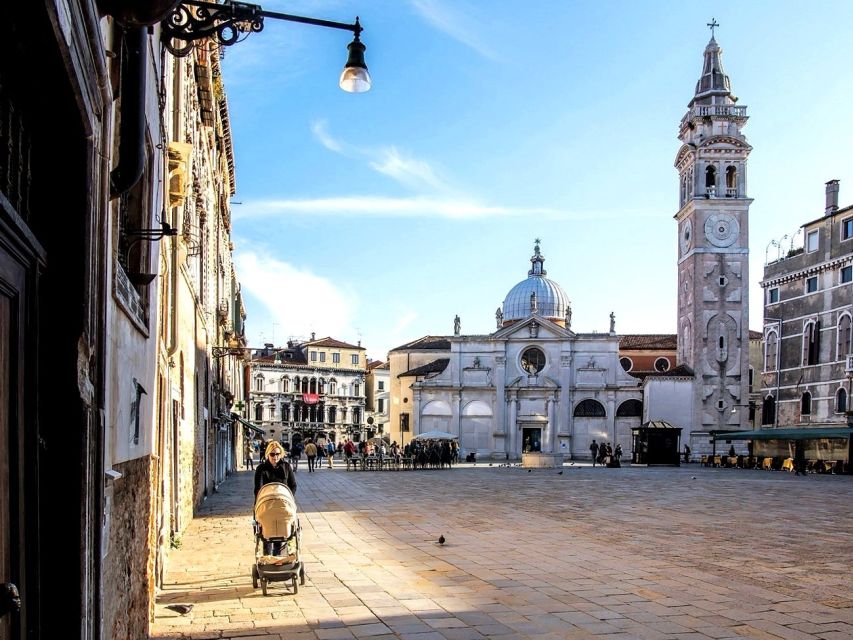
- Campo Santa Maria Formosa: a church stop with context
- Marco Polo’s former home and a theatre with extravagant stage history
- Mercerie lanes: the trade streets behind the glamour
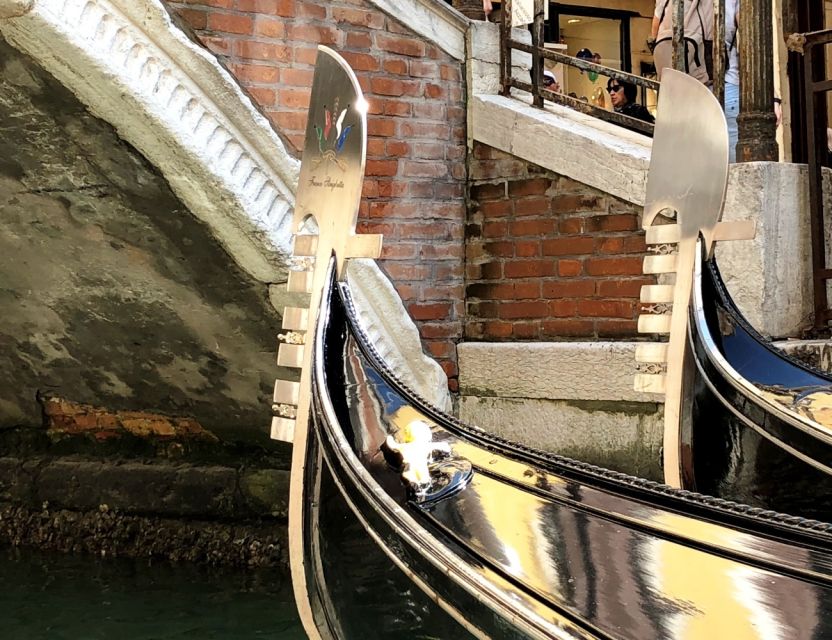
- The gondola ride: a 30-minute punt through minor canals off the Grand Canal
- What you’ll see from the water
- Group size and seating reality
- Timing can shift when canals get crowded
- Winter note: no explanations during the gondola ride
- Weather can cancel the gondola
- The landmarks that anchor the whole route: La Fenice and the Basilica della Salute
- La Fenice Opera House façade, seen as street architecture
- Basilica della Salute: a closing visual cue
- Guide quality, languages, and how to hear the story
- Who this tour fits best (and who should rethink it)
- Should you book this Venice walking tour and gondola ride combo?
- FAQ
- How long is the tour, and what parts are included?
- Where is the meeting point?
- What languages are available for the live guide?
- Is the gondola ride explained by the guide?
- What happens if weather causes a change to the gondola ride?
- Is the itinerary wheelchair accessible?
Key highlights worth your time
- St Mark’s to Rialto, through the narrow in-between streets instead of just the main drag
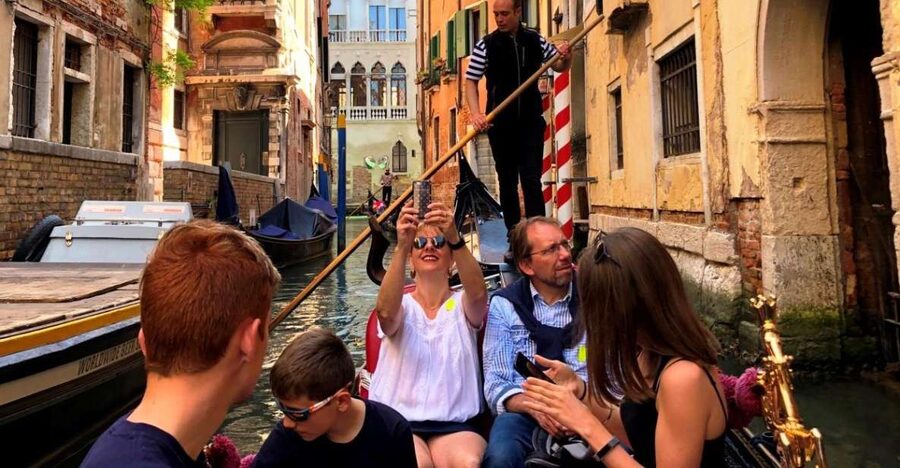
- Quieter gondola routes, on small canals off the Grand Canal
- Marco Polo connections, plus stops that explain how Venetian trade shaped everyday life
- Mercerie lanes, where goods from distant markets were sold
- Landmarks you can recognize immediately, including La Fenice’s façade and the Basilica della Salute
- Small boat capacity (up to 5), with groups split if needed
Other gondolas, with and without the singing:
Why this Venice combo works: walk first, then glide
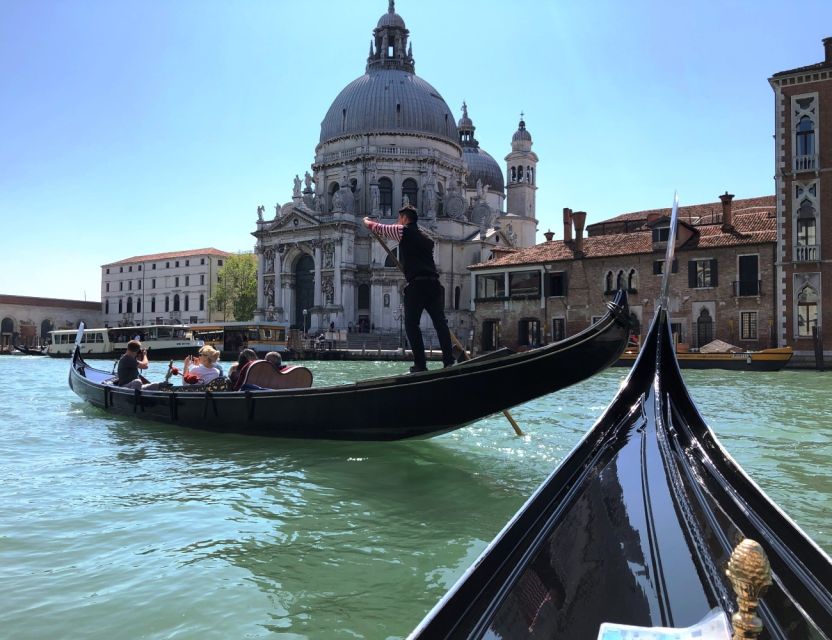
This tour’s format is the real reason it’s enjoyable. Walking gives you context, landmarks, and route sense. Then the gondola turns that same geography into something you can feel, especially when you slip into the smaller canals where space tightens and the pace slows.
You’re not just checking off sights. You’re learning how Venice is built: routes between plazas, the way the streets funnel toward water, and why certain areas became trade hubs. That makes later self-guided wandering easier, because you’ll recognize what you’re looking at, even if you’re a few bridges away.
And yes, the gondola is the star moment. But the best version of gondola is the one that feels connected to the morning’s walk, not random sightseeing. This combo is designed for that flow.
Price and time: what you really get for $80
The price is $80 per person for about 3 hours, combining a 1.5-hour walking tour and a 30-minute gondola ride. You might wonder if it’s “worth it” compared to booking a gondola alone. The answer is usually yes here, because you’re paying for a guide on the walking portion too, not just the boat.
Think of the value like this: you get orientation through multiple districts plus a guided explanation of how Venice’s Republic worked, and then you top it off with a short gondola ride. If you’re the type of traveler who likes to understand what you’re seeing before you take photos, the math tends to favor a guided combo.
Do keep your expectations flexible about the gondola timing. Bad weather can suspend the ride, and the canal area can get congested. So you’re paying for the experience, not a guaranteed-to-the-minute stopwatch.
Getting started at Calle larga de l’ Ascension (behind the Correr museum)
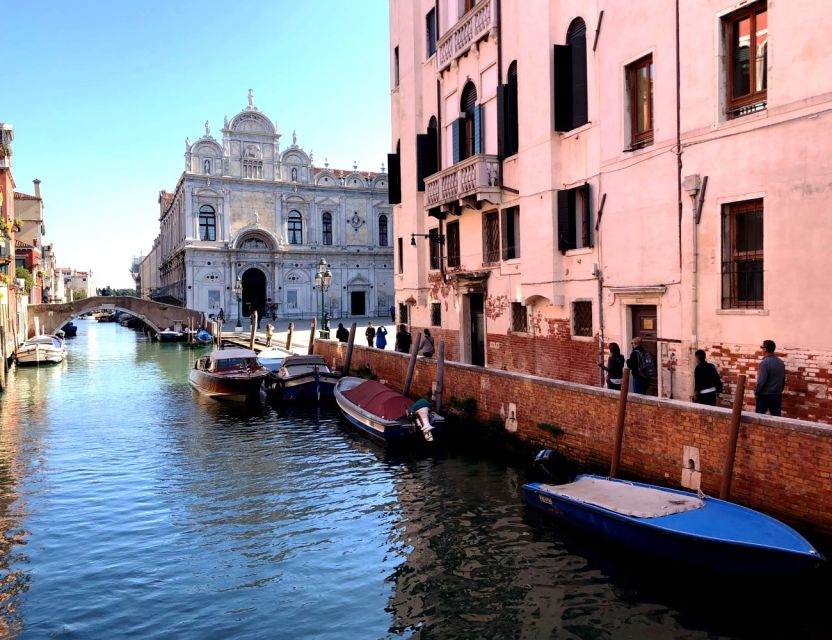
Your meeting point is Calle larga de l’ Ascension, near the post office behind the Correr museum. A TURIVE staff member will check your voucher.
This matters more than it sounds. Venice meeting points can be tricky, and a clean start helps the whole day feel smoother. Once you’re with the group, the guide can set the pace and get you moving through the streets while you still have energy.
If you show up a few minutes early, you’ll avoid the stress of figuring out which side street you’re on. That’s an underrated part of enjoying Venice.
More sestieri crossed bridge by bridge:
- Venice: Doge’s Palace and St Mark’s Basilica Walking Tour
★ 4.4 · 6,291 reviews - Venice: San Marco to Rialto Walk & Spritz Like a Local
★ 4.2 · 3,651 reviews - Venice Walking Tour and Gondola Ride
★ 3.5 · 3,630 reviews - Private 3 hrs Venice Tour: St Mark’s, Walking tour & Boat tour
★ 4.0 · 3,372 reviews - Venice: City Center Historical Guided Walking Tour
★ 4.2 · 1,873 reviews
The 1.5-hour walk: St Mark’s Square to the Rialto in smart segments
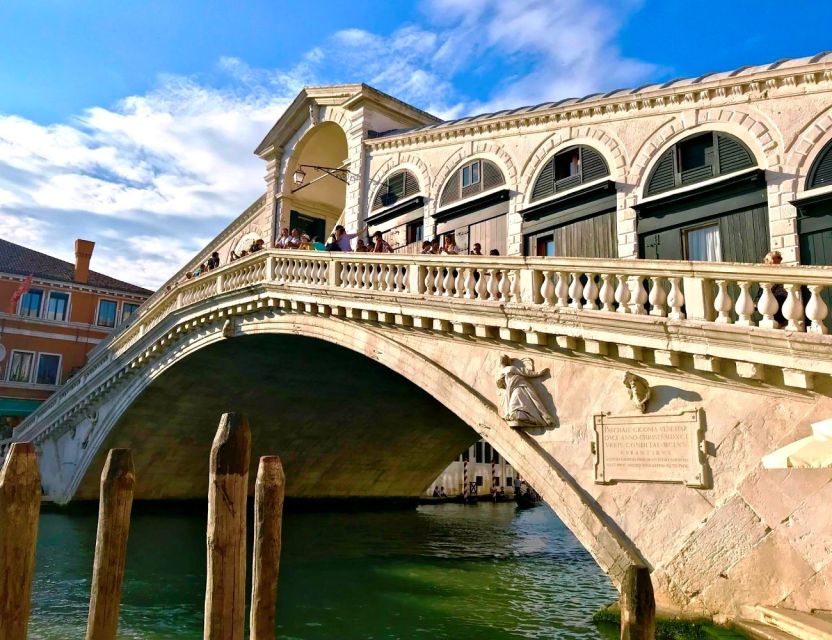
The walking tour is focused, not scattered. It starts at St Mark’s Square, then moves you toward Campo Santa Maria Formosa and onward to the Mercerie lanes near the Rialto market area.
St Mark’s Basilica and the Doge’s Palace area, explained from the outside
Even if you don’t go inside, you’ll get the visual anchors. You’ll admire the Byzantine façade of St Mark’s Basilica and the imposing edifice of the Doge’s Palace before moving on.
The key here is that the guide uses the buildings as story prompts. You’re not just looking at stone. You’re learning what power looked like and how Venice’s Republic expressed itself in architecture. That makes you understand why certain places matter so much.
Campo Santa Maria Formosa: a church stop with context
Next is Campo Santa Maria Formosa, where you learn the story of one of Venice’s beautiful churches. This is the kind of stop that works well on a walking tour because it’s close enough to reach on foot, but interesting enough to break up the big-sight density.
You’ll also hear how religion, politics, and daily life tangled together in Venice. It’s not just religious tourism. It’s about how the city made meaning in public spaces.
Marco Polo’s former home and a theatre with extravagant stage history
You’ll see the former home of Marco Polo along the route. Then you’ll pass the Malibran Theatre, known for having an especially extravagant stage.
This is one of the strengths of the tour: it adds personality to the day. A city like Venice can feel like it’s only about grand façades, but the Marco Polo connection reminds you that the Republic was outward-looking, shaped by exploration and trade. The Malibran Theatre stop nudges you toward understanding Venice as an arts city too.
Mercerie lanes: the trade streets behind the glamour
Then you reach the Mercerie, Venice’s narrow streets where goods brought from distant markets were sold.
If you only walk through big plazas, you miss this layer. Mercerie is where you start to understand Venice as a marketplace, not just a postcard. The guide’s stories tie the street plan to the function: small lanes for movement, close proximity for buying, and easy connections toward bigger hubs.
Practical note: these streets are narrow, and the stones can be uneven. Comfortable walking shoes help a lot.
The gondola ride: a 30-minute punt through minor canals off the Grand Canal
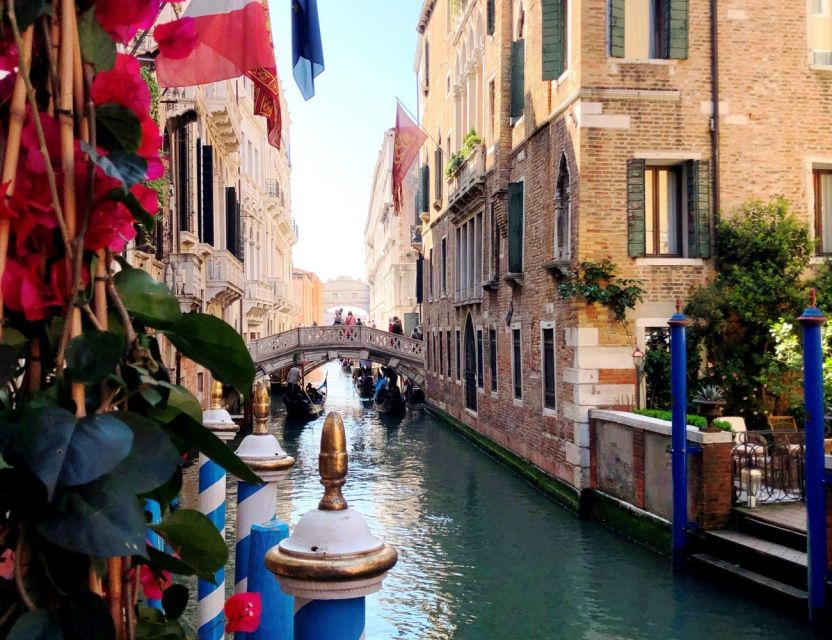
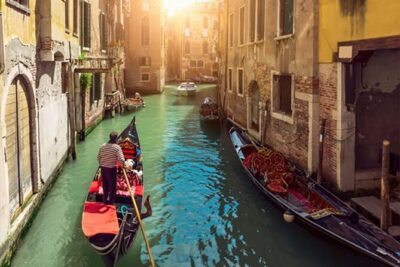
After the walk, you board a gondola for 30 minutes. The goal is a calming ride on the quieter canals, typically along smaller routes off the main Grand Canal flow.
What you’ll see from the water
You’ll pass lesser known areas with quaint corners and majestic palaces from a different perspective. This part feels especially good if you’ve just spent time threading through alleyways on foot. From the gondola, you understand the scale of the buildings and how close the city sits to the water.
As you return, you’ll admire the Basilica della Salute and drift back toward St Mark’s Basin, where the Grand Canal begins.
That St Mark’s Basin moment is a nice mental reset. You end near a place you already visited from land, so the contrast helps you remember the ride and connect the geography.
Group size and seating reality
A gondola can host up to 5 people. If your reservation includes more than 5 people, your group will be divided into smaller groups.
This is one of those details that affects your expectations. You might not all ride together in the largest groups. If you’re traveling as a family or small group, it’s usually smooth. If you’re part of a larger booking, assume you’ll split.
Timing can shift when canals get crowded
The ride is advertised as 30 minutes, but canal bottlenecks can affect real-world timing. You’ll still get the experience, yet don’t treat the minutes like a train schedule.
If timing precision matters to you, plan one thing: take a deep breath and enjoy the ride as a short chapter, not an event with strict minute-by-minute control. Gondolas operate in a shared system.
Winter note: no explanations during the gondola ride
During the winter period (November 1 to March 31), the tour is bilingual. The important detail is that no explanations are provided during the gondola ride in that period.
So if you’re visiting in winter and you want narration on the water, adjust your expectations. The story time is built for the walking portion.
Weather can cancel the gondola
The gondola ride might be suspended in case of bad weather.
That’s not just a minor inconvenience in Venice. If the weather turns rough, water access can become unsafe or impossible. Build some flexibility into your day, because the walk will still be valuable, but the boat portion may not happen.
The landmarks that anchor the whole route: La Fenice and the Basilica della Salute
Two façades give the tour a strong “I recognize this later” effect.
La Fenice Opera House façade, seen as street architecture
You’ll admire the unusual façade of La Fenice Opera House. The tour frames it as part of how Venice expresses itself in architecture, not as a lecture about the opera world.
Seeing La Fenice from the street helps because it’s still part of daily Venice. You’re not separating the city into museum and non-museum zones. It’s just Venice, with cultural identity built into the skyline.
Basilica della Salute: a closing visual cue
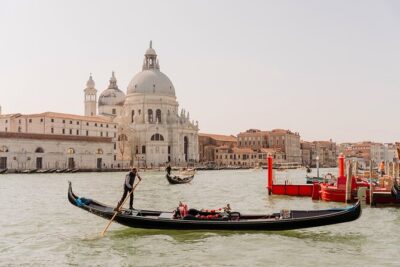
The Basilica della Salute appears again from the water as you drift back toward St Mark’s Basin. That replay works. You see it while you’re moving, and it becomes a kind of destination marker for the end of the ride.
It also helps you orient yourself after the gondola, especially if you want to continue exploring afterward.
Guide quality, languages, and how to hear the story
This tour runs with a live guide in English, Spanish, French, or German.
In places like Venice, language skill matters, but so does delivery. Several guides have been recognized for being funny while also packing in clear, useful historical connections. If your guide is Gina or Stephanie, for example, you’ll likely get that mix of humor plus structure that keeps the walk from turning into a blur.
One more practical factor: hearing clarity. Some people have said the audio or listening devices were hard to understand. If you’re using audio equipment, check it early. Sit or stand close enough that you’re not relying on perfect volume.
Tip: keep your eyes on the guide when they point. A lot of the meaning is visual. Even if you catch only part of the narration, you’ll still connect the story to the street plan and the buildings.
Who this tour fits best (and who should rethink it)
This is a strong fit if you want a first introduction to Venice that goes beyond the postcard loop. It also suits you if you like short, efficient sightseeing rather than half-day waits in lines.
You’ll likely enjoy it if you:
- want an easy route between St Mark’s Square and the Rialto area
- enjoy stories about how Venice operated as a Republic and trading hub
- want a gondola ride that feels connected to the neighborhoods you walked
If you have wheelchair needs or serious walking difficulties, the tour may not work well. The whole itinerary may not be accessible for wheelchair users and those with walking difficulties.
Also consider what you want out of the gondola. This is 30 minutes, not a long cruise. It’s ideal as a taste, especially after the walk.
Should you book this Venice walking tour and gondola ride combo?
I’d book it if you’re short on time and you want a guided foundation you can build on later. The best part is the combination logic: you learn Venice on foot, then you view it from the water. That makes the whole day feel cohesive, not like two unrelated activities.
I’d think twice if your trip is extremely weather-sensitive or if you need an exact, guaranteed-on-the-minute gondola duration. Bad weather can suspend the ride, and canal crowding can affect how long you actually spend in the boat.
One last decision helper: if you care about guide-led storytelling, this is the type of tour where guide quality really matters, and the format is designed to keep you moving through places that feel more like Venice and less like a theme park.
If you book, I’d also plan your outfit for lots of walking and narrow streets, and keep a calm mindset for the canal bottleneck reality. Do that, and you’ll get a memorable, efficient taste of La Serenissima.
FAQ
How long is the tour, and what parts are included?
The tour runs for about 3 hours. It combines a 1.5-hour guided walking tour and a 30-minute gondola ride, with the guide leading the walking portion.
Where is the meeting point?
Meet at Calle larga de l’ Ascension, near the post office behind the Correr museum. A TURIVE staff member will check your voucher.
What languages are available for the live guide?
The live tour guide is available in English, Spanish, French, and German.
Is the gondola ride explained by the guide?
During the winter period (November 1 to March 31), the tour is bilingual, and no explanations are provided during the gondola ride. The walking portion is where the guide’s commentary comes in.
What happens if weather causes a change to the gondola ride?
The gondola ride might be suspended in case of bad weather.
Is the itinerary wheelchair accessible?
The whole tour itinerary may not be accessible to wheelchair users and those with walking difficulties.
Lately added around Venice
Gondola Rides & Serenades, compared.
Grand Canal Gondola Ride with App Commentary
Read our review →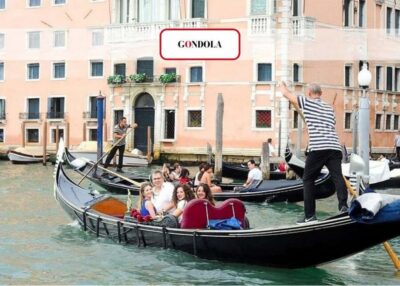
Grand Canal Gondola Experience with Live Commentary™
Read our review →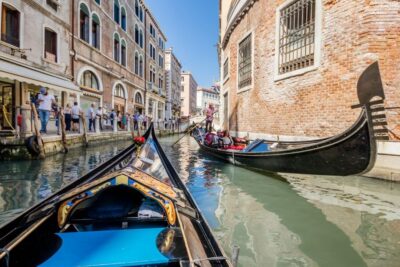
Grand Canal Gondola Experience with Live Commentary™
Read our review →
Venice In a Day: St Mark’s, Doges Palace Gondola Ride & City Tour
Read our review →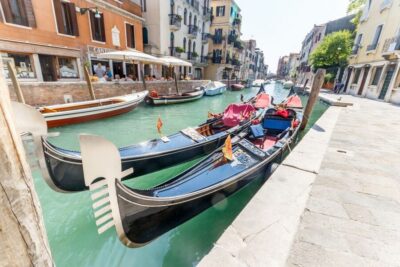
Private Crafted Gondola Ride Along Grand Canal
Read our review →Browse the lists this tour appears in