Reviewed · CITY TOURS
Another Side of the City: Discovering Authentic Venice
Venice without the postcard crowd, after 4 pm. This private walk is built for real-life streets and calmer corners, with stories tied to what you can actually see today. You start near the Accademia area and end back where you began, with stops that range from church history to craft along the water.
I like this tour for two big reasons. First, it’s private, so the pace and sights match your interests instead of herding you along. Second, the route includes places many visitors skip, like the Squero di San Trovaso gondola shipyard and the Dorsoduro campos where people linger.
One heads-up: it’s a walking tour on uneven pavement and through plenty of bridges. If your legs have limits, plan for moderate fitness and bring good shoes.
In This Review
- Key things to know before you go
- Where the tour starts: Gallerie dell’Accademia, then straight into real Venice lanes
- The kind of Venice route you’ll get, not just a highlight loop
- Accademia area paintings, viewed from outside only
- Santa Maria della Salute: plague-era building story in a single stop
- Fondamenta Zattere: the waterfront promenade where locals reset
- Squero di San Trovaso: where gondolas are still made
- Campo San Barnaba: Dorsoduro’s picturesque square time
- Campo Santa Margherita: where people still live around the square
- Why the guide matters: local storytelling, practical tips, and real recommendations
- Price and value: paying for time with a local, not just for walking
- Practical stuff you should plan for before you commit
- Should you book this Venice private walking tour?
- FAQ
- What time does the tour start?
- Where does the tour meet, and does it end somewhere else?
- How long is the walking tour?
- Is this a private tour?
- What language is the tour offered in?
- Are there admission tickets included for the sights?
- Can I bring a service animal?
- Do I need moderate walking ability?
- Is there an extra Venice access fee?
- What happens if the weather is bad, or I need to cancel?
Key things to know before you go
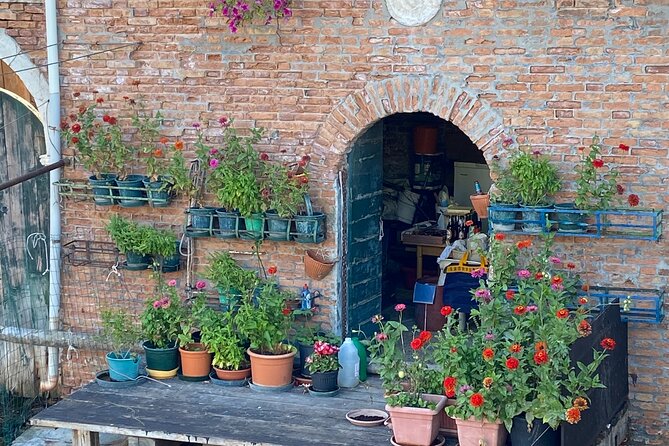
- 4:00 pm start means fewer crowds and softer light for photographing Venice lanes and canals
- Private group only so you can ask questions and shape the conversation as you walk
- Santa Maria della Salute connects you to plague-era Venice, not just pretty architecture
- Gondola craft at Squero di San Trovaso lets you spot where traditional gondolas are still made
- Campo San Barnaba and Campo Santa Margherita show how Venetians use squares day to day
- Most stops are free, with one big view moment at the Accademia paintings area from the outside
A few more Venice outings worth comparing

Where the tour starts: Gallerie dell’Accademia, then straight into real Venice lanes
This tour meets at Gallerie dell’Accademia, Calle della Carità, 1050, 30123 Venezia. You also finish back at the meeting point, which keeps logistics simple if you’re coming from another part of town.
The start time matters. At 4:00 pm, the day-trippers have usually thinned out a bit. The streets still feel busy, but the dense crush is lighter than the morning peak. That sets the tone for the whole walk: you can actually hear your guide, and you can look closely at details without constantly sidestepping groups.
You get a mobile ticket, and the tour is offered in English. It’s also designed for a small, personal experience, since it’s private and only your group participates.
The kind of Venice route you’ll get, not just a highlight loop
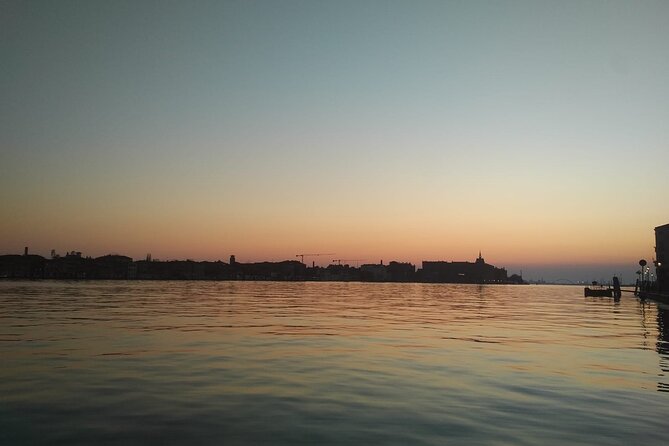
Venice can feel like one big maze. The smart trick is letting someone local guide you through the rhythm of the city: narrow passages, small bridges, sudden canals, and squares that look like they appear from nowhere.
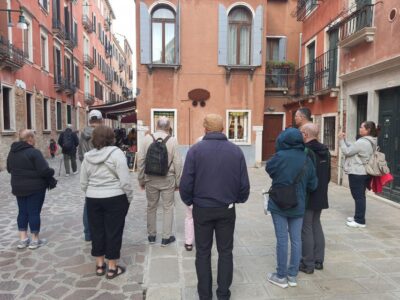
What makes this route feel different is that it targets everyday Venice spaces, not only the top-shelf sights. You’ll pass through quieter neighborhoods and see churches, waterfront edges, and historic landmarks that sit just off the main visitor paths. You’re not rushing to “tick off” famous names. Instead, you’re learning how Venice works, socially and historically, block by block.
One more practical note: even though the tour is only about two hours, you’ll still cover ground on uneven surfaces. Some reviewers explicitly call out the walking and bridges, which matches how Venice truly is. If you’re prone to sore feet, plan ahead with cushioned shoes and a bottle of water.
Accademia area paintings, viewed from outside only
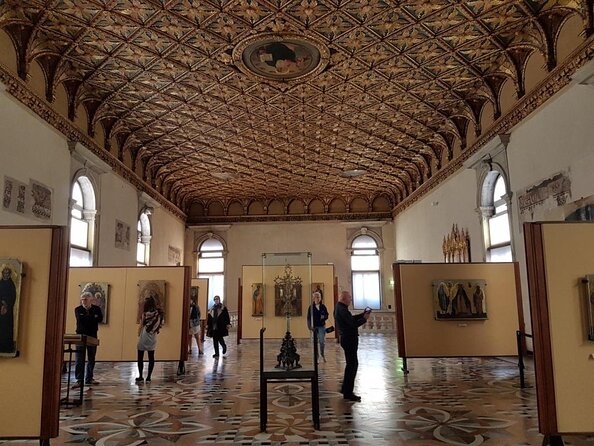
Your first stop is an “incredible collection of paintings from 1200 to 1900,” but it’s outside only. That means you get the setting and the context without turning the tour into a museum day.
Why I like this approach: it helps you warm up without losing time to lines or indoor pacing. You get oriented in the Accademia-side area, then move into streets where the architecture, canals, and small landmarks do the talking.
The trade-off is also clear. If you want full museum time inside the Gallerie dell’Accademia itself, this tour is not that. It’s a street-level Venice experience, with art history as backdrop rather than a ticketed gallery visit.
The same hours, spent on the water instead:
- Venice: Doge’s Palace Reserved Entry Ticket
★ 4.6 · 42,716 reviews - Venice: Grand Canal Gondola Ride with App Commentary
★ 4.1 · 23,020 reviews - Venice: Grand Canal Gondola Experience with Live Commentary™
★ 4.2 · 16,504 reviews - Boat Trip: Glimpse of Murano, Torcello & Burano Islands
★ 4.3 · 15,699 reviews - Venice: La Fenice Opera House Entry Ticket with Audio Guide
★ 4.6 · 11,742 reviews
Santa Maria della Salute: plague-era building story in a single stop
Next you head to Basilica di Santa Maria della Salute. This stop is about 20 minutes, and admission is free.
The hook here is the story behind it. The basilica was built at the end of one of the last plagues to hit Venice. That kind of background changes how you look at a church. Instead of only admiring the façade, you’re thinking about civic fear, gratitude, and how faith shaped public life when the city was under pressure.
A short church stop works well on a walking tour because it gives you a mental reset. You stand still for a moment, read what you can, and then get back into motion through the neighborhoods around it.
Fondamenta Zattere: the waterfront promenade where locals reset
Your stroll continues to Fondamenta Zattere, a promenade where Venetians come to relax and catch the peace and sun. This is scheduled for about 30 minutes, and there’s no admission fee.
This stop is valuable because it shifts you from monuments to daily life. Venice’s big sights are impressive, but the city really breathes along the waterfront edges, where people talk, stroll, and watch the water.
You may also have the chance to pause at Nico’s, depending on timing and routing. Even if you only stop briefly, it’s the kind of local detail that makes a tour feel grounded. It’s not just “see a view,” it’s “see where people unwind.”
Squero di San Trovaso: where gondolas are still made
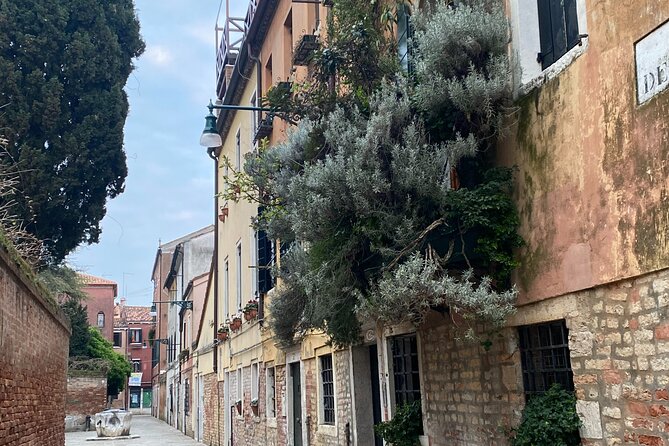
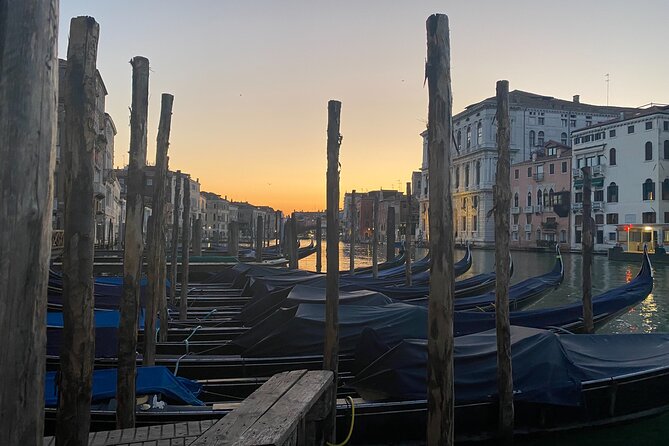
Then comes one of the most compelling moments on the route: Squero di San Trovaso, the shipyard where gondolas are made, or at least made in the traditional sense. Your time here is about 20 minutes, with no admission ticket required for the stop itself.
You’ll be able to see it from across the canal. That matters because you’re getting a street-side perspective rather than a staged viewpoint. And Venice rewards that kind of seeing: you notice how buildings frame the water, how the canal feels narrower when you’re close to it, and how craft sites sit inside the city fabric like they’ve always been there.
Also, as you pass by, you might catch one of the area’s well-known bacari, Ai gia Schiavi. Bacari stops can be tricky on a tight two hours, but even a quick look helps you understand the social structure of Venice food and drink. If you’re the type who likes cicchetti and short local meals, this is the right energy for it.
Campo San Barnaba: Dorsoduro’s picturesque square time
Next you’ll reach Campo San Barnaba, one of the more picturesque areas of Dorsoduro. The stop is about 10 minutes.
Ten minutes sounds short, but squares in Venice act like small theaters. In that window, you can catch the mood: how locals move through the space, how the buildings frame the open area, and how “nothing much” is exactly what makes it Venice. It’s a good pause between more story-heavy stops.
The drawback is simple. If you’re hoping for a long sit-down break or a long photo session, this stop will feel brief. Still, for a walking tour, it’s a solid way to keep momentum without losing the character of neighborhoods.
Campo Santa Margherita: where people still live around the square
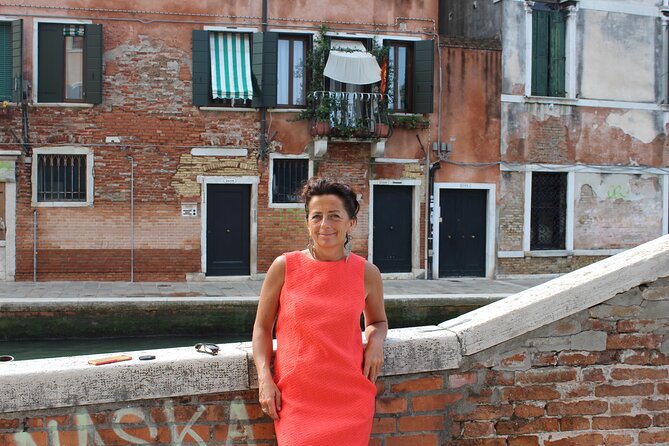
Your final main stop is Campo Santa Margherita, a well-known campo where there are still residents. This stop runs about 30 minutes and there’s no admission fee.
This is a smart ending point because it gives you flexibility. You might choose to stop for a drink or dinner at the end of the tour, and that means you can turn the square into your own mini-plan. Venice works best when you’re not locked into someone else’s schedule.
What I like about ending in a lived-in square: it’s the opposite of a tourist stage. You’re not leaving after the city’s most famous photo moment. You’re leaving at a place where Venice life continues, which helps you find your footing for the rest of your evening.
Why the guide matters: local storytelling, practical tips, and real recommendations
This tour stands or falls on the guide, and the guide experience is consistently the high point.
The provider is Elisabetta Amadi, and in the stories people share, she shows up as a lifelong Venetian who speaks English well and shares stories with real affection for the city. That kind of background makes a difference. You don’t get generic captions. You get context tied to why buildings exist, why squares function, and how Venice residents think about visitors.
One of the most useful things you might get is guidance on cultural norms and pickpocket awareness. Scams can happen anywhere, but in Venice it can feel extra sneaky. A guide who warns you, shows you how to spot trouble, and tells you what to do instead can save a trip from turning stressful.
Food and drink tips are another major value. In past experiences, your guide may recommend where to eat and what kind of place fits your style, from local bars to meals that feel genuinely Venetian. Some reviews even mention special treats like gelato or wine along the way, which fits the tour’s format: walk, look, listen, then taste something local when it makes sense.
Because the tour is private, you can also shape the conversation. If you’re history-focused, you’ll likely lean into church and civic stories. If you’re craft-focused, you’ll get extra attention around the Squero and waterfront details.
Price and value: paying for time with a local, not just for walking
At $102.58 per person for about two hours, this is not the cheapest way to see Venice. But it’s also not priced like a museum add-on or a full private day.
You’re paying for three things that matter:
- Time with a local guide who can interpret what you’re seeing as you walk
- A private format where your group stays together and your pace is yours
- Access to lesser-known streets and the kind of stops that are hard to plan alone
The key value point is that most stops are free and your time isn’t swallowed by ticket lines. The Accademia painting collection is viewed from outside only. Santa Maria della Salute is free for entry. The waterfront promenade, shipyard viewing across the canal, and the campos are also scheduled without paid admission.
So the price is mainly for guidance and routing, not for a stack of entrance fees. If you enjoy learning as you go, this is a reasonable way to buy clarity in a city that can otherwise feel like you’re guessing.
Practical stuff you should plan for before you commit
Venice requires a little preparation, and this tour is no exception.
Walking and footing: You should have moderate physical fitness. Expect uneven pavement and bridges. If you hate uncomfortable shoes, don’t test it here.
Weather: The tour requires good weather. If conditions are poor, it may be canceled and you’ll be offered a different date or a full refund.
Day-tripper access fee: On certain dates, visitors staying outside Venice who are visiting for the day may need to pay a €5 access fee. The applicable days and exemptions are posted at https://cda.ve.it. This is worth checking before you plan your afternoon.
Service animals: Service animals are allowed.
One more small planning tip: Since the tour starts at 4:00 pm, it’s a good moment to do it after you’ve done your “big sights” earlier. Then you shift into the calmer Venice mode for your evening.
Should you book this Venice private walking tour?
Book it if you want Venice with less noise and more meaning. This is a great choice for first-timers who already feel the guidebook overwhelm and for repeat visitors who want quieter lanes, local waterfront life, and craft details at Squero di San Trovaso. The private format is especially worth it if you travel as a couple or small family and you like asking questions.
Skip it or consider a different style if you want lots of indoor museum time. The Accademia paintings stop is outside only, so don’t expect a gallery day. Also, if walking is a struggle, the bridge-heavy city terrain may not feel comfortable even with a shorter two-hour route.
If you’re aiming for the Venice that happens between the famous stops, this is one of the best ways to get there.
FAQ
What time does the tour start?
The tour starts at 4:00 pm.
Where does the tour meet, and does it end somewhere else?
It meets at Gallerie dell’Accademia, Calle della Carità, 1050, 30123 Venezia VE, Italy, and the activity ends back at the same meeting point.
How long is the walking tour?
The duration is about 2 hours.
Is this a private tour?
Yes. It’s a private tour/activity, so only your group participates.
What language is the tour offered in?
The tour is offered in English.
Are there admission tickets included for the sights?
Most stops listed are free. Santa Maria della Salute is free, and the promenade, shipyard viewing, and the two campos are also scheduled without admission tickets. The painting collection stop is outside only.
Can I bring a service animal?
Yes, service animals are allowed.
Do I need moderate walking ability?
The tour asks for travelers with a moderate physical fitness level.
Is there an extra Venice access fee?
On certain dates, day visitors staying outside of Venice may be required to pay a €5 access fee. For details and exemptions, check https://cda.ve.it.
What happens if the weather is bad, or I need to cancel?
The experience requires good weather. If it’s canceled due to poor weather, you’ll be offered a different date or a full refund. You can cancel for a full refund up to 24 hours in advance.
Lately added around Venice

City Tours, compared.
Venice In a Day: St Mark’s, Doges Palace Gondola Ride & City Tour
Read our review →
Walking Guided Tour of the City Must-See Sites
Read our review →
City Pass with Museums including Doge’s Palace
Read our review →