
Reviewed · MURANO & BURANO BOAT TRIPS
Create Your Own Murano Glass: Beginner’s Glassblowing Class
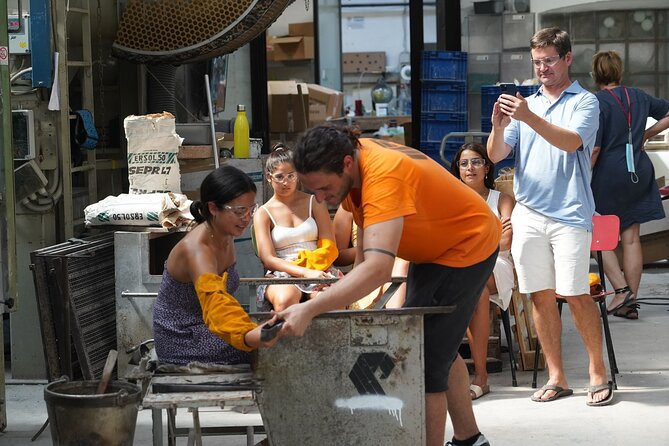
Glassblowing is hands-on, hot work in Murano. This beginner class in Venice is built around learning by doing, in a studio setting limited to just 4 people, with instruction in English and a finished piece that’s ready the next day.
What I like most is that you do more than watch. You start with practical drills (no glass) to train your grip, timing, and hand-eye coordination, then you move into exercises with molten glass around 1000 C before you try your own artifact. The second big win is the intimacy, your instructor can spot what you’re doing wrong and correct it while you’re actually working.
One thing to consider: this is not a chill, light activity. It’s physically demanding and it’s hot, so it’s not a good match if you struggle with extreme heat, get easily panicked, or have health concerns.
In This Review
- Key things to know before you go
- Where This Class Fits Into Venice (And Why Murano Matters)
- Meeting at Fondamenta da Mula, Then Getting Into Studio Mode
- Step 1: The No-Glass Drills That Make the Hot Glass Possible
- Step 2: Working With Molten Glass Around 1000 C
- Step 3: Blow Your Own Murano Artifact
- Pickup the Next Day, or Shipping It Later
- Small Group With Real Teaching (And Why It Feels Personal)
- What to Wear and How to Stay Comfortable in the Heat
- Price and Value: Why This Costs More Than a Souvenir
- Who Should Book This, and Who Should Skip It
- My Bottom Line: Should You Book This Murano Class?
- FAQ
- How long is the Create Your Own Murano Glass class?
- What group size is this workshop?
- Is the class offered in English?
- Where do I meet for the class?
- What’s included in the price?
- What should I wear?
- Is my glass ready the same day?
- Can I ship my glass instead of picking it up?
- Is the workshop physically demanding?
- Can I get a full refund if I cancel?
Key things to know before you go
- Small group, big coaching: the workshop runs with a maximum of 4 travelers, so you get real attention.
- Warm-up first, then hot glass: you practice movements with no glass, then with molten glass before making your final piece.
- Choose your shape: you’ll blow either a drinking cup/bowl or a small custom vase.
- Plan for annealing time: your piece needs to cool overnight, so pickup is typically the next day (or you can ship it later for a fee).
- Wear real clothes and real shoes: closed-toe shoes are required, and synthetic fabric is not recommended.
- It’s included, but you still prep: you get water, safety glasses, and a sleeve to protect your arm from furnace heat, but you need to dress for the job yourself.
Other furnaces to watch glass pulled from:



Where This Class Fits Into Venice (And Why Murano Matters)
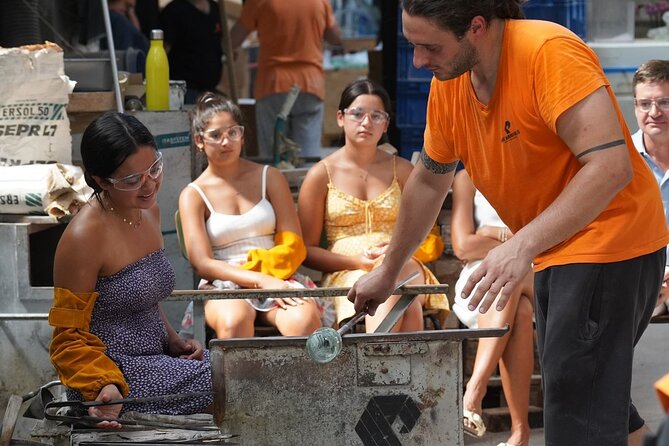
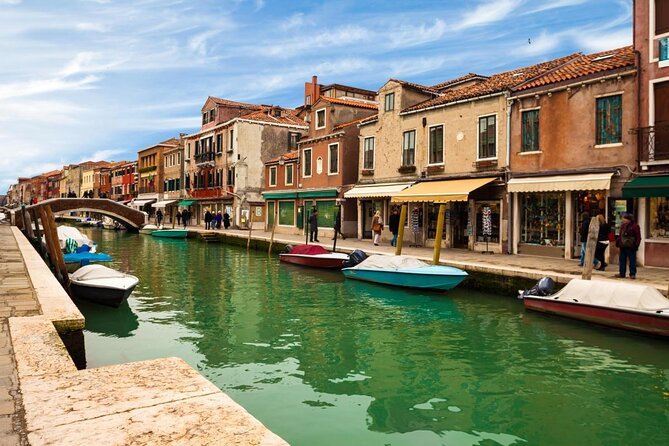
Murano glass is one of those Venice stories you’ve heard a thousand times. The difference here is that you don’t just hear it. You work inside the rhythm of the craft, learn why it’s so fast and precise, and leave with an object you made, not a factory-store souvenir.
You’ll be based on Murano, and the workshop is designed for beginners. That matters because true Murano glassblowing is full of muscle memory and timing. Most people can’t wing it safely. Here, they build your confidence step-by-step, starting with movement practice and only moving to hot glass once you’ve got the basics down.
The class runs about 2 hours, and it’s offered as a mobile ticket experience. It’s also booked far in advance on average, so if your Venice days are tight, I’d pick a date early and then plan your other Murano stops around your workshop time.
Meeting at Fondamenta da Mula, Then Getting Into Studio Mode
The meeting point is Fondamenta da Mula, 152, 30141 Venezia VE, Italy. Your activity ends back at the same point. That sounds simple, but Murano is full of glass shops and studios close to each other, so do yourself a favor and double-check you’re in the right place when you arrive.
You’re told it’s near public transportation, which helps if you’re building the day around trains, vaporetto routes, or a timed connection. If you’re traveling as part of a day-trip from outside Venice, there’s another detail worth flagging: on certain dates, day-trippers may need to pay a €5 access fee managed by CDA.ve.it. It’s not universal, so check the calendar before you lock your plans.
Timing is important because glass needs heat time and cooling time. Even though the class itself is about 2 hours, your “piece moment” is mostly split between the workshop and the next day when it’s ready. Some schedules may allow earlier pickup for certain sessions, but the safe assumption is that you’ll pick it up the next day or ship it.
Step 1: The No-Glass Drills That Make the Hot Glass Possible
The first stage is practical exercises with no glass. This is a smart choice. Real glassblowing isn’t just art, it’s mechanics: how you hold the rod, how you control airflow, when you adjust your wrist, and how you keep your focus as your hands learn the sequence.
In this workshop, you’ll do hands-on practice to build:
- basic glassblowing movements
- hand-eye coordination
- body memory for what comes next
This is one reason the class works for beginners. Instead of dropping you straight into furnace heat, they teach the body skills first, so when you finally touch the real material, you’re not panicking because your technique is missing.
If you’re the type who likes clear coaching, this step is where you start feeling calm. You can see progress because you’re learning movement patterns, not trying to invent a sculpture on the spot.
Other boats out to Murano and Burano:
- Boat Trip: Glimpse of Murano, Torcello & Burano Islands
★ 4.3 · 15,699 reviews - Murano, Burano and Torcello Half-Day Sightseeing Tour
★ 3.5 · 7,928 reviews - Murano & Burano Islands Guided Small-Group Tour by Private Boat
★ 4.5 · 7,580 reviews - Murano, Burano, Torcello: Tour with Guide & Glass Factory
★ 4.4 · 6,187 reviews - Murano & Burano Guided Tour by Private Boat with Glassmaking
★ 4.7 · 5,658 reviews
Step 2: Working With Molten Glass Around 1000 C
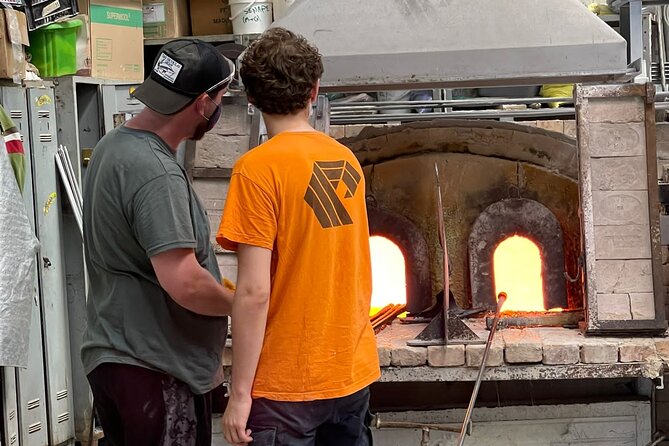
Then comes the part that makes most people decide the workshop is either a must-do or a no-go: hot glass. You’ll do exercises with molten glass described as moving around 1000 C.
This is why the class repeatedly stresses safety and why the provided gear matters. You’ll get:
- safety glasses
- a sleeve designed to protect your arm from furnace heat
- water to rehydrate
You’ll also be working in a space where splashes can happen, which is why footwear and clothing choices matter so much. Even if you’re careful, the material is fast and hot, and the process includes precision adjustments in real time.
From a practical point of view, this step teaches you something you can’t learn from photos: the glass changes while you work. Your instructor guides you, but you still have to react. That’s the difference between watching a master and learning to do the thing yourself.
And yes, it feels intense. One of the most common pieces of advice from people who’ve taken the class is simple: dress for heat and wear closed-toe shoes so you can focus on the technique.
Step 3: Blow Your Own Murano Artifact
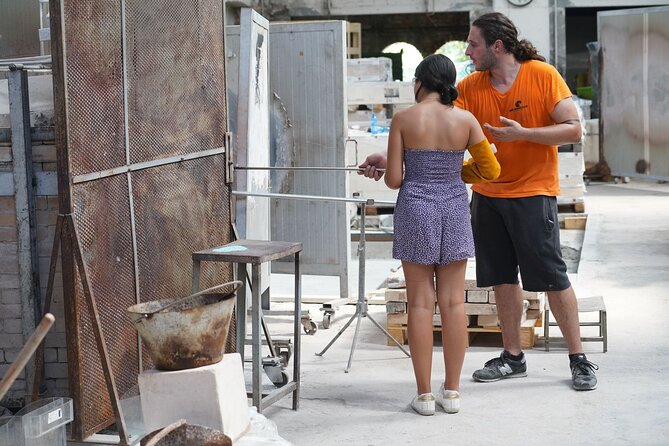
Your final step is the part you’re really here for, you’ll blow your own piece. You’ll have time to create either:
- a drinking cup or bowl, or
- a small custom glass vase
This is where beginner learning becomes real-making. Instead of trying to copy a perfect sculpture, you’ll get coached toward a shape you can manage within the class structure. In reviews, instructors are repeatedly praised for being patient, stepping in when you need help, and guiding you without taking over your whole piece.
Expect to work through a sequence where you blow, shape, and refine. Some people describe the process as having lots of steps, and it makes sense: glassblowing is a chain of decisions happening quickly. You might be surprised by how much instruction happens while you’re “just” holding and turning the glass.
Also, your piece needs to anneal overnight. That’s not a store-brand trick, it’s how glass is treated so it’s less likely to crack later. It’s part of the real craft process, and it directly affects your schedule.
Pickup the Next Day, or Shipping It Later
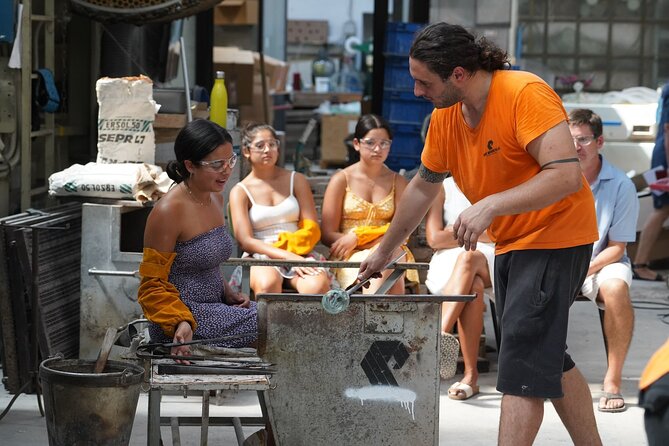
After class, your glass can’t be immediately handled and taken home. The key detail is the annealing overnight. That means:
- you can pick it up the next day, or
- you can have it shipped anywhere in the world for an extra fee
Shipping is not included in the tour price, but it’s offered as an option. People report good results with packing and shipping, which matters because Murano glass is delicate even after annealing.
One practical tip: if your itinerary is inflexible, plan your workshop for the front half of your Murano stay so you have time to return for pickup. If you’re leaving Venice soon after the class, shipping can save you stress, but you should budget the additional cost.
If you’re deciding between pickup and shipping, think about how hard it is to travel with a breakable item. A handmade object is priceless as a memory, but carrying it through airports and cobblestones is where the headaches start.
Small Group With Real Teaching (And Why It Feels Personal)
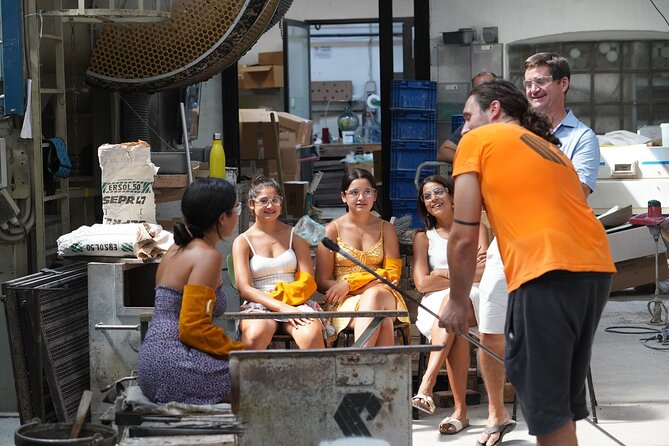
This is the workshop’s secret sauce: maximum 4 travelers. With this size, you’re not competing for attention, and your instructor can watch what your hands are doing right in front of them.
Instructors are described as patient and hands-on across multiple accounts. You might work with instructors such as Tam, Hilary/Hillary, Melissa, Emilia/Emelia, or Stefania depending on the session. The common thread is coaching in real time, with a focus on safety and getting you to the next step.
This setup is especially valuable if you’ve never done anything like this. In other types of workshops, you get a quick demonstration and then you’re mostly on your own. Here, the class structure is designed around learning sequences, and you benefit from a tighter feedback loop.
And it’s not just teaching. Some people also describe getting a behind-the-scenes look at the working studio environment before the making begins. So even if your focus is on the final piece, you also get context for how fast and precise the craft is when it’s done for real.
What to Wear and How to Stay Comfortable in the Heat
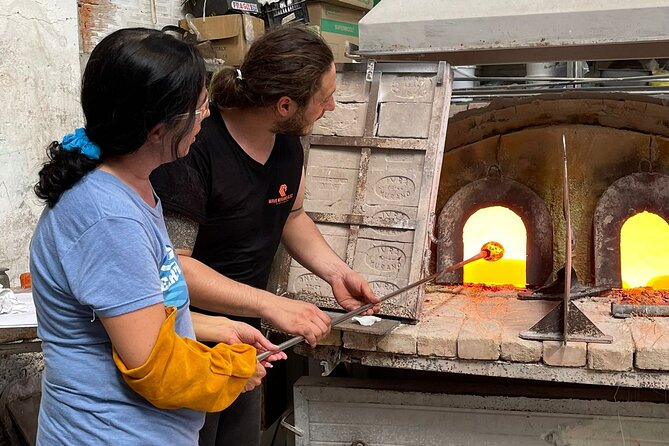
This class is not outdoors on a breezy promenade, so your clothing choices aren’t minor. They directly affect comfort, safety, and how much you can focus.
Wear:
- closed shoes (no sandals, flip-flops, or slippers)
- clothing that you can move in
Don’t wear:
- synthetic clothing, which isn’t recommended
- exposed legs, since hot glass splashes can occur
The workshop provides a sleeve for arm protection, plus safety glasses and water. But those are not a substitute for dressing correctly. One family noted that splashes can happen to legs, which is why full coverage matters even if you’re careful.
If you get cold easily, you might still want layers, but keep it practical and non-synthetic. The studio will feel hot, and you’ll want clothing that won’t be a hassle to keep track of while you work.
Price and Value: Why This Costs More Than a Souvenir
The price is $296.41 per person, and the class lasts about 2 hours. That sounds high if you’re thinking of this as a shop purchase. But think of it as paying for a rare thing: time in a working studio with expert coaching, hot-glass training, and a handmade object that must be annealed properly afterward.
Here’s the value logic:
- You get step-by-step instruction including a no-glass warmup and hot-glass exercises.
- You work in a very small group of up to 4, which increases the attention you get.
- You leave with an artifact made by your own hands, shaped with real Murano glass technique.
- You have the option to pick up next day or ship, which protects your vacation from the burden of carrying glass.
A lot of glass tours in Murano focus on watching. If that’s all you wanted, you could probably pay less. This class is different because you’re actively producing something. In reviews, people repeatedly call it their favorite activity in Venice for exactly that reason, it feels like learning the craft rather than buying the story.
Who Should Book This, and Who Should Skip It
This experience is for the curious doers. If you want a hands-on art experience and you’re okay with heat and effort, you’ll likely love it.
It’s likely a great match if you:
- enjoy practical workshops where you learn by doing
- can follow safety rules closely
- want something more meaningful than a typical souvenir
It’s not recommended if you:
- are afraid of extreme heat
- panic easily
- have health issues that make heat exposure difficult
- generally struggle with physical activities
Also, it may feel intense for first-timers simply because glassblowing is physical. You’re using your hands continuously and working with tools and airflow in tight timing. Even if you’re fit, it’s different from stretching or light crafting.
If you’re traveling with kids, this can work for teenagers and older children with proper assistance. One family with a mix of ages said the class felt manageable because instructors could guide them step-by-step, but they also emphasized that it gets hot and splashes can happen, so clothing matters.
My Bottom Line: Should You Book This Murano Class?
If you want to experience Murano in a way that sticks, I think this class is worth serious consideration. The small group size, the no-glass warmup, and the chance to actually blow your own piece are the combination that makes it feel like real learning, not just a performance.
Book it if you’re ready for heat, you’ll wear closed shoes and full-coverage clothing, and you’re okay with picking up your piece next day (or paying extra to ship).
Skip it if extreme heat makes you uncomfortable, you get panicky under pressure, or you have health limitations. In that case, you’ll be happier with a gentler factory visit where you can observe without stepping into molten material.
If you want one Murano activity that turns into a lasting memory, this is one of the clearest bets you can make.
FAQ
How long is the Create Your Own Murano Glass class?
It’s about 2 hours, approximately.
What group size is this workshop?
It has a maximum of 4 travelers.
Is the class offered in English?
Yes. The experience is offered in English.
Where do I meet for the class?
You meet at Fondamenta da Mula, 152, 30141 Venezia VE, Italy.
What’s included in the price?
Included items are water to rehydrate, safety glasses, and a sleeve to protect your arm from furnace heat.
What should I wear?
Wear closed shoes. Clothing is not provided, and synthetic clothing is not recommended.
Is my glass ready the same day?
No. Your piece must anneal overnight, so pickup is next day or you can ship it later for an extra fee.
Can I ship my glass instead of picking it up?
Yes. Shipping is available for an additional cost, and it is not included in the base price.
Is the workshop physically demanding?
It does involve physical work and exposure to intense heat, so it’s recommended for travelers with moderate physical fitness.
Can I get a full refund if I cancel?
Yes, you can cancel for a full refund if you cancel at least 24 hours in advance of the experience’s start time.
Glass, Paper and Paint
- Venice: Carnival Mask Workshop
★ 4.5 · 1,925 reviews - Venice: Pasta and Tiramisu Cooking Class with Wine
★ 4.9 · 1,010 reviews - Pasta and Tiramisu Cooking Class with Wine in Venice
★ 5.0 · 945 reviews - Create Your Glass Artwork: Private Lesson With Local Artisan
★ 5.0 · 556 reviews
Lately added around Venice


Murano & Burano Boat Trips, compared.
Boat Trip: Glimpse of Murano, Torcello & Burano Islands
Read our review →
Murano & Burano: Boat Tour with Guide & Glass Factory Visit
Read our review →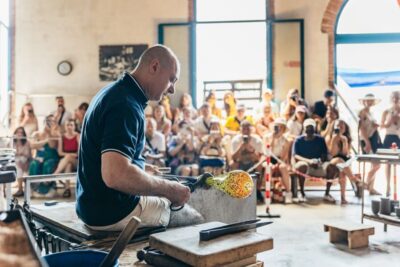
Burano, Torcello & Murano Boat Tour w/Glassblowing
Read our review →
Murano, Burano and Torcello Half-Day Sightseeing Tour
Read our review →
Murano & Burano Islands Guided Small-Group Tour by Private Boat
Read our review →
Murano & Burano Panoramic Boat Tour w/ Glassblowing
Read our review →
Murano, Burano, Torcello: Tour with Guide & Glass Factory
Read our review →
Murano & Burano Guided Tour by Private Boat with Glassmaking
Read our review →Browse the lists this tour appears in