
Reviewed · WORKSHOPS
Creative Venice: Artisan Excellence and Craftsmen Workshops
Venice can feel like one long photo stop, unless you aim for the hands behind the art. This 3-hour Creative Venice walk focuses on artisan workshops, where you see how everyday objects are made, repaired, and kept alive with techniques that still matter.
I like two things most. First, the itinerary mixes street-level Venice (Rialto) with quiet ateliers, so you get both the noise and the craft rhythm. Second, the guide, Valerio Coppo, is the real engine of the experience, sharing stories and pointing out details you would normally miss.
One consideration: you are moving through several small shops and stops in a short time. If you prefer long museum-style viewing or you want zero walking, this fast-paced format may feel a bit packed.
In This Review
- Key things that make this tour worth your time
- Rialto to Cannaregio, how the route tells a craft story
- Campo San Giacomo di Rialto, the oldest-feeling start in Venice
- Mercato del Pesce al Minuto, where Venice smells like work
- A ceramics break in San Polo, rural tradition made wearable
- Ponte di Rialto shoe shop, recycling turned into footwear design
- Campo Manin and Giuliana’s hats, practical fashion with a long supply chain
- Campo Santo Stefano and paper marbling, color made by the lagoon
- San Salvador atelier, sculptures, jewelry, and glass flowers
- Murano glass jewelry at Ponte di Rialto, handmade beads you can feel
- Cannaregio textiles, why hand looms still matter
- What you learn about Venetian craft beyond the objects
- Price and value: is $182.17 per person fair?
- Practical tips so you enjoy the pace
- Should you book Creative Venice artisan workshops?
- FAQ
- How long is the Creative Venice tour?
- What is the price per person?
- Is the tour offered in English?
- Do I get pickup?
- Where do I meet the guide?
- Are tickets or admission costs included?
- Can I cancel and get a full refund?
- Is the tour suitable for everyone?
Key things that make this tour worth your time

- Behind-the-scenes access to craft spaces, including workshops not set up for casual passersby
- Rialto market energy paired with slow, hands-on craft explanations
- Craft variety that is actually useful, textiles, ceramics, shoes, paper marbling, and Murano glass
- A guide who brings context, with anecdotes and practical observations tied to Venetian life
- A flexible private setup, so the pace can work for your group better than a rigid group tour
More Venetian benches for glass, paper and paint:


Rialto to Cannaregio, how the route tells a craft story
This tour is smartly stitched together, because it doesn’t treat Venice craft as a single theme. It shows how materials, reuse, and local demand shape what gets made. You start in the center of things, then gradually shift into more specialized workshop worlds.
You’ll spend about 15 minutes at each stop, which keeps the day moving without turning it into a sprint. And because it’s a private experience for your group, you can usually slow down for the part you care about most, like ceramics, paper, or glass.
The overall vibe is not showroom shopping. It’s more like a guided route through working traditions, where the objects come from real labor, real tools, and real knowledge passed along.
Campo San Giacomo di Rialto, the oldest-feeling start in Venice
Your first stop is Campo San Giacomo di Rialto, in front of a church traditionally considered to be among the oldest in Venice. Starting here works, because you get a grounded moment before you hit the market noise.
Even with a short time slot, this stop gives you a sense of scale and age. Venice is a city that grew around waterways and trade, and beginning near a landmark like this helps you understand why so many crafts evolved here: materials came in by boat, and local skills turned them into objects people needed every day.
This is also a good place to get your bearings. The square setting is open enough to orient yourself, then the tour heads into tighter streets and workshop doors.
Mercato del Pesce al Minuto, where Venice smells like work
Next comes the fish market at Rialto, Mercato del Pesce al Minuto. This stop is about the raw, real Venetian rhythm: fish piled on stalls under crushed ice, seagulls wandering around, and fishmongers calling out the day’s catch.
The practical value here is that it puts crafts in context. In Venice, a lot of craftsmanship grew from the realities of food, trade, and daily routines. When you see how intensely local people browse and move through the market, you start to connect the dots to later stops, where you learn how objects support home life.
You also learn what to notice. Ice texture, arrangement style, and how quickly sellers move tell you something about the market’s speed. That sets the tone for what you’ll see later in workshops: technique matters, but so does time.
Short on time? This is still worth it, because you get the feeling of a living place instead of a staged scene.
The same hours, spent on the water instead:
- Venice: Doge’s Palace Reserved Entry Ticket
★ 4.6 · 42,716 reviews - Venice: Grand Canal Gondola Ride with App Commentary
★ 4.1 · 23,020 reviews - Venice: Grand Canal Gondola Experience with Live Commentary™
★ 4.2 · 16,504 reviews - Boat Trip: Glimpse of Murano, Torcello & Burano Islands
★ 4.3 · 15,699 reviews - Venice: La Fenice Opera House Entry Ticket with Audio Guide
★ 4.6 · 11,742 reviews
A ceramics break in San Polo, rural tradition made wearable
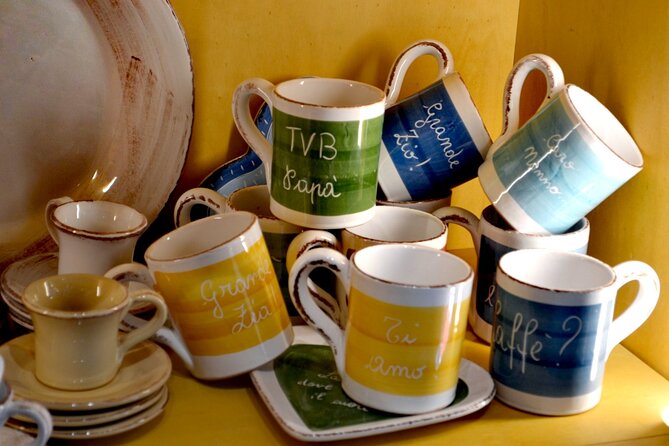
In San Polo, you visit a local artisan focused on traditional rural products. The tour frames these ceramics as something more than “nice bowls,” tied to family tables, gatherings, and celebration.
What I like about this stop is the way it explains why certain patterns and production methods survived. When industrial production took over, many small-batch techniques got lost. Here, you see how craft keeps the link between material and meaning.
The ceramics are described as bright in color with lively patterns, made using typical materials and time-honored manufacturing. That matters for you as a traveler, because it helps you buy or photograph with intelligence. You can look at a glaze or a motif and understand it as a cultural choice, not random decoration.
Possible drawback: if you already know a lot about ceramic history, you might crave more technical detail than a 15-minute window can deliver. But for most visitors, the story and the visuals fit the overall flow.
Ponte di Rialto shoe shop, recycling turned into footwear design
At the next stop, you step into a traditional shoe shop where the idea is simple but clever: necessity becomes virtue. The soles are made from old bicycle tyres, the linings come from jute sacks used in grain and seed transport, and uppers can be transformed from rags or old clothes.
This stop is one of the most “Venice, specifically Venice” moments. Venice has always been shaped by scarcity, trade, and reuse. Seeing that logic in something as intimate as shoes makes the story feel real, not abstract.
You may also notice the design inspiration behind the modern “Veneziane” style slippers, said to echo 18th-century influences from the Serenissima era. The tour adds that these shoes are hand-sewn, with options like velvet or bright oriental silks.
For your planning: keep your eye on construction. Even if you don’t buy, you’ll learn what “hand-sewn” means in practice, like how the seams sit and how the materials meet at the edges.
Campo Manin and Giuliana’s hats, practical fashion with a long supply chain
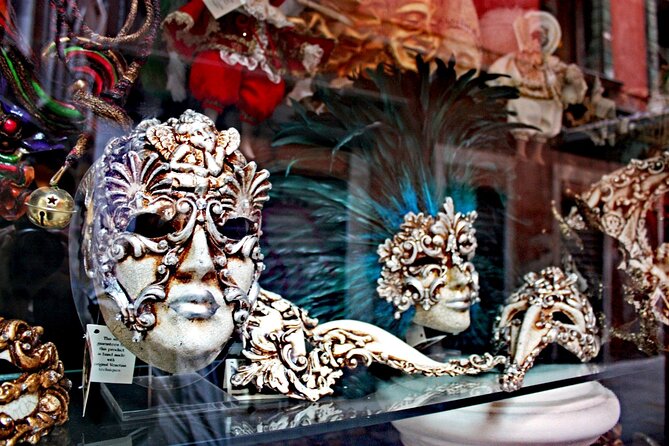
In Campo Manin, you visit Giuliana’s tiny hat shop. The shop is known for a strong mix: Panama hats, gondolier hats, Carnevale styles, waterproof hats, woolly hats, and even wedding hats.
A detail I really appreciate here is that Giuliana has imported Panama hats directly from Ecuador since 1980. That’s the kind of supply-chain fact that changes how you look at “souvenirs.” You can sense a real relationship with sourcing, not just product variety.
The tour also notes that the shop is officially recognized as a historic place of the Veneto Region. For you, that means this isn’t just a cute store stop. It’s a place that has persisted, which is often where authentic business practices hide.
If you’re the type who likes wearable memories instead of magnets, this is a great place to pause.
Campo Santo Stefano and paper marbling, color made by the lagoon
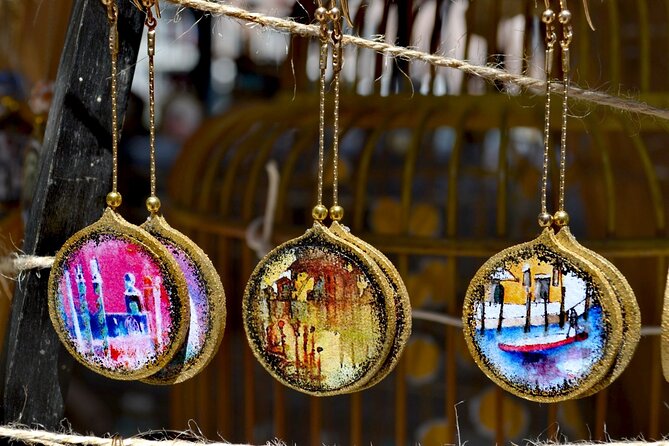
At Campo Santo Stefano, the tour meets a “maestro marmorizzatore,” a master papermaker. This term is interesting because maestro can mean an expert and teacher, but Venetians also use it as a respectful greeting for an elderly person. That social layer matters in craft towns: skill is personal and community-facing.
Here you’re watching ancient paper techniques in action. The tour explains that the lagoon water takes on different shades through the day, and those color changes are part of what these techniques reproduce. You can think of it like natural timing baked into the craft.
What you might see includes flower-themed sheets, like tulips and roses, plus an unusual series described as smiling fish. The fish are captured in the liquid element and then petrified on paper as if they are fossils embedded in primordial seas.
This is the stop where I’d slow down if you can. Paper marbling can look like art prints at first glance, but in practice it’s chemistry, patience, and control. Even with limited time, the guide’s focus helps you understand why each sheet has personality.
San Salvador atelier, sculptures, jewelry, and glass flowers
Between Rialto Bridge and St. Mark’s Square, you visit a cozy atelier at Chiesa di San Salvador. Since 2007, a couple of artists have been working in this intimate space, encouraging the relationship between the object and the viewer.
Expect a strong mix of materials. You’ll see sculptures and jewelry, delicate glass flowers, dreamlike cut-iron shapes, and wood works described like reborn trees. There are also “nomadic landscapes” and sights from the abyss, which hints at the artists’ storytelling approach.
Even if you aren’t a “glass person,” this stop is worth it because it shows how Venice craft is not only traditional guild methods. It also includes contemporary makers who still use the same instincts for material and form.
How to enjoy it: look for how the pieces interact with light. Glass and cut iron behave differently in the same room, and the guide’s comments can help you notice those shifts fast.
Murano glass jewelry at Ponte di Rialto, handmade beads you can feel
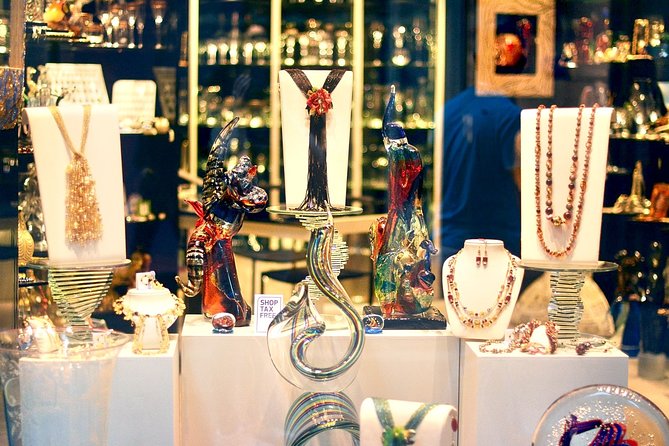
Back near the Ponte di Rialto, the tour visits a jewelry shop producing Murano glass pieces entirely by hand, using refined Venetian techniques. The guide focuses on the fact that the beads are hand made by small local workshops with years of experience in Murano glass making, glass blowing, and lamp-working.
This matters because Murano glass can mean a lot of things in Venice. Some places sell mass-produced items. Here, the emphasis is on the hands-on steps, which changes how you assess quality.
In a short visit, you won’t master lamp-working, but you can still learn how craft shows up in the final object. Watch for irregularities that look intentional, not careless. Notice how colors layer and how shapes hold their detail.
If you want a glass souvenir that feels like it has a process behind it, this stop is the best place to focus.
Cannaregio textiles, why hand looms still matter
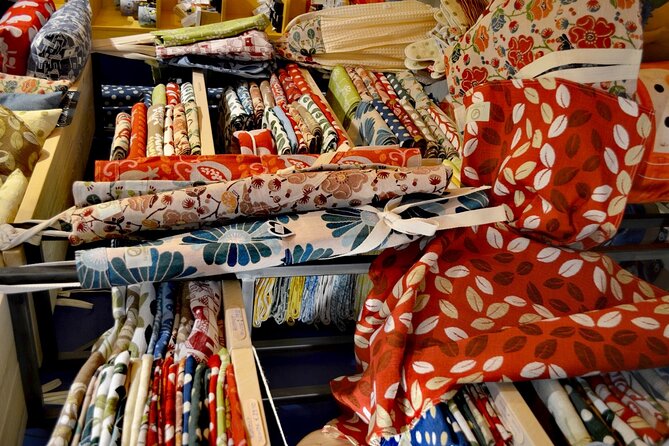
In Cannaregio, you visit a textile company producing fine fabrics for furnishing and high fashion. You may see velvets, damasks, lampases, brocatelles, plus soprarizzo velvet.
The special point here is that soprarizzo production is still carried out on 18 looms of the 18th century, previously belonging to the silk guild of the Republic of Venice. That’s not a small detail. It means the craft is not just imitated with machines, it is tied to historic equipment and methods.
For you, that’s value. Textiles are one of the hardest crafts for visitors to “read” from the outside. So when you get a guide pointing out what’s hand-made and what is loom-driven, you end up with a better eye.
You might also notice that fabrics in this category are less about a single dramatic item and more about quality over time. If you like practical elegance, this stop can shift you from Venice “stuff” to Venice “materials.”
What you learn about Venetian craft beyond the objects
The biggest win of this tour is that it helps you understand craft as a system. Materials move through the city, techniques survive because they serve real needs, and artisans keep knowledge alive by passing it through daily practice.
You’ll also pick up a few useful ways to look at what you see in Venice:
- Reuse is part of design, like the shoe shop turning old tyres, jute, and clothing into durable parts.
- Tradition has social meaning, like ceramics tied to shared meals and celebrations.
- Craft is timed, like paper marbling using lagoon water color shifts through the day.
- Handwork shows up in decisions, like Murano glass beads made with lamp-working and local workshops.
And since Valerio Coppo’s style is described as entertaining, full of anecdotes, and personable, you don’t just get facts. You get a sense of why Venetians care.
Price and value: is $182.17 per person fair?
At $182.17 per person for about 3 hours, the price makes sense only if you treat this as a craft access tour, not a generic city stroll.
Here’s what you get for the money based on how the experience is built:
- a licensed tour guide who connects the dots between crafts and Venetian life
- short, focused visits across multiple workshops and ateliers
- access to working spaces that you might not reach on your own
- a private-group format, with customization of pace for your group
If you’re traveling solo, it can still be worth it if you strongly care about craft. But if you have a small group of friends, you’ll feel the value more because you’re paying for the guide time and the workshop access together.
The best match is someone who likes seeing “how it’s made,” and who is comfortable walking between stops for a concentrated afternoon.
Practical tips so you enjoy the pace
This is a stop-by-stop walk, mostly indoors at the workshop doors. A few basics will make it smoother:
- Wear comfortable shoes. You’ll bounce between squares, bridges, and small shop entrances.
- Bring a light layer. Venice shops and atelier spaces can feel cooler than the street.
- Have one focus. If you’re torn between textiles, paper, and glass, pick one to go deeper on during the visit.
Also, don’t worry if you’re not buying anything. The tour’s emphasis is on seeing the process and meeting the makers. That’s the real souvenir.
Should you book Creative Venice artisan workshops?
Book it if you want Venice that goes past monuments and into real craft work. This tour is strongest for people who love the details, like recycled materials becoming design, ancient papermaking techniques tied to lagoon color, and hand-made Murano glass beads shaped by skilled work.
Skip it if you want a long, museum-style experience or if you dislike moving between many quick stops. This is built as a 3-hour route, so it’s best for a focused afternoon, not a slow day of roaming.
If you can, consider booking early in your trip. Seeing craft processes near Rialto and then carrying that lens into later sightseeing makes the whole city feel more understandable.
FAQ
How long is the Creative Venice tour?
The tour lasts about 3 hours.
What is the price per person?
The price is $182.17 per person.
Is the tour offered in English?
Yes, it is offered in English.
Do I get pickup?
Pickup is possible, but personalized pickup is only mentioned for a private group. If you did not book a shared small group and instead booked privately, you should let the provider know if you want pickup at a location in the historical center of Venice.
Where do I meet the guide?
Meet at Campo San Giacomo di Rialto, in front of the church near the fountain in the middle of the square.
Are tickets or admission costs included?
The stops listed show admission ticket free.
Can I cancel and get a full refund?
Yes, free cancellation is available. You can cancel up to 24 hours in advance for a full refund.
Is the tour suitable for everyone?
The information says most travelers can participate, and service animals are allowed.
Lately added around Venice


Workshops, compared.
Pasta and Tiramisu Cooking Class with Wine in Venice
Read our review →
Create Your Glass Artwork: Private Lesson With Local Artisan
Read our review →
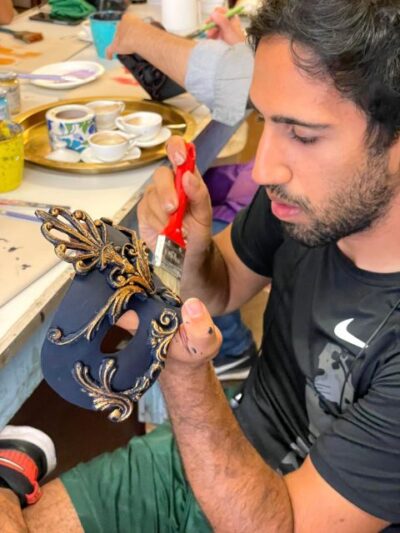
Venetian Carnival Mask Making Class in Venice, Italy
Read our review →
Murano Glass Factory Experience: A Workshop in Venice
Read our review →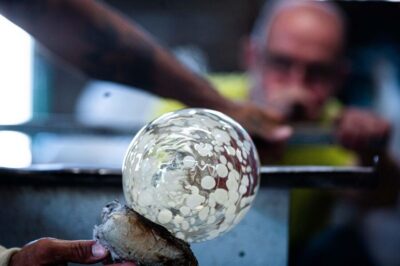
Browse the lists this tour appears in