

Reviewed · JEWISH GHETTO GUIDED WALKS
Jewish Ghetto Heritage and Rituals in Venice
The Venice Jewish Ghetto has layers you can feel. This 2-hour private walk through the Campo del Ghetto mixes synagogue architecture, daily rituals, and stories tied to persecution and survival.
What I really like is how the guide connects place to meaning, not just dates and names. You also get time at two synagogue interiors, so you see how the space shapes prayer and community life.
One possible drawback: you must plan for extra costs, since the synagogue entry tickets are not included, and you’ll need to cover shoulders and knees to enter.
In This Review
- Key things you’ll notice in the Venetian Ghetto
- Start at Ba Ghetto Ristorante Kosher, then walk into a living neighborhood
- Campo del Ghetto Ebraico: why the world’s first ghetto still matters
- Two interiors and five synagogues: how to read Renaissance “scola” spaces
- The Spanish Synagogue: Aron ha Qodesh marble and a floor “error”
- Beyond buildings: rituals, Judaica arts, and the Ashkenazy and Sephardic food legacy
- WWII remembrance and Doctor Giuseppe Jona: why this tour does not look away
- Price and value: what you pay and what you still need to budget
- How to dress and plan your visit without stress
- Who this tour is best for, and who should think twice
- Should you book this Venetian Jewish Ghetto tour?
Key things you’ll notice in the Venetian Ghetto
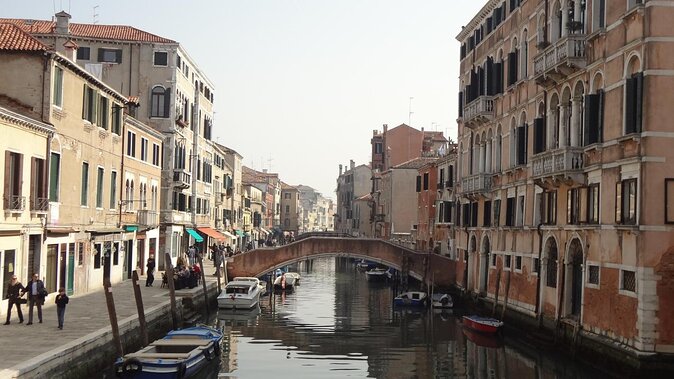
- The first ghetto in the world, created in the 1500s, right where Venice still speaks in Jewish history
- Five synagogues in the Ghetto, with two synagogue interiors visited on this tour
- Spanish Synagogue highlights, including the marble Aron ha Qodesh and a floor detail linked to the community’s story
- Expulsion-era arrivals, explaining how Spanish and Portuguese Jews came to Venice after 1492 and 1496
- WWII remembrance plus Doctor Giuseppe Jona, bringing the modern era into the same streets you’re walking
- Today’s Jewish life in Venice, plus Judaica arts and the Ashkenazy and Sephardic food legacy in Venetian cuisine
Other walks through the Ghetto:
Start at Ba Ghetto Ristorante Kosher, then walk into a living neighborhood
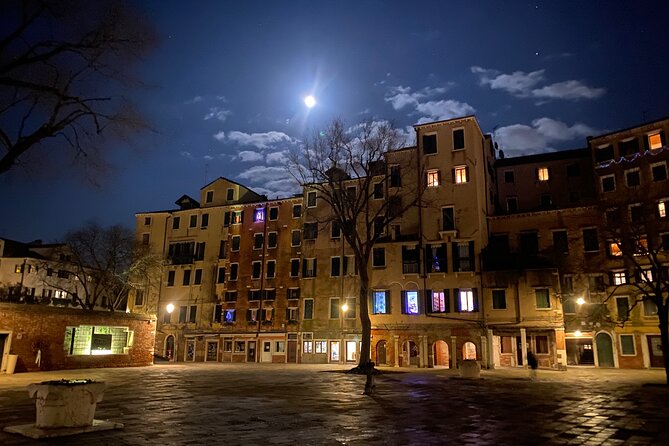
Your meeting point is Ba Ghetto Ristorante Kosher in Cannaregio, at 2873/c. From there, you’re close enough to public transport to make the start easy, yet you’ll still feel like you’ve stepped into a more intimate Venice.
This is a private tour, meaning only your group participates. That matters here, because the guide can tailor the pace and answer questions without rushing you off to the next stop.
You’ll be out for about 2 hours, so wear comfortable shoes. The streets around the Campo are narrow and made for slow looking, not sprinting.
Campo del Ghetto Ebraico: why the world’s first ghetto still matters
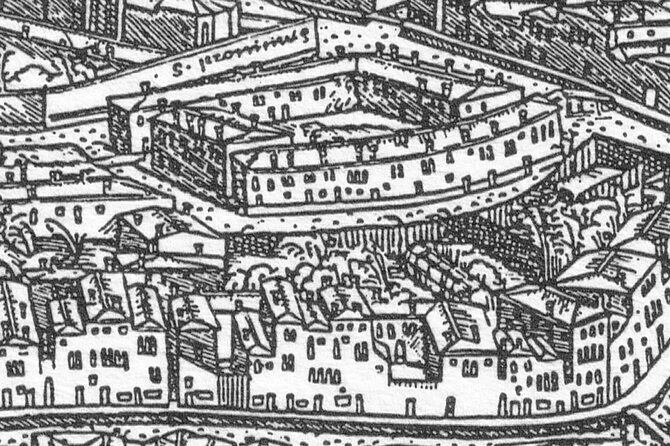
You’ll spend the first hour around the Campo del Ghetto, the heart of the Ghetto Ebraico. This is where the idea of a controlled, restricted Jewish quarter became real in Venice, and it’s why the area is treated as a landmark in European Jewish history.
The tour frames the creation of the Ghetto in plain terms. The point is not to drown you in dates, but to help you understand why this space was designed to separate, regulate, and control.
You’ll also see two synagogue interiors as part of this first stretch. The focus is not only on what the buildings look like, but on what survives, especially given the destruction of the Shoah and the endurance of community tradition.
What I love is that the guide ties architecture to ritual. When you hear why certain objects and layout elements matter, the room feels more than a museum space.
A practical note: synagogue entry requires an extra ticket. So if your priority is seeing the interiors, keep that in mind when you budget.
Two interiors and five synagogues: how to read Renaissance “scola” spaces
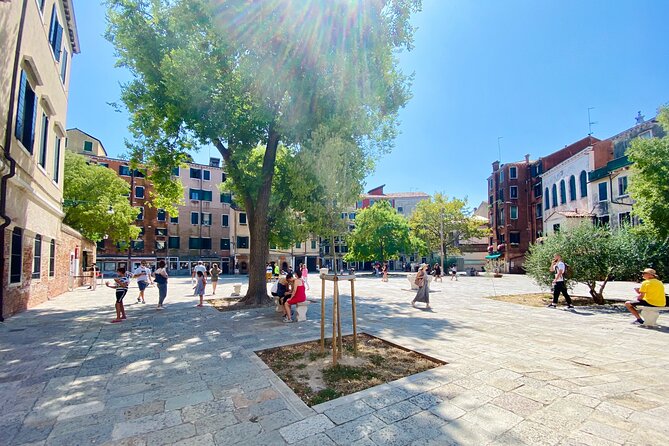
Venice’s Ghetto is linked with five synagogues, often referred to as scola. On this tour, you’ll view five from the outside, then enter two, including an especially important one later in the walk.
Seeing the outside first helps. You start to notice how these sacred buildings relate to the cramped urban setting, and why the community needed identity and continuity even in a restricted environment.
Then, when you enter, you’ll be able to connect what you noticed from outside with the interior details. That shift is the difference between a quick photo stop and an understanding of how these spaces work for worship.
The guide also points out that the interiors you visit are not just pretty. They are Renaissance treasures that endured and survived the Shoah, which changes how you look at every wall and doorway.
If you’re the type of traveler who likes meaning behind the stones, this portion will click fast.
A few more Venice outings worth comparing
- Venice’s Best: Basilica, Doge’s Palace, Gondola & History Gallery
★ 4.5 · 2,478 reviews - Venice: City Center Historical Guided Walking Tour
★ 4.2 · 1,873 reviews - Venice: The History of St. Mark’s Basilica Tour
★ 4.2 · 986 reviews - Venice: Bell Tower & St Mark’s Square History Gallery Ticket
★ 4.3 · 910 reviews - Basilica, Doge’s Palace, History Gallery & Bell Tower Option
★ 5.0 · 586 reviews
The Spanish Synagogue: Aron ha Qodesh marble and a floor “error”

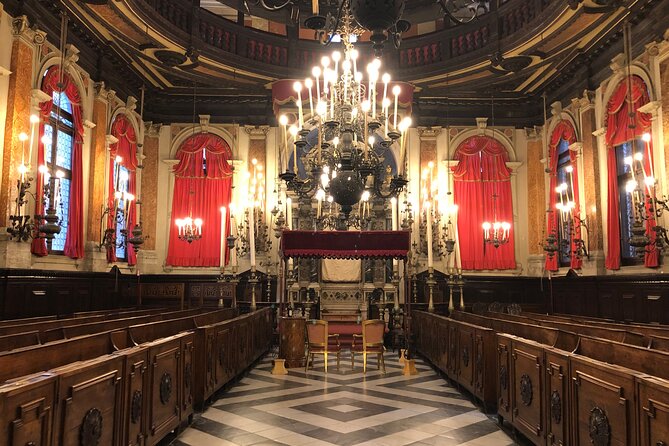
In the second stop, you’ll focus on the Spanish Synagogue, the largest of the five scola. This is a smart choice for the itinerary because it gives you a concentrated look at design, symbolism, and the community story wrapped into the building.
You’ll spend about 25 minutes here, and the guide walks you through standout details, including the Aron ha Qodesh sculpted in marble. Even if you do not read Hebrew, you can feel that the artistry aims to express reverence and permanence.
One of the most interesting parts is the talk around the “error” in the floor. The guide uses it like a clue, explaining how even imperfections can reflect real human decisions inside a community under pressure.
You’ll also hear why this synagogue connects to the history of Spanish and Portuguese Jews in Venice. After expulsions tied to 1492 and 1496, those arrivals reshaped local Jewish life, and this building becomes a tangible marker of that movement.
If you care about how migration histories get carved into city space, don’t rush this stop. Let the guide’s explanations change what you see before you move on.
Beyond buildings: rituals, Judaica arts, and the Ashkenazy and Sephardic food legacy
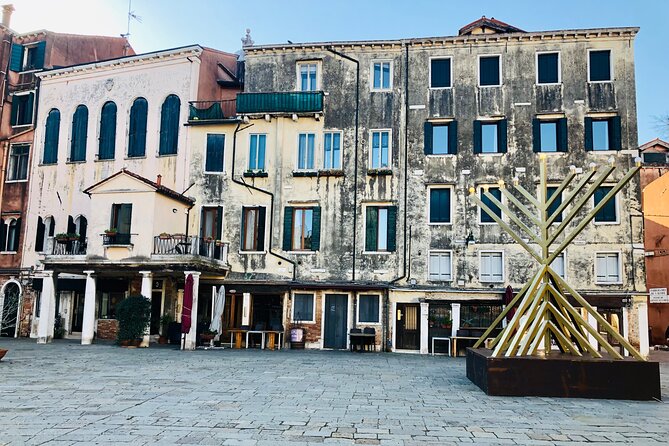
The tour doesn’t freeze the Jewish Ghetto in the past. It also brings you to the present by explaining traditions and the everyday culture that continued in Venice.
You’ll hear about Judaica arts, and how objects and crafts fit into community life. That’s not just trivia, it’s a way to understand how tradition is carried forward when you live in a city that constantly changes around you.
And then comes the food angle, which I think is one of the most practical ways to make history stick. The guide points out the Ashkenazy and Sephardic culinary legacy that left marks on Venetian cuisine.
This is the kind of information you can use later when you eat in Venice. You’ll start noticing different flavors and techniques as echoes of community identity, not just as generic Italian cooking.
If you’re traveling with someone who feels “synagogues are all the same,” this part helps you realize how many layers are in the same neighborhood.
WWII remembrance and Doctor Giuseppe Jona: why this tour does not look away
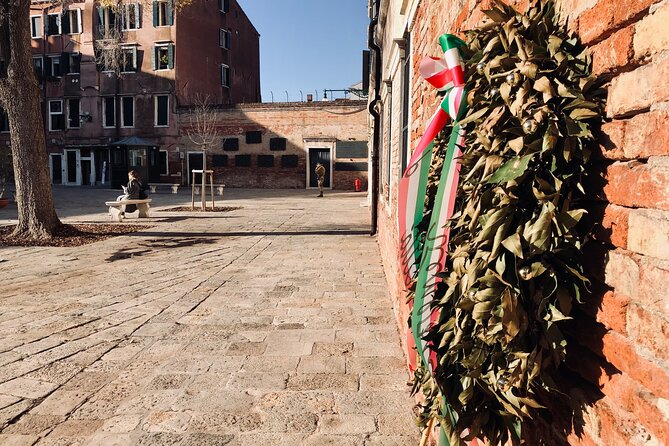
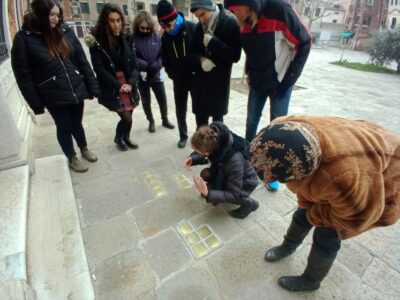
Venice’s Ghetto is not only architecture and ritual. The tour addresses the suffering of the Jewish people during WWII in a direct way.
This is a sensitive subject, and the value here is honesty without sensationalism. The guide talks about what happened and then anchors the story in people who mattered in Venice, including Doctor Giuseppe Jona.
You’ll learn about his story as part of how the community endured and responded. Even if you already know some WWII history, connecting it to this particular place gives the topic a stronger human scale.
For many travelers, this is the emotional center of the tour. If you want a purely light, photo-friendly experience, this may feel heavier than you expected.
But if you prefer to understand a city by how it faced real events, you’ll find this portion meaningful.
Price and value: what you pay and what you still need to budget
The tour price is $143.68 per person, for about 2 hours. That is not a budget deal, but it’s not just “a walk with a guide” either.
You’re paying for a private, exclusive experience focused on a specific area and its meaning. Plus, the itinerary is set up so you see both synagogue exteriors and two synagogue interiors, which normally requires careful planning on your own.
What’s not included is the synagogue entry ticket. You’ll need to budget 15€ per person (or 13€ reduced) for admission to the two synagogues. So a realistic total budget is the tour price plus that ticket cost.
In practical terms, this is still good value if you want the interiors and the guided context. If you planned to skip entrances and rely only on the outside views, the price might feel high, because the tour’s payoff is the deeper access.
How to dress and plan your visit without stress
You’ll need to cover shoulders and knees. It’s easy to meet this in Venice with a light layer, but it’s worth planning, especially in warmer months.
The good news: this tour is close to public transport, so you’re not likely to waste time getting to the start. Service animals are allowed as well, which helps for travelers who need them.
One more practical detail matters for some day-trippers: on certain dates, people staying outside Venice who plan to visit for the day may need to pay a €5 access fee. Check the official guidance linked as cda.ve.it for which days apply and exemptions.
Who this tour is best for, and who should think twice
This works best for travelers who want more than sightseeing. If you care about Jewish heritage, synagogue architecture, and how community ritual connects to everyday life, you’ll get a lot from this short, focused route.
It’s also a good match if you’re the kind of person who likes a guide who can answer questions. The experience is private, so discussion does not feel like an interruption.
If you are traveling with someone who prefers only upbeat history, or who finds WWII topics hard to hear, you might want to consider whether you’re in the right mood for remembrance.
The itinerary is short on purpose. That’s ideal if you have limited time in Venice, but it’s not the best choice if you want hours of wandering without structure.
Should you book this Venetian Jewish Ghetto tour?
I’d book it if your Venice plan includes history that has real consequences, and you want context that makes the buildings and rituals feel alive. The combination of Campo del Ghetto exploration, seeing multiple synagogues from the outside, and entering two interiors gives you real depth in just about 2 hours.
I’d hesitate if you’re only interested in a quick scenic walk, or you don’t want to spend extra money on synagogue tickets. Also think twice if the WWII portion will feel too heavy right now.
If you want to understand why this place is still the center of Jewish culture in Venice, this is one of the most direct ways to do it.
Lately added around Venice



Jewish Ghetto Guided Walks, compared.
Jewish Ghetto Walking Tour with Synagogue Visits
Read our review →
Jewish Ghetto & Cannaregio Area Food Tour: Pasta Wine Gelato and More!
Read our review →
Jewish Ghetto Walking Tour with Synagogues Visit
Read our review →
Small-Group Walking Tour of the Jewish Ghetto in Venice
Read our review →
Venice Jewish Ghetto and Cannaregio Food, Wine, Sightseeing Tour
Read our review →Venice Guided Tour of Synagogues and Ghetto Area
Read our review →Browse the lists this tour appears in