
Reviewed · HIDDEN GEMS & BACKSTREET TOURS
Secrets of Venice Carnival and Life of Casanova Tour
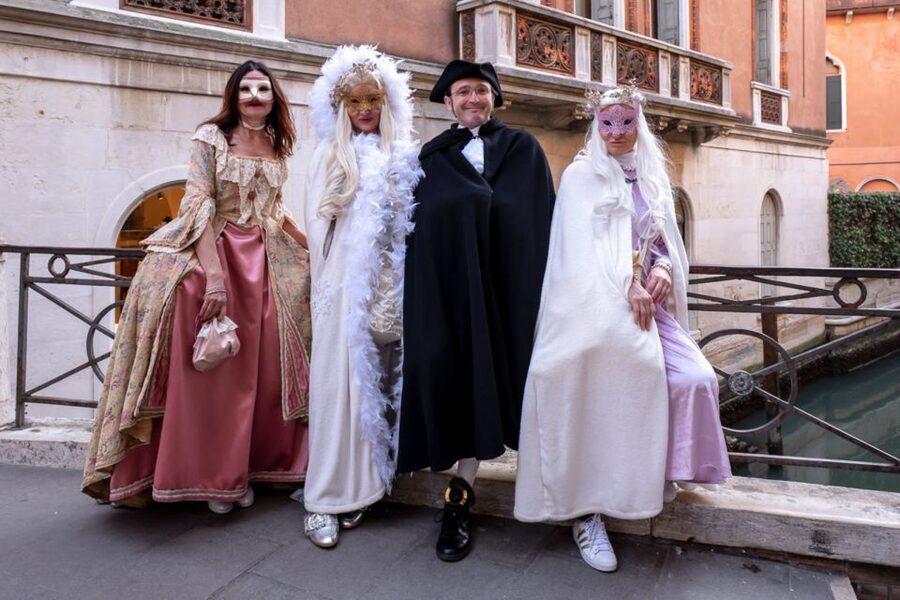
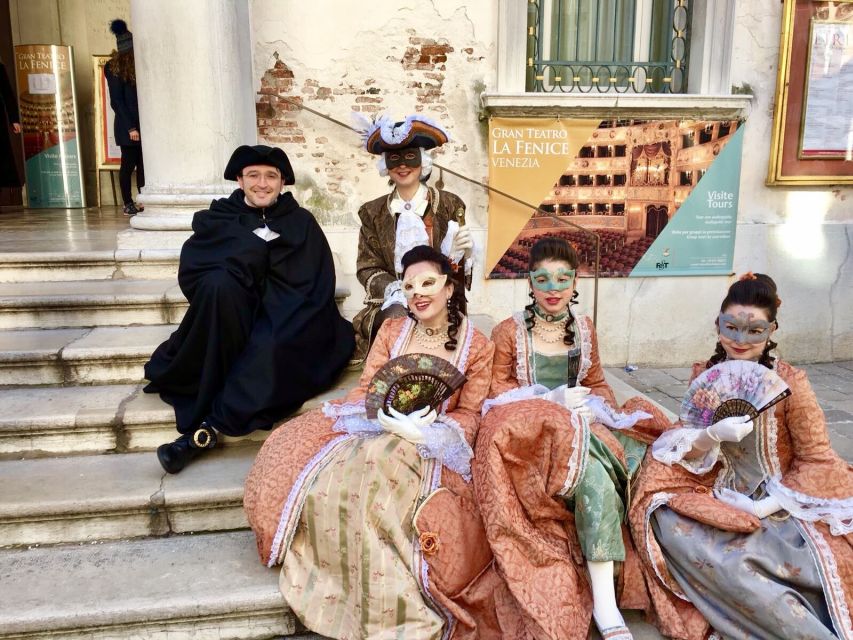
Casanova’s Venice still smells of perfume. This Venice Carnival walk sends you from La Fenice into backstreets, with your guide in Carnival costume and stories about masks, traditions, and 18th-century pleasure.
I especially like the mix of real locations tied to Casanova and Giorgio Baffo, plus the practical talk on how Carnival masks are made. I also like the warm landing at Le Café Venezia, with a hot cappuccino and Carnival-era frittelle. One thing to consider, since the streets can be tight, is that in bad weather or with a larger group, it can get harder to hear every detail.
In This Review
- Key points to know before you go
- Why this Casanova-focused Venice Carnival tour works
- Meeting at Teatro La Fenice, then setting the mood in costume
- The heart of the walk: masks, anonymity, and Venice’s Carnival rules
- Palazzo Contarini del Bovolo and the pleasure of the middle stops
- Campo Santo Stefano: where the story breathes
- Following Casanova through San Samuele and Giorgio Baffo’s circle
- End at Le Café Venezia: warm drink, Carnival frittelle, and an easy finish near St Mark’s
- Price and value: $88, and what you actually get
- Comfort, pacing, and the main things to watch on Carnival days
- Who should book this tour, and who should skip it
- Should you book Secrets of Venice Carnival and Life of Casanova Tour?
- FAQ
- How much does the tour cost?
- Where do I meet the guide?
- How long is the tour?
- What do I get at the end of the tour?
- Is the tour in English?
- Can I come in a Carnival costume or mask?
- Is the tour wheelchair accessible?
- Is oversize luggage allowed?
Key points to know before you go
- Casanova route with Venice detail, including his connections in the city and his world of entertainment
- Mask-making explained, plus why masks once protected identity during Carnival
- Costumes, balls, and 17th-century style, not just generic Venice photos
- Stops built for character, from La Fenice to Campo Santo Stefano and beyond
- A real food finish, hot cappuccino and frittelle at Le Café Venezia
- Guides with stage presence, with Sergio, Dennis, and Lorenzo specifically noted for humor and energy
Other walks through the quieter calli:
Why this Casanova-focused Venice Carnival tour works
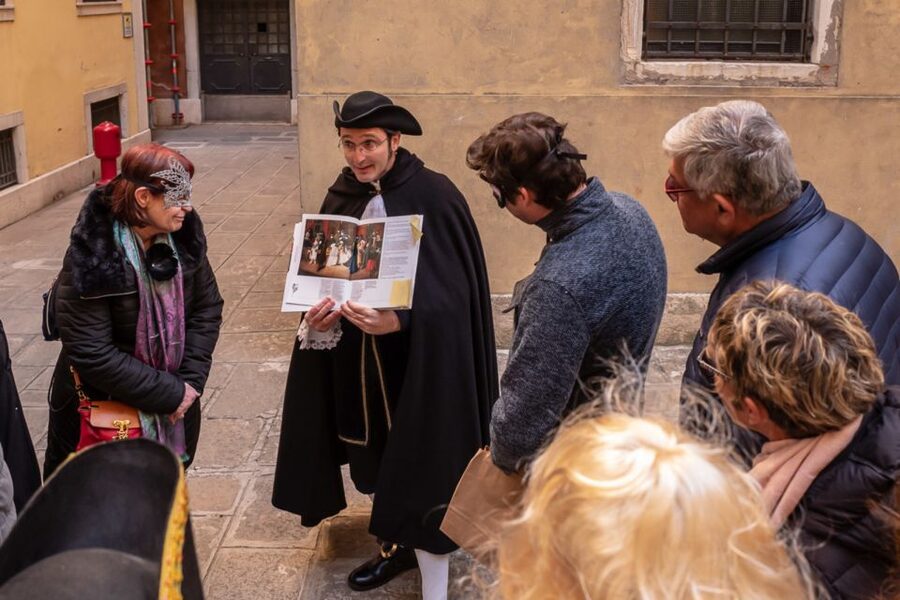
Venice has a way of turning history into theater. This tour uses that strength. You’re not just hearing dates and names. You’re following Casanova’s footsteps through places tied to his early life, then tying it back to what Carnival was for: disguise, performance, and social play.
What I like most is that the story stays grounded in the city. You spend time around recognizable Venice anchors like La Fenice and then you move into the narrow calle, where Venice feels like it did before mass tourism. Your guide also adds the right kind of costume context. You learn what people wore and why, including the difference between flamboyant parade-style clothing and the luxurious look tied to private gatherings.
And yes, you end with something warm. That matters in Venice. A hot cappuccino and a Carnival frittelle at the end is a simple close, but it’s a smart one, especially if you’re doing this on a cooler Carnival day.
Meeting at Teatro La Fenice, then setting the mood in costume
You meet at Campo della Fenice, right in front of Teatro la Fenice. Look for your guide with the tour sign, and expect an English-speaking guide dressed for Carnival. Starting at an opera house is a deliberate move. It tells you this won’t be a dry lecture. It’s meant to feel like you stepped into a play, with your guide as part narrator and part performer.
If you’re coming from St Mark’s Square, the directions are fairly direct: walk past the arches near the Correr museum area, follow the route toward Salisaza San Moisè, cross the bridge near the hotel Bauer, then head along calle larga XXII Marzo. Turn on calle della Vesta, cross the small bridge, and the meeting point is in front of the well in campo della Fenice. It’s Venice, so you’re still likely to ask for help at least once. That’s normal. Just keep an eye out for the sign.
Once you start walking, the pace is meant to carry the story. Your guide will introduce Carnival in the 18th century, then connect it to masks and traditions that are still visible today. Since your guide is in costume, the first few minutes usually click fast. Even if you’re not a big costume person, you’ll get the point quickly: Carnival is about identity shifting, not just decoration.
The heart of the walk: masks, anonymity, and Venice’s Carnival rules
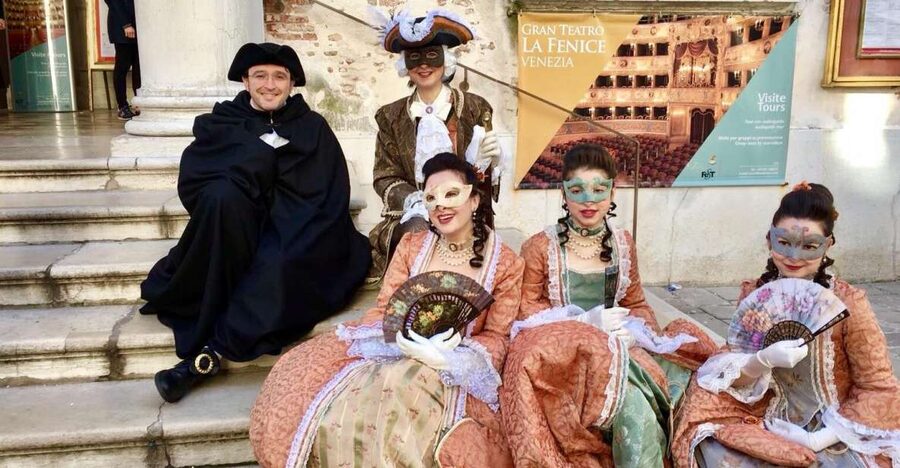
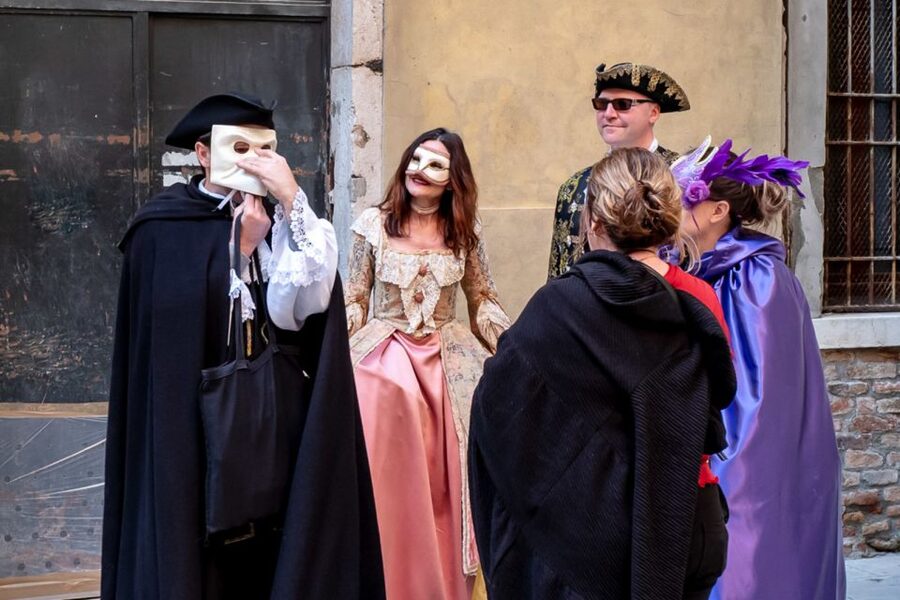
A big part of this tour is the explanation of masks, not just the sight of them. You’ll hear why masks were used to hide the wearer’s identity, and how that freedom shaped what people did during Carnival.
That might sound like a general concept, but the tour approach makes it concrete. You’ll also learn about how traditional masks are made. You’re not expected to become an artisan, but you should walk away understanding the idea behind the craft: masks weren’t random souvenirs. They were part of a social system where what you looked like could help you move through the city differently.
This is also where the 17th-century costume talk becomes more than costume talk. Your guide points out the flamboyant style connected to that era, and connects it to street-life parade culture during Carnival time. You’ll hear what kinds of outfits people wore for public displays, compared with the more luxurious look tied to private palace gatherings.
I like how this tour keeps the focus on meaning. When you understand why masks existed and what people dressed for, Carnival visuals stop being background and start being a window into how Venice social life worked.
The same hours, spent on the water instead:
- Venice: Doge’s Palace Reserved Entry Ticket
★ 4.6 · 42,716 reviews - Venice: Grand Canal Gondola Ride with App Commentary
★ 4.1 · 23,020 reviews - Venice: Grand Canal Gondola Experience with Live Commentary™
★ 4.2 · 16,504 reviews - Boat Trip: Glimpse of Murano, Torcello & Burano Islands
★ 4.3 · 15,699 reviews - Venice: La Fenice Opera House Entry Ticket with Audio Guide
★ 4.6 · 11,742 reviews
Palazzo Contarini del Bovolo and the pleasure of the middle stops
Midway through the walk, you’ll pause around Palazzo Contarini del Bovolo. The name matters because it marks the tour’s shift from big Venetian icons into the quieter architectural stops that make routes like this feel local.
Even though the tour is story-driven, those pauses are useful. They give you a moment to reset your bearings in Venice, and they help break up the narrow street walking. If you’ve ever tried to do Venice solo during Carnival, you know how easily you can end up in a loop of crowds. This kind of guided structure helps you see more of the city without constantly checking your map.
At this stage, your guide tends to layer in more Casanova context. You’ll keep hearing how he fits into Venice life, including his role as a celebrated lover and adventurer. The stories also point to his connection to the social world where pleasure and networking mattered. That sets up the next part of the tour well, which moves deeper into the city’s entertainment scene.
Campo Santo Stefano: where the story breathes
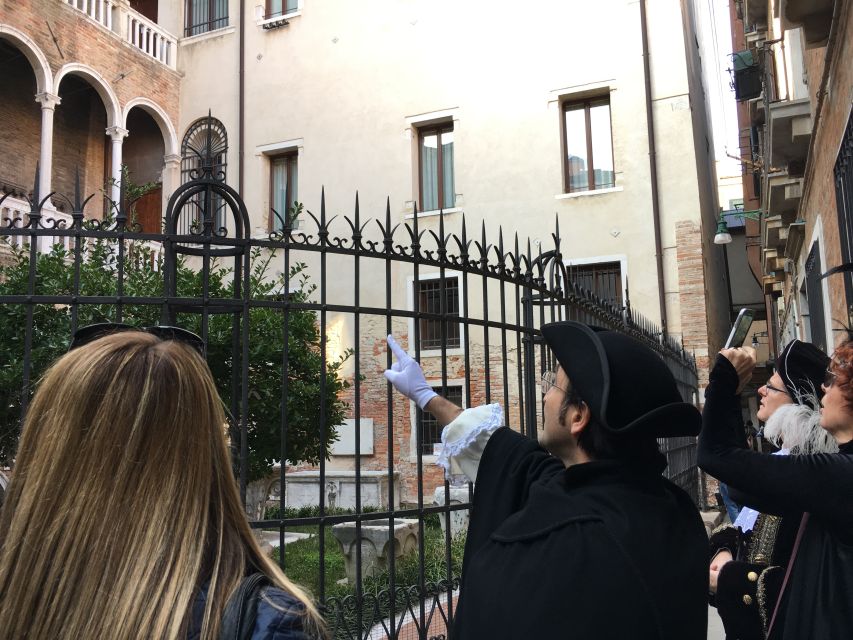
Campo Santo Stefano is one of those spots that feels like a natural pause in Venice. It’s also an ideal place to talk about the city’s social rhythm, because open squares help your ears work better than narrow calle do.
This stop also helps you connect the Casanova narrative to Venice’s entertainment spaces. You’ll hear about the Ridotto, described as the first casino in Venice, and how Casanova would meet Venetian aristocracy there. Even if you’ve heard the name before, this kind of guide-led explanation tends to make it feel more real. You get a sense of the setting and why it mattered to Venice’s upper social layers.
You’ll also hear about courtesans and how they shaped the city’s energy during Carnival and beyond. This matters because it broadens Casanova from a single character into a cultural ecosystem. Venice in this period wasn’t only about theatrical costume. It was about relationships, introductions, and the social scenes where people met.
If you’re the type who likes your history with personality, this is where the tour usually pays off. You get story, place, and context in one chunk.
Following Casanova through San Samuele and Giorgio Baffo’s circle
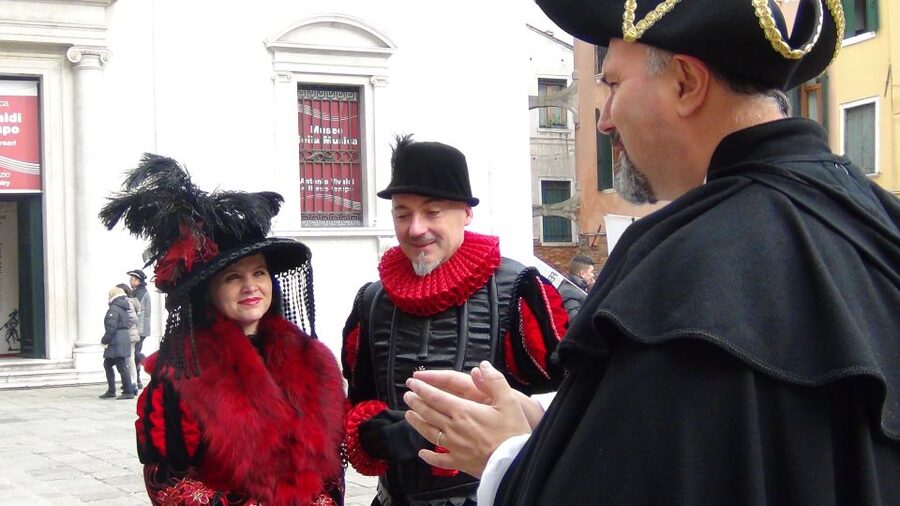
One of the most interesting parts of the experience is that the tour follows Casanova back to his roots. Casanova was born in Venice, and the walk ties to his upbringing in the San Samuele area. You’ll walk through narrow calle that pass areas connected to his home.
The tour also connects Casanova to Giorgio Baffo, the poet who introduced him to worldly pleasures. This is a smart detail because it helps explain why Casanova’s name belongs not only to romance, but to a wider network of arts, wit, and social gateways. You’re not just getting a scandal version of history. You’re getting a social map.
As you move through these streets, think of it as stepping into a Venice where identity was negotiated. That links back to the mask theme: when Carnival masks hid you, the real skill was understanding who to talk to, where to go, and how to enter social circles. Casanova’s story becomes a lens for seeing why Carnival and city life worked the way they did.
Also, the tour includes a focus on the kinds of celebrations that shaped the season. You’ll hear about elegant costumes and luxurious outfits tied to people attending grand balls in private palaces. Even if you never plan to attend a private palace event yourself, it helps you understand what the costumes were for and why they signaled status.
End at Le Café Venezia: warm drink, Carnival frittelle, and an easy finish near St Mark’s
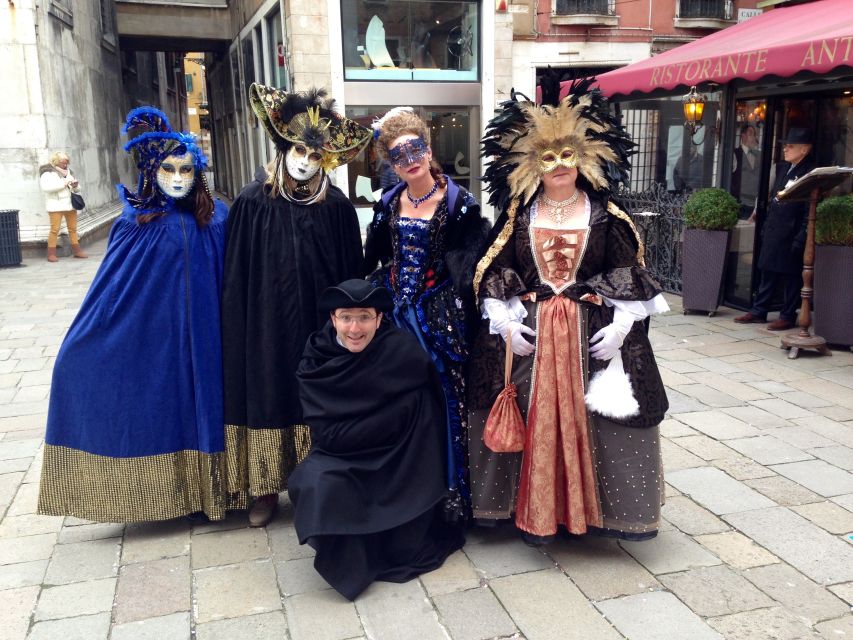
The tour wraps at Le Café Venezia, about a 10-minute walk from St Mark’s Square. That ending is practical. It keeps you close enough to continue exploring on your own after the tour, while still giving you a true rest stop instead of ending in the middle of nowhere.
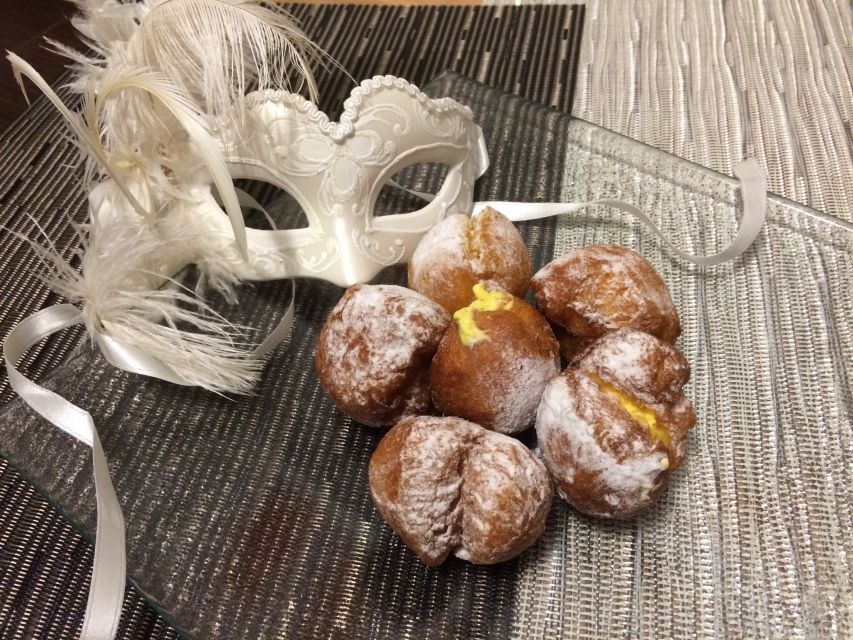
You’ll be offered a hot cappuccino and a typical Venetian Carnival cake called frittelle. This is the kind of small inclusion that boosts the overall value. Venice walking can wear you down fast, and the chance to warm up with something seasonal makes the final stretch feel more complete.
I also like that your guide typically does not just vanish at the end. Many guides on this type of tour are happy to keep chatting in the café setting, and that informality can help you turn the story into better next steps for your day.
Price and value: $88, and what you actually get
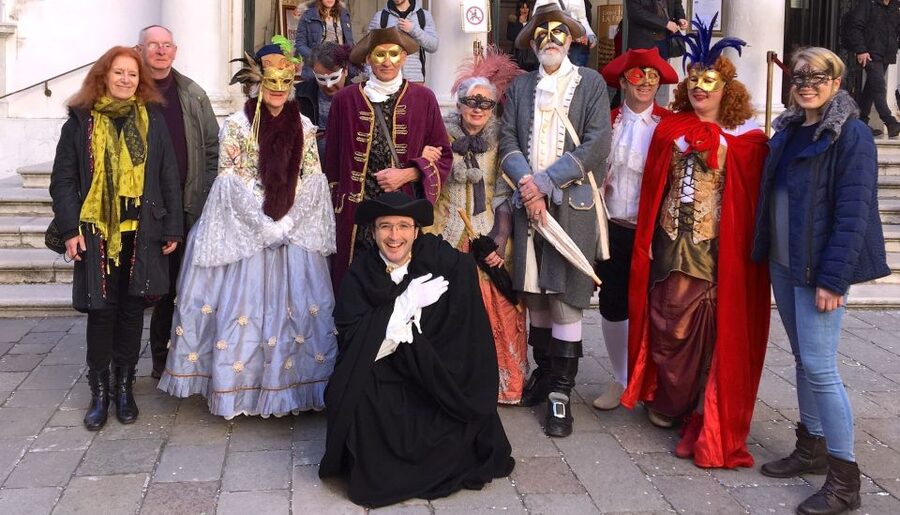
At $88 per person for about a 2-hour experience, the best way to judge value is by what’s included and what you’re avoiding.
You’re paying for:
- An English-speaking guide dressed in Carnival costume
- A guided walk centered on Casanova, Venice Carnival traditions, and mask-making
- A hot cappuccino plus frittelle at the end
You’re also told there’s skip-the-ticket-line listed in the activity description. For a walking tour, that wording can be aimed at any official entry moments that might be part of the experience. The key practical point for you: you should plan as if you’re walking the city, but that the tour may include a smoother rhythm than you’d get alone.
Compared with Venice museum tickets alone, $88 is a reasonable price for a guide-led evening of story, place, and a food stop. The main thing to check in your decision is fit. If you love Carnival and want a themed route tied to Casanova’s world, this is likely a strong value. If you only want basic photos of masks without the background, you might feel it’s priced for more than sightseeing.
Comfort, pacing, and the main things to watch on Carnival days
This is a walking experience. You’ll be moving through narrow streets, and that affects comfort.
Here’s what I’d plan for:
- Come with the expectation of lots of street time, not lots of sitting
- If it’s rainy, expect umbrella noise and colder temps, especially in tight lanes
- Keep an eye on the group so you do not drift away, since one of the common issues mentioned is that people wander off
Group size can also change your comfort. A larger group means more voices trying to find the guide, and less ability for your guide to tailor explanations to you. One review noted trouble hearing in rainy conditions with umbrellas. That doesn’t mean the tour is bad, it means you should dress smart and accept that street acoustics can be rough.
One more practical note: the tour ends at a café near St Mark’s Square, but with any walking tour, it helps to stay with your guide at the close so you know exactly where you are.
Who should book this tour, and who should skip it
I’d book this if:
- You’re excited by Venice Carnival beyond masks on shop windows
- You enjoy themed walking tours that connect a character to real streets
- You want practical story details like how masks are made and what identity meant in Carnival
I’d think twice if:
- You need wheelchair access, since it’s not suitable for wheelchair users
- You prefer fully indoor experiences or minimal standing
- You’re hoping for a quiet, low-energy tour. This is more performance and storytelling than a museum shuffle.
If you like history with attitude, this is right up your alley. Casanova brings spice, and Carnival brings the stage.
Should you book Secrets of Venice Carnival and Life of Casanova Tour?
If your goal is to see Venice Carnival with context, this is an easy yes. The tour combines Casanova storytelling, a mask tradition focus, costume detail, and a warm finish with cappuccino and frittelle. Starting at Teatro la Fenice and ending near St Mark’s also makes it practical for planning the rest of your day.
My only reason to hesitate is comfort in less-than-perfect weather and crowd conditions. If you dress for cold or rain and stay close to the group, you’ll likely enjoy the experience a lot.
FAQ
How much does the tour cost?
The price is $88 per person.
Where do I meet the guide?
Meet at Campo della Fenice in front of Teatro la Fenice. Look for the guide holding a sign with the tour name.
How long is the tour?
The duration is about 2 hours.
What do I get at the end of the tour?
At the end, you stop at Le Café Venezia for a hot cappuccino and a typical Venetian Carnival cake called frittelle.
Is the tour in English?
Yes, the guide speaks English.
Can I come in a Carnival costume or mask?
Yes. You are welcome to come in Carnival costume, or wear a cape with a mask, which is great for photos.
Is the tour wheelchair accessible?
No, it is not suitable for wheelchair users.
Is oversize luggage allowed?
No, oversize luggage is not allowed.
Lately added around Venice

Hidden Gems & Backstreet Tours, compared.
Venice Private Gondola Ride: Explore Hidden Canals and Sights
Read our review →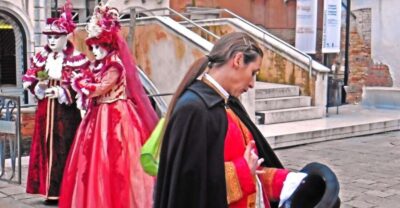

Venice 3,5 hrs tour: Doge’s Palace, St Mark’s and Hidden Gems
Read our review →
Private Secret Venice Tour; Rialto Market, San Polo & Food and Wine tasting
Read our review →Browse the lists this tour appears in