
Reviewed · HIDDEN GEMS & BACKSTREET TOURS
Self Guided Tour of Venice’s Best Kept Secrets
Venice feels like a choose-your-own-adventure. What makes this route work is the app-led navigation plus offline access, so you can move at your pace through big sights and lesser-seen corners. I like the focus on major landmarks like St Mark’s, but I also like the small turns that help you feel like you found your own Venice. One drawback to plan for: you are relying on your phone, and if audio or navigation doesn’t behave, the first stops can feel a bit harder to follow.
You start at St Mark’s Basilica at Piazza San Marco and loop back to the same spot after about 3 hours 30 minutes of walking. It’s private in the sense that it’s just your group using the app, not a live guide steering you. If you want the best experience, you’ll need internet, a charged smartphone, and headphones, unless you’ve pre-downloaded the tour for offline use.
In This Review
- Key things to know before you go
- St Mark’s Basilica to Doge’s Palace, the smart way to start
- St Mark’s Basilica mosaics and the bronze horses viewpoint
- Doge’s Palace Gothic facade, right beside the basilica
- Campo Santo Stefano, open space in a city of tight turns
- Palazzo Contarini del Bovolo, the spiral staircase you will talk about later
- Campo Santa Maria Formosa, a lively square with real momentum
- Rialto Bridge and San Polo, markets, views, and street-level Venice
- Frari and San Rocco, Gothic church to Tintoretto art
- Campo Santa Margherita, the café-and-market pause
- San Giorgio Maggiore and San Michele, two islands that change the mood
- Isola San Giorgio Maggiore, Palladio’s calm and the skyline view
- Isola San Michele, the cemetery island with Stravinsky and Pound
- App reality check: offline access, internet needs, and how to avoid getting stuck
- Price and value at about $3.58 for a 3.5-hour Venice route
- Who this self-guided route fits best
- Should you book this Venice Best Kept Secrets tour?
- FAQ
- How long is the self-guided Venice tour?
- Where does the tour start?
- Is there a physical guide with you?
- Do I need internet on the day?
- Are there admission fees included for the stops?
- Is the ticket mobile or printed?
- Can I cancel and get a full refund?
Key things to know before you go
- A low-cost route built around an app: self-guided, no paper map needed, mobile ticket included.
- Big-hits landmarks up front: St Mark’s Basilica and Doge’s Palace are early anchor points.
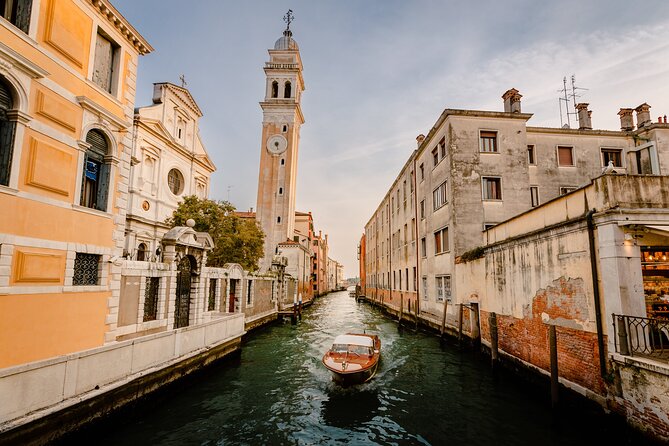
- Under-the-radar architecture stops: Palazzo Contarini del Bovolo and Scuola Grande di San Rocco add variety.
- Squares that feel local: Campo Santo Stefano, Campo Santa Maria Formosa, and Campo Santa Margherita break up the museum-mode crowds.
- Lagoon islands included: San Giorgio Maggiore (Palladio) and San Michele (cemetery island) stretch the day beyond the center.
Other walks through the quieter calli:

St Mark’s Basilica to Doge’s Palace, the smart way to start
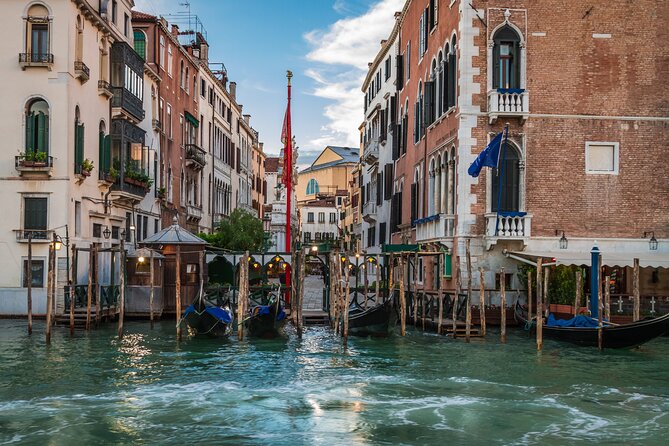
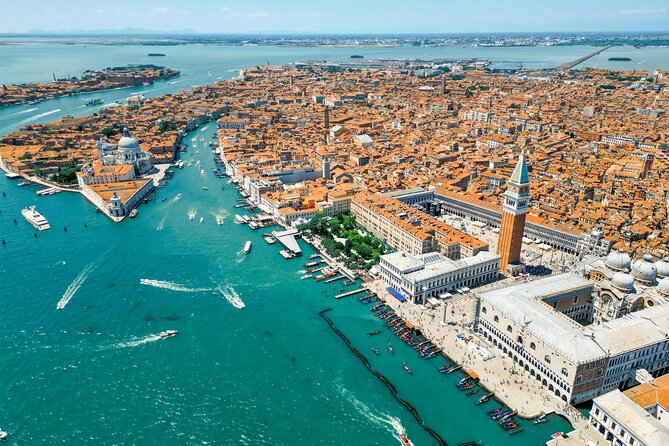
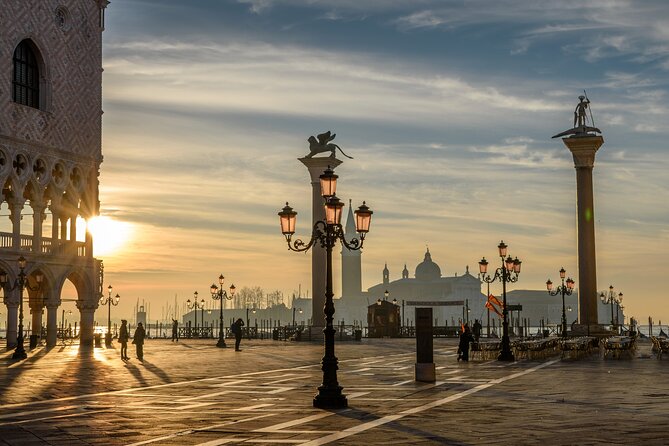
Starting at Piazza San Marco is a good move, because this area gives you instant context for what you’ll see later. Your app route begins right at St Mark’s Basilica, so you’re placed where the city’s power and wealth still show up in stone, metal, and gold-toned mosaics.
St Mark’s is also an energy test. It is famous, yes, but it’s famous for a reason. If you arrive early enough to beat some of the heaviest crush, you’ll get more time to actually look at the details the app points out. And because it’s self-guided, you can pause as long as you want without feeling rushed.
Then you move to Doge’s Palace, which sits right by St Mark’s. The key idea here is contrast. You go from Byzantine-style visual storytelling to Venetian Gothic elegance, all in the same morning without changing neighborhoods.
A practical note: because you’re using your phone for navigation, keep it ready. In Venice, that means charged battery and headphones in your pocket. If your phone is low, you’ll waste time searching for power instead of enjoying the walk.
St Mark’s Basilica mosaics and the bronze horses viewpoint
This stop is built around the visual wow factor. Your route has you at St Mark’s Basilica to take in the Byzantine architecture and intricate mosaics that made the Republic feel larger than life. Even if you’ve seen photos before, seeing it in person is different, mostly because the details are layered and the lighting changes as you shift position.
Then the app nudges you to the terrace area and the bronze horses. This is one of those Venice moments where the view does half the work. You’re looking out over Piazza San Marco, and suddenly the geography of Venice feels clear: the city’s main stage, the square’s proportions, and how the landmark cluster wraps together.
What I like about this pairing is that it breaks the stop into two modes. First you look up and soak in the facade and mosaics. Then you look outward and read the city from a vantage point.
Doge’s Palace Gothic facade, right beside the basilica
Doge’s Palace is listed as your next must-see, and it makes sense because it’s both close and conceptually connected. The palace sits in that Venetian Gothic style with ornate marble tracery and sculptural decoration that feels like it was meant to be stared at from different angles.
What you should aim for is not just a quick pass. The app route helps you focus on why the building looks the way it does, instead of treating it like another landmark photo stop. In practice, that means you can slow down to track the facade patterns, then step back to get your bearings.
Because this is self-guided, you choose how long you linger. That’s a plus if you like architecture. It’s a caution if you’re the type who wants a human guide to explain everything on the spot.
More visits at your own pace:
- Venice: Grand Canal Gondola Ride with App Commentary
★ 4.1 · 23,020 reviews - Venice: La Fenice Opera House Entry Ticket with Audio Guide
★ 4.6 · 11,742 reviews - Venice: St. Mark’s Basilica with Audio and Campanile Options
★ 4.5 · 2,093 reviews - Venice: St. Mark’s Basilica Ticket with Audio Guide
★ 3.4 · 1,645 reviews - Venice: St. Mark’s Basilica Skip-the-Line Ticket & Audio App
★ 3.9 · 1,183 reviews
Campo Santo Stefano, open space in a city of tight turns
Once you leave the biggest sights, the route shifts to squares that help your brain reset. Campo Santo Stefano is a good example. It’s described as a charming square with open space and historic buildings, and it’s a classic Venice decompression zone.
The itinerary gives you about 40 minutes here with admission listed as free for this stop. That length matters. In Venice, the streets can feel twisty and relentless. A square stop gives you room to breathe, spot photo angles, and then start your next walk segment with less mental overload.
Look around like you live here for a minute. Notice how the buildings frame the empty space, and how local life tends to gather where the stone floor opens up.
Palazzo Contarini del Bovolo, the spiral staircase you will talk about later
Then comes a stop you’ll be glad is on the route: Palazzo Contarini del Bovolo, famous for its spiral staircase. If you like architectural quirks, this is the kind of detail that turns a city walk into a story.
The tour description highlights a blend of Renaissance and Gothic styles, which is part of what makes the staircase special. Even without a long explanation, you can see the style shift in the way the staircase structure reads against the surrounding building.
This is also a great stop for photos, but I’d treat it more like an observation point than a checklist. Spend time going slow, looking for how the spiral shape works from below and how it changes as you ascend.
Campo Santa Maria Formosa, a lively square with real momentum
Next is Campo Santa Maria Formosa, another open-air square stop, listed at about 20 minutes and marked free. This is the Venice “in between” stop, the one that keeps you moving through the day without pulling you away from the walking rhythm.
What makes it useful is the atmosphere. The tour description frames it as a blend of historic architecture and lively activity. In other words, you get to experience Venice as something more than a museum city.
If you’re traveling with someone who gets tired of constant monument stops, this square is a good compromise. It’s interesting enough to look at, but it also lets you sit, people-watch, and regroup.
Rialto Bridge and San Polo, markets, views, and street-level Venice
After the squares, your route hits one of Venice’s most recognizable icons: Ponte di Rialto. It’s described as spanning the Grand Canal with elegant arches, bustling market stalls, and strong views of Venice life and architecture.
You get about 25 minutes here, again marked free. That’s enough time to walk in the right direction for the best angles and still feel like you earned your photos. What you should avoid is getting stuck in the tight crowd zones with no plan. With a self-guided tour, you’re responsible for choosing your view positions.
Then you continue into San Polo, a historic neighborhood known for labyrinth streets, vibrant markets, and landmarks around the Rialto area. The itinerary allocates about 30 minutes here. The value of this section is that it’s not only about one structure. It’s about the feel of the neighborhood as you wind through it.
Think of this part as your “slow wandering” segment. Let the streets carry you. If the app changes your turning points midstream, follow it, but don’t treat it like a race. Venice rewards walking without forcing it.
Frari and San Rocco, Gothic church to Tintoretto art
Now the tour leans into art and architecture inside major buildings.
First is Basilica S. Maria Gloriosa dei Frari, described as a magnificent Gothic church with imposing architecture, and it lists big names connected to the art there, including Titian, Bellini, and Donatello. The point of this stop is to connect Venice’s visual style to the artists whose work shaped what people imagine when they think of Venetian painting and sculpture.
Next you head to Scuola Grande di San Rocco, listed as a majestic Renaissance building with intricate marble and stunning artworks by Tintoretto. The tour description frames it as a cultural centerpiece and that’s exactly how it feels when you’re inside and you realize these buildings served both artistic and civic roles.
Two practical considerations here:
- You will want your phone audio on if you can, because the app is designed to provide context and navigation guidance.
- This part of the day can be tiring, since churches and enclosed interiors often mean standing and slow walking. Plan for short breaks rather than expecting constant motion.
Also, the tour information says there are no entry fees for museums or tourist attractions, so you’re not paying extra at each stop. Still, double-check what you personally want to enter, because some areas can have their own rules depending on what’s open that day.
Campo Santa Margherita, the café-and-market pause
After the indoor art stops, the route gives you Campo Santa Margherita for about 20 minutes, marked free. This is a great tonal shift. Instead of Gothic stone and painted ceilings, you get everyday Venice: cafes, markets, and a more relaxed local rhythm.
This stop works well for two reasons. First, it gives you time to sit. Second, it helps you remember that Venice is lived in, not only visited.
If you’re hungry, this is a sensible moment to look for something simple nearby. Don’t overplan lunch here, because you might end up spending your best café time trying to find the “perfect” place instead of using the square as a recharge.
San Giorgio Maggiore and San Michele, two islands that change the mood
The last phase of the tour moves into Venice’s lagoon world, with two island stops.
Isola San Giorgio Maggiore, Palladio’s calm and the skyline view
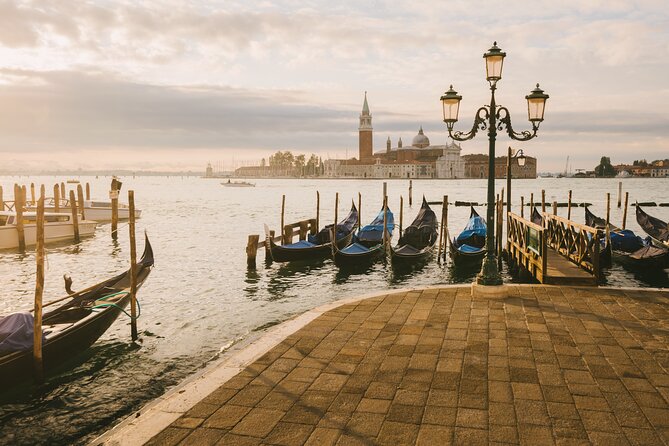
San Giorgio Maggiore is described as a Renaissance masterpiece on an island, designed by Andrea Palladio. The tour mentions a serene interior and breathtaking views of Venice’s skyline and waters.
The reason this stop is valuable in a self-guided route is simple: it resets the day. By the time you reach the lagoon, you’ve already seen the city’s most famous grandeur. Now you get a quieter, more architectural kind of beauty.
Plan to take your time at the viewing moments. The value here is how the city looks from the outside in, not just how the island looks up close.
Isola San Michele, the cemetery island with Stravinsky and Pound
Then you go to Isola San Michele, the historic cemetery island. The description says it has a peaceful ambiance, an ancient monastery, and resting places of notable figures like Igor Stravinsky and Ezra Pound.
This is not a sightseeing stop in the usual sense. It’s more reflective and more still. If you’ve been mentally sprinting through Venice, this section slows you down. It’s also a helpful contrast to the more public energy of San Marco and Rialto.
Because this is included in the tour timeline (about 45 minutes), treat it like part of the main route, not an optional detour. It’s one of the places that makes this walk feel different from the typical “big sights only” Venice loop.
App reality check: offline access, internet needs, and how to avoid getting stuck
This tour is built on the app. That’s the main tradeoff.
The good part is that it offers historical insights, navigation help, and audio, plus you can pre-download for offline use. That’s perfect for Venice, where data can be spotty.
The tricky part is that you’ll want a phone and headphones you trust. The tour info also says internet connection is needed for the best experience. So if you want your route to run smoothly, do this:
- Download the app and the tour content ahead of time.
- Make sure your phone is charged before you leave St Mark’s.
- Bring headphones, because the tour relies on audio.
One more caution pulled from real-world experience: there can be friction if you try to activate optional audio that costs extra. I suggest you don’t treat audio like a last-minute surprise. If the app is behaving badly, you can still walk the route and use the on-screen guidance, but you may lose some of the context.
There’s also a practical tip from a reported snag: pack lighter than you think. One person said a backpack restriction wasn’t clearly mentioned until they were already in line, and it caused hassle. Venice buildings often have their own bag rules at entrances, so it’s safer to travel with a small day bag.
Price and value at about $3.58 for a 3.5-hour Venice route
At around $3.58 per person, you’re paying for structure and context, not a staff-led guided experience. That’s the value math.
You get:
- A full self-guided loop around major sights and specific quieter stops.
- Historical insights and audio content through the app.
- Mobile ticket delivery.
- Offline capability if you prepare.
What you don’t get:
- A live guide to solve problems on the spot.
- A paper map.
- The kind of flexible conversation you’d have with a person steering you.
So the question is not whether this is cheap. It is. The question is whether you’ll use the app well. If your phone battery holds up and your offline download works, this route is a bargain. If you hate phone navigation, you may feel stressed when the city’s streets start looking identical.
Who this self-guided route fits best
This route is ideal if you like:
- Architecture and art detail, not just quick sightseeing photos.
- A structured walking plan with room to set your own pace.
- Learning from short, contextual explanations instead of a long lecture.
You might want a different format if:
- You prefer a live guide because you want Q and A.
- You hate relying on mobile connectivity.
- You’re traveling with a large bag and you suspect entry lines may be strict.
If you do go with this tour, keep your expectations practical. Use the app to guide you, but still let Venice slow you down.
Should you book this Venice Best Kept Secrets tour?
If you want a low-cost way to cover St Mark’s, Doge’s Palace, Rialto, and two lagoon islands, this is a strong option. The route mixes big-name landmarks with stops like the spiral staircase at Palazzo Contarini del Bovolo and the art-focused Scuola Grande di San Rocco. That combo is why it feels like more than the same loop you’ve seen a hundred times.
Book it if you’ll prepare your phone in advance and you’re comfortable walking with navigation support from an app. Skip it if you need a human guide to keep you calm when tech fails, because the experience depends on your device working well on the day.
FAQ
How long is the self-guided Venice tour?
The tour is about 3 hours 30 minutes.
Where does the tour start?
It starts at Saint Mark’s Basilica, Piazza San Marco, 328, 30124 Venezia VE, Italy.
Is there a physical guide with you?
No. This is an app-based self-guided tour, with no physical guide on-site.
Do I need internet on the day?
Connectivity is required for the best experience, but you can download the app in advance for offline access.
Are there admission fees included for the stops?
The tour info says there are no entry fees to any museums or tourist attractions.
Is the ticket mobile or printed?
It uses a mobile ticket.
Can I cancel and get a full refund?
Yes. You can cancel up to 24 hours in advance for a full refund.
Lately added around Venice




Hidden Gems & Backstreet Tours, compared.

Venice Private Gondola Ride: Explore Hidden Canals and Sights
Read our review →

Venice 3,5 hrs tour: Doge’s Palace, St Mark’s and Hidden Gems
Read our review →
Private Secret Venice Tour; Rialto Market, San Polo & Food and Wine tasting
Read our review →Browse the lists this tour appears in