Reviewed · CITY TOURS
Venice: 1.5-Hour Wandering Around the City
Venice makes sense on a short walk. In just 1.5 hours, this guided stroll threads together the major landmarks that shaped the Serenissima Republic, with just enough anecdotes to make the stones feel human. You’ll move between squares and iconic corners without needing a day-long map marathon.
What I like most is the way the tour turns St. Mark’s Square from a pretty postcard into a clear story of power. I also like how you walk the Mercerie, the shopping spine between Rialto and San Marco, so you feel how locals actually move through this city.
One thing to consider: it’s moderate walking and the pace is efficient. If you prefer long pauses at one site, or you’re expecting a museum-style deep dive at every stop, this short format might feel a bit fast, and one guide example I saw named Silvana sounded more information-heavy than high-energy.
In This Review
- Key things you’ll notice on this 1.5-hour Venice walk
- St. Mark’s Square: where you start to read Venice
- Santa Maria Formosa Square: a quieter square with strong personality
- Campo SS. Giovanni e Paolo, the Doge’s Pantheon area
- Marco Polo’s House and Malibran Theatre: stories where time overlaps
- Mercerie and the Rialto connection: the walk that feels like local life
- Optional glass furnace stop: craft Venice, not just monuments
- Price and time: is $41 for 1.5 hours good value?
- Meeting at TURIVE near St. Mark’s: how to start without stress
- Guide style can vary, and that affects your experience
- Who should book this 1.5-hour Venice wandering tour
- Should you book this 1.5-hour Venice tour?
- FAQ
- How long is the Venice walking tour?
- What does the tour include?
- Where do I meet the guide?
- Which languages are available?
- Is there a lot of walking?
- What’s the pricing and cancellation approach?
Key things you’ll notice on this 1.5-hour Venice walk
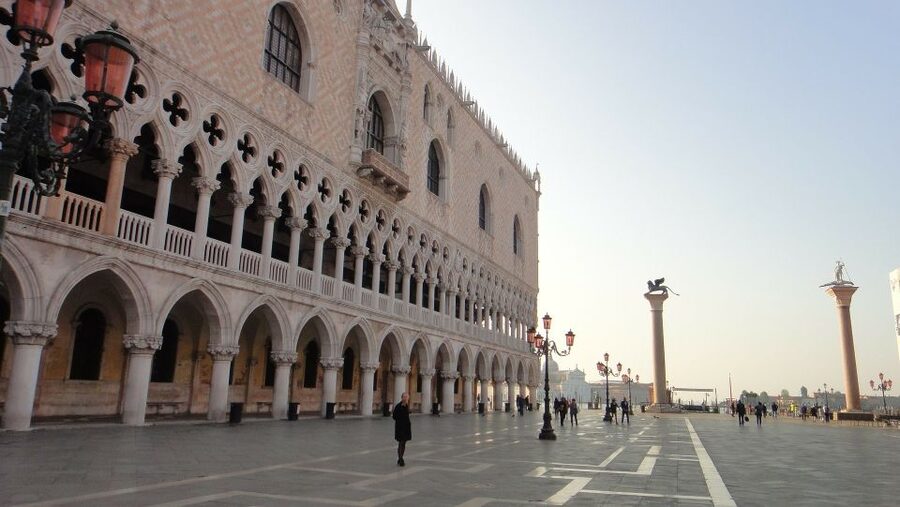
- St. Mark’s Square landmarks explained so you know what you’re looking at, including Basilica San Marco and the Doge’s political setting
- Santa Maria Formosa Square stories that give personality to a space many people pass through
- Campo SS. Giovanni e Paolo as the Doge’s Pantheon area, with references to famous civic monuments
- Marco Polo’s House and Malibran Theatre together, where old legends and more recent Venice life overlap
- Mercerie as the connector street, practical for orientation and for understanding the city’s shopping flow
- An optional glass furnace stop, for craft-focused Venice art at the end
A few more Venice outings worth comparing

St. Mark’s Square: where you start to read Venice
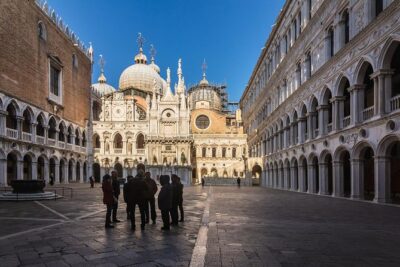
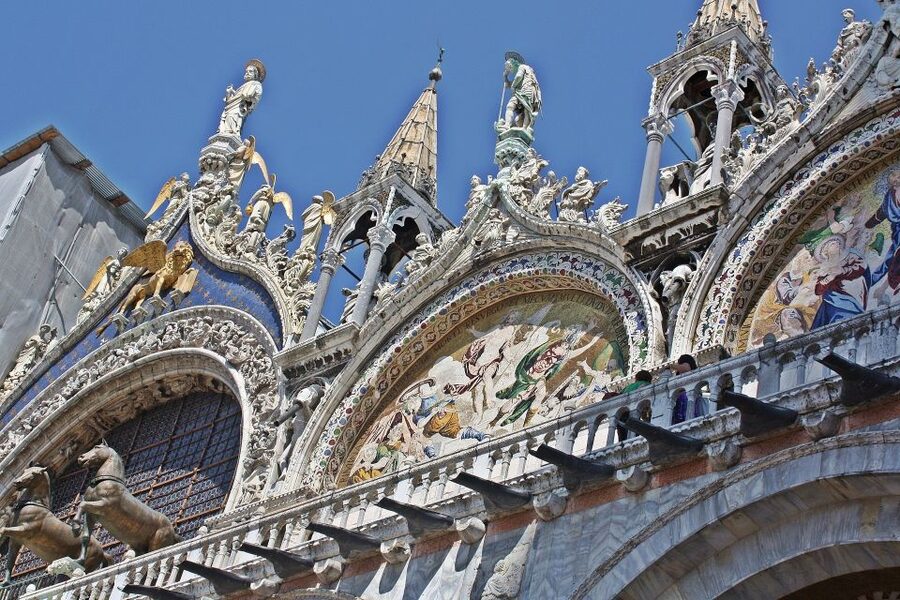
St. Mark’s Square is the kind of place where your first instinct is to look up, then around, then back at the big buildings again. This tour starts here for a reason. You get a quick grounding in the origins and history of the square, then you’re shown the main monuments as a connected set.
Expect to spend time focusing on the Basilica San Marco, the Palazzo Ducale, the Bell Tower, the Clock Tower, and the Procuratie. The value is not only seeing them, but understanding why they were important to Venice as a political and ceremonial center. Once you know that, the architecture stops being decoration and starts being evidence.
A practical tip: when you’re in the square, take a few seconds to look for sightlines, not just details. You’ll notice how spaces feel designed to funnel movement and attention. That mindset helps you enjoy the rest of the walk because you’re already learning how Venice “routes” people through its most symbolic zones.
Santa Maria Formosa Square: a quieter square with strong personality
After the big showstopper, Santa Maria Formosa Square gives you a different flavor. It’s still central, but it feels more intimate, and that makes the stories easier to remember. The guide share history and anecdotes tied specifically to this square, so you’re not just ticking off another stop.
What I like about this sequence is contrast. St. Mark’s can overload your senses with scale and crowds. Santa Maria Formosa helps you catch your breath while still teaching you how Venice developed neighborhood-level centers, not just ceremonial monuments.
When you’re standing there, pay attention to how the square sits within the surrounding lanes. Venice squares often act like tiny stages that connect streets like a network. If you’ve been wandering without guidance, the city can feel random. A stop like this helps your brain build structure fast.
Campo SS. Giovanni e Paolo, the Doge’s Pantheon area
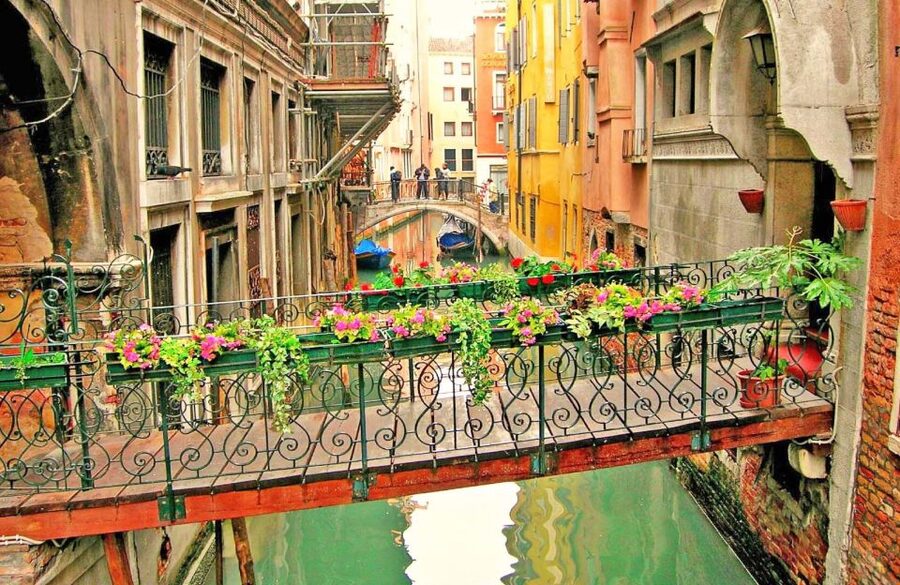
Next comes Campo SS. Giovanni e Paolo, described as the Doge’s Pantheon. That nickname matters because it frames what you’re looking at. This isn’t a vague “nice square” stop, it’s tied to Venetian leadership and civic identity.
The tour includes landmarks tied to this area’s meaning, including the Great School of Charity and the Captains of Fortune. These names are more than labels. They give you a sense of how Venice celebrated, trained, funded, and remembered people who shaped the republic.
The practical way to enjoy this stop is to keep asking yourself one question: who was this for? Great School of Charity points to institutions that supported community life. Captains of Fortune nods to leadership and service. Once you see the names this way, the square becomes a map of social values.
Also, this stop helps you understand Venice beyond the famous ducal bubble of St. Mark’s. You’re moving through a layer of the city where civic life and memory are written into public spaces.
The same hours, spent on the water instead:
- Venice: Doge’s Palace Reserved Entry Ticket
★ 4.6 · 42,716 reviews - Venice: Grand Canal Gondola Ride with App Commentary
★ 4.1 · 23,020 reviews - Venice: Grand Canal Gondola Experience with Live Commentary™
★ 4.2 · 16,504 reviews - Boat Trip: Glimpse of Murano, Torcello & Burano Islands
★ 4.3 · 15,699 reviews - Venice: La Fenice Opera House Entry Ticket with Audio Guide
★ 4.6 · 11,742 reviews
Marco Polo’s House and Malibran Theatre: stories where time overlaps
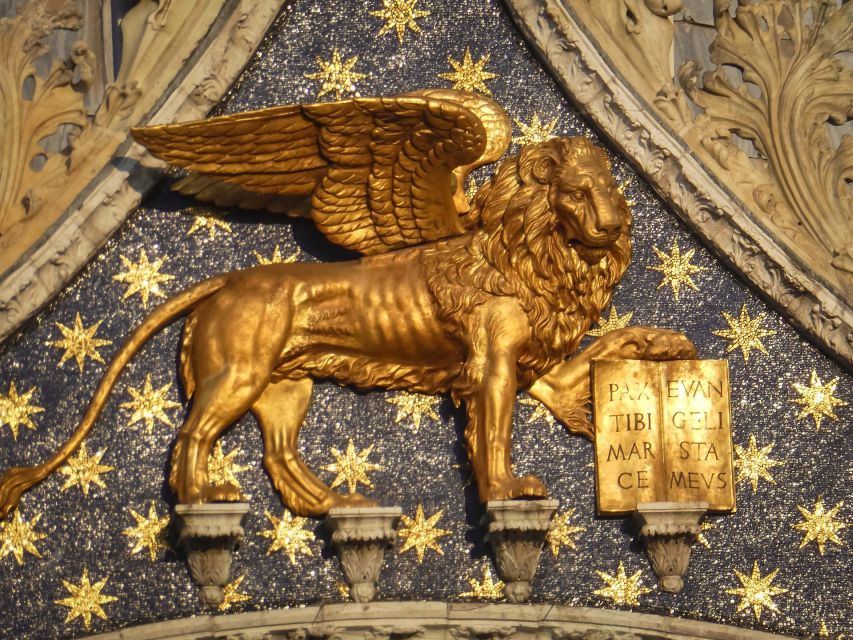
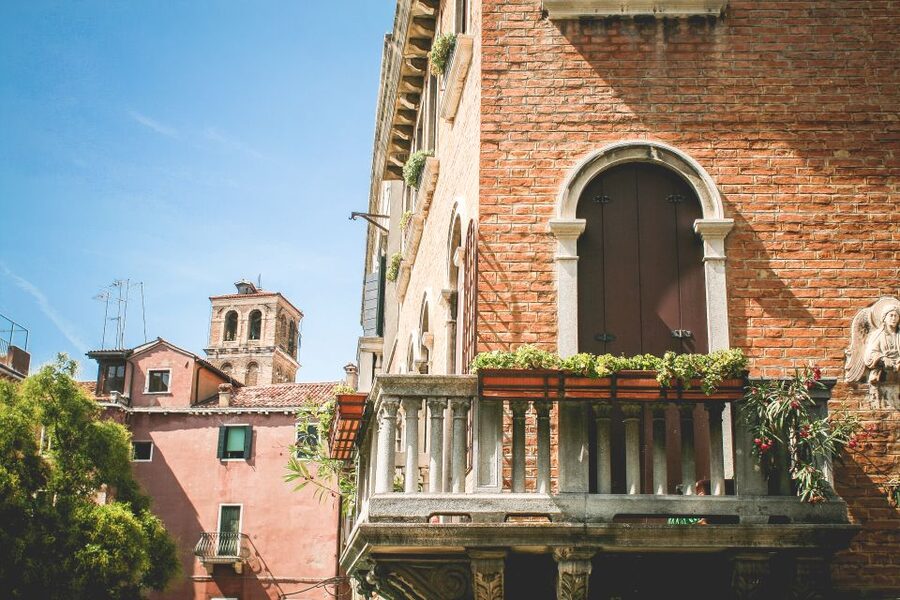
One reason this tour feels fun is that it doesn’t treat Venice as one era. You go from medieval and civic markers into corners where the legend of Marco Polo and the presence of the Malibran Theatre create a different rhythm.
You’ll see Marco Polo’s House and learn anecdotes that connect the past to what’s around you now. The tour also includes the Malibran Theatre, with stories that explain how past and more recent Venice life can sit next to each other without conflict.
This pairing works well because both stops are about narrative. Marco Polo’s name brings myth and long-distance imagination. A theatre brings culture you can sense right away just by looking at the setting. Even if you don’t go inside, the guide’s anecdotes help you picture how people used Venice not only for trade and politics, but for performance, identity, and public life.
A quick suggestion: if you’re taking photos, spend your time on angles that show context, not only facades. In Venice, the lanes, the buildings’ edges, and the way streets bend are part of the story.
Mercerie and the Rialto connection: the walk that feels like local life
After the major stops, the tour returns to San Marco via the Mercerie. This matters because the Mercerie isn’t just a street for shopping. It’s a key connection between Rialto and San Marco, and it’s described as the main street for city shopping.
I love this part because it turns your route into something useful. If you’ve ever felt lost in Venice, it usually comes from not understanding where people naturally go. Walking the Mercerie gives you that instinct. You start to feel the city’s flow, where one “anchor” leads to another.
Expect the guide to keep tying the walk to history, but the mood shifts too. The Mercerie area is practical for orientation and helpful for your next hours after the tour ends. You’ll finish with a stronger sense of how to wander on your own without going in circles.
Also, this section gives you a chance to spot details you might miss if you’re only staring at monuments. Look at storefront rhythms, doorways, and the way pedestrians move through narrower sections. It’s a small but real education in how Venice functions day to day.
Optional glass furnace stop: craft Venice, not just monuments
At the end, there’s an optional visit to a glass furnace. Venice glass is one of the city’s most recognizable arts, and this stop adds a hands-on type of appreciation, even if it’s brief.
The tour frames it as a touch of the Venetian greatest art. That phrasing is marketing, but the concept is solid: if you only focus on architecture, you miss another pillar of Venetian culture. Glassmaking is local creativity, skill, and tradition turned into something visible and repeatable.
If you enjoy watching how things are made, even from the outside or from a short look, this optional add-on can be the most memorable moment of the entire walk. If you’re not that interested in craft demos, you can likely treat it as optional and stick to the walk’s main historic route.
Either way, it’s a good final note. The walk ends where many first-timers feel most comfortable, around San Marco, but with one extra layer of Venetian identity in your head.
Price and time: is $41 for 1.5 hours good value?
$41 for a 1.5-hour walking tour is not cheap, but it’s not extreme for a guided route that covers multiple major points in one go. The real value isn’t that you see more buildings than you could alone. It’s that you get the connections between them.
You’re paying for a licensed guide, plus interpretation at a pace designed for first-timers. The tour hits St. Mark’s Square, Santa Maria Formosa Square, Campo SS. Giovanni e Paolo, Marco Polo’s House, Malibran Theatre, and then walks you through the Mercerie corridor. That’s a lot of named places packed into a short time window.
If you’re a traveler who wants to understand Venice quickly, this format works. It gives you context so your future independent wandering makes more sense. If you already know Venice well, or you prefer slow, unstructured exploring, you might feel the price is paying for guidance more than discovery.
For most people, though, this is a practical first step. It’s the kind of tour that can turn a day of aimless wandering into a day where you know what you’re looking at and why it matters.
Meeting at TURIVE near St. Mark’s: how to start without stress
You meet at Calle Larga de l’Ascension, in front of the TURIVE kiosk near St. Mark’s Square. Plan to arrive 15 minutes early. That timing matters in Venice, because getting yourself to the correct side of streets and alleys can take longer than your map expects.
Before you go, do one simple thing: wear comfortable shoes and assume you’ll be on uneven, old stone surfaces. The tour involves a moderate amount of walking, so your feet will decide how much you enjoy the landmarks.
You’ll also want to have your language preference ready. Live guides are available in German, English, Spanish, and French, so you can match the tour to your comfort level and get more out of the details.
Finally, keep expectations realistic. This is 1.5 hours, so the guide hits highlights and stories rather than lengthy stops. Think of it like a guided orientation that equips you for later.
Guide style can vary, and that affects your experience
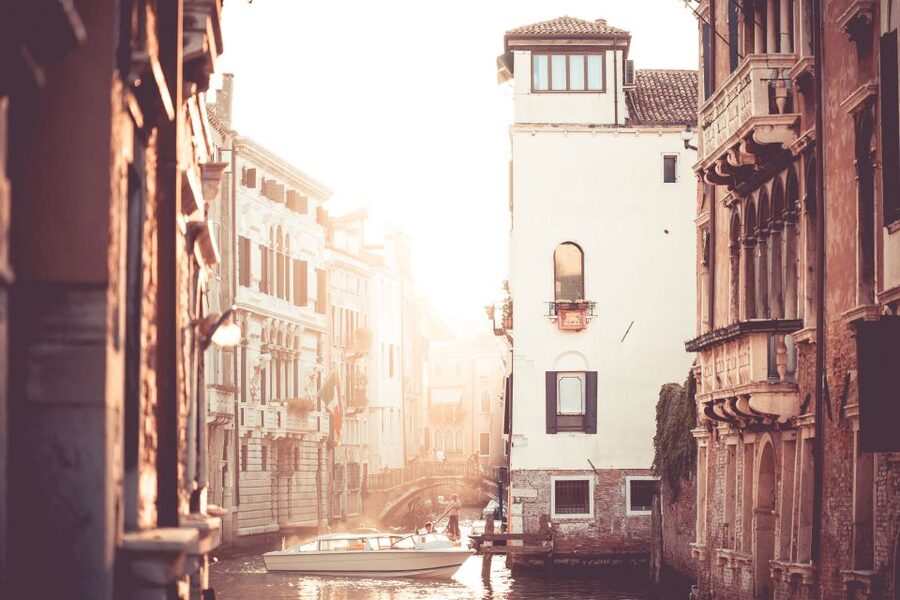
Live tours can be hit or miss depending on delivery. One example I saw named Silvana, and the note was that her tour leaned heavily on information even if the enthusiasm felt lower than you might hope. That’s not a guarantee for all guides, but it’s a useful reminder.
If you want a lively, high-energy storytelling style, you may prefer a time slot where you expect higher enthusiasm. If you mainly want facts, context, and names you can remember, a more straightforward delivery can still be a win.
Either way, the route is designed to give you clear takeaways. The main value comes from understanding what each place represents and how the walk connects them.
Who should book this 1.5-hour Venice wandering tour
This is a good match if you:
- want an efficient introduction to Venice’s top squares and landmarks
- prefer a guided narrative over self-guiding with lots of stops
- enjoy learning the meaning behind names like Doge’s Pantheon, Great School of Charity, and Captains of Fortune
- like the idea of adding a short optional craft visit to your day
You might skip it if you:
- need long time inside major sites
- dislike walking for 1.5 hours at a moderate pace
- want a tour focused on one neighborhood only, with lots of deep detail
Should you book this 1.5-hour Venice tour?
I’d book it if you’re trying to get oriented quickly and you want a guide to connect the dots between St. Mark’s Square, the Doge’s Pantheon area, Marco Polo’s legend, theatre life, and the Mercerie route toward Rialto. For $41, you’re buying clarity and momentum, not just a walk.
If your goal is to see everything slowly, you might find the pacing a little tight. But as a first Venice walking chapter, this one is a strong way to turn Venice from confusing streets into a story you can follow.
FAQ
How long is the Venice walking tour?
It lasts 1.5 hours.
What does the tour include?
It includes a walking tour and a licensed guide.
Where do I meet the guide?
Meet at Calle Larga de l’Ascension, in front of the TURIVE kiosk near St. Mark’s Square. Arrive 15 minutes early.
Which languages are available?
The live tour guide is available in German, English, Spanish, and French.
Is there a lot of walking?
Yes, there is a moderate amount of walking involved.
What’s the pricing and cancellation approach?
Adult pricing applies to all travelers, and free cancellation is available up to 24 hours in advance for a full refund. You can also reserve now and pay later to keep plans flexible.
Lately added around Venice



City Tours, compared.
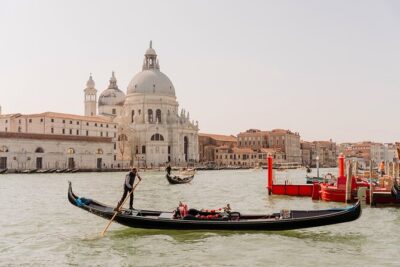
Venice In a Day: St Mark’s, Doges Palace Gondola Ride & City Tour
Read our review →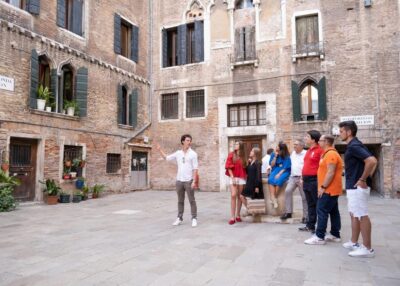
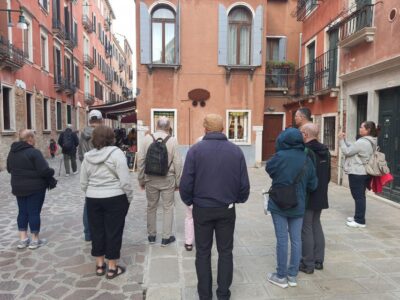
Walking Guided Tour of the City Must-See Sites
Read our review →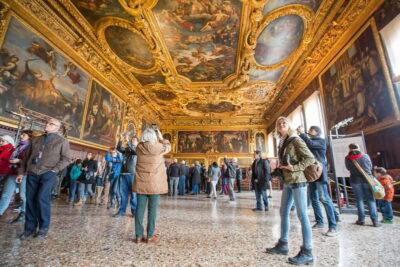
City Pass with Museums including Doge’s Palace
Read our review →