
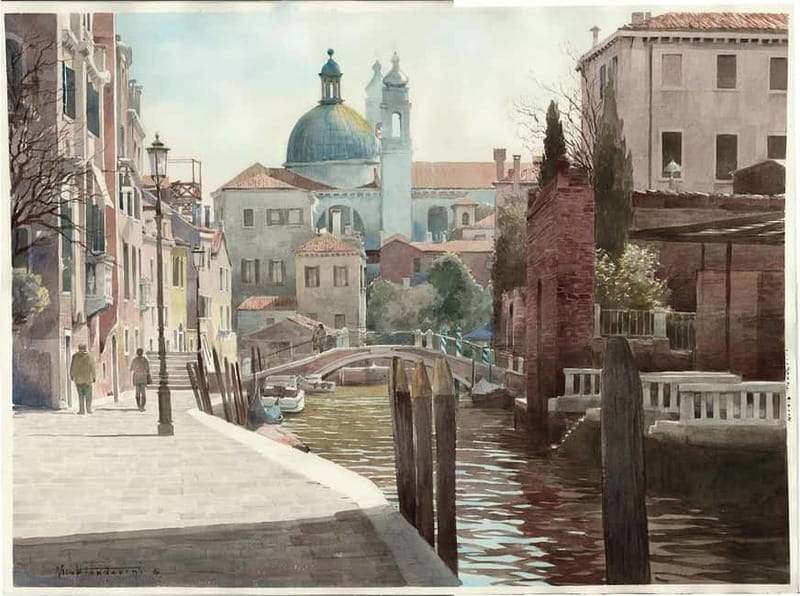
Reviewed · WORKSHOPS
Venice: Watercolor Workshop with the Art Circle Artists
Venice turns into paint fast here. This 90-minute workshop at Prison’s Palace teaches you how to capture iconic Venice scenes with watercolor techniques, not just copy a postcard.
I like how the class starts with a sketch you can actually build on, then moves into color with the teacher at your side. I also love the focus on light as color, including the tricks for water reflections and shadow details.
One heads-up: this experience is not fully accessible for wheelchairs or people with walking disabilities, and it takes place near old-stone Venice pathways.
In This Review
- Key highlights you will care about
- Entering Prison’s Palace, the start point you should not rush
- What happens in your 90 minutes: sketch, color, and real painting skills
- The sketch stage: how you get perspective without special talent
- Color and light: learning to treat light like the main ingredient
- Painting reflections and shadows: the Venetian details that sell the scene
- Where you paint in Venice, and what changes when weather turns
- Teacher styles you can expect, from Alvis to Nicholas Tenderini
- Group setup: shared class time, small pacing, and a focus on your work
- What you get for your $27: supplies, coaching, and a take-home piece
- What to bring so you feel comfortable and ready
- Who should book this watercolor workshop, and who should skip it
- Should you book this class?
- FAQ
- How long is the Venice watercolor workshop?
- Where do I meet for the class?
- Is any art equipment provided?
- What languages are offered?
- What should I bring with me?
- Is free cancellation available, and can I reserve without paying now?
- Is the workshop accessible for wheelchair users?
Key highlights you will care about
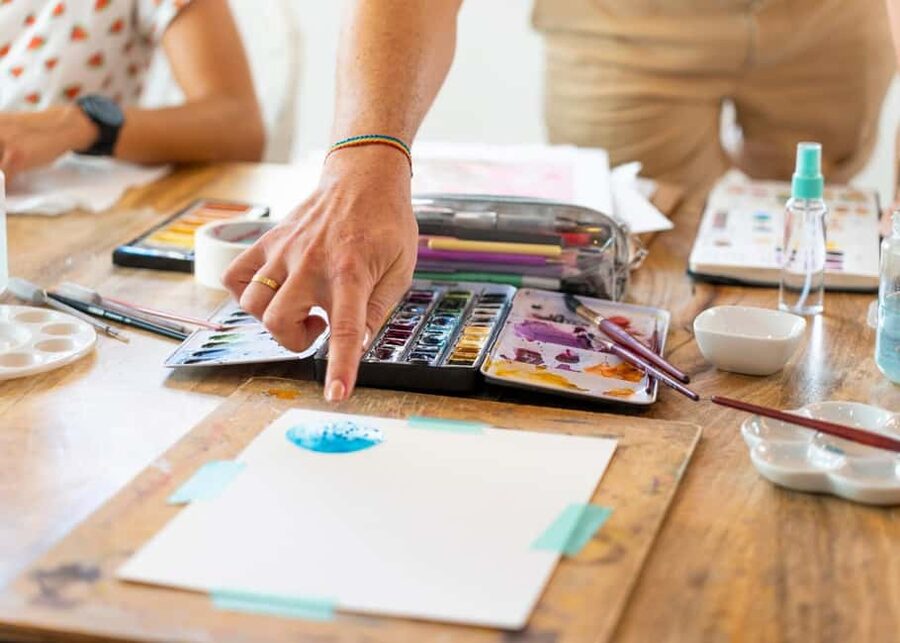
- A sketch-first plan that helps you place buildings and angles without panic
- Light-as-color lessons that make sky and water look believable
- Hands-on coaching for reflections, shading between clouds and sky, and light and shadow details
- All equipment included, so you can travel lighter and start sooner
- Beginner-friendly results, built for novices who still want something beautiful to take home
More Venetian benches for glass, paper and paint:


Entering Prison’s Palace, the start point you should not rush
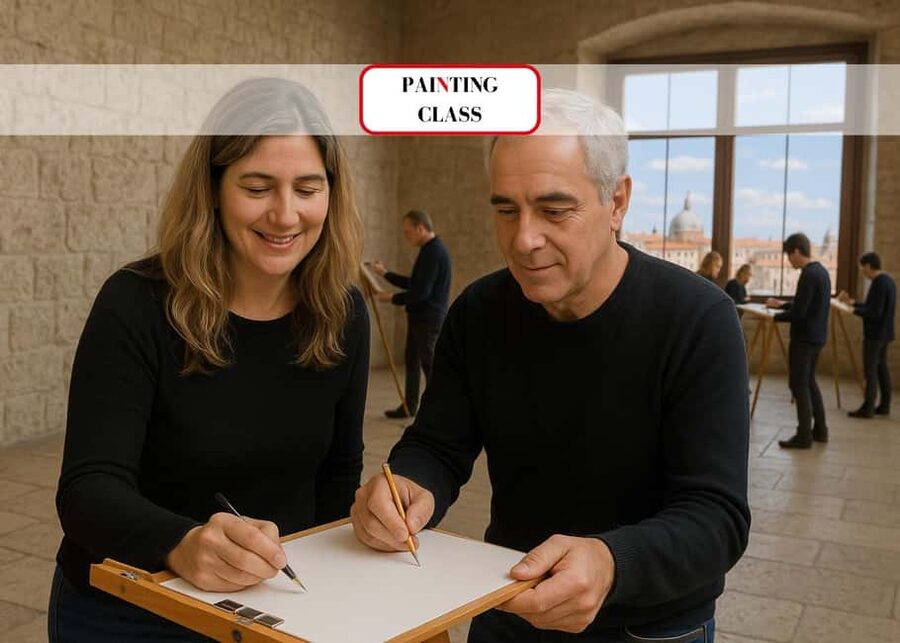
Meet at Prison’s Place, then head upstairs to the first floor. It’s close to St Mark’s Square, so you can pair it with a morning or afternoon of walking Venice, if your schedule allows.
The route is also simple to follow: cross the bridge on the right-hand side of the entrance of the Doge’s Palace. Arrive 10 minutes early so you can get settled, choose your spot, and start drawing before your time gets tight.
What happens in your 90 minutes: sketch, color, and real painting skills
This is not a “watch and hope” class. You are guided through a tight sequence, and you actively make choices with pencil and brush. The time limit matters, because it forces you to learn what actually moves the picture forward, instead of getting stuck on details that won’t matter at the end.
You begin with studying the sketch. You’ll work out the essentials, then the teacher helps you translate that into color. After that, you focus on watercolor technique, where the paper, water, and pigments all interact like a living system.
The sketch stage: how you get perspective without special talent

The sketch portion is where this class earns its value. Venice is full of repeating angles and lined-up distances, and most beginners feel like everything should be hard. Here, the process is made teachable: you learn how to start correctly, then refine what you already have.
Expect practical coaching on the basics of drawing with perspective. In past lessons, instructors have guided people on how to measure and divide spaces so lines behave and buildings look like they belong in the same scene. That step alone helps a lot if you’ve ever tried to sketch Venice freehand and watched it collapse.
The same hours, spent on the water instead:
- Venice: Doge’s Palace Reserved Entry Ticket
★ 4.6 · 42,716 reviews - Venice: Grand Canal Gondola Ride with App Commentary
★ 4.1 · 23,020 reviews - Venice: Grand Canal Gondola Experience with Live Commentary™
★ 4.2 · 16,504 reviews - Boat Trip: Glimpse of Murano, Torcello & Burano Islands
★ 4.3 · 15,699 reviews - Venice: La Fenice Opera House Entry Ticket with Audio Guide
★ 4.6 · 11,742 reviews
Color and light: learning to treat light like the main ingredient
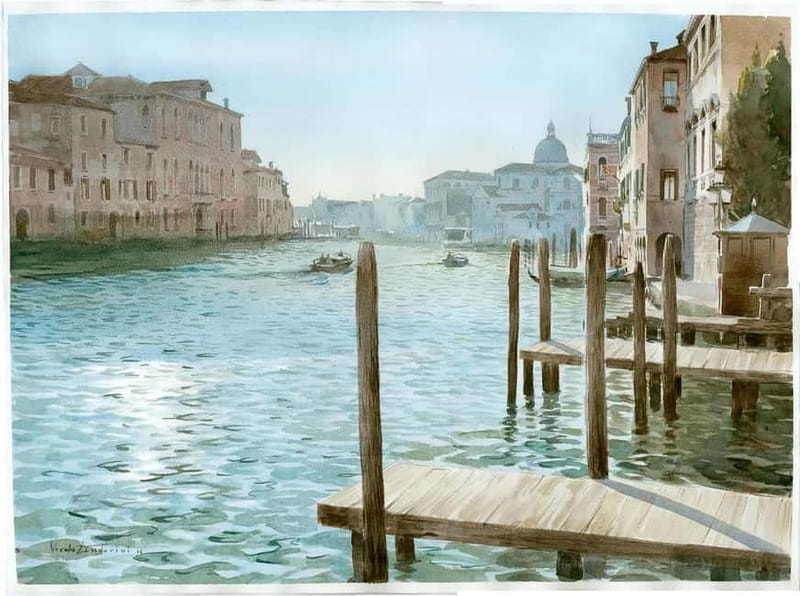
Once your sketch has structure, you move into color. This is the part where watercolor can feel magical, but only if you understand the underlying logic. You’ll work on how light functions as a color, not just brightness.
You also get specific technique targets. The teacher explains how shading works between clouds and sky, and how to handle the darker-to-lighter transitions that make a Venice sky and water feel real. And because you are working under guidance, you’re not stuck guessing how much pigment to use or when to stop.
Painting reflections and shadows: the Venetian details that sell the scene
If you want your painting to look like Venice and not just “a bunch of blue,” pay attention here. The class explicitly teaches you how to approach water reflections and how to build lights and shadows in a way that feels convincing.
Watercolors can look flat if you don’t manage contrast. In this class format, you learn where to darken for depth, how to keep edges soft where the scene dissolves into water, and how to keep the sky from stealing all the attention from the subject. It’s the kind of guidance that makes your painting look intentional.
This is also where patient instruction shows up. Several instructors in past sessions have been praised for guiding novices through shadows and brushwork step by step, including help with mixing and applying paint so it lands the way you expect.
Where you paint in Venice, and what changes when weather turns
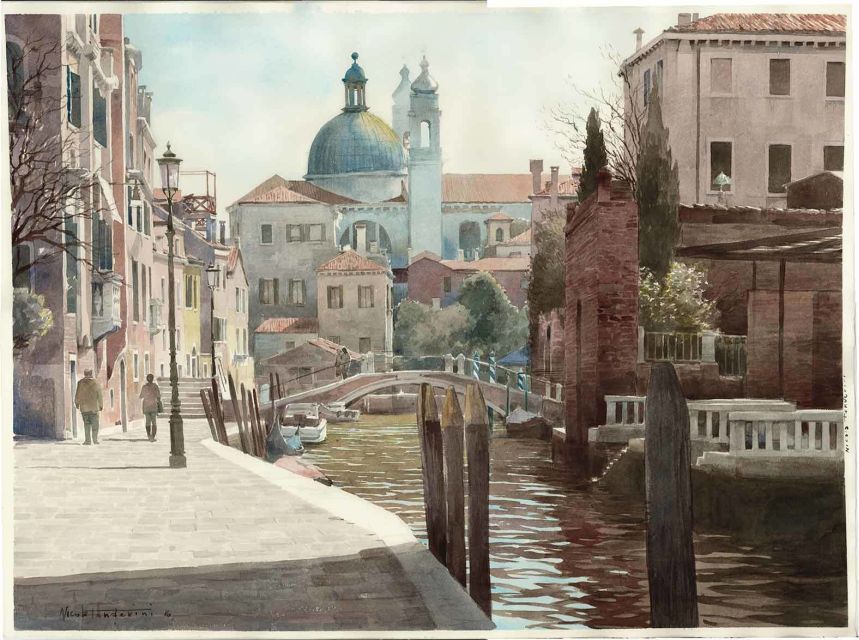
A big part of the appeal is painting in a real Venice setting. Many sessions happen outdoors or in the open air, so you get that immediacy of canals, quiet streets, and architectural lines you can actually see. That also means you notice details you might otherwise ignore, like how canal-side light shifts minute by minute.
Weather matters in Venice. On cold or rainy days, you may be moved to a studio space so you can keep painting without freezing or ruining materials. That flexibility is a big deal, because it protects the class experience when conditions change quickly.
Teacher styles you can expect, from Alvis to Nicholas Tenderini
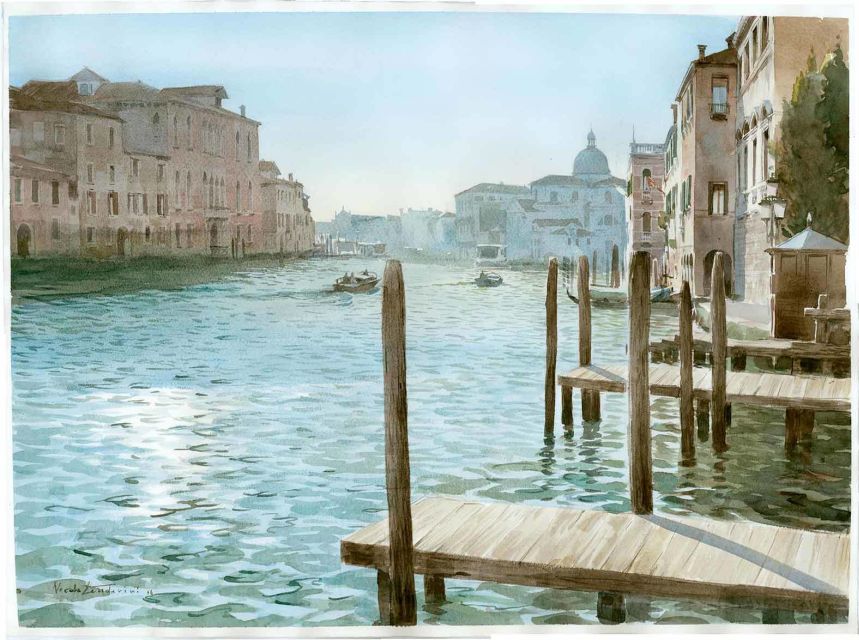
The class is taught by Venetian art circle artists, and instructors teach at a level that meets you where you are. In past sessions, teachers named Alvis, Pedra, Petra, Nicola, Nikola, and Nicholas Tenderini have been singled out for patient, encouraging instruction.
What stands out across those names is how the teacher stays close. You’re not handed a brush and sent off. You get show-and-explain coaching in real time, with the instructor adjusting to how you draw, what you’re mixing, and what your picture needs next.
Also, some classes have gone over the scheduled time when the group was still learning well. That can be a pleasant bonus if you want more feedback, but don’t count on it every time. Still, it tells you something: this isn’t a rush-through class.
Group setup: shared class time, small pacing, and a focus on your work
This experience can be shared with people who are not part of your group. That doesn’t automatically mean awkward. In practice, the class tends to stay small enough that the teacher can still give hands-on attention.
You can expect a mix of skill levels. The teaching is friendly for first-timers, especially because you start with sketching fundamentals and basic watercolor moves. If you already paint, you’ll still benefit from the structured approach to light, reflections, and shadows.
What you get for your $27: supplies, coaching, and a take-home piece
At $27 per person for a 90-minute class, the value comes from three things: equipment included, live commentary, and real instruction. In Venice, spending less money often means fewer materials and less teaching. Here, you start with the tools you need, and you spend the time learning how to use them.
This class also gives you a souvenir that actually feels personal. You’re not just buying an image of Venice. You’re making one, with technique support that helps your final painting look like you meant it.
And because this is a time-boxed lesson, it fits the way most people travel. You get a creative activity without committing to a full workshop day.
What to bring so you feel comfortable and ready
Bring comfortable shoes. Venice ground can be uneven, and you’ll want stability while you sketch and paint. Also bring a sun hat, especially if your session stays outdoors for part of the time.
What’s nice is you do not have to pack art supplies. All equipment is included, so you can keep your luggage sane and your focus on learning.
Who should book this watercolor workshop, and who should skip it
This class is a strong fit if you want:
- A beginner-friendly way to learn watercolor techniques in a short session
- A structured sketch approach that helps you manage perspective
- A practical take-home painting with help on light, reflections, and shadows
It may be less suitable if you have mobility impairments or difficulty walking. The tour is not fully accessible for wheelchairs or people with walking disabilities, and the meeting area is in a part of Venice built for feet that can handle old pathways.
Also note that pets are not allowed. If you’re traveling with an animal, this probably won’t work for your plans.
Should you book this class?
I’d book it if you want a hands-on Venice experience with real guidance, not a passive activity. The sketch-first method, the focus on light and water reflections, and the fact that equipment is included make the $27 price feel fair.
I’d hesitate only if your walking ability is limited, because the experience is not designed for full wheelchair access. If you can handle the short walk approach and you’re comfortable wearing shoes for Venice sidewalks, this workshop is a smart use of time near St Mark’s Square.
If you care about bringing home something you made yourself, this is one of the most efficient ways to do it in the city.
FAQ
How long is the Venice watercolor workshop?
It lasts 90 minutes.
Where do I meet for the class?
Meet at Prison’s Place, then go upstairs to the first floor. The site is close to St Mark’s Square. To get there, cross the bridge on the right-hand side of the entrance of the Doge’s Palace, and arrive 10 minutes early.
Is any art equipment provided?
Yes. All equipment is included, and there is live commentary during the class.
What languages are offered?
The instructor teaches in English, Spanish, Italian, and French.
What should I bring with me?
Bring comfortable shoes and a sun hat.
Is free cancellation available, and can I reserve without paying now?
Yes. You can cancel up to 24 hours in advance for a full refund, and you can reserve now and pay later.
Is the workshop accessible for wheelchair users?
No. The tour is not fully accessible for wheelchair users or people with walking disabilities.
Lately added around Venice

Workshops, compared.

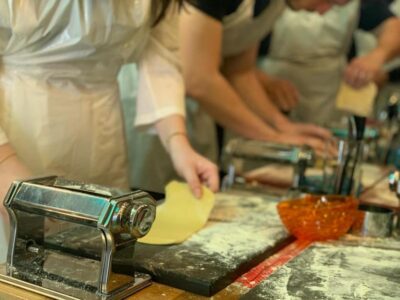
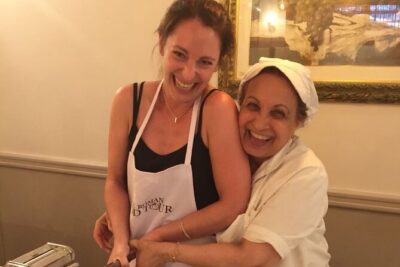
Pasta and Tiramisu Cooking Class with Wine in Venice
Read our review →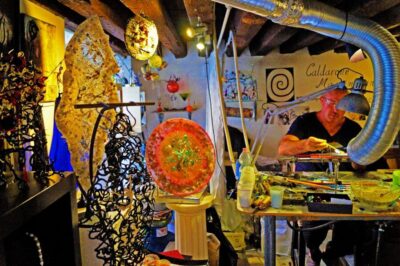
Create Your Glass Artwork: Private Lesson With Local Artisan
Read our review →
Venetian Carnival Mask Making Class in Venice, Italy
Read our review →
Murano Glass Factory Experience: A Workshop in Venice
Read our review →
Browse the lists this tour appears in